Wize University Physiology Textbook > Cardiovascular Physiology
Cardiovascular System Overview
Popular Courses
MCAT
General Course
DAT
General Course
Intro to Physiology
University Study Guides
PHYSIOL 1021
Western University
PHYSIOL 2130
Western University
Intro to Physiology
University Study Guides
PSL300H1
University of Toronto
PHYSL 210
University of Alberta
PHGY 210
McGill University
PHGY 215
Queen's University
KNES 259
University of Calgary
PHGY 216
Queen's University
BIOL 273
University of Waterloo
BIOL 260
University of British Columbia
PHYSIOL 3120
Western University
KNES 260
University of Calgary
BIOL 116
Case Western Reserve University
PPT 301
University of North Dakota
ANAT 212
McGill University
HTHSCI 2FF3
McMaster University
0:00 / 0:00
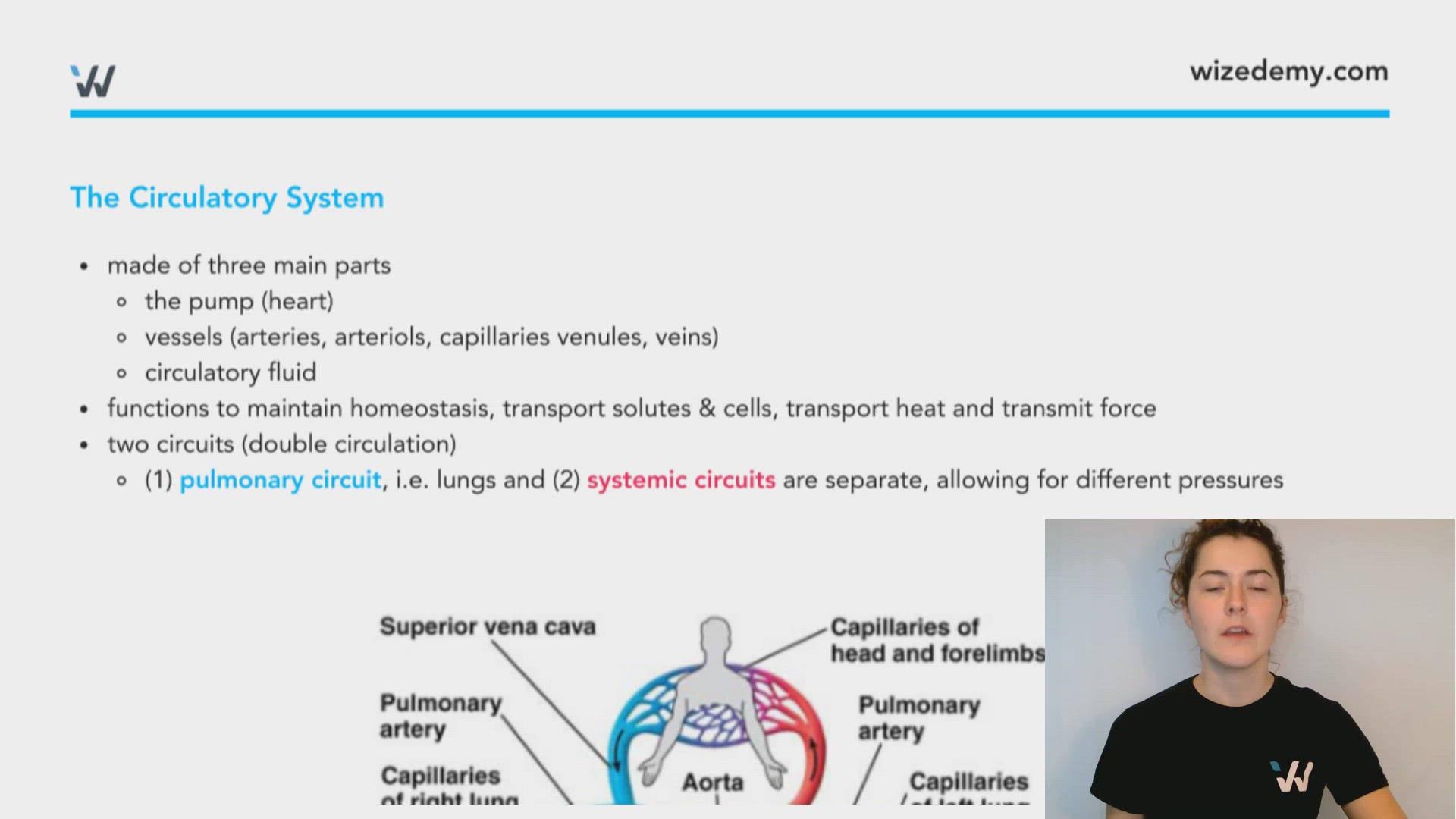
The Circulatory System
- made of three main parts
- the pump (heart)
- vessels (arteries, arteriols, capillaries, venules, veins)
- circulatory fluid
- functions to maintain homeostasis, transport solutes & cells, transport heat and transmit force
- two circuits (double circulation)
- (1) pulmonary circuit, i.e. lungs and (2) systemic circuits are separate, allowing for different pressures

Watch Out!
- In the pulmonary circuit, the deoxygenated blood is in the arteries and the oxygenated blood is in the veins.
- In the systemic circuit, the oxygenated blood is in the arteries and the deoxygenated blood is in the veins
0:00 / 0:00
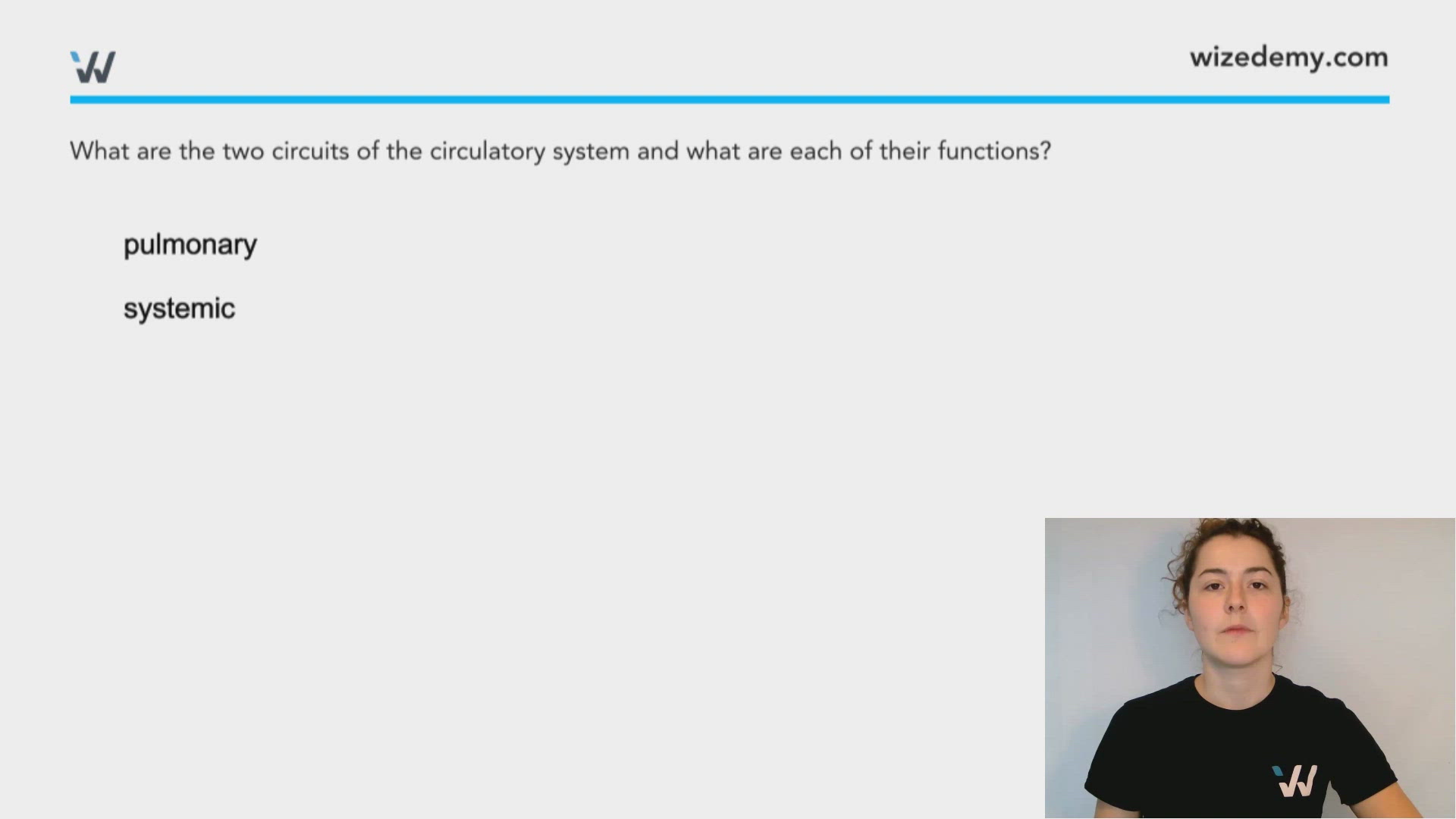
What are the two circuits of the circulatory system and what are each of their functions?
Pulponary circulation - main function is to pick up oxygenated blood from the lungs
Systemic circulation - main function is to deliver oxygenated blood.
Both systems are used to move other materials around the body such as hormones and glucose.