Popular Courses
Find My CourseGolgi Apparatus
The golgi apparatus or golgi body consists of a stack of membrane-bound flattened sacs, or cisternae, that are not physically connected. This organelle functions as the warehouse of the cell, dealing with receiving, sorting, packaging, and shipping of macromolecules. They even some manufacturing of macromolecules.

Structure
The golgi apparatus appears as a stack of cisternae under the electron microscope. A golgi body has distinct structural and functional directionality respective to the ER. Each side of the golgi apparatus can be distinguished from one another based on thickness and molecular composition.
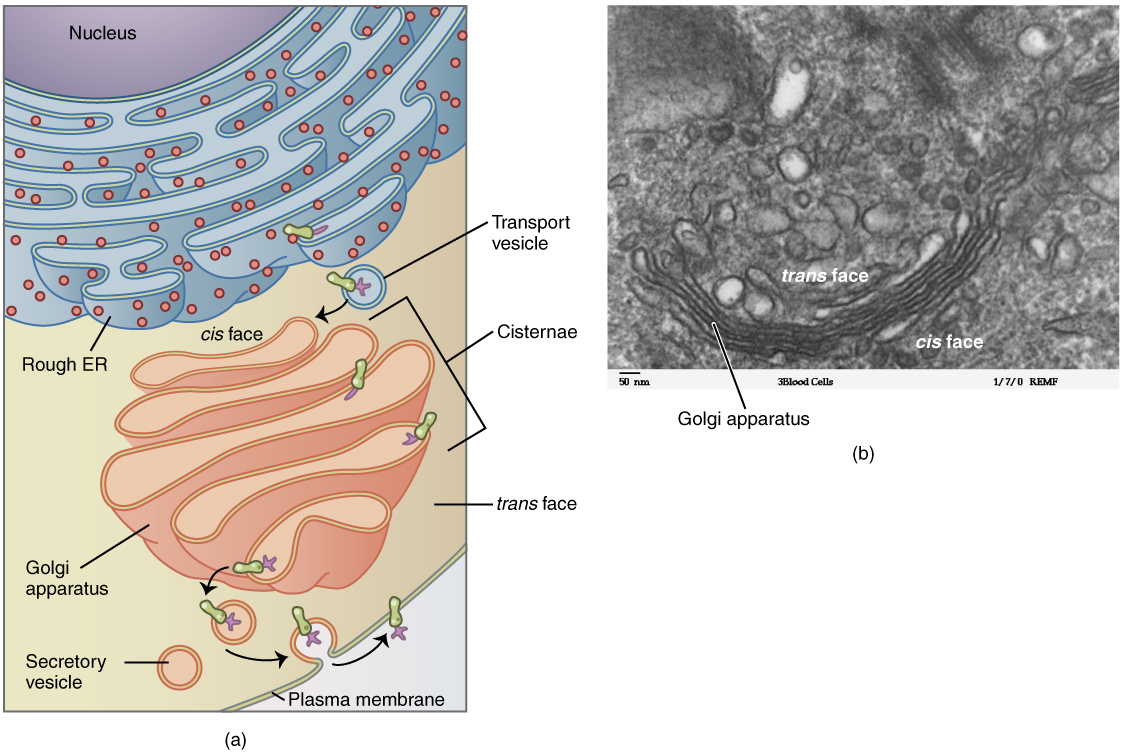
- The side that is usually located near the ER is referred to as the cis face, as cis means "on the near side of"
- This side is the receiving department of the golgi apparatus.
- The side that is located further from the ER is referred to as the trans face, since trans means "on the opposite side"
- This side is the shipping department of the golgi apparatus.
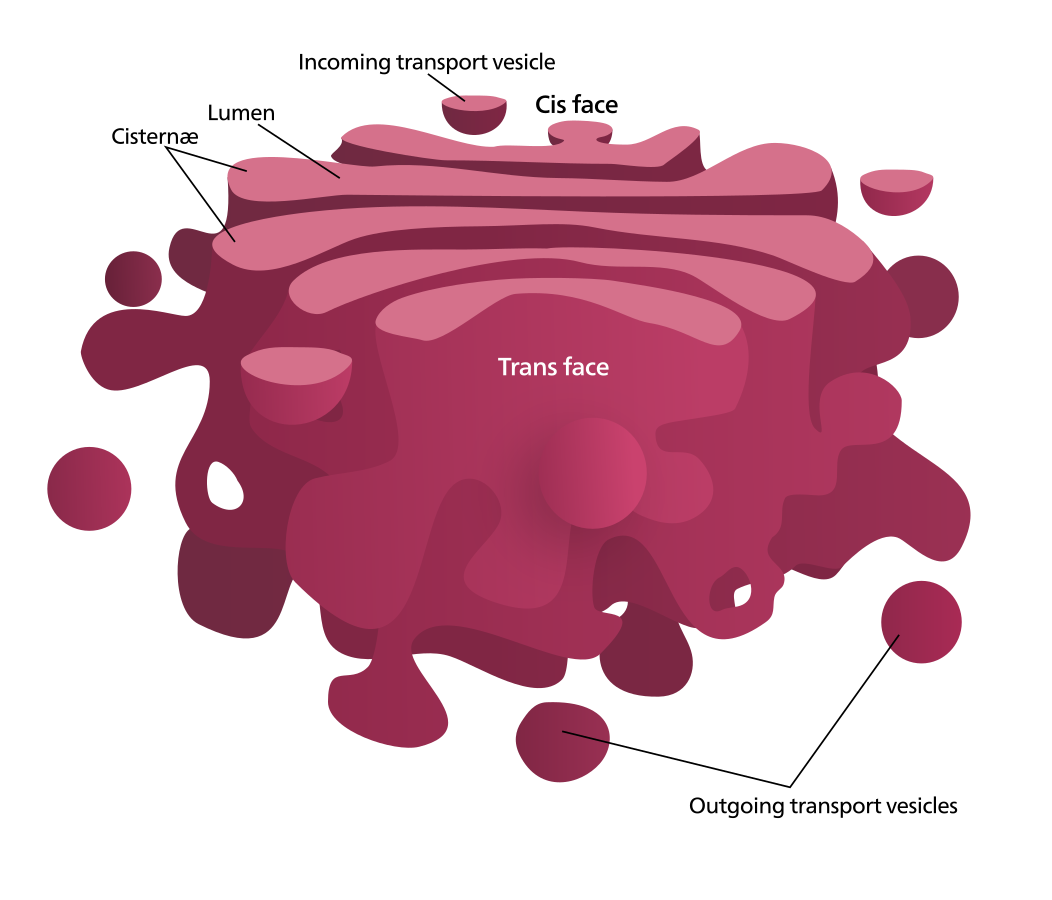
- Receive transport vesicles from the ER:
- A golgi stack will receive transport vesicles from the ER on the cis face.
- The vesicle will fuse with the cis face, adding its membrane and contents to that face of the golgi apparatus.
- Shipping and sorting of the fresh vesicles:
- A golgi stack will dispatch its products by budding vesicles from the trans face..
- Molecular tagging on the products as well as external molecules on the budding vesicles aid in targeting the vesicles appropriately.
- They can go one of 3 destinations.
- Within the cell ("the lysosome line")
- Cell membrane
- Outside of the cell
- Modify the contents of the transport vesicles:
- During the journey from the cis region to the trans region, products contained within the transport vesicle will be modified.
- This modification is done in stages, with different cisternae containing unique groups of enzymes.
- Manufacture macromolecules
- The golgi apparatus is able to manufacture macromolecules. In plant cells, the golgi apparatus is able to synthesis polysaccharides such as pectin which can later be incorporated into the plant cell wall.
Practice: Golgi Apparatus Structure
"Cis" refers to which side of the golgi apparatus?