
Acids and Bases Definitions
- Arrhenius definition: compounds identified as producing H+ or OH- ions in solution
- Acids produce H+ ions:
- Bases produce OH- ions:
- Modified Arrhenius definition: compounds identified as acids or bases based on their reaction with water
- Acids react with water to produce H3O+ ions
- Bases react with water to produce OH- ions
Acid and Base Strength
- Strong acids ionize completely:

- Weak acids partially ionize to give H+:
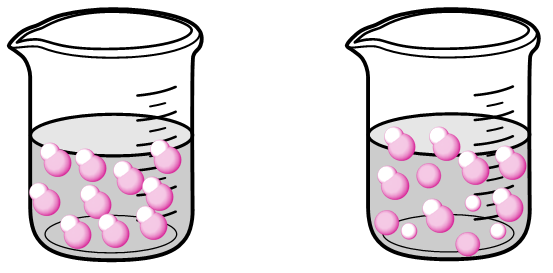
- Strong bases dissociate completely in water:
- Weak bases react with water to give OH-, but the reaction is not complete

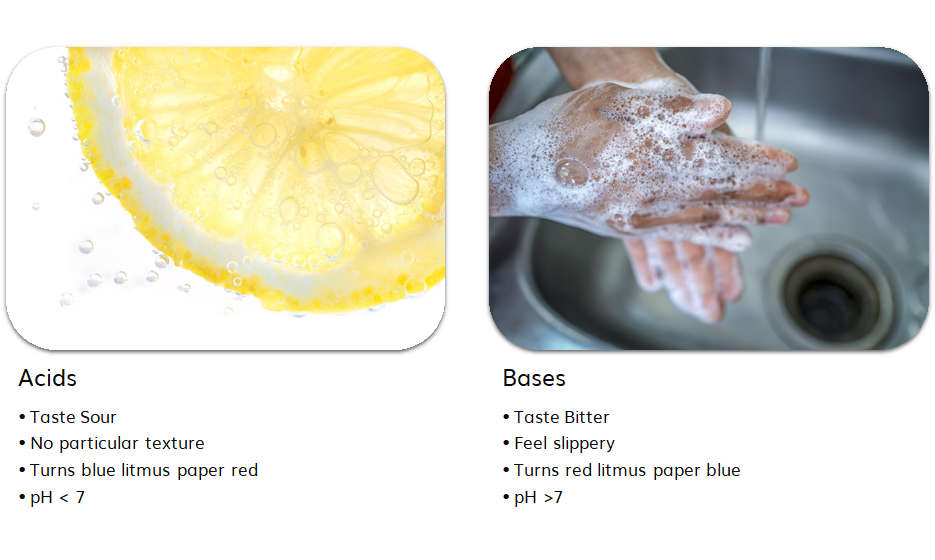
Properties of Acids and Bases

Example: Identifying Strong Acids and Bases
Group the following molecules as strong acids, strong bases, or neither: HBr, NaCl, H2SO4, Mg(OH)2, KOH, H3PO4
Strong Acids: HBr and H2SO4
Strong Bases: Mg(OH)2 and KOH
Neither: NaCl, and H3PO4