
0:00 / 0:00
Solubility
- Solubility is defined as the amount of solute that can be dissolved in an amount of solvent at a given temperature.
- Whether a solute will dissolve in a solvent, depends on the intermolecular forces between:
- Solute particles
- Solvent particles
- Solute and solvent particles
- A solute will dissolve in a solvent if the solute-solvent forces of attraction are greater than the solute-solute and solvent-solvent forces of attraction.
- Polar substances will dissolve in polar substances Example: water and methanol (CH3OH)
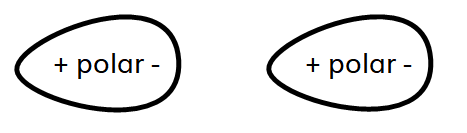
- Ionic substances will dissolve in polar substances Example: water and salt (NaCl)

- Non-polar substances will dissolve in other non-polar substances Example: hexane and benzene
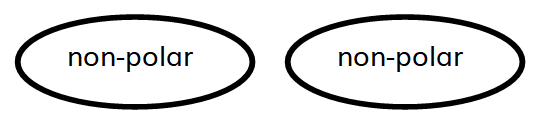
Wize Tip
Remember, "like dissolves like"!
- Polar (or ionic) substances dissolve other polar substances
- Non-polar substances dissolve other non-polar substances
- A solute will not dissolve in a solvent if the solute-solvent forces of attraction are weaker than individual solute and solvent force of attractions.
- Non-polar substances don't dissolve in polar substance, since they cannot break the strong forces of attraction inside the polar substance

Types of Solutions
- An unsaturated solution is a solution in which more solute can be dissolved in the solvent at a given temperature and pressure
- A saturated solution contains the maximum amount of solute that can be dissolved in a solvent at a given temperature and pressure
- A super saturated solution contains more than the maximum amount of solute that can be dissolved in a solvent at a given temperature and pressure

0:00 / 0:00
Solubility Curves
- We can tell what type of solution we have from a solubility curve by looking at the concentration of the solution and the temperature at which the solution is at.
- To the left of the curve - supersaturated solution Example: a 50g KNO3/100mL H2O of at 20°C
- On the curve - saturated solution Example: a 50g KNO3/100mL H2O of at 45°C
- To the right of the curve - unsaturated solution Example: a 50g KNO3/100mL H2O of at 80°C


0:00 / 0:00
Factors Affecting Solubility
Temperature
- For solids in an aqueous solution, an increase in temperature will typically result in an increase in solubility

- For liquids, there is no defined trend
- For gases in an aqueous solution, an increase in temperature will typically result in a decrease in solubility

Pressure
- For solids and liquids, a change in pressure will have a negligible effect on solubility
- For gases, an increase in pressure will typically result in an increase in solubility

0:00 / 0:00
Example: Solubility Curves
Suppose a solution contains 20g of MgSO4 dissolved in 100mL of water at 50°C. Is the solution saturated, unsaturated, or supersaturated? Explain your answer.

The solution is unsaturated; the point on the graph where we have a 20g/100mL solution of MgSO4 at 50°C falls below (or to the right of the curve), hence unsaturated.
Practice: Solubility
What would HCl readily dissolve in?
Practice: Factors affecting Solubility
Most solutes dissolve faster in a water when the temperature is increased. Which of the following solutes is an exception to this rule?
Practice: Solubility Curves
Use the solubility curve below to answer the following questions:

What happens to a solution of KNO3 that is saturated at 50°C when it is cooled quickly to 10°C?