Wize High School Grade 11 Chemistry Textbook > Introduction to Organic Chemistry
Introduction to Organic Chemistry

0:00 / 0:00
What is Organic Chemistry?
- Organic chemistry is the study of the structure, properties and reactions of organic compounds, which contain carbon in covalent bonding. Example: CH4, CH3COOH etc.
- Some common bonding patterns that you will encounter in introductory organic chemistry:
- Carbon can have four single bonds, or one double bond and two single bonds, or two double bonds, or one triple bond and a single bond Example:

- Hydrogen can have one bond only and can never be the central atom Example:

- Oxygen can have two single bonds or one double bond Example:

- Nitrogen can have three single bonds, or one double bond and one single bond or one triple bond Example:


0:00 / 0:00
Introduction to Hydrocarbons
- A hydrocarbon is an organic compound that only contains carbon and hydrogen atoms
- Simplest organic molecules
- Non-polar
- Small hydrocarbons are often used as fuels in combustion reactions and as solvents
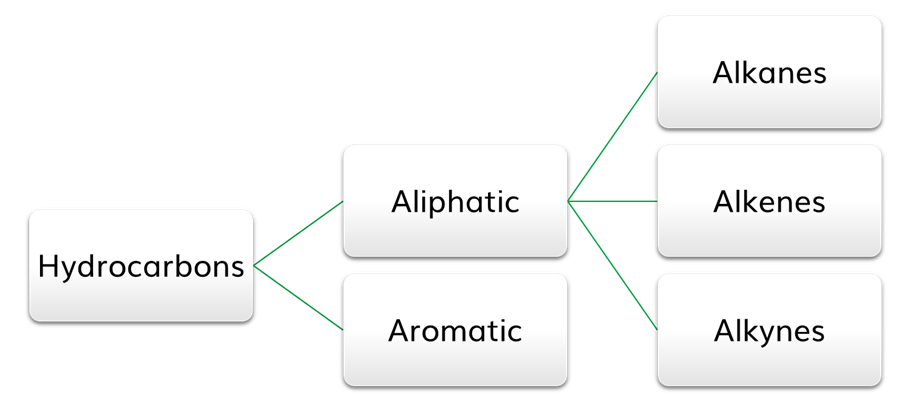
Aliphatic vs Aromatic Hydrocarbons
- Aliphatic hydrocarbons: compounds that have a structure based on straight or branched chains or rings of carbon atoms
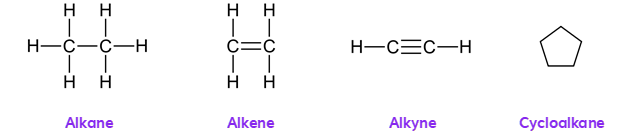
- Aromatic hydrocarbons: a compound with a structure based on benzene (C6H6).
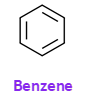
Unsaturated vs Saturated Hydrocarbons
- A saturated hydrocarbon is one that has the maximum number of hydrogens added
- There are no double or triple bonds. Alkanes are saturated hydrocarbons
- Alkenes and alkynes are unsaturated hydrocarbons
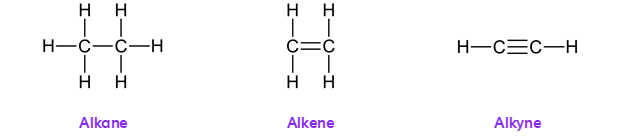
General Formulas for Hydrocarbons
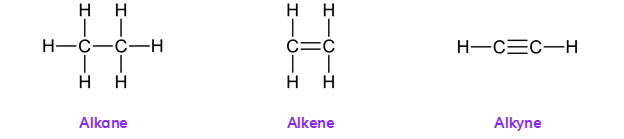
- Alkanes are hydrocarbons that only have single bonds between carbon atoms General molecular formula: CnH2n+2
- Alkenes are hydrocarbons that have at least 1 C=C double bond General molecular formula: CnH2n
- Alkynes are hydrocarbons that contain at least 1 C≡C triple bond General molecular formula: CnH2n-2
Isomers
- If two hydrocarbons have the same number of atoms but different bond connectivity then they are structural isomers.

- Both molecules above have a molecular formula of C5H12 but have very different structures.
0:00 / 0:00
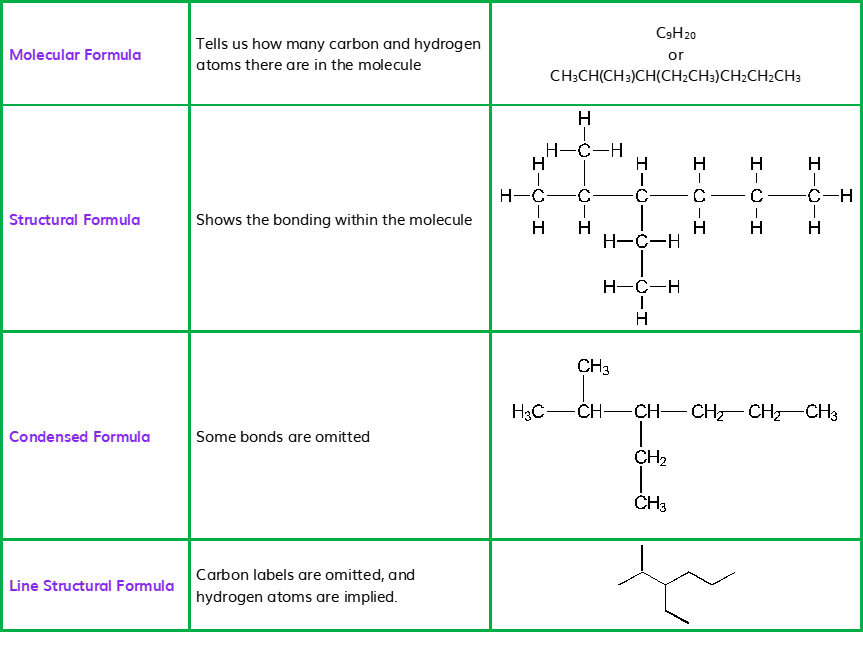
Ways to Represent Hydrocarbons

0:00 / 0:00
Example: Identifying Isomers
Decide whether the following pairs of compounds are Identical, structural isomers or unrelated to one another.
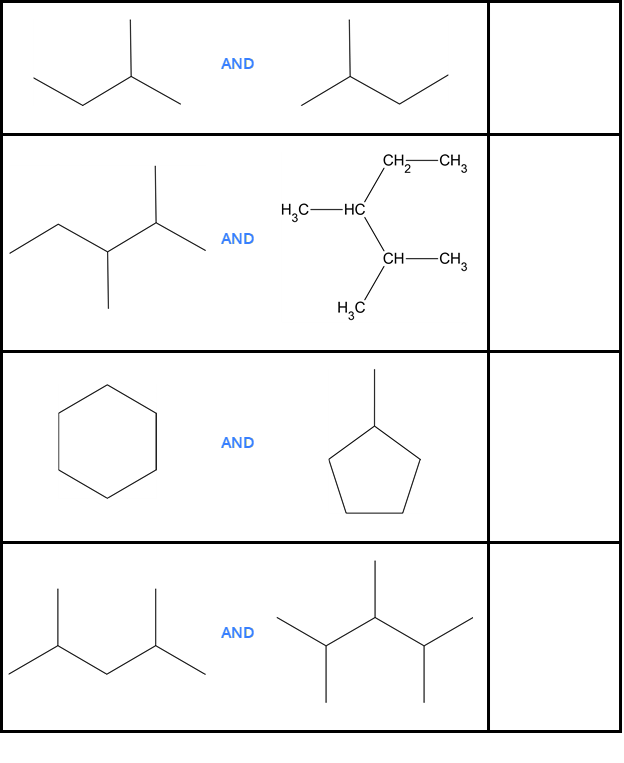
Identical
Identical
Structural Isomers
Unrelated
Practice: Organic Compounds
Classify the following chemicals as organic (O) or inorganic (I).
- CaCO3(s)
- CH3COOH(l)
- C25H52(s)
- CaC2(s)
- KCN(s)
- CCl4(l)
Practice: Identifying Structural Isomers
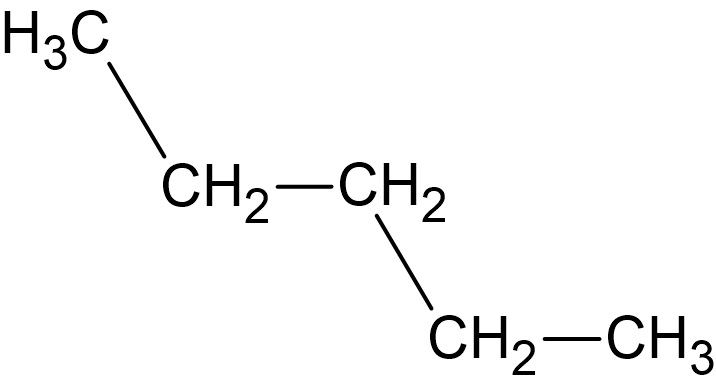
The alkane pentane, C5H12, has several structural isomers, all of which are included in the set of molecules shown below. Which of the following structures are isomers of pentane? Select all that apply.
Practice: Hydrocarbons
Crude oil is made of many hydrocarbons. Answer the following questions.
Complete the sentence:
Hydrocarbons contain two elements only. They are called and .
Note: name the two elements in alphabetical order