Wize University Chemistry Textbook > Periodic Table Trends
Ionization Energy
Popular Courses
MCAT
General Course
Grade 12 Chemistry
Ontario High School
Grade 12 Chemistry
Canada High School
CHEM 1301A/B
Western University
CHEM 201
University of Calgary
General Chemistry
University Study Guides
AP Chemistry Exam Prep Course
AP Exam Prep
CHEM 1A03
McMaster University
CHEM 101
University of Alberta
CHEM 112
Queen's University
CHEM 121
University of British Columbia
High School Chemistry
US High School
Chemistry
General Course
DAT
General Course
General Chemistry
University Study Guides
CHEM 1E03
McMaster University
CHEM 110
McGill University
CHEM 103
University of Alberta
ENGG 204
University of Calgary
CHM135H1
University of Toronto

0:00 / 0:00
Ionization Energy (IE)
The ionization energy is the amount of energy required to remove the outermost electron from an atom or ion in the gas phase
- If removing an electron do we get an anion or a cation?cation
- ↑IE means that the atom/ion requires more energy for a valence electron to be removed (has a tight pull on electron)
The Periodic Trend
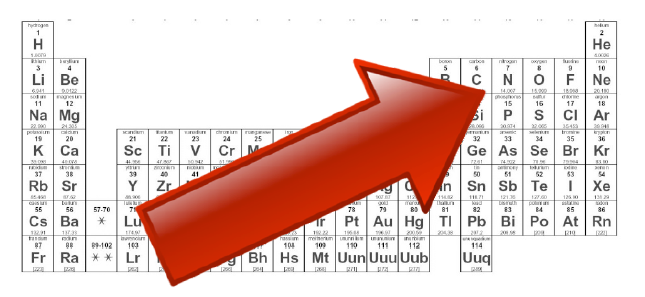
- As we move to the right across a period, Zeff increases and the electrons are held more tightly. Therefore, it takes more energy to remove an electron and the IE increases as we move to the right.
- As we move down a group and the valence electrons are further away from the nucleus, they are held more weakly (lower Zeff) and IE decreases (it becomes easier to remove the outermost electron)

0:00 / 0:00
Comparing 1st, 2nd, and 3rd Ionization Energies
How does the first IE compare to the second IE?
1st ionization is always smaller than the 2nd because removing a negatively charged electron from a cation is more difficult.
Example:
Wize Tip
IE1 < IE2 < IE3 < IE4 etc
How does the IE2 and IE3 for magnesium compare?
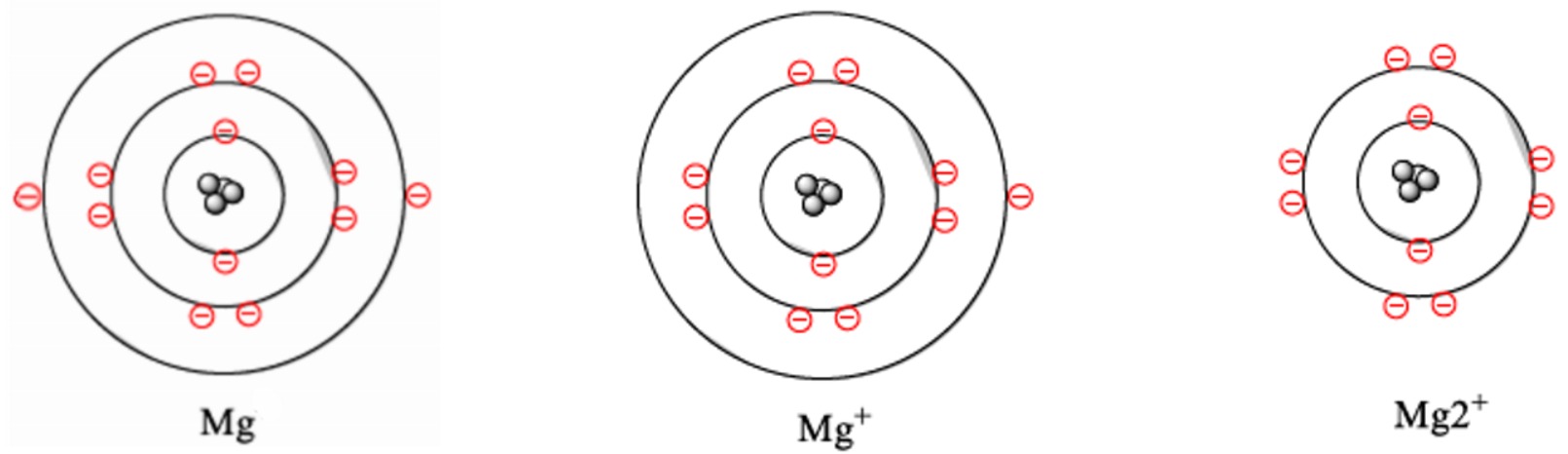
A core electron is much more difficult to remove than a valence electron, for example: the 3rd ionization energy of magnesium is much, much, higher than the 2nd.
Wize Tip
Although the IE increases each time another electron is removed, the increase is not linear and is usually related to the electron configuration.
Ionizing Mg2+ would be very difficult!
Needing so much energy to remove the 3rd electron indicates that when 2 were removed it was stable/unstable:
stable
!Practice: Highest 1st Ionization Energy
Which of the following species has the highest 1st ionization energy?
Practice: Trends in Ionization Energy
Rank the following atoms in order of increasing first ionization energy (1 = smallest; 6 = largest): Fe, O, Ba, Si, V, Zr
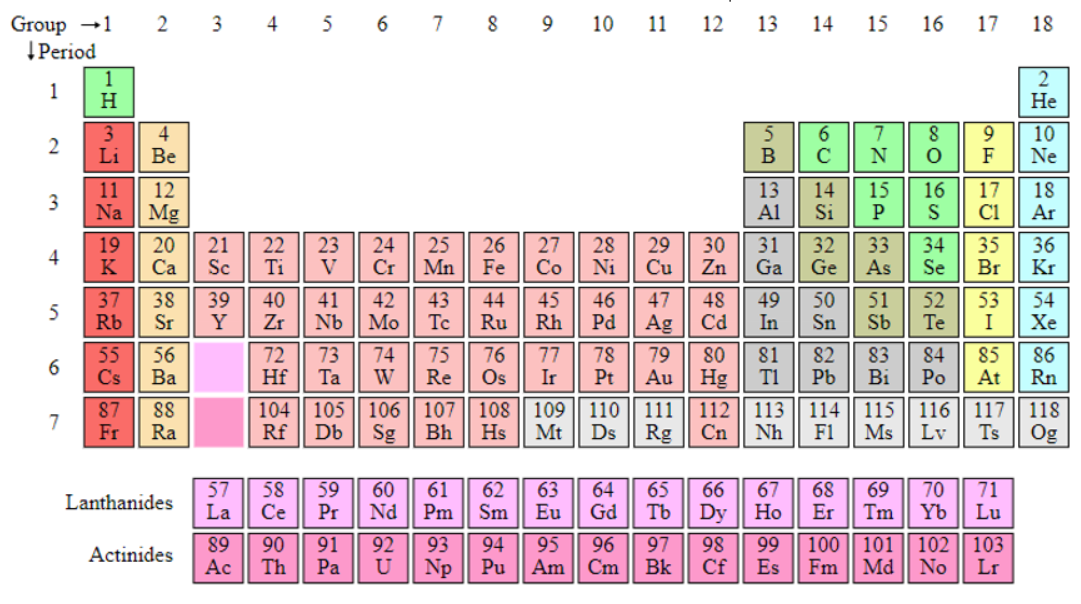
| Fe | |
| O | |
| Ba | |
| Si | |
| V | |
| Zr |
Practice: Lowest Ionization Energy
Select the element with the lowest 3rd ionization energy.