Wize High School Algebra I Textbook (Common Core) > Quadratic Functions
Determine the Factored Form of a Quadratic
Popular Courses
Find My Course
0:00 / 0:00
Example: Factored Form of a Quadratic Equation Given Information
Determine the quadratic equations given the following information
a) The quadratic graph has zeros and , and an value of .
Recall that the factored form of the quadratic equation is .
Using the information given, we know that:
So, the equation is
Watch Out!
Notice that the values within the brackets are and , they appear to have opposite signs than the actual zeros!
b) The quadratic graph has x-intercepts and , and passes through the point .
Substituting the x-intercepts (zeros) into the factored form of the quadratic equation, we get .
This simplifies to .
Now, let's substitute the point into this equation:
So, the factored form of this quadratic equation is .
c) The quadratic graph has x-intercepts and , and a y-intercept of .
Substituting the x-intercepts (zeros) into the factored form of the quadratic equation, we get .
The y-intecept corresponds to the point . Now, let's substitute the point into this equation:
So, the factored form of this quadratic equation is .
Practice: Factored Form of a Quadratic Equation from Graph
Match each quadratic graph to its equation.
A.
B.
C.
D.
E.
F.
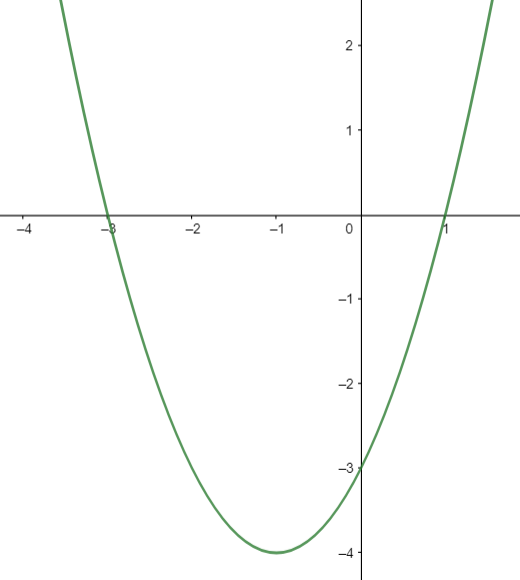
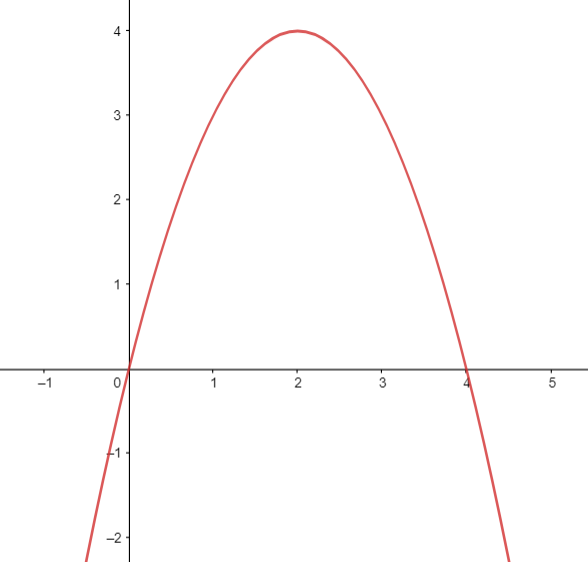
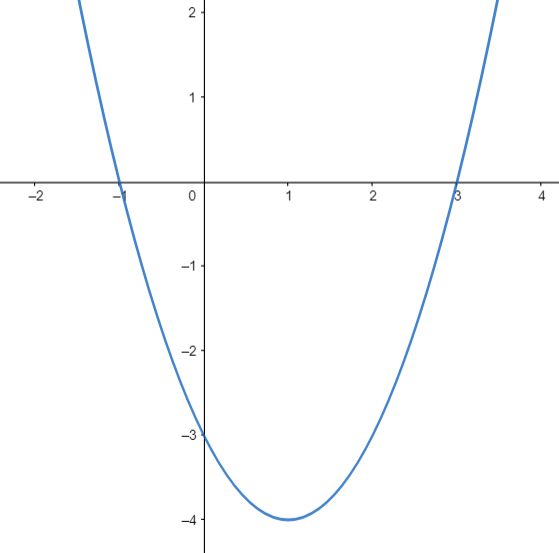
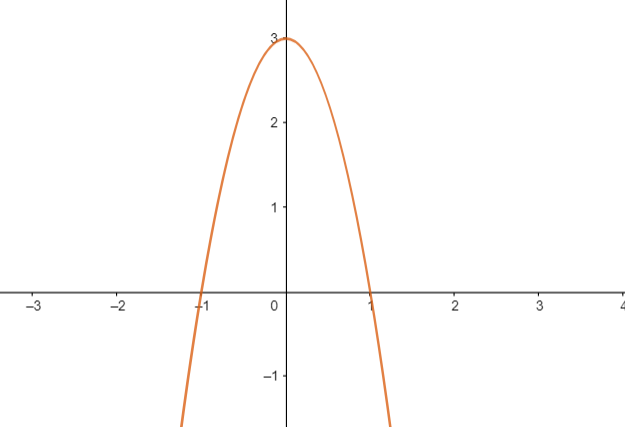
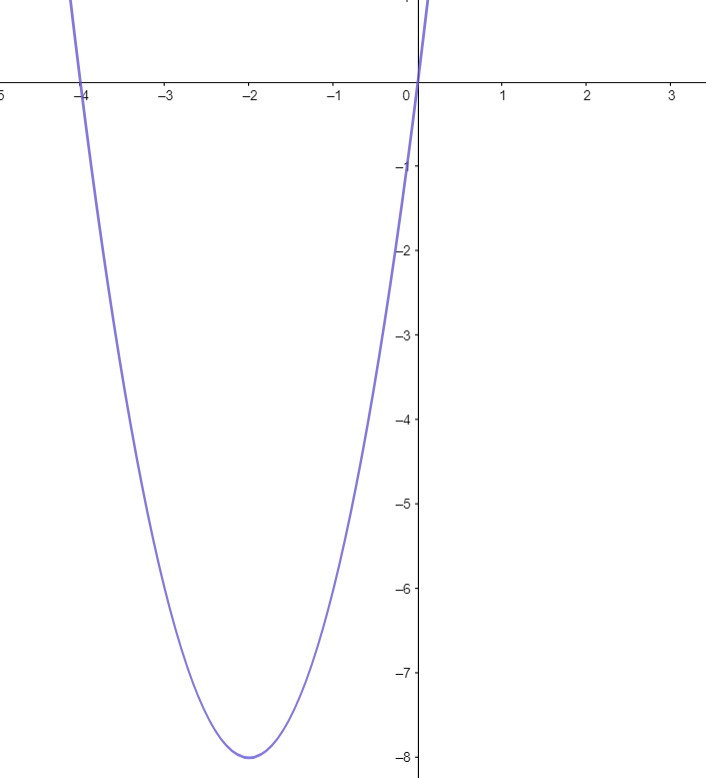
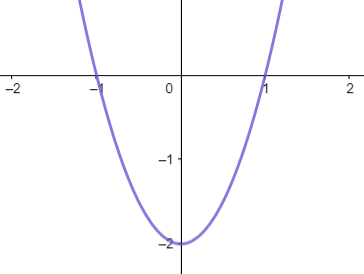
0:00 / 0:00
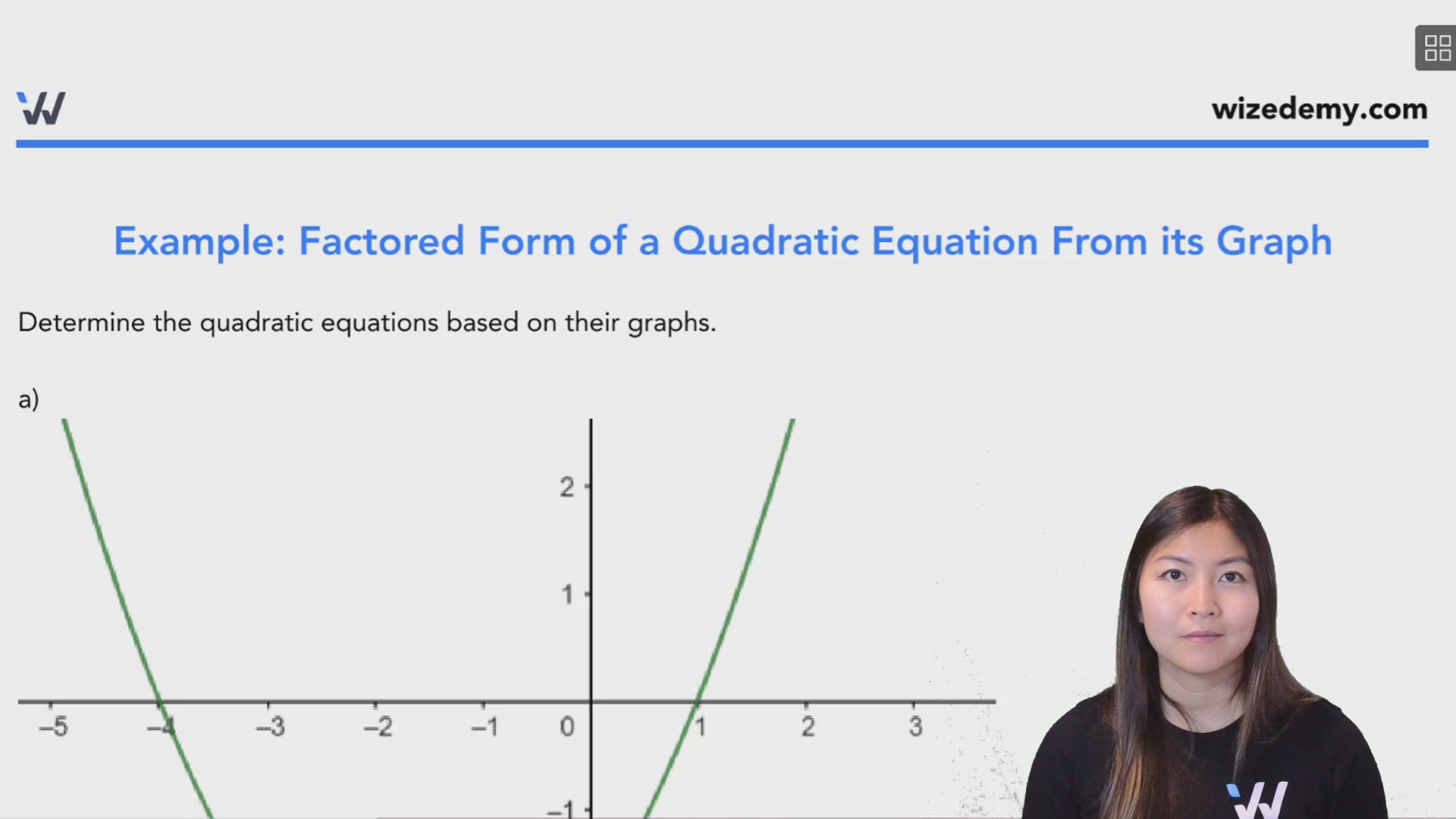
Example: Factored Form of a Quadratic Equation From its Graph
Determine the quadratic equations based on their graphs.
a)
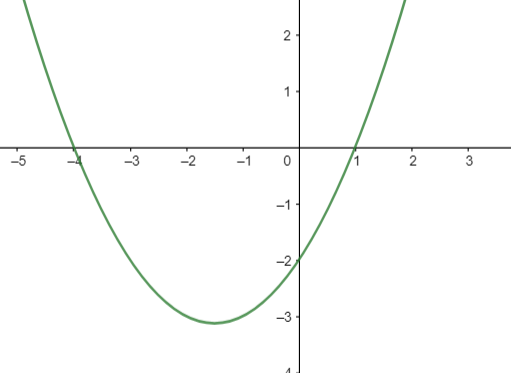
The zeros are and , so the quadratic equation will have factors
*Notice that the values in the factors seem to have opposite signs as the zeros!
Substituting these zeros into the factored form of the quadratic equation, we get the equation
Another clear point on the graph is the y-intercept , let's substitute this into our equation (you could have also used the vertex or any other point on the quadratic graph!):
So, the quadratic equation is .
b)
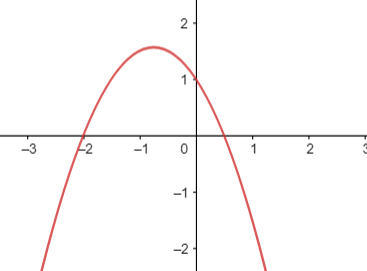
The zeros are and , so the quadratic equation will have factors
*Notice that the values in the factors seem to have opposite signs as the zeros!
Substituting these zeros into the factored form of the quadratic equation, we get the equation
Another clear point on the graph is the y-intercept , let's substitute this into our equation (you could have also used the vertex or any other point on the quadratic graph!):
So, the quadratic equation is .
Practice: Factored Form of a Quadratic Equation From its Graph
The revenue of a soda company is given by the following graph
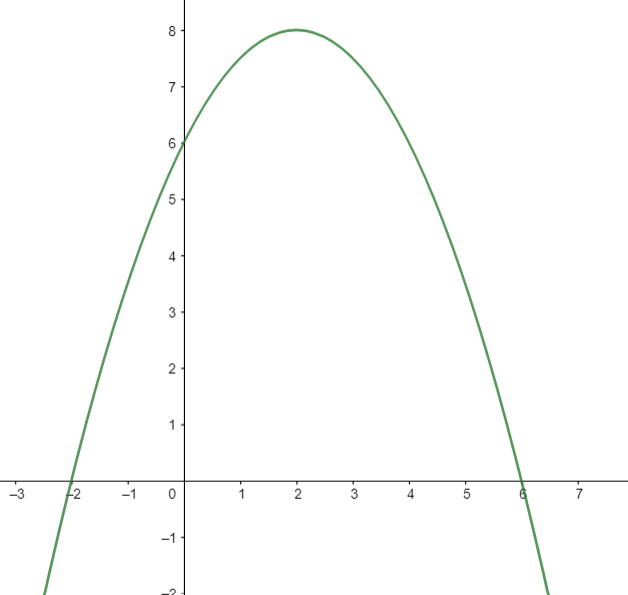
The horizontal axis represents the number of $1 price increases from its current sode price. A positive x value means that there is a price increase; a negative x value means that there is a price decrease.
The vertical axis represents the total revenue (in millions) at the given soda price.
a) Determine the equation that represents the total revenue (in millions) for any given $1 price increase . Enter your answer in factored form and standard form.
b) What is the company's total revenue at the current soda price (without any price increases or decreases)
c) What is the maximum revenue of this soda company?
d) If the current soda price is $2/bottle, at what soda price will the company achieve its maximum revenue?
e) If the current soda price is $2/bottle, at what soda price(s) will the company achieve a total revenue of $0?
f) If the current soda price is $2/bottle, what will the total revenue be if you increased the price by $0.75?
Practice: Factored Form of a Quadratic Equation
Determine the quadratic equation whose graph has zeros at and , and a maximum value of .
Practice: Factored Form of a Quadratic Equation
Determine the quadratic equation whose graph has a y-intercept at and a vertex of .