0:00 / 0:00
Angles
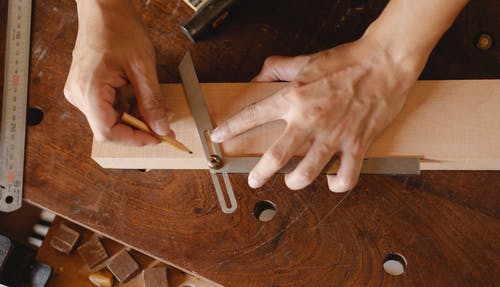
An angle is when two different rays share a common endpoint. We call the endpoint the vertex of the angle, and the rays are the sides of the angle. We can describe an angle using a variety of notations.
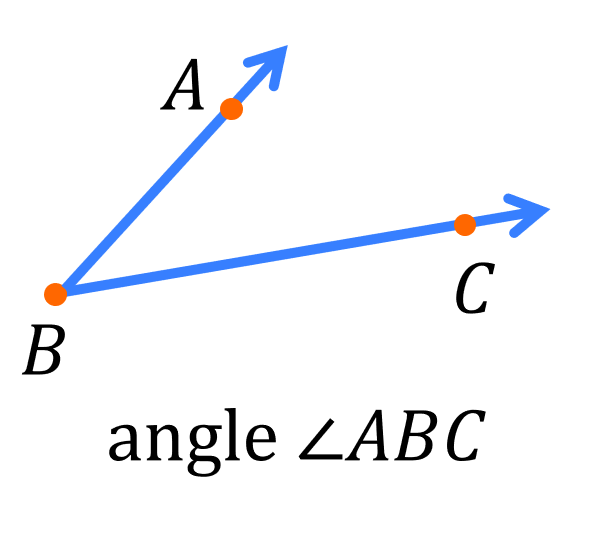
- Using the vertex
- Using the vertex and points on the rays. Note the vertex goes between the points.
- Using a number
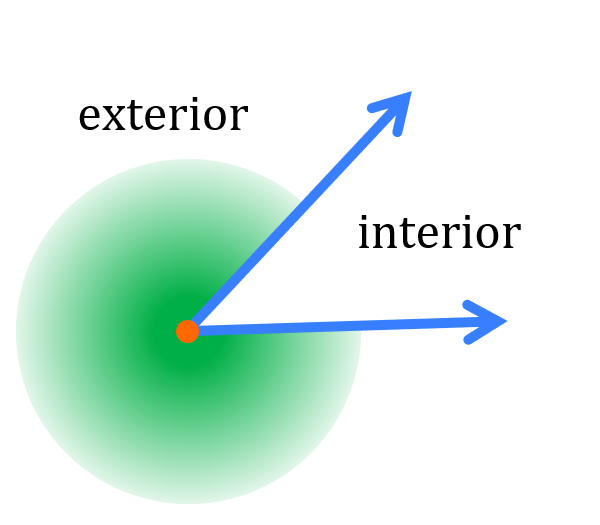
The interior of an angle is all of the points that live between the two sides. The exterior of an angle is all of the points that live out side of the two sides.
Constructing Angles
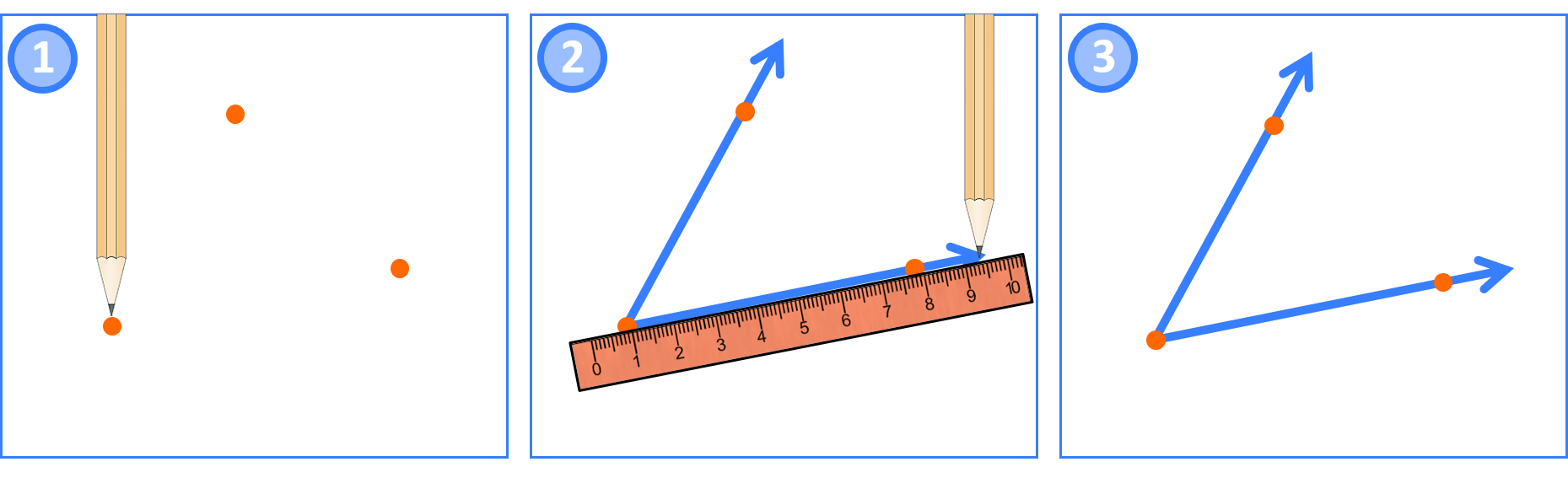
To construct an angle we can use a marking tool and a straightedge.
- Mark out three points that are not in a strait line.
- Draw a ray through two points at a time.
- The common point will be the vertex.
Example 1
Construct an angle.
ANSWER
0:00 / 0:00
Measuring Angles

To measure an angle we can use a protractor.
This tool commonly looks like a half circle and has markings along the curved side much like a ruler.
The units we use for measuring an angle are usually degrees or radians.
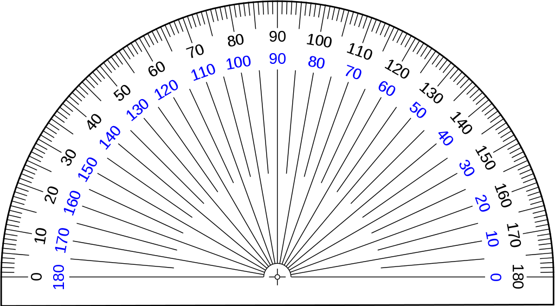
Measure and angle using a protractor
- Align the vertex of the angle with the origin of the protractor.
- Record the numbers where the rays pass through
- Take the difference of these numbers
- Take their absolute value
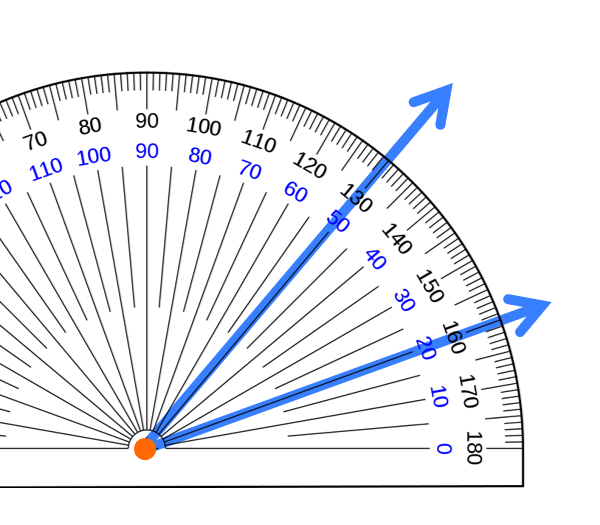
When talking about he measure of an angle, we can put a small next to the notation.
To write that the measure of angle A is 30 degrees we write:
Special Angles
- Acute angles have a measure less than 90 degrees
- Right angles are exactly 90 degrees
- Obtuse angles have a measure more than 90 degrees, but less than 180
- Straight angles are exactly 180 degrees
Congruent Angles
We say that two angles are congruent if they have exactly the same measurement.
Angle A is congruent to angle B is written as
When drawing congruent angles we can use small arcs on the interior of the congruent angles.

0:00 / 0:00
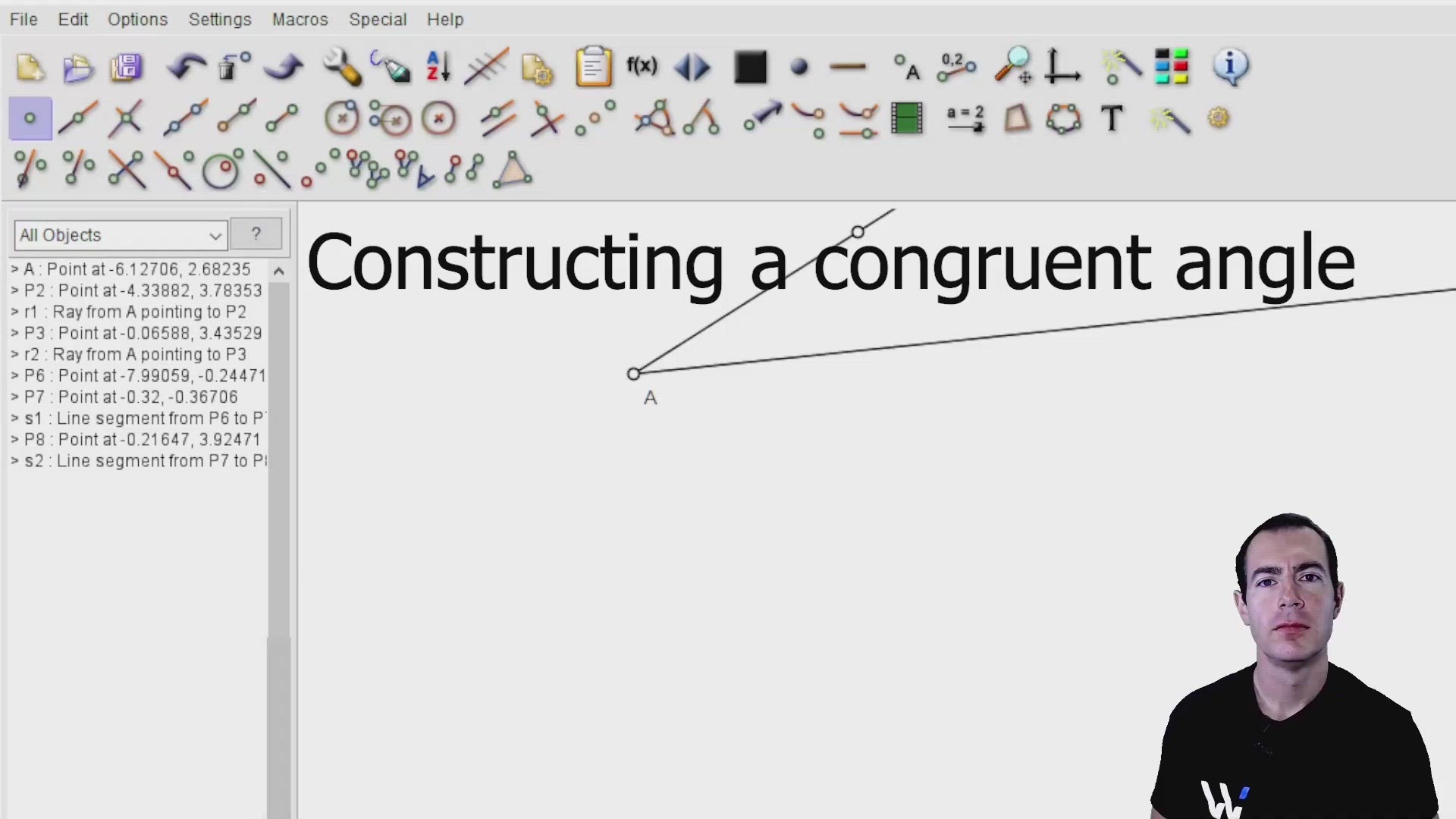
Constructing congruent angles
Our goal in this construction is to create a new angle that is congruent to a given angle.
Using a compass and straightedge

Begin with an angle whose vertex is marked as .
- Build a ray to form the first side of your new angle. Label the endpoint as .
- Use a compass to mark out an arc on the interior of your original and new angle. Label the intersections as points and .
- Adjust the compass so that it is the same as the distance between and .
- Mark out an arc with this distance on the new angle. Label the intersection as .
- Use a straightedge to make the ray ray
From this we now have
Using Technology
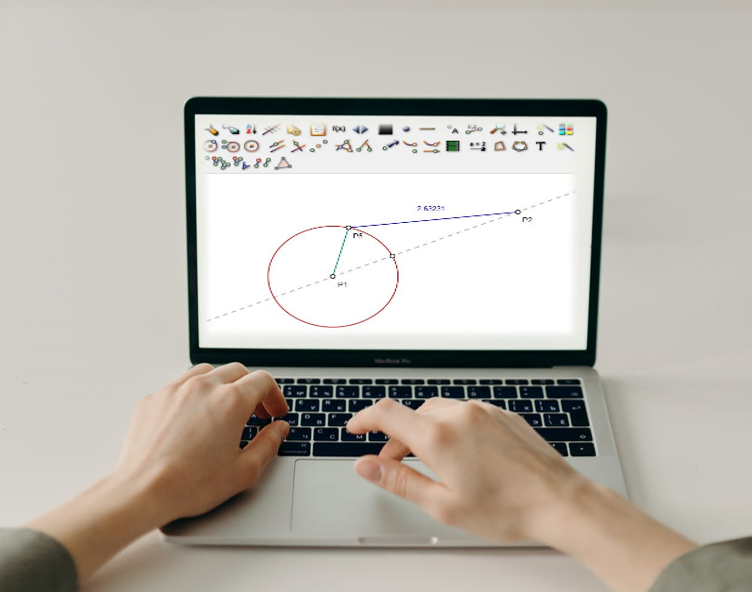
Begin with an angle whose vertex is marked as .
- Build a ray to form the first side of your new angle. Label the endpoint as .
- Place a point along one side of the original angle. Label this as point .
- Use the compass tool to make a circle with a radius the length of , centered at . Label the point where it intersects the other side as .
- Use the compass tool to make a circle with a radius the length of , centered at . Label the point where it intersects the ray as .
- Use the compass tool to make a circle with a radius the length of , centered at . Label the point where the two circles intersect as .
- Use the ray tool to draw a ray starting at , and through .
From this we now have
0:00 / 0:00
Astronomy and Math

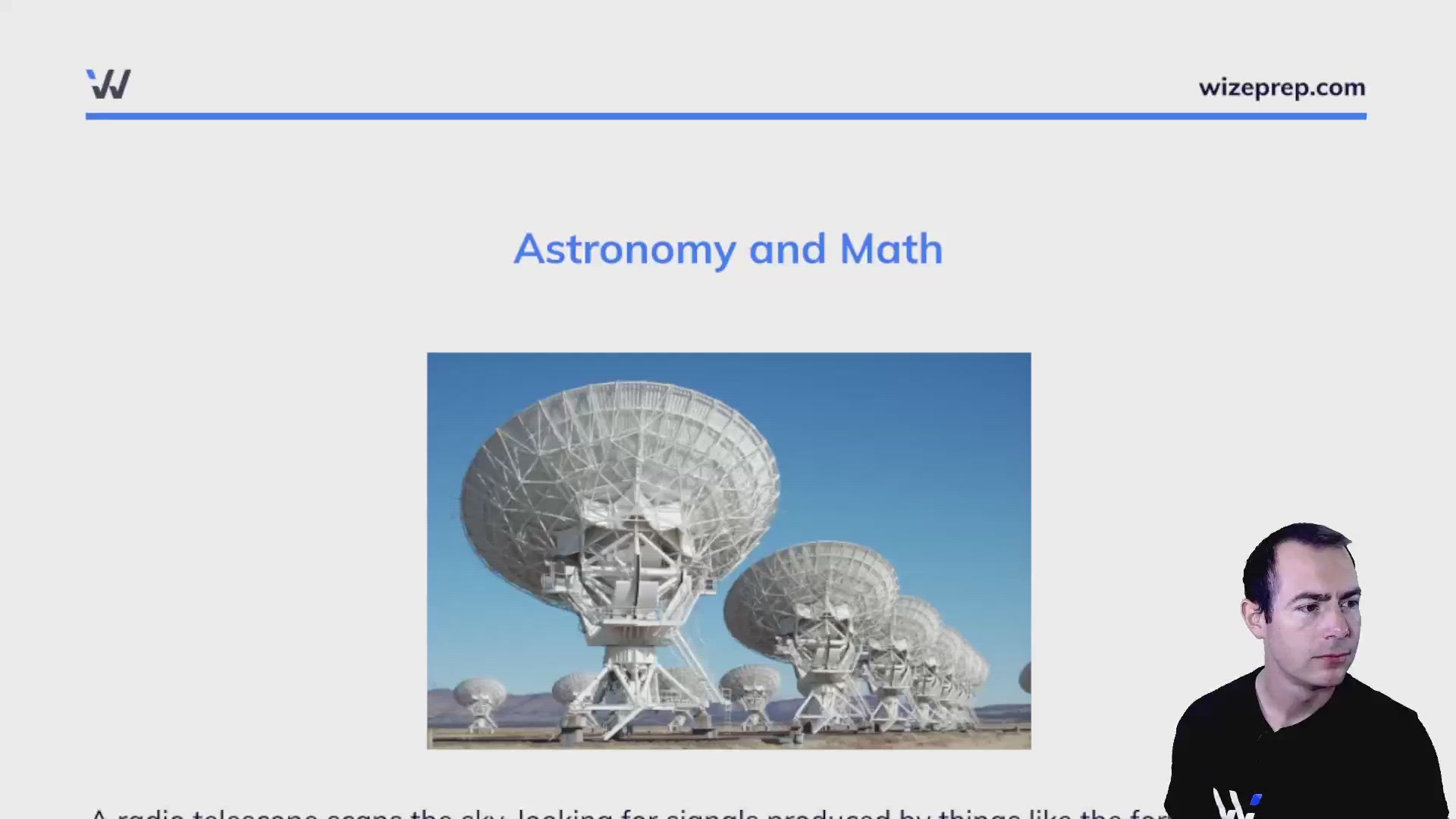
A radio telescope scans the sky, looking for signals produced by things like the formation of stars or even black holes. Use the diagram and information below about a particular radio telescope to answer the questions.
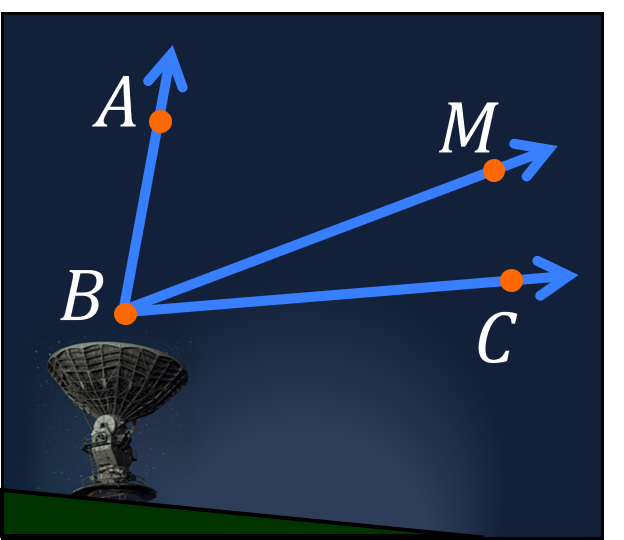
Over the course of one night, this radio telescope can sweep out an angle of 84 degrees. This is marked as angle . The angle is 8 more than 3 times the angle of .
What is the measure of angles , and ?
What kind of angles are these?
ANSWER:
These are both less than , so we call them acute angles.
Starting with the total of both angles we have
Now from the given information we know that
Substituting this in we have
Again we can substitute this to find the other angle.
Identifying Angles
Use the diagram to match the angle with a type of angle.
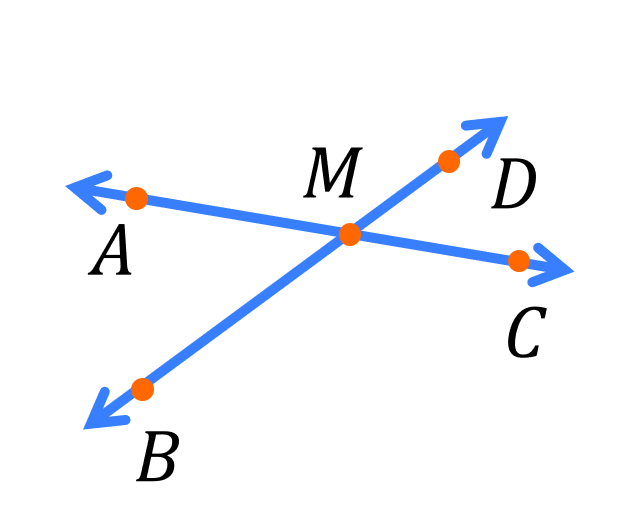
A.
Acute angle
B.
Straight angle
C.
Congruent angles
D.
Obtuse angle
E.
Side of angle
the pair and
Angles and Algebra
Use the diagram below, and the fact that to answer the questions.
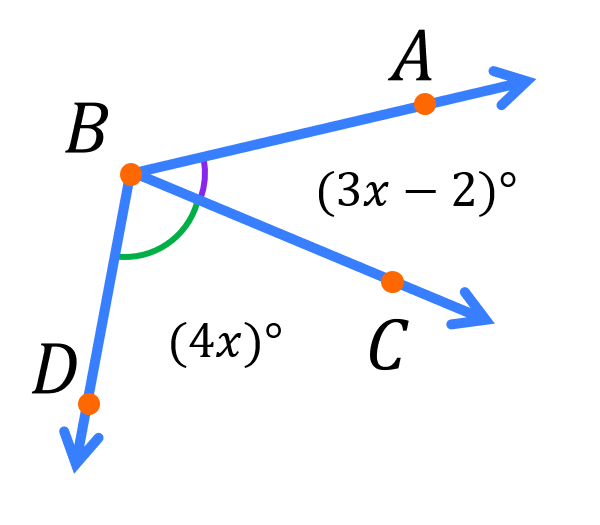
1. What is the value of x ?
2. What is the measure of ?
3. What is the measure of ?
1. What is the value of x ?
0:00 / 0:00
Pairs of Angles

Certain pairs of angles can have special properties. To better identify these pairs we can give them names.
Adjacent Angles
Adjacent angles share a common vertex and a side.
If angles are not adjacent we simply call them nonadjacent angles.
Special Pairs
The total measure of complementary angles is 90 degrees.
The total measure of supplementary angles is 180 degrees.
A linear pair of angles are adjacent angles such that the sides that is not shared forms a strait line.
Vertical angles form two pairs of opposite rays.
Watch Out!
Complementary and supplementary angles do not need to be adjacent to one another. They key is that their measure adds to 90 or 180 degrees.
Example
Draw an example of
- a pair of angles that are adjacent, and supplementary.
- a pair of angles that are not adjacent, and complementary.
- vertical angles
ANSWER
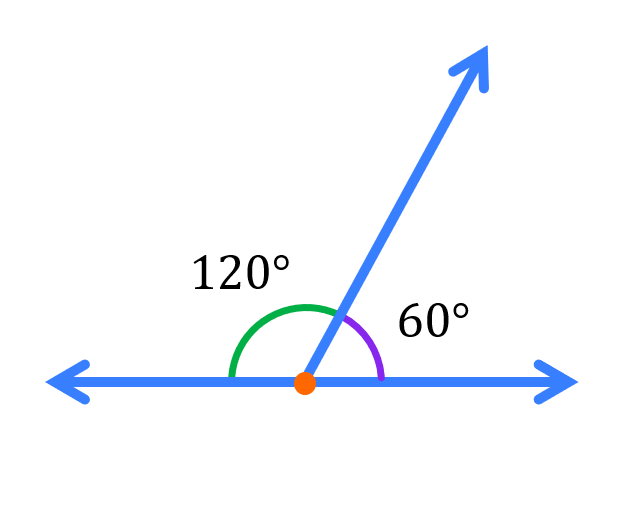
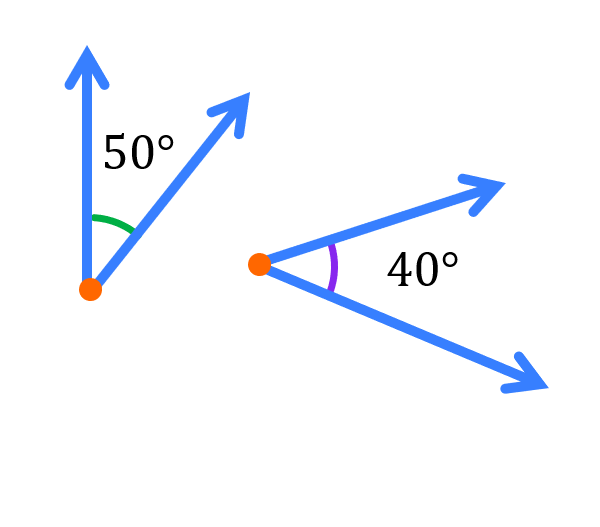
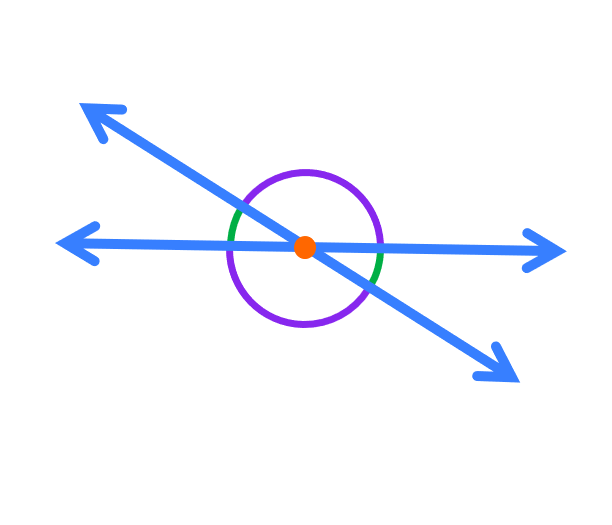

0:00 / 0:00
Constructing an angle bisector

Our goal in this construction is to split a given angle into two congruent angles. In this way we bisect the original angle.
Using a compass and straightedge
Begin with an angle whose vertex is labeled .
- Using the compass, draw an arc on the inside of the angle. Label the points where the arc intersects the sides of the angle as and .
- Adjust the compass so it is a little bit wider than half the distance of .
- Put the compass at , and make an arc.
- Put the compass at , and make an arc. Label where these two arcs cross as point .
- Draw a ray starting at , and through point .
From this we now have that
Using Technology
Begin with an angle whose vertex is labeled .
- Using the circle tool, draw a circle centered at . Label where this circle intersects the sides of the angle as and .
- Using the circle too, draw a circle centered at , whose radius is a bit more than half the length of . Label the point where it intersects the first circle inside the angle as point .
- Use the compass tool to make a circle with a radius the length of , centered at . Label where these two circles cross as point .
- Draw a ray starting at , and through point .
From this we now have that
0:00 / 0:00
Bridge Design

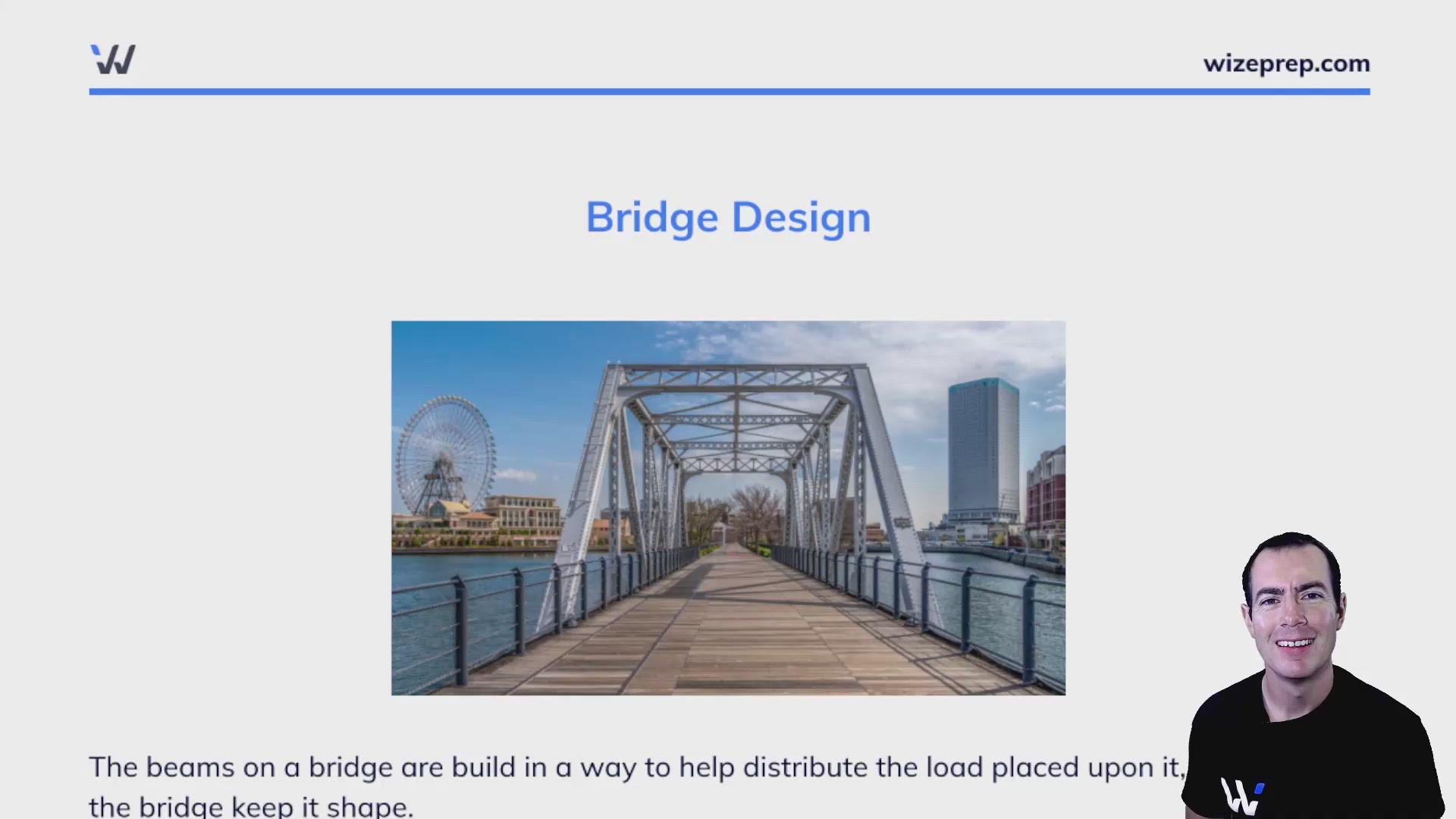
The beams on a bridge are build in a way to help distribute the load placed upon it, and to help the bridge keep it shape.
Use the diagram about one of these bridges, and the information given to answer the questions.
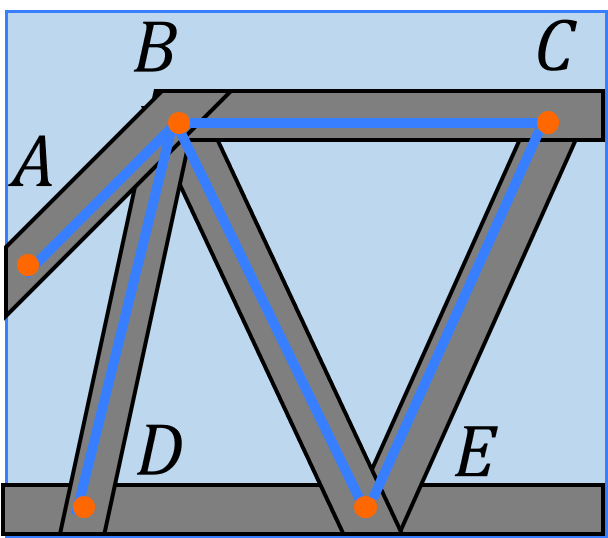
Given that
- bisects
- bisects
- The angles and are congruent
- The sum of the angles and is
Find the measure of angle .
ANSWER:
Since the sum of the angles and is
We can start with
Substituting in , and the fact that
Since bisects , we have , so .
Since bisects , we have that .
Game of pool

In the game of pool, players hit colorful balls around the table hoping to eventually strike them into a hole along the side.
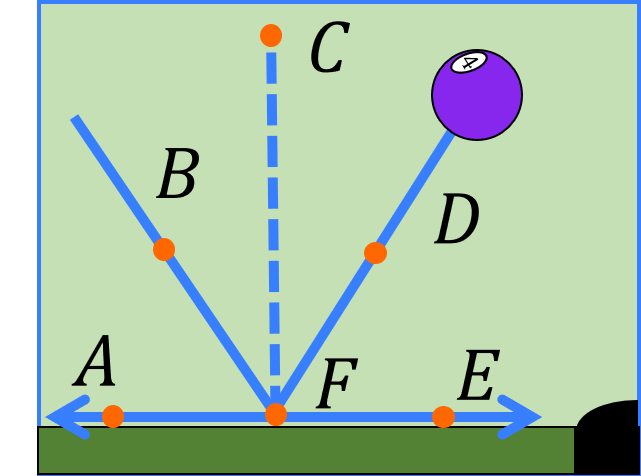
When a pool ball hits the side of the table, it bounces off at an angle that is congruent to the angle it struck the side as seen in the diagram.
Use this information and the diagram to match the angles with their best description.
A.
Complimentary angles
B.
Supplementary angles
C.
Adjacent angles
D.
Linear Pair
and
and
and
and
Airplane Wings
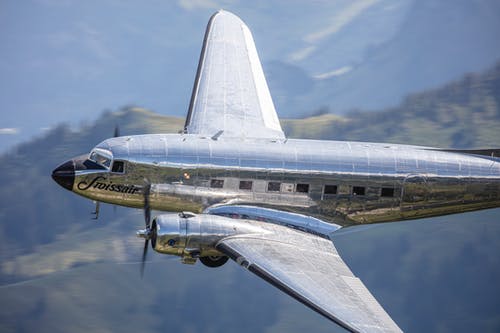
The sweep of an airplane wing can be modeling using various angles.
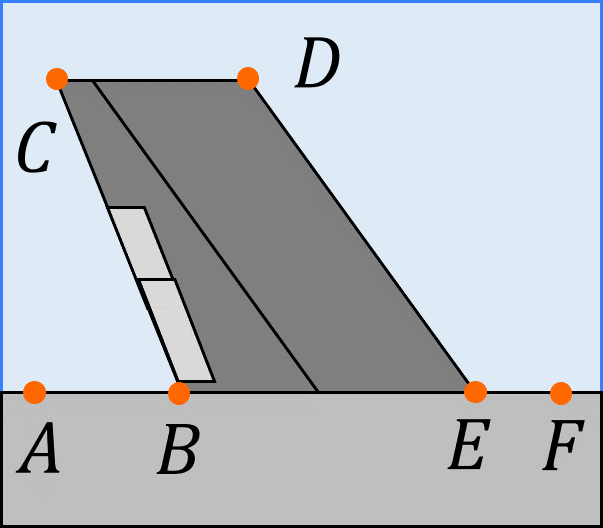
In the diagram we have
- and are supplementary
- and form a linear pair
- The measures of and sum to
Use this information to find the measure of angle .