Wize High School Geometry Textbook (Common Core) > Congruent & Similar Triangles
Congruent Triangles (ASA)
Popular Courses
Find My Course
0:00 / 0:00
Congruent Triangles using ASA

This theorem is similar to SAS, but notice how we have two angles and the side is in-between them.
Angle Side Angle (ASA) Theorem
If two triangles have a pair of congruent angles, and the side between the angles is also congruent, then the triangles are congruent.
More precisely if we have
Then

Example:
Which pair of triangles can be considered congruent?

ANSWER:
The last two tringles labeled B and C are congruent. Even though all of the sides are not marked out, we have a pair of congruent angles, along with the side in-between the angle. By the ASA theorem, these triangles are congruent.

0:00 / 0:00
Construct a copy of a triangle (ASA)

Our goal in this construction is to copy a given triangle using two angles and the side in between. This is known as angle-side-angle or simply ASA.
Using Technology
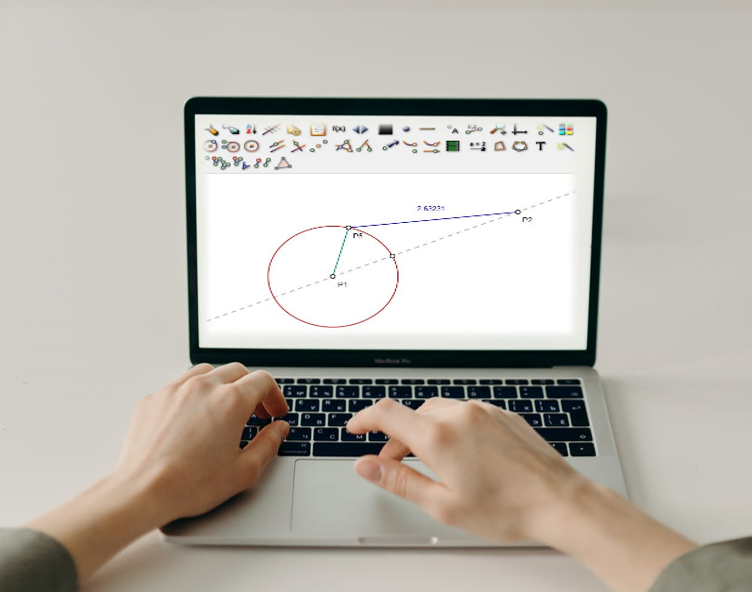
Begin with triangle
- Draw a line where you would like to build the new triangle.
- Use the compass tool to draw a circle with radius centered at . Label the intersection of the circle and line as point .
- Construct a new angle with side that is congruent to .
- Construct a new angle with side that is congruent to . Label the intersection of the two rays as point .
- Draw segments and .
From this we now have using angle-side-angle.
Congruent Triangles
In the diagram assume that lines and are parallel.
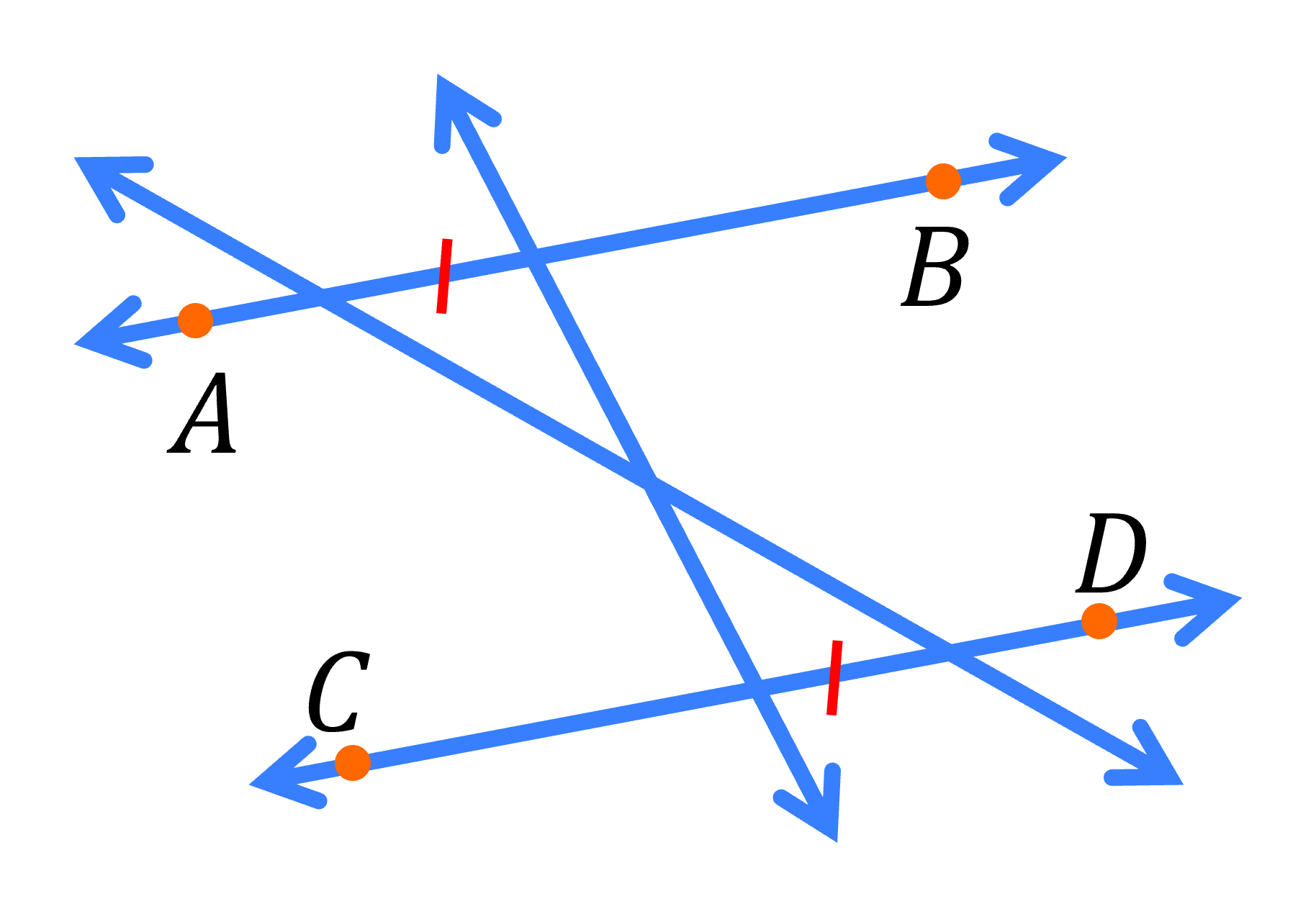
Can we conclude that the following triangles are congruent?
Congruent Triangles
Amelia is working on drawing stars for an art project. In the process she has drawn the following shape.
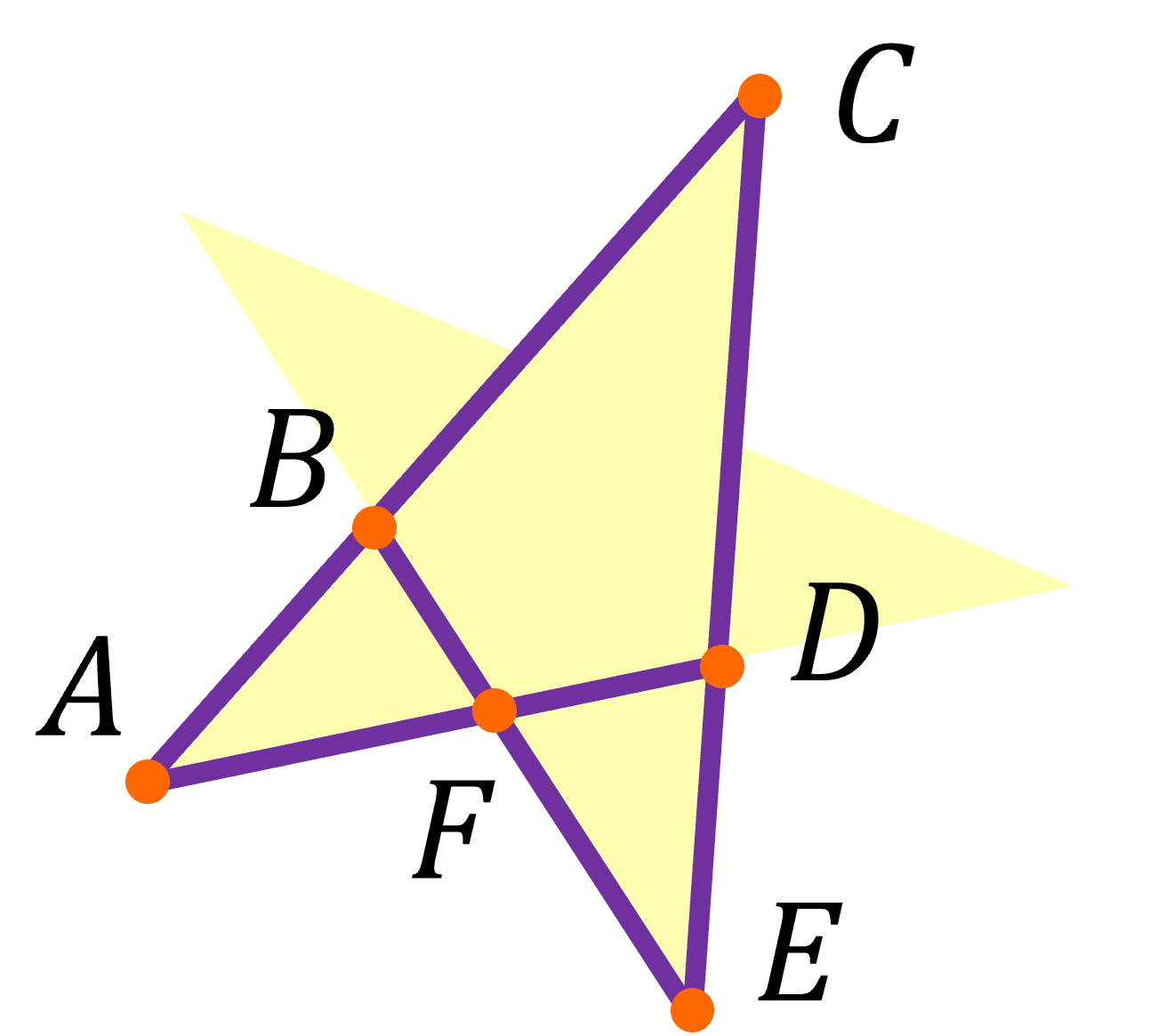
It appears that lengths of and are congruent.
Suppose she wants to conclude that and are congruent using ASA.
What information does she need?