Popular Courses
Grade 12 Advanced Functions
Ontario High School
Grade 12 Pre-Calculus/Functions
Canada High School
Algebra II
US High School
Math 30-1
Alberta High School
Pre-Calculus 12
British Columbia High School
MATH*1030
University of Guelph
MATH 201
Concordia University
MATH 1149
Ohio State University
MAC 1140
University of Florida
MATH 41
Pennsylvania State University
MATH 150
Texas A&M University
MAC 1105
Florida State University
MAT 012
University of California - Davis
MTH 116
Michigan State University
MTH 103A
Michigan State University
MAC 1147
University of Florida
MATH 140
San Diego State University
MAC 1140C
University of Central Florida
MA 15800
Purdue University
MAC 1114C
University of Central Florida
0:00 / 0:00
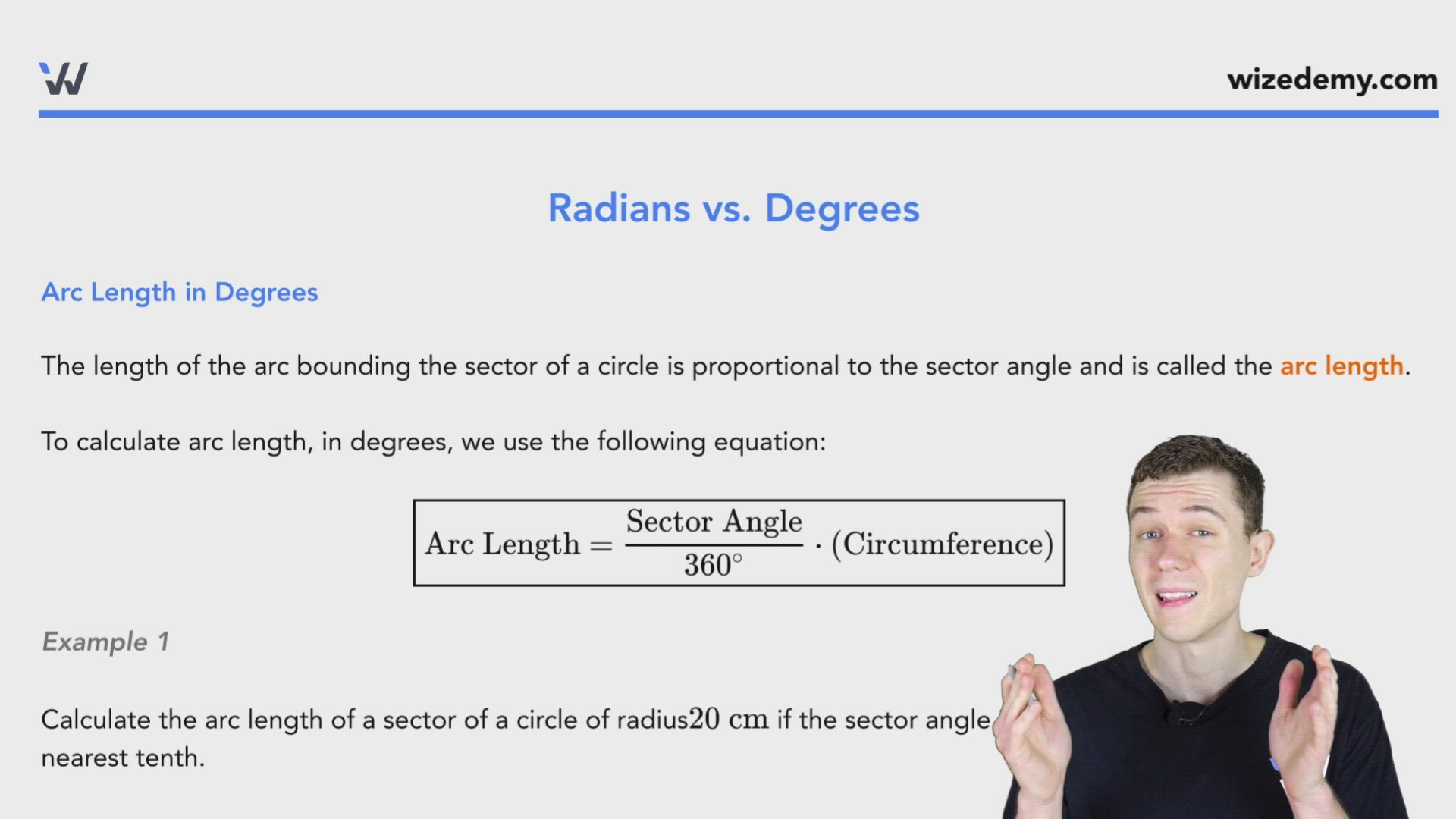
Radians vs. Degrees
Arc Length in Degrees
The length of the arc bounding the sector of a circle is proportional to the sector angle and is called the arc length.
To calculate arc length, in degrees, we use the following equation:
Example 1
Calculate the arc length of a sector of a circle of radius if the sector angle is . Round answer to the nearest tenth.
Up to this point, we’ve been measuring angles in degrees. However, just like how we can measure length in terms of meters or inches, there’s another way to measure angles that are more often used in physics and math applications: radians.
Arc Length in Radians
One radian is the measure of an angle that is subtended at the center of a circle by an arc equal in length to the radius of the circle.
Let's look at the following circle with radius ''.
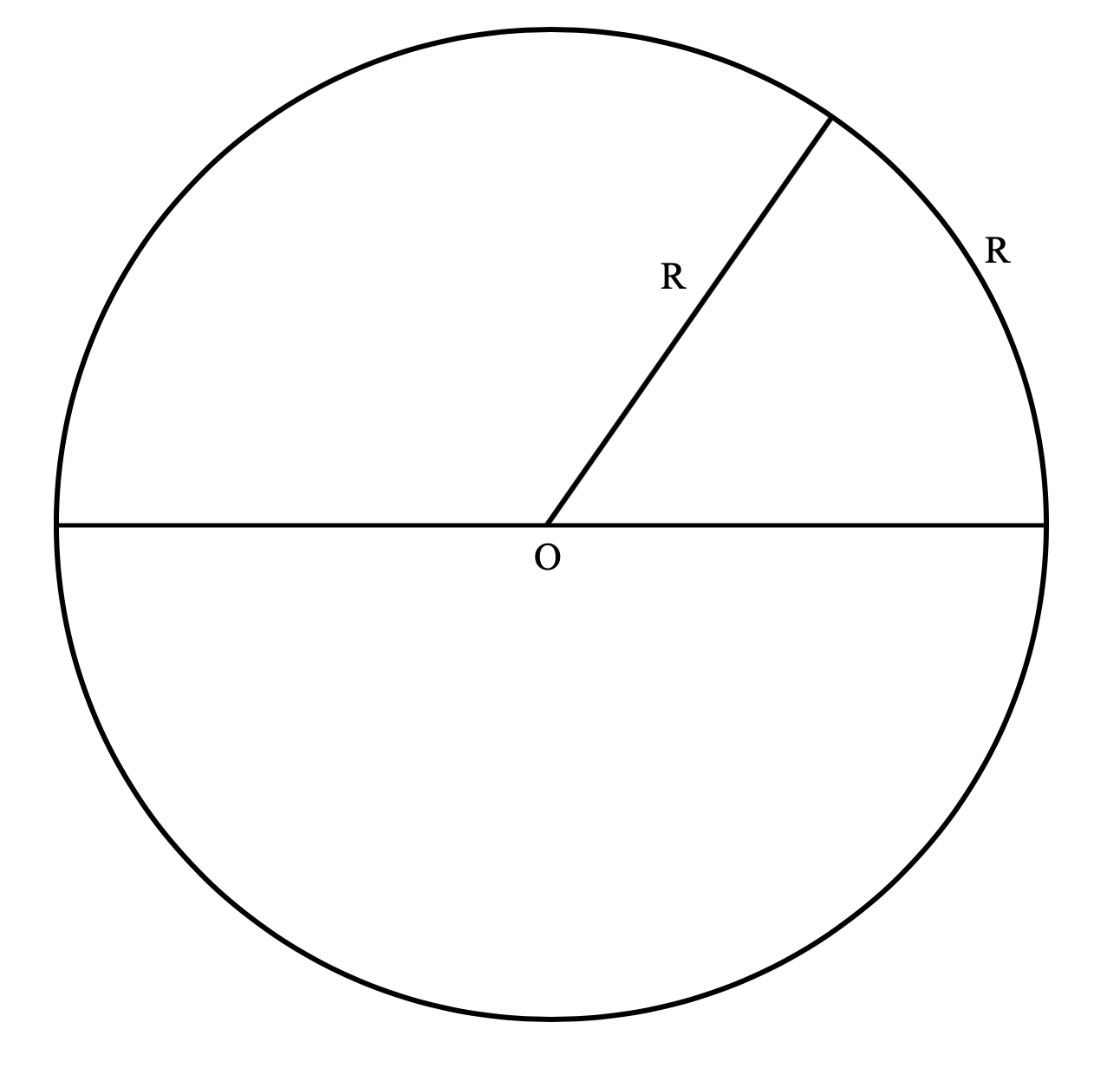
From the definition of arc length,
In conclusion,
Therefore, arc length, in radians, is:
where is in radians.
Example 2
A circle has a radius of and a arc length of . What is the sector angle, in radians?
0:00 / 0:00
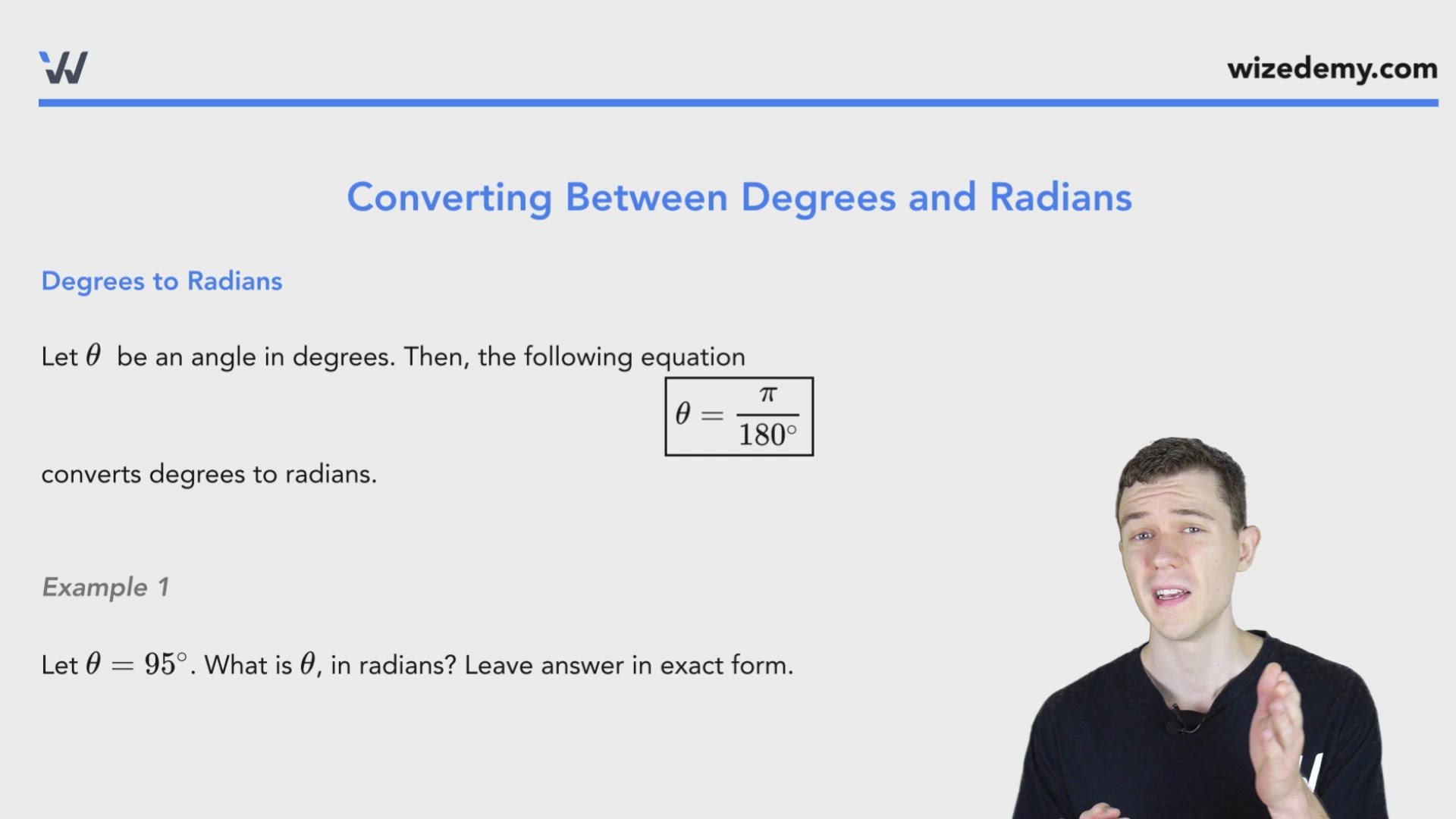
Converting Between Degrees and Radians
Degrees to Radians
Let be an angle in degrees. Then, the following equation
converts degrees to radians.
Example 1
Let . What is , in radians? Leave answer in exact form.
Radians to Degrees
Let be an angle in radians. Then, the following equation
converts radians to degrees.
Example 2
Let . What is , in degrees?
0:00 / 0:00
Example: Radians & Degrees
Calculate the arc length, in radians, of the sector of a circle with radius and a sector angle of . Round to the nearest hundredth of a centimeter.
First, find the angle in radians.
Then,
Practice: Radians & Degrees
Convert:
- to radians.
- to degrees.
Practice: Radians & Degrees
Match the correct angle in degrees to its equivalent angle in radians.
A.
B.
C.
D.
Practice: Radians & Degrees
Match the correct angle in radians to its equivalent angle in degrees.
A.
B.
C.
D.
Practice: Radians & Degrees
The arc length of a circle is and the radius is . What is the sector angle, in degrees? Round the answer to the nearest hundredth of a degree.
Practice: Radians & Degrees
A circle with center and arc length measuring long have angles , shown below.
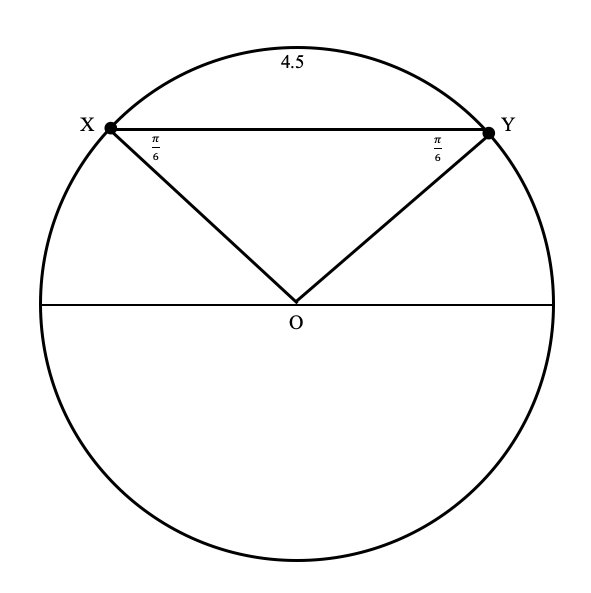
What is the radius of the circle?