Wize High School Grade 12 Pre-Calculus Textbook > Trigonometric Ratios (Radians)
Trigonometric Ratios in Radians
Popular Courses
Grade 12 Advanced Functions
Ontario High School
Grade 12 Pre-Calculus/Functions
Canada High School
Algebra II
US High School
Math 30-1
Alberta High School
Pre-Calculus 12
British Columbia High School
MATH 1LS3
McMaster University
MATH*1030
University of Guelph
MATH 144
University of Alberta
MATH 139
McGill University
MATH 201
Concordia University
MATH-1760
University of Windsor
MATH 1149
Ohio State University
MAC 1140
University of Florida
MATH 41
Pennsylvania State University
MATH 150
Texas A&M University
MAC 1105
Florida State University
MAT 012
University of California - Davis
MTH 116
Michigan State University
MTH 103A
Michigan State University
MAC 1147
University of Florida
0:00 / 0:00
Trigonometric Ratios in Radians
Let be a point that moves around a circle with radius and center
For any position of , the primary trigonometric ratios are:
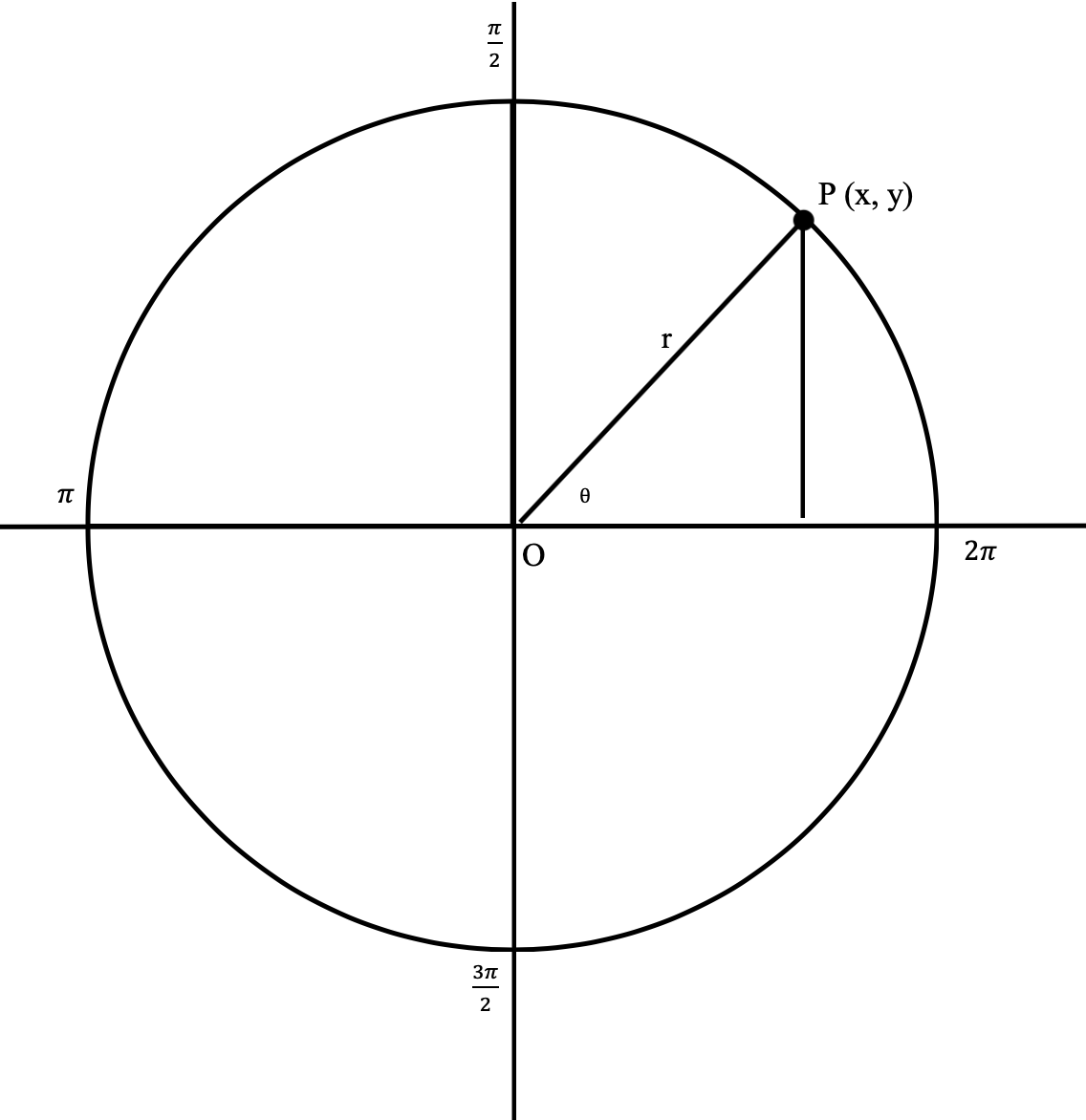
- is the terminal arm.
- The angle is in standard position, which means that one side of the angle is fixed along the positive x-axis and the vertex is located at the origin.
- The reference angle is the smallest angle that the terminal arm can make with the x-axis and can be determined in each quadrant.
- Quadrant II:
- Quadrant III:
- Quadrant IV:
- All coterminal angles to can be found by . Coterminal angles are angles that share the terminal side of an angle occupying the standard position.
Example 1
Let . Determine:
- The reference angle
- 4 coterminal angles: 2 positive, 2 negative
a. Let's sketch where is.
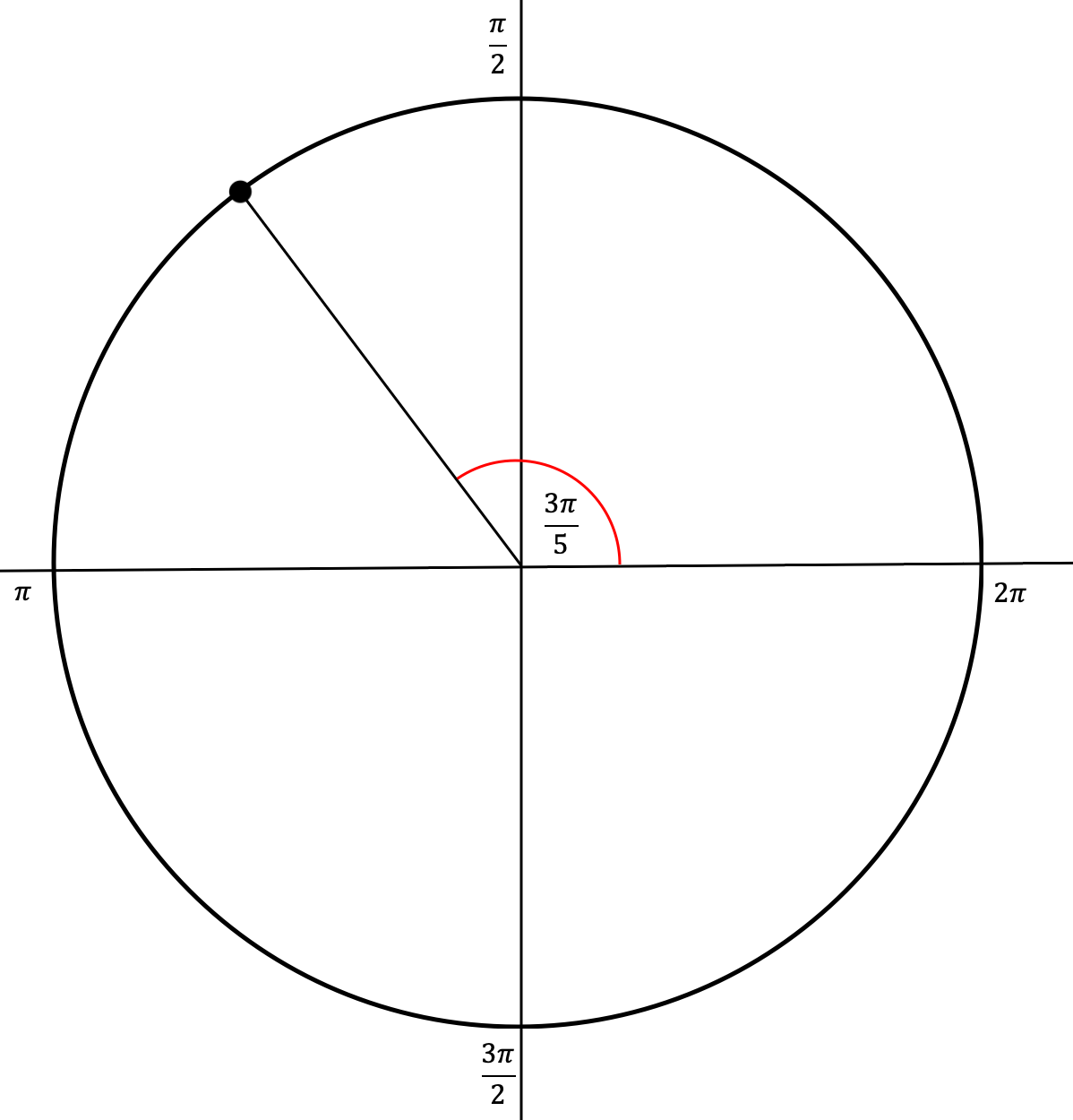
Therefore, the reference angle is:
b. 2 Positive Coterminal Angles:
2 Negative Coterminal Angles:
Example 2
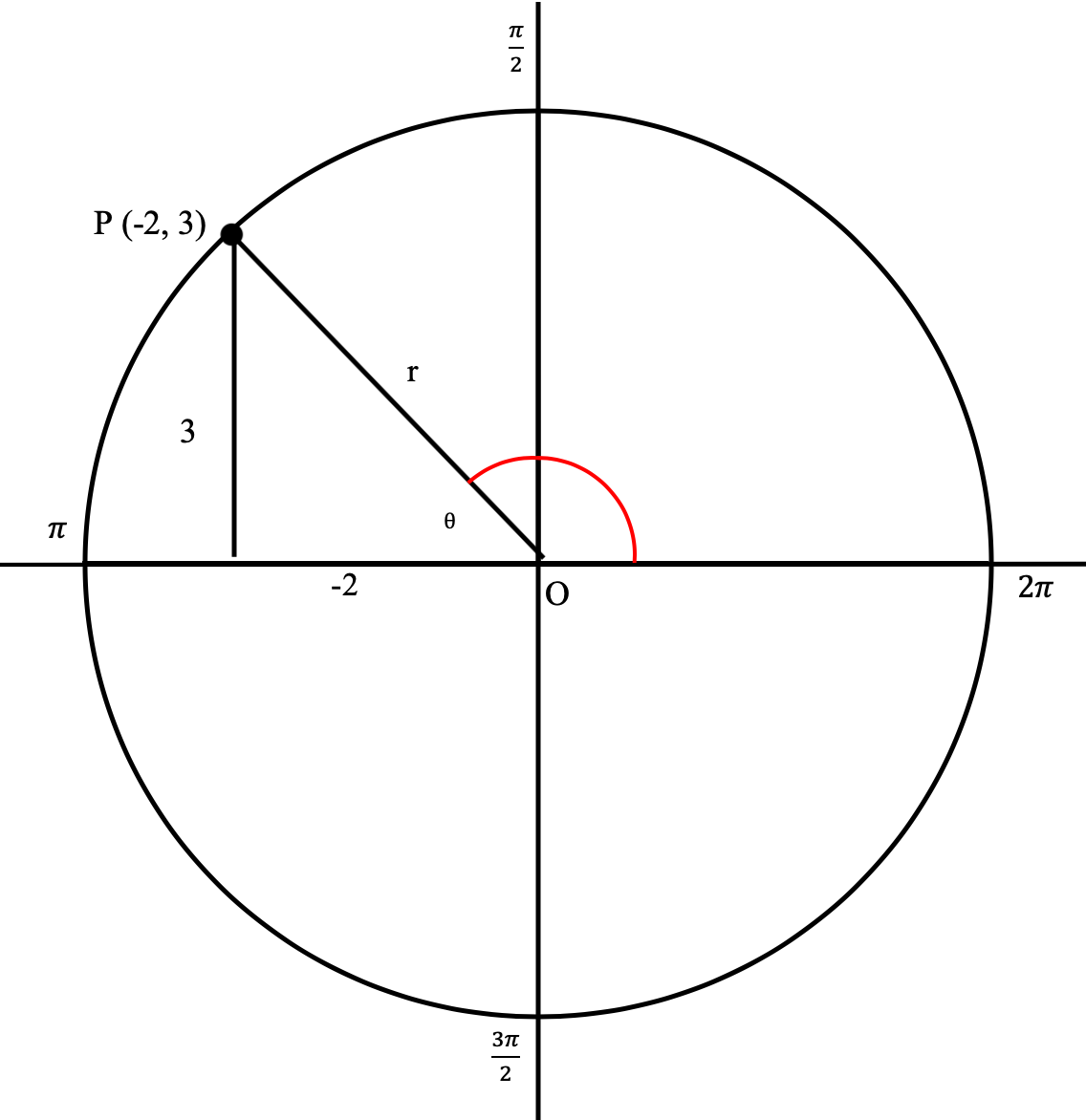
The point is on the terminal arm of an angle
Calculate the values of and leave in exact form.
0:00 / 0:00
Example: Trigonometric Ratios in Radians
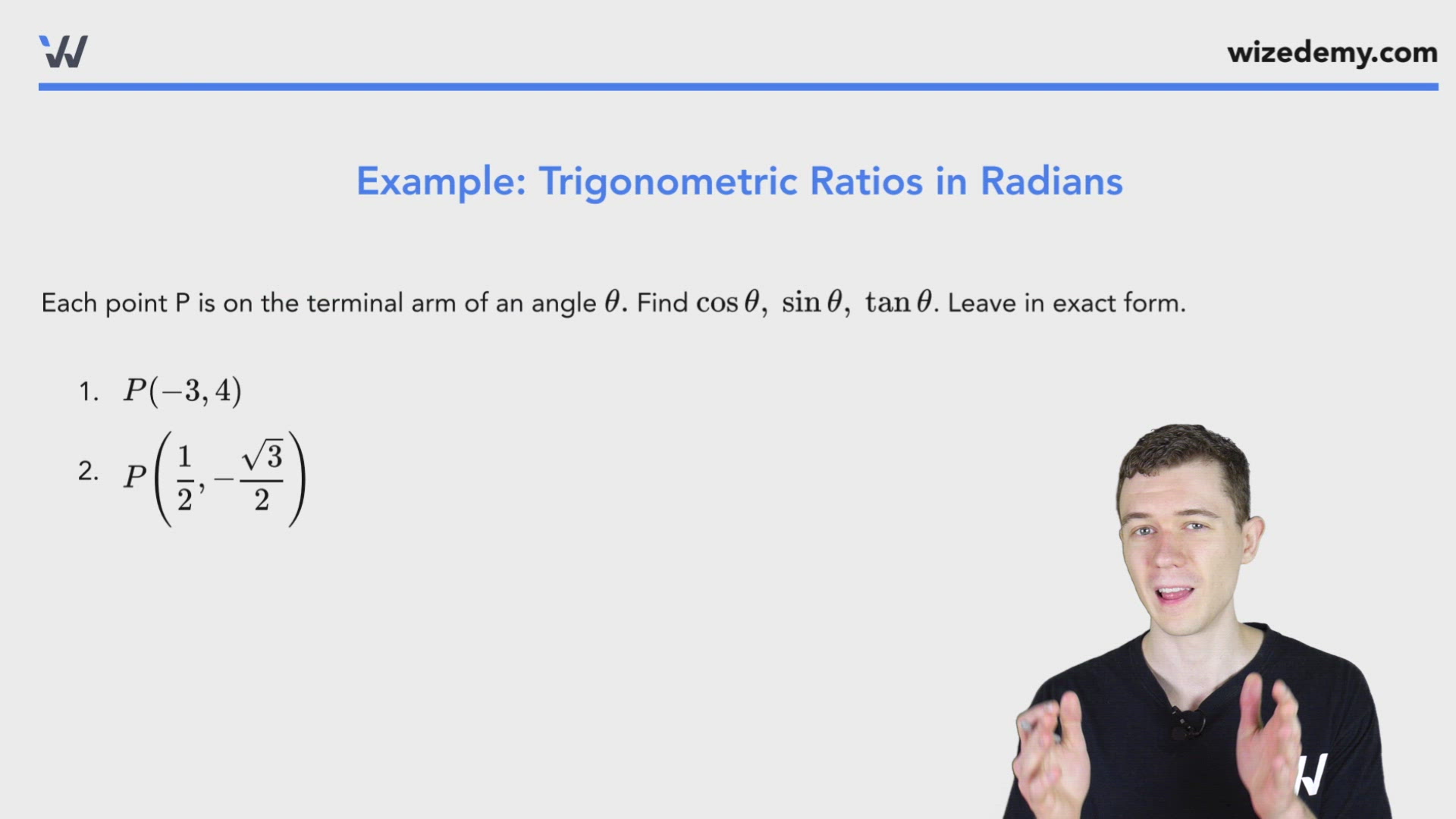
Each point P is on the terminal arm of an angle Find . Leave in exact form.
1.
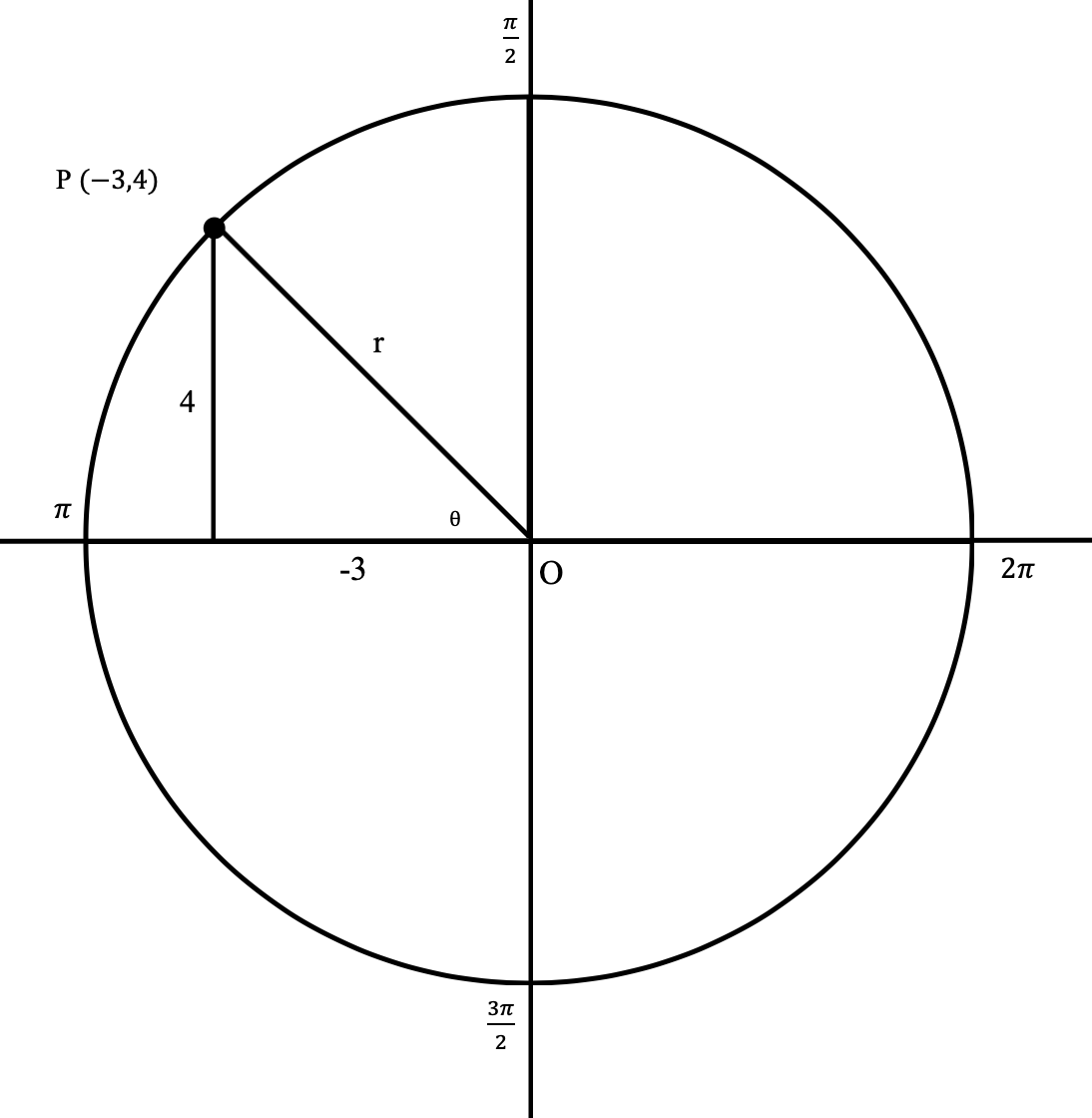
Find radius, r:
Find the trigonometric ratios:
2.
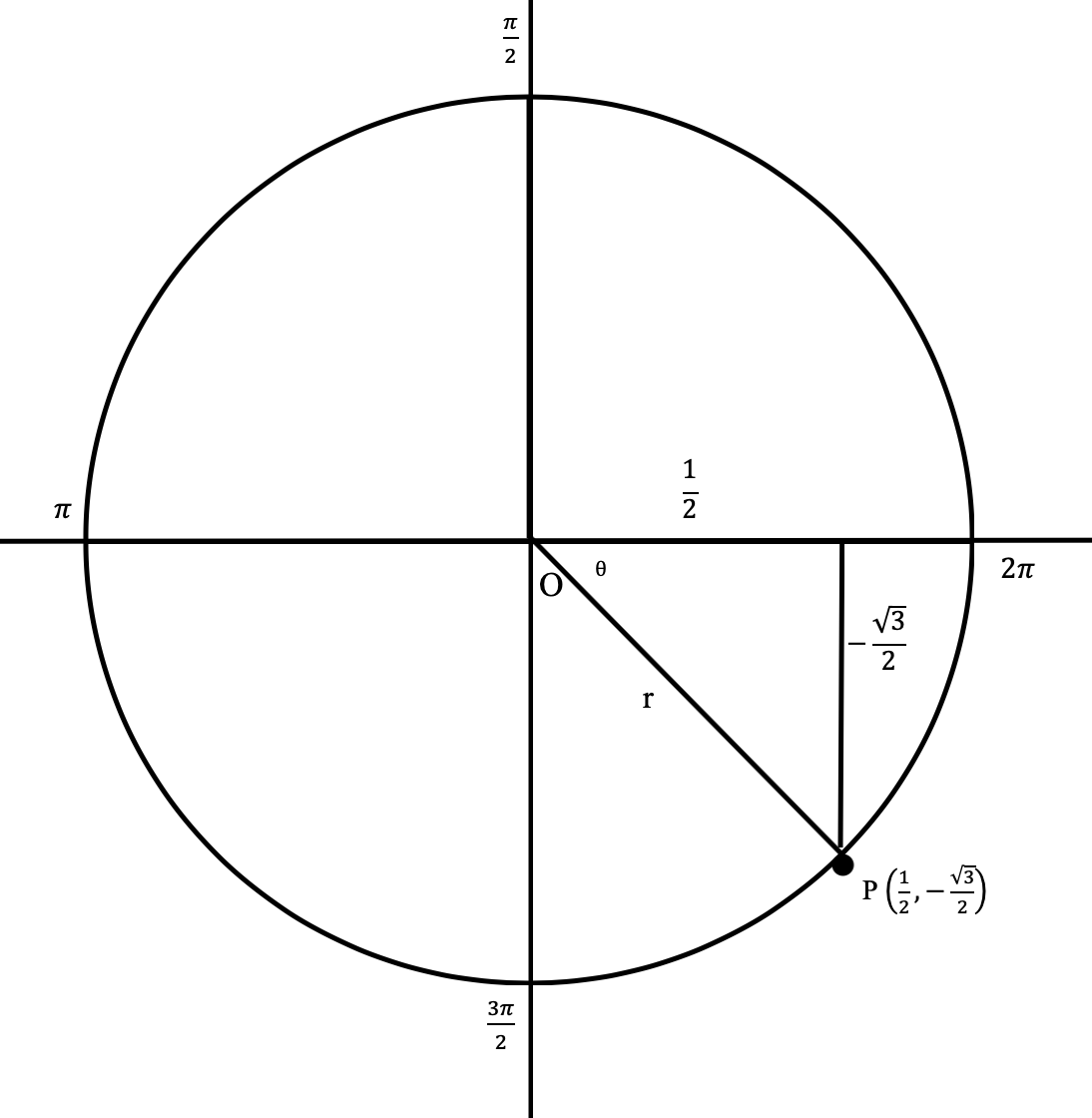
Find radius r:
Find the trigonometric ratios:
Practice: Trigonometric Ratios in Radians
Fill in the blanks.
If the initial angle is in radians, answer in radians.
If the initial angle is in degrees, answer in degrees.
Do NOT include units in your answer.
| a. | b. | ||
| c. | d. | ||
| e. | f. | ||
| g. | h. |
Practice: Trigonometric Functions of Angles in Standard Position,
Reference & Coterminal Angles
Let be a point on the terminal arm of some angle Find . Leave answer in exact form.
Practice: Trigonometric Functions of Angles in Standard Position
Reference & Coterminal Angles
Let and .
If , determine .