Vector Properties
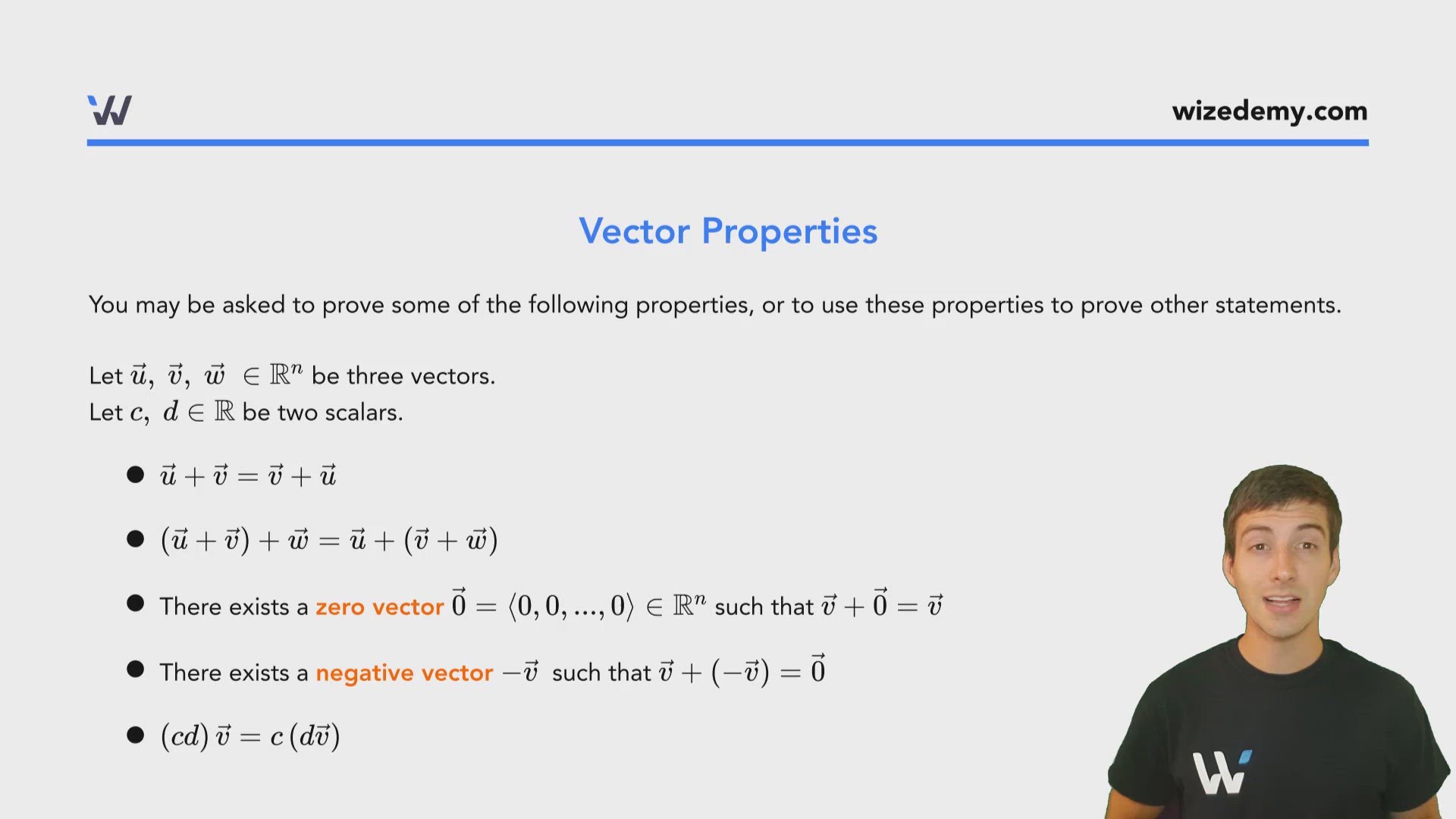
You may be asked to prove some of the following properties, or to use these properties to prove other statements.
Let be three vectors.
Let be two scalars.
- There exists a zero vector such that
- There exists a negative vector such that
Example: Proving Vector Properties
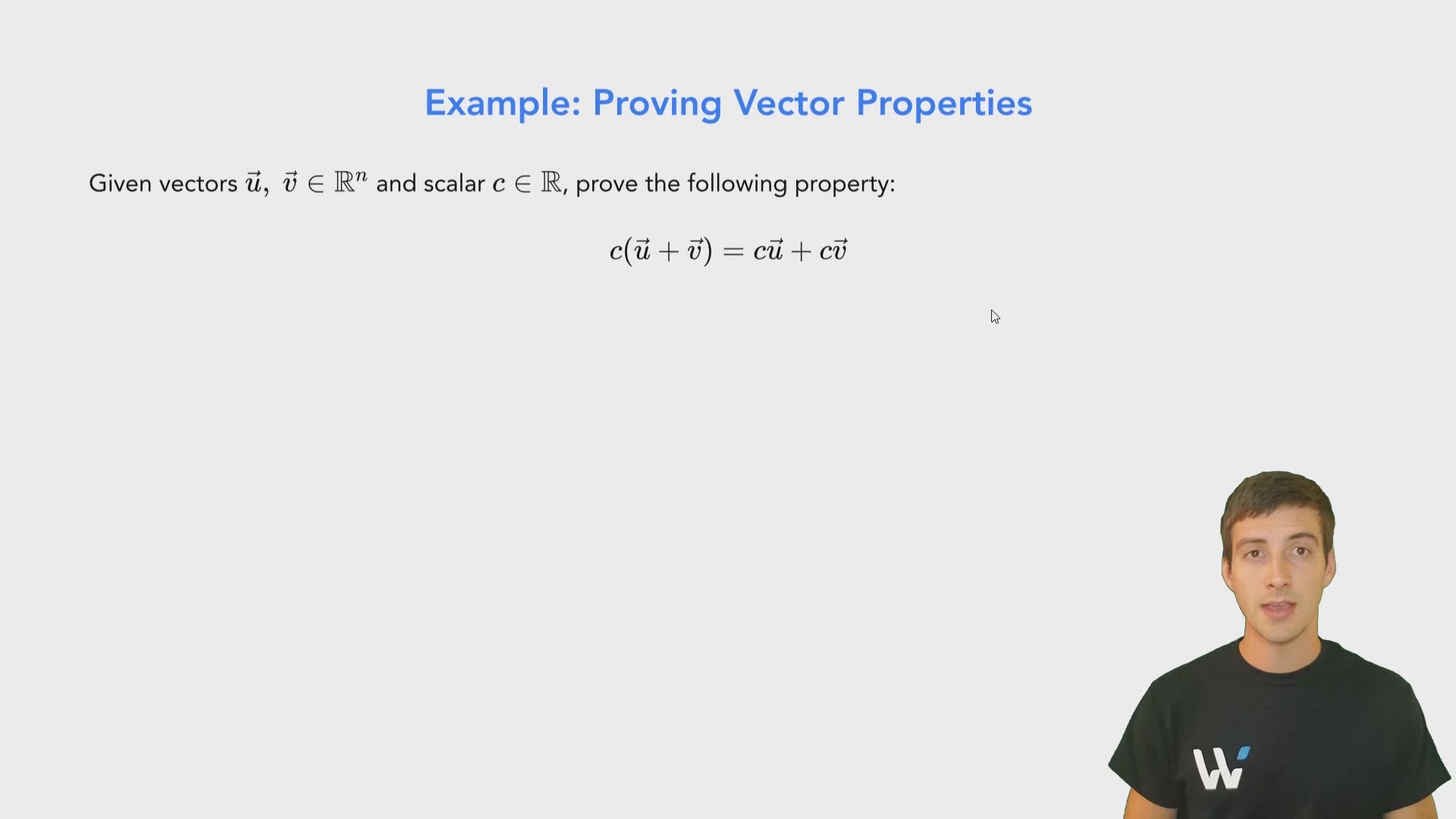
Given vectors and scalar , prove the following property:
Begin by writing out the components of and :
Then:
Example: Proving Vector Properties
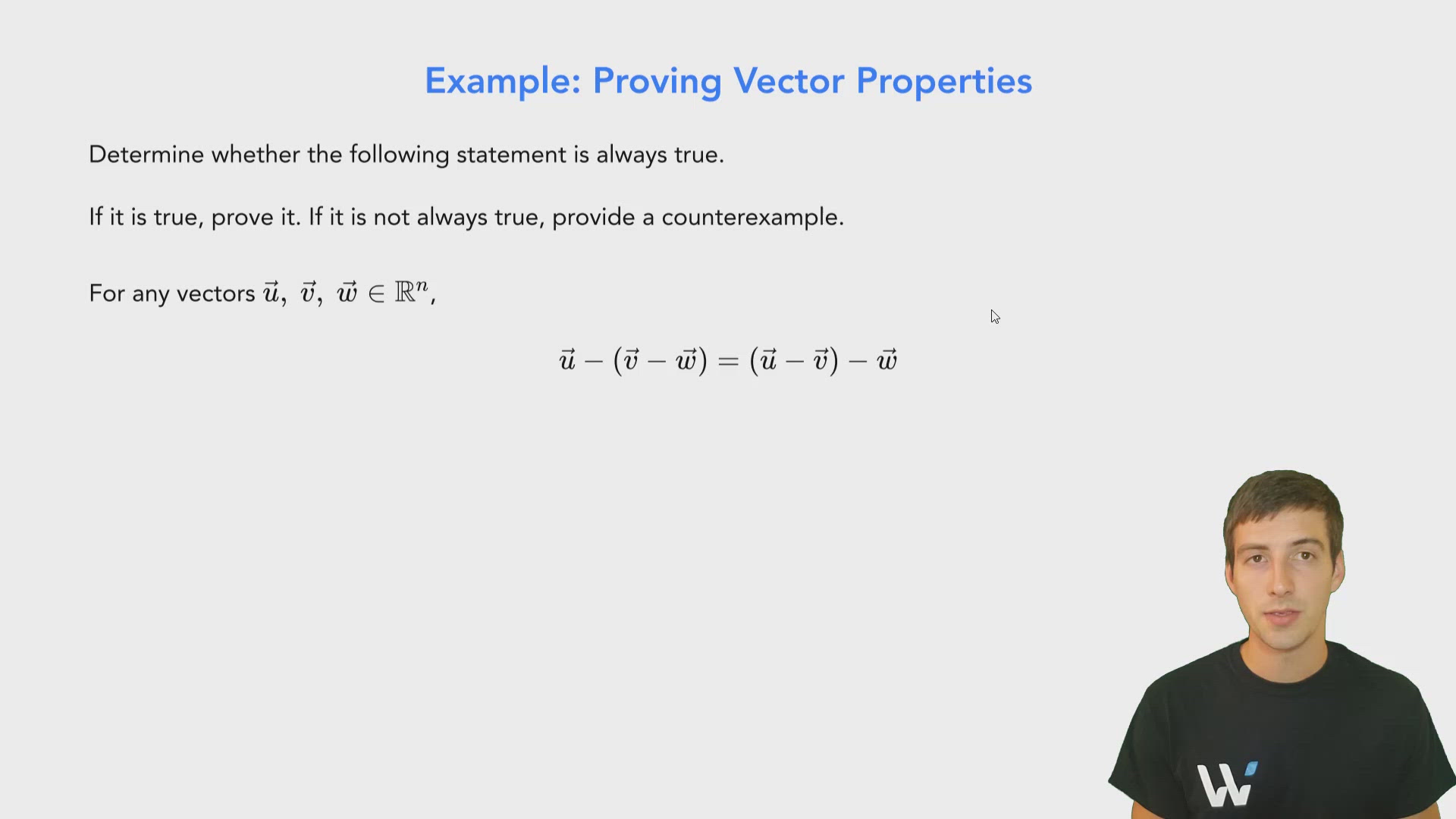
Determine whether the following statement is always true.
If it is true, prove it. If it is not always true, provide a counterexample.
For any vectors ,
Not always true.
Intuitively, we might think something isn't quite right when we try to distribute the negative on the LHS:
This leads us to think of a counterexample. Keep it simple with vectors in .
Let .
LHS
RHS
Since , this counterexample implies that the statement is not true in general.