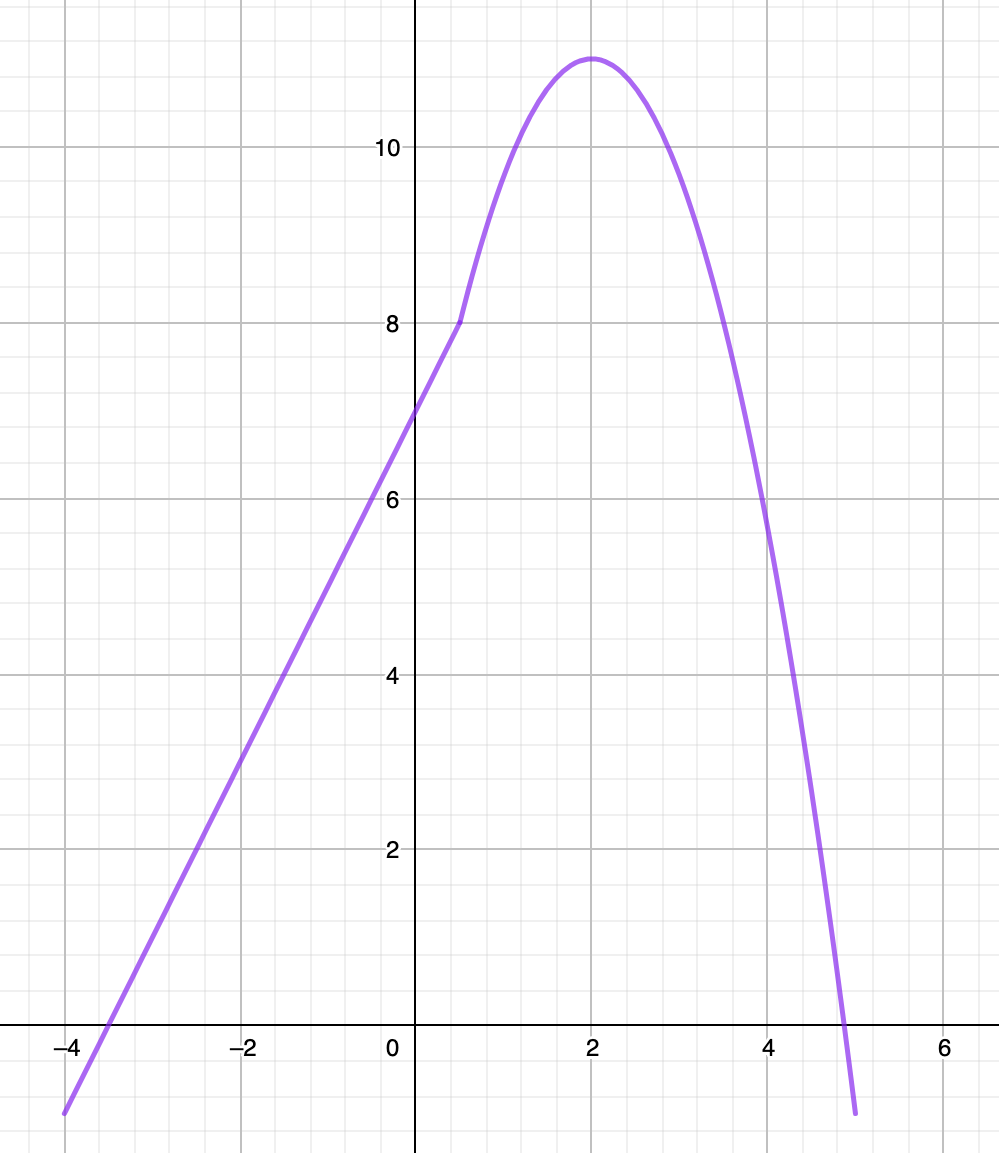
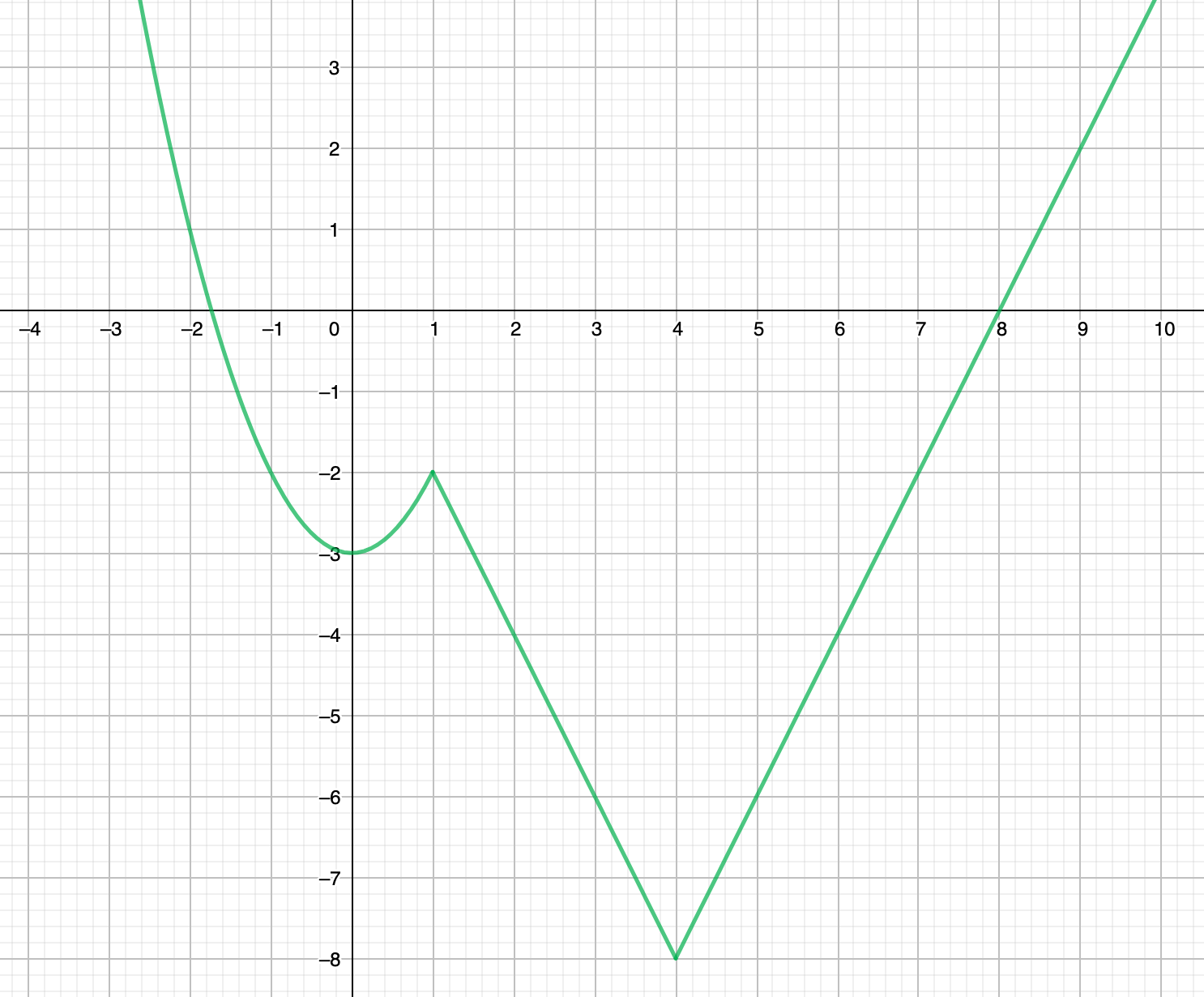
Combining Transformations
Let be the transformed function of where a, b, h, k are real numbers. Then:
If the point (x, y) is a point on the parent function f(x), then the point on the transformed function becomes:
Example
Let have the following table of values:
Let's look at the following transformations:
Part a.
The transformations that are applied are:
The table of values for the transformed function is:
Part b.
The transformations applied are:
The table of values for the transformed function is:
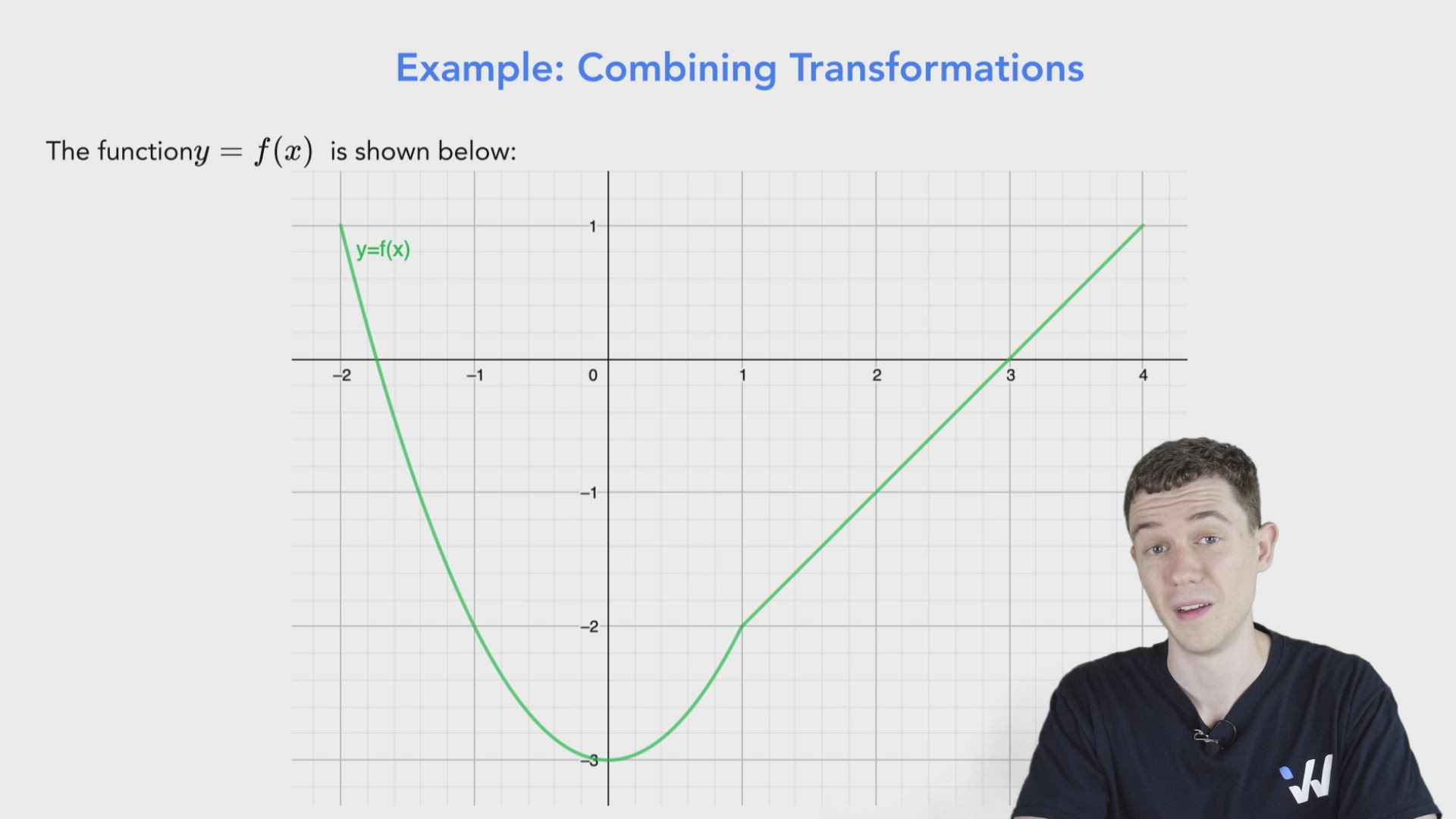
Example: Combining Transformations
The function is shown below:
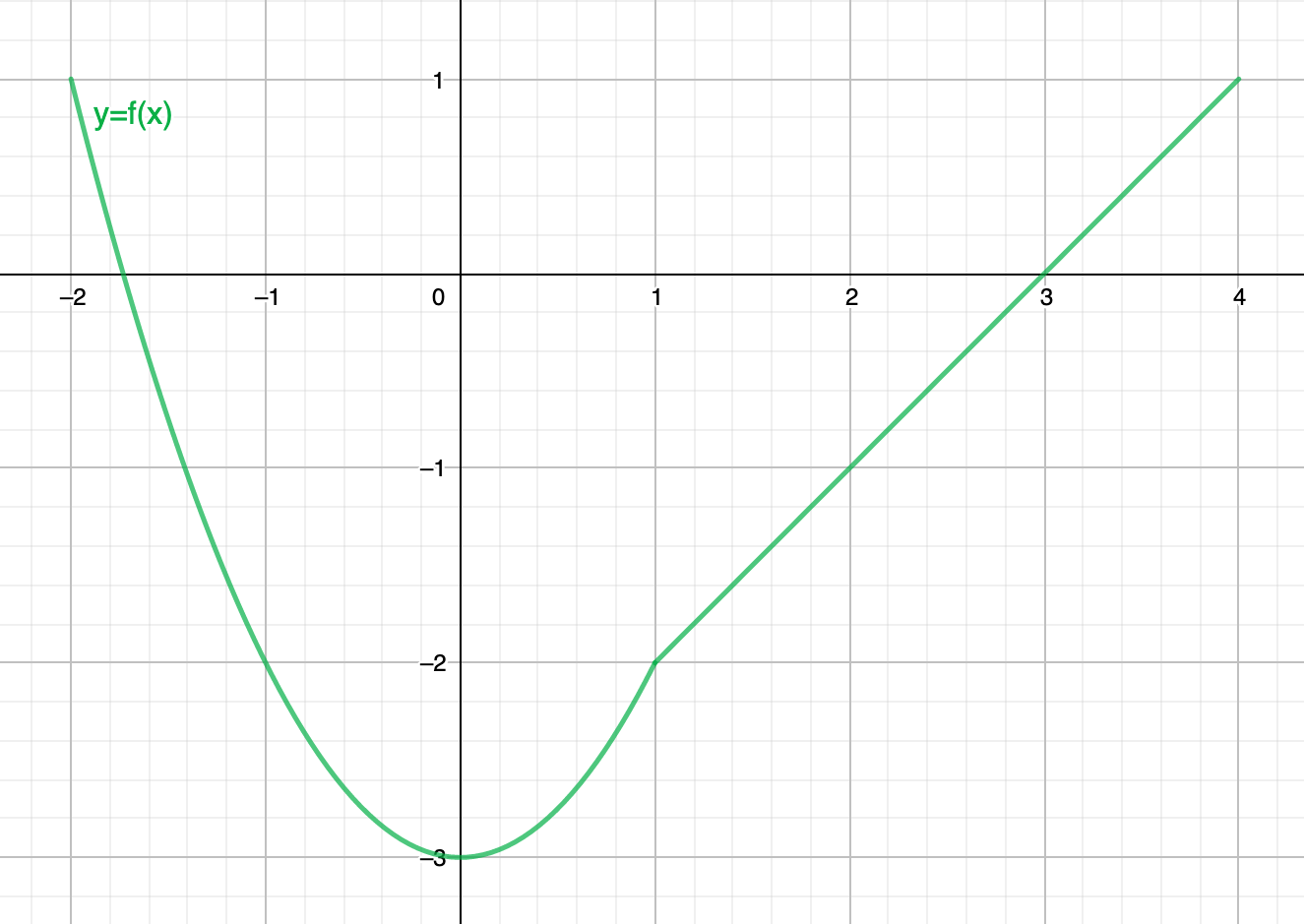
Graph identifying the transformations that occured.
The transformations that occurred are:
The table of values for and :
Sketch: