Wize High School Grade 12 Calculus Textbook > Derivative of Trigonometric Functions
Review of Trig Functions
Popular Courses
Find My Course
0:00 / 0:00
Review of Trigonometric Functions
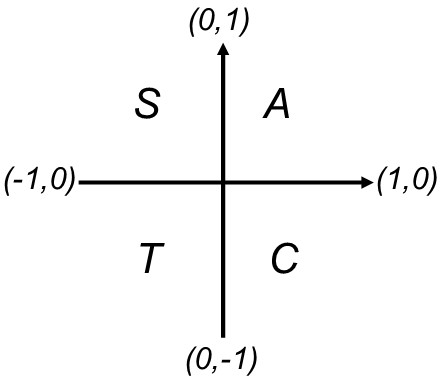
SOH CAH TOA CAST Rule

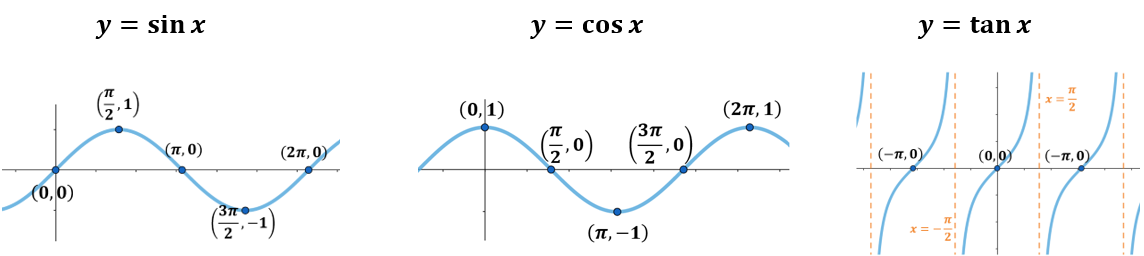
Trig Graphs
Special Triangles

Finding Exact Trig Values
- Draw out the angle given
- Identify the relative acute angle (RAA)--angle made with the x-axis
- Find the trig ratio of the RAA using special triangles
- Make the trig ratio positive or negative based on the CAST rule
Example:
Practice: Limits of Trig Functions
Use the trig graphs to evaluate the following limits.
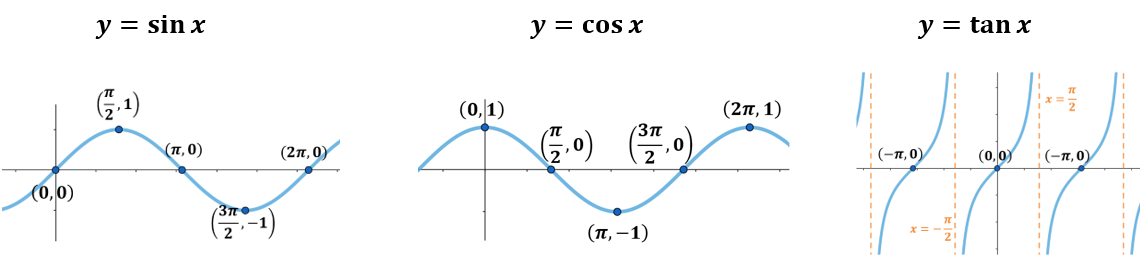
If the limit approaches or , enter or instead of DNE.