Wize Grade 11 Mathematics Textbook > Transformations on Functions
Applying Transformations
Popular Courses
Find My Course
0:00 / 0:00
Applying Transformations
Applying Transformations
More than one transformation can be applied to any function. The graph can look very different from the original, but usually maintains its basic shape, or distinctive features.
Example 1
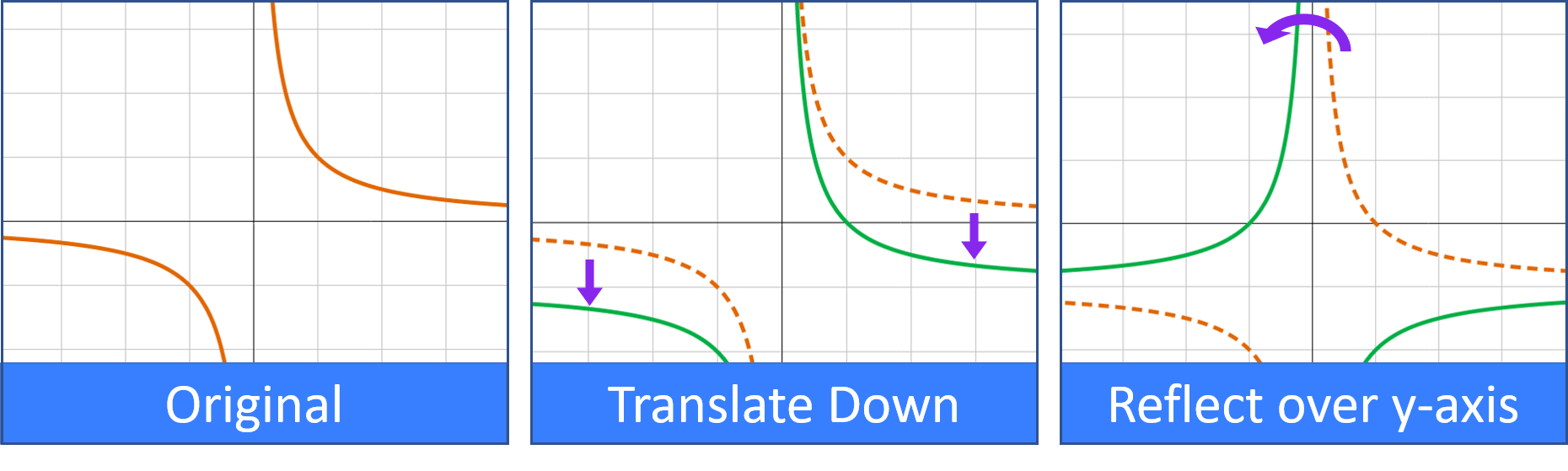
Applying Transformations from the equation
When graphing transformations by using an equation, its important to write the equation in a form so that all the transformations can be seen.
- Rewrite the equation in the form
- Identify the original function
- List all the transformations
- Apply the transformations to the original graph
Order of Transformations
The order that transformations are applied can have an effect on the new graph, specifically when it comes to reflections.
It is recommended that you apply transformations in the following order
- reflect horizontally, then stretch or compress
- translate left or right
- reflect vertically, then stretch or compress
- translate up or down
Watch Out!
Transformations that effect the graph horizontally work opposite of your intuition.
Example 2
For each equation, describe the original function, and the type of transformation.
List the transformations in the order they should be applied.
1.
- Function:
- Transformations: Translate right 1 unit Reflect over x-axis Vertically stretch by a factor of 2
2.
- Function:
- Transformations: Reflect over y-axis Horizontally stretch by a factor of 3 Translate right 2 units
3.
- Function:
- Transformations: Translate left 1 unit Vertically stretch by a factor of 4 Translate down 3 units
0:00 / 0:00
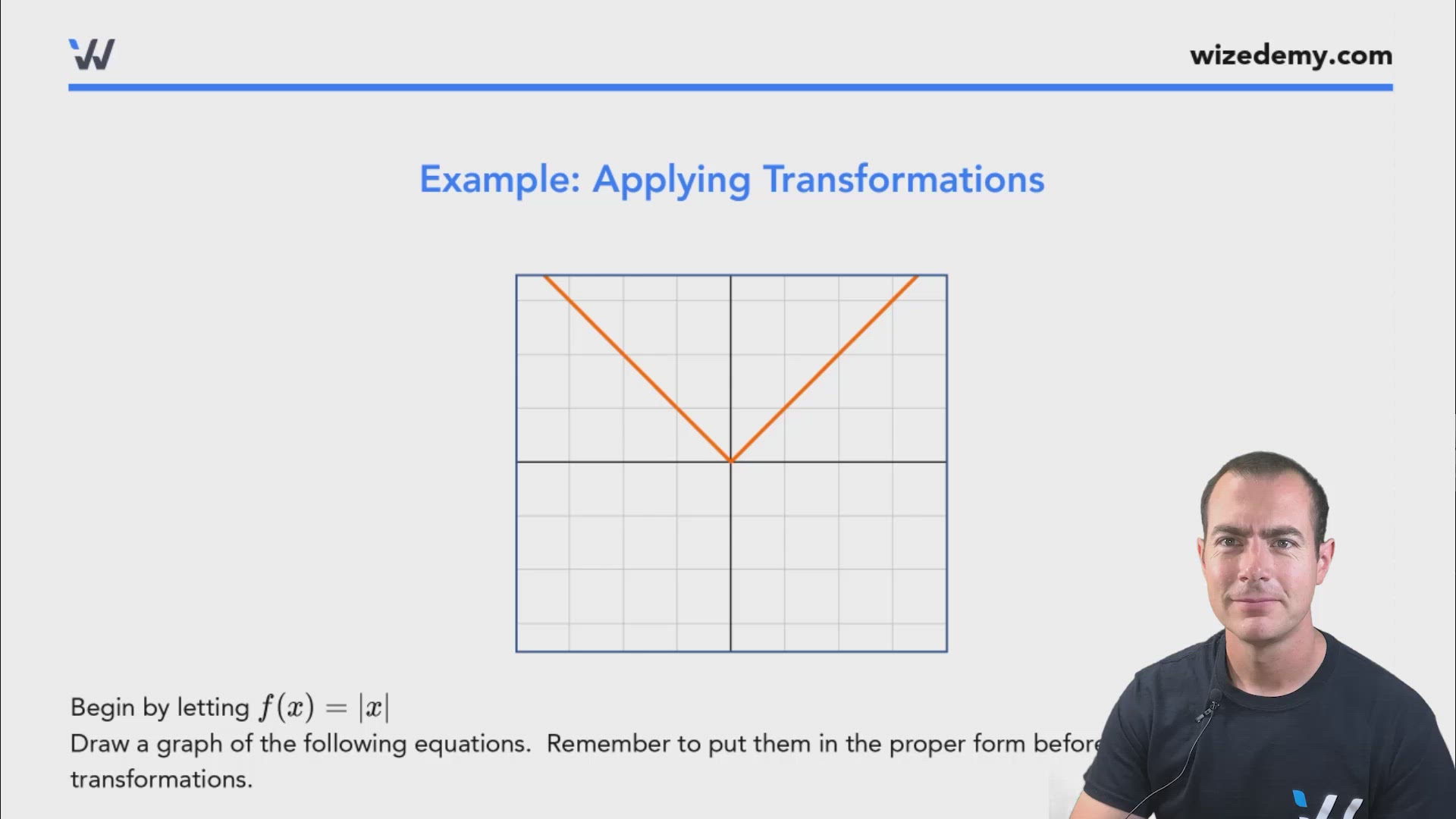
Example: Applying Transformations
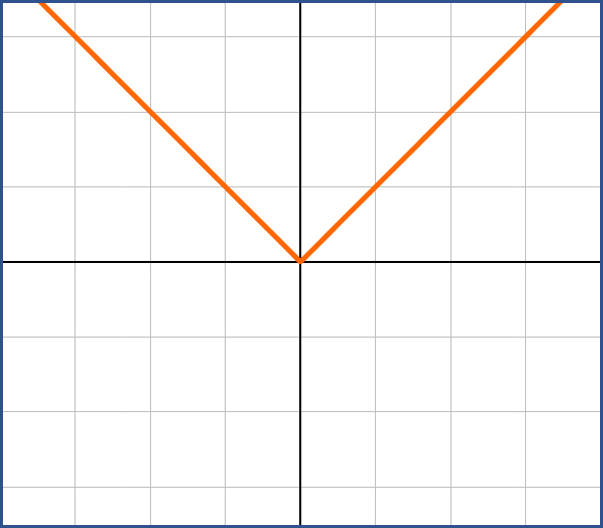
Begin by letting
Draw a graph of the following equations. Remember to put them in the proper form before trying to list the transformations.
1.
- This is already in the proper form
- -3 will translate the graph right 3 units
- 2 will stretch the graph vertically by a factor of 2

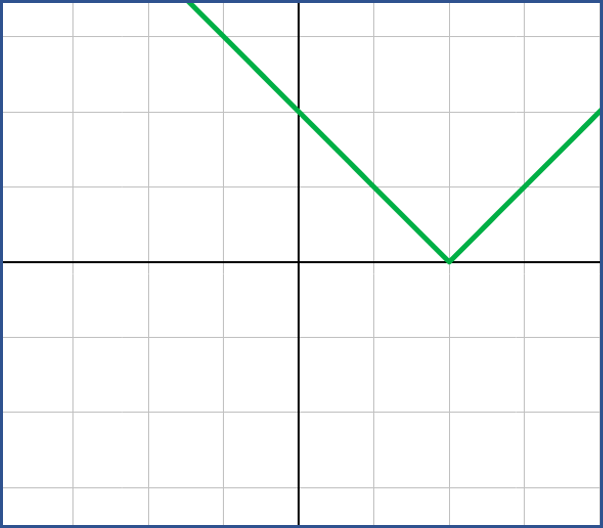
2.
- Factoring on the inside allows us to put this in the form
- The -1 on the inside will reflect it over the y-axis
- The -2 will then translate the graph right 2 units
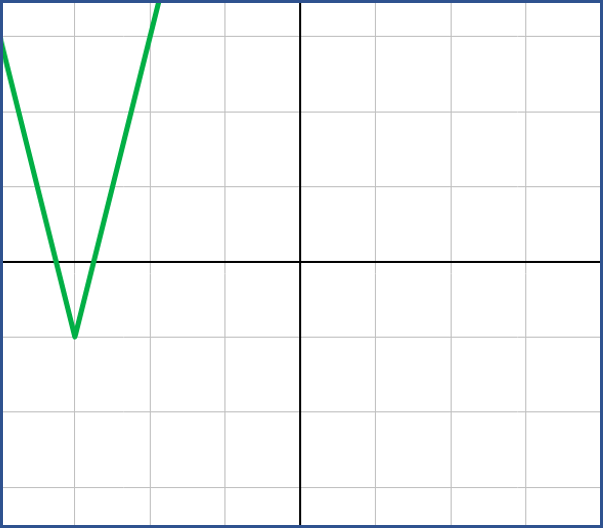
3.
- Distributing the 2 on the outside, and factoring the 2 on the inside puts this in the form
- The 2 on the inside will compress the graph horizontally by a factor of 2
- The 3 on the inside will translate the graph left 3 units
- The 2 on the outside will stretch the graph vertically by a factor of 2
- The -1 on the outside will translate the graph down 1 unit
Practice: Applying Transformations
In the following equation there are several transformations
Let , and complete the table describing the different values, direction, and type of transformation.
| Value | Direction | Transformation |
| 2 | Horizontal | Translation |
| 3 | Stretch | |
| 4 | Horizontal | |
| 5 |
Practice: Applying Transformations
In the following equation there are several transformations
What is the correct order that these transformations should be applied to the function ?
Practice: Applying Transformations
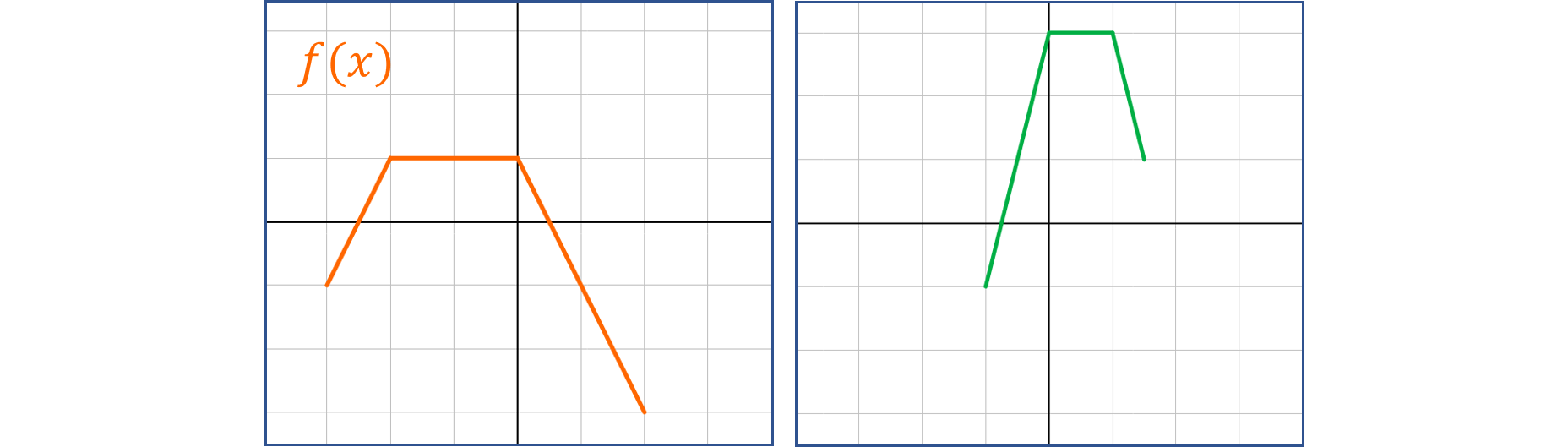
The graph of a function is given as well as its transformed graph.
Write the equation of the transformed graph.