
Review of Linear Equations
What is a Linear Equation?
A Linear Equation is any equation that can be written in the form where the values of and are real numbers.
When a linear equation is written in this way, we say it is in Slope-Intercept Form.
Example 1
The following are all Linear Equations. .
- , this can be rearranged to become
- , this can be rearranged to become
Graphs of Linear Equations
The graph of a Linear Equation has the basic shape of a completely straight line. This line continues on in both directions infinitely.

Slope:
- This characterizes the steepness of a line.
- In slope-intercept form the slope is the number associated with the variable.
y-intercept:
- This is where the graph of the line cross the y-axis.
- In the slope-intercept form , the slope is the number .
Example 2
Identify the slope and the y-intercept in the following linear equations.
1.
Slope: 4
y-intercept: 5
2.
Slope:
y-intercept: 3
3.
First we can rearrange the equation to become .
Slope: 2
y-intercept: 4
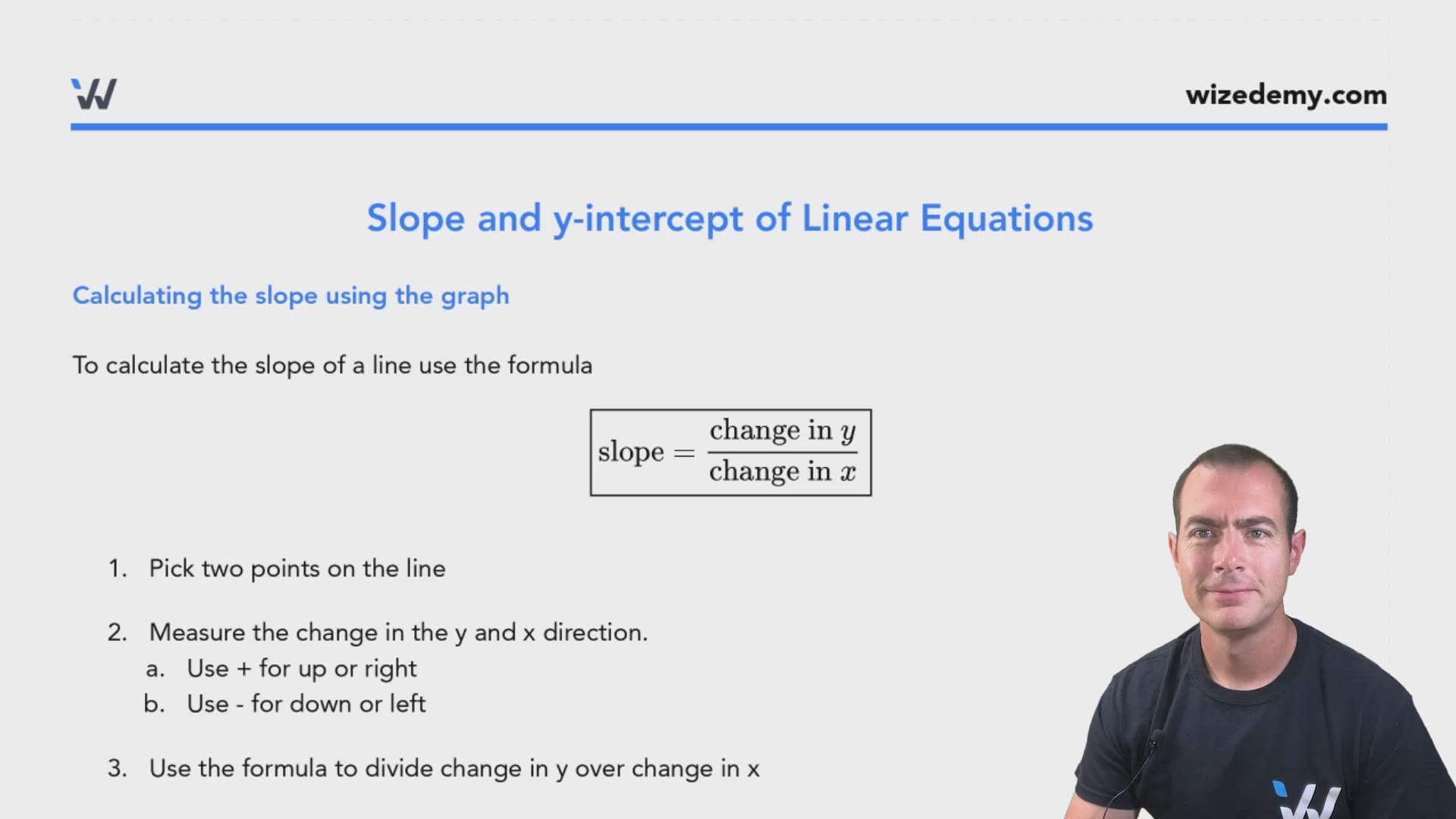
Slope and y-intercept of Linear Equations
Calculating the slope using the graph
To calculate the slope of a line use the formula
- Pick two points on the line
- Measure the change in the y and x direction.
- Use + for up or right
- Use - for down or left
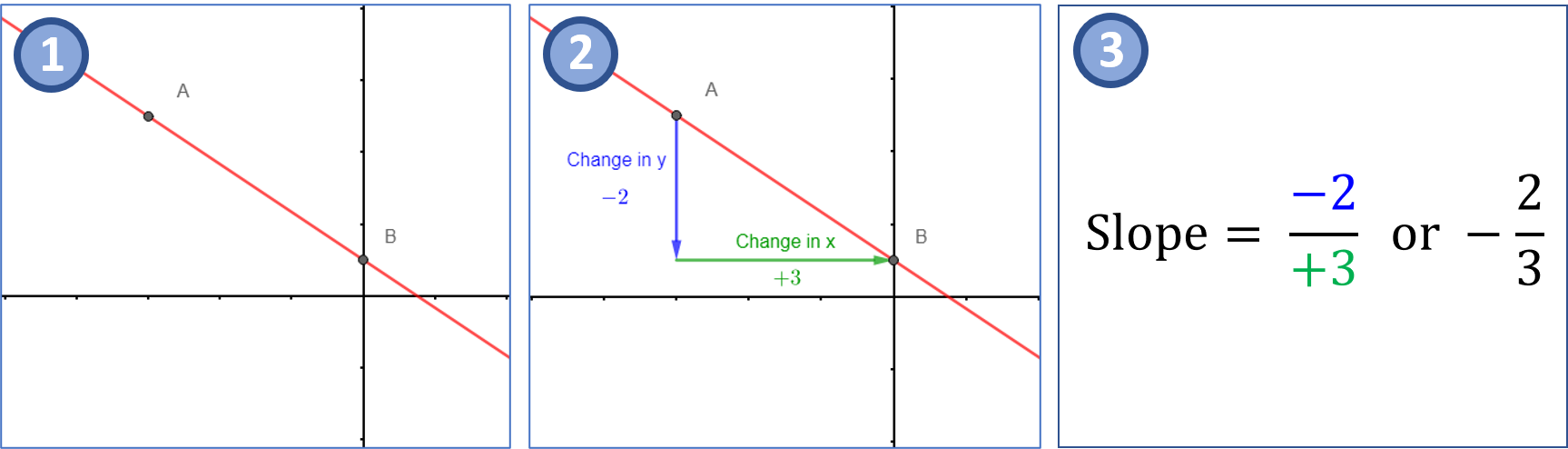
- Use the formula to divide change in y over change in x
Example 1
Calculating the y-intercept the graph
To calculate the y-intercept we can usually see where the graph of the linear equation crosses the y-axis. Even though this is a point, only the y-value is used in describing the y-intercept.
Example 2
