Transformations on Polynomials
Transformations
If the polynomial can be written in the form
then we can graph the polynomial using transformations on the basic polynomial.
Example 1
Graph the following polynomials.
1.
- The basic polynomial is
- The 1 on the inside will translate the graph right one unit
- The 2 on the outside will stretch it vertically by a factor of 2
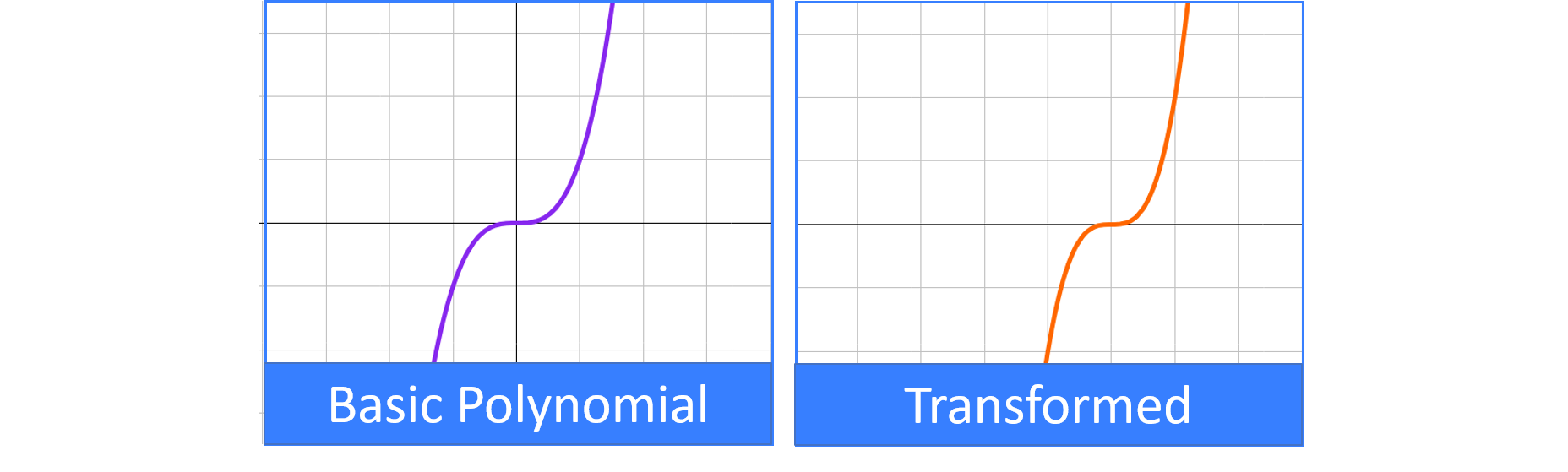
2.
- The basic polynomial is
- The 2 on the inside will translate the graph left 2 units
- The -1 on the outside will reflect it over the x-axis
- The +2 on the outside will translate the graph up 2 units
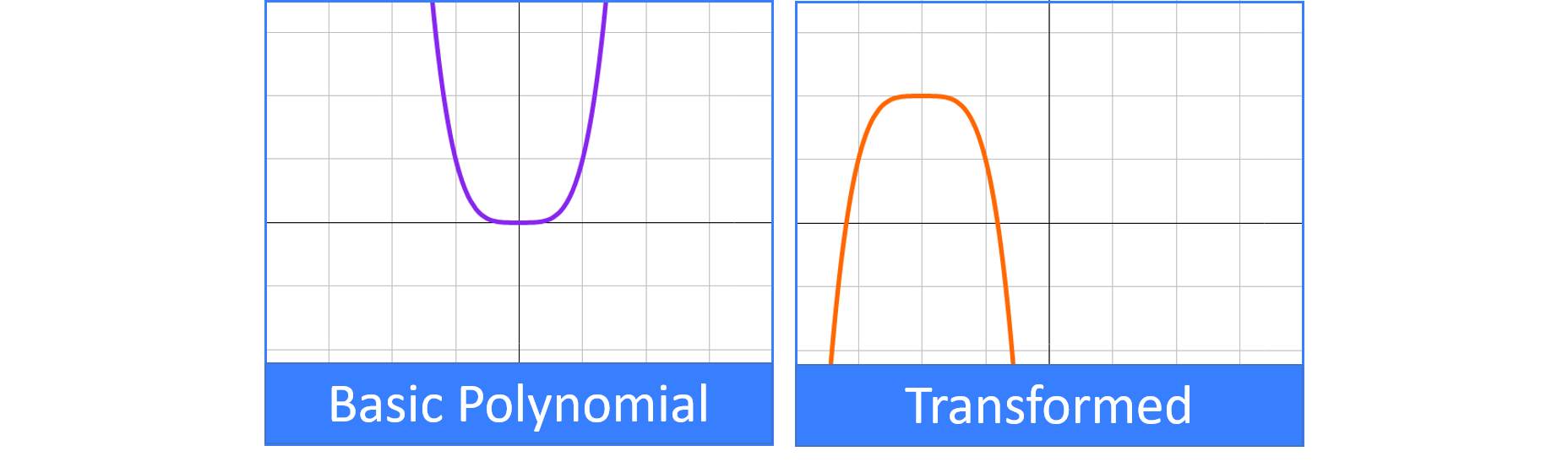
Example: Graphing Polynomials using Transformations
The following graph comes from transforming the polynomial
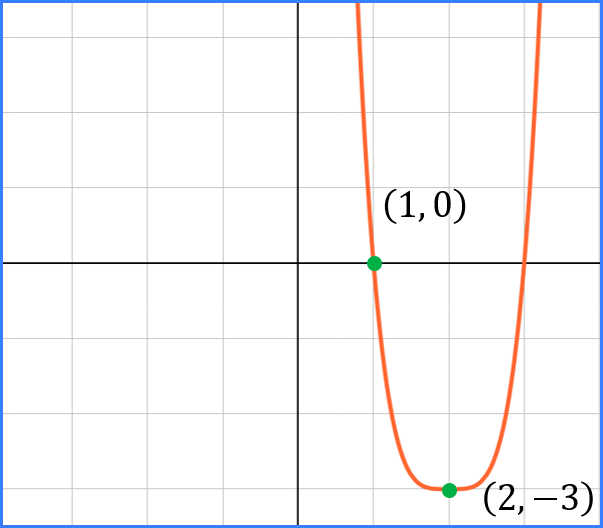
1. What transformations can you read from the graph.
It appears that the graph has been
- translated right by 2 units
- translated down by 3 units
- it maybe stretched, but it is unclear by how much
2. Write the equation of the transformed function. Begin the equation with .
From the transformations we know that
To find the value of we can use information from the point
This gives us that
To the equation from the graph is