Wize High School Grade 12 Pre-Calculus Textbook > Trigonometric (Sinusoidal) Graphs
Equivalent Sinusoidal Functions (Radians)
Popular Courses
Grade 12 Advanced Functions
Ontario High School
Grade 12 Pre-Calculus/Functions
Canada High School
Algebra II
US High School
Math 30-1
Alberta High School
Pre-Calculus 12
British Columbia High School
MATH 201
Concordia University
MATH 1149
Ohio State University
MAC 1140
University of Florida
MATH 41
Pennsylvania State University
MATH 150
Texas A&M University
MAC 1105
Florida State University
MAT 012
University of California - Davis
MTH 103A
Michigan State University
MTH 116
Michigan State University
MAC 1147
University of Florida
MATH 140
San Diego State University
MA 15800
Purdue University
MAC 1140C
University of Central Florida
MAC 1114C
University of Central Florida
MATH 102
California State University - Northridge
0:00 / 0:00
Equivalent Sinusoidal Functions (Radians)
Equivalent sinusoidal functions have many equivalent expressions because of their periodic behavior.
In order for 2 or more expressions to be equivalent, their graphs must be superimposable, which means that they lie right on top of each other.
Using Principal Angles to Write Equivalent Sinusoidal Functions
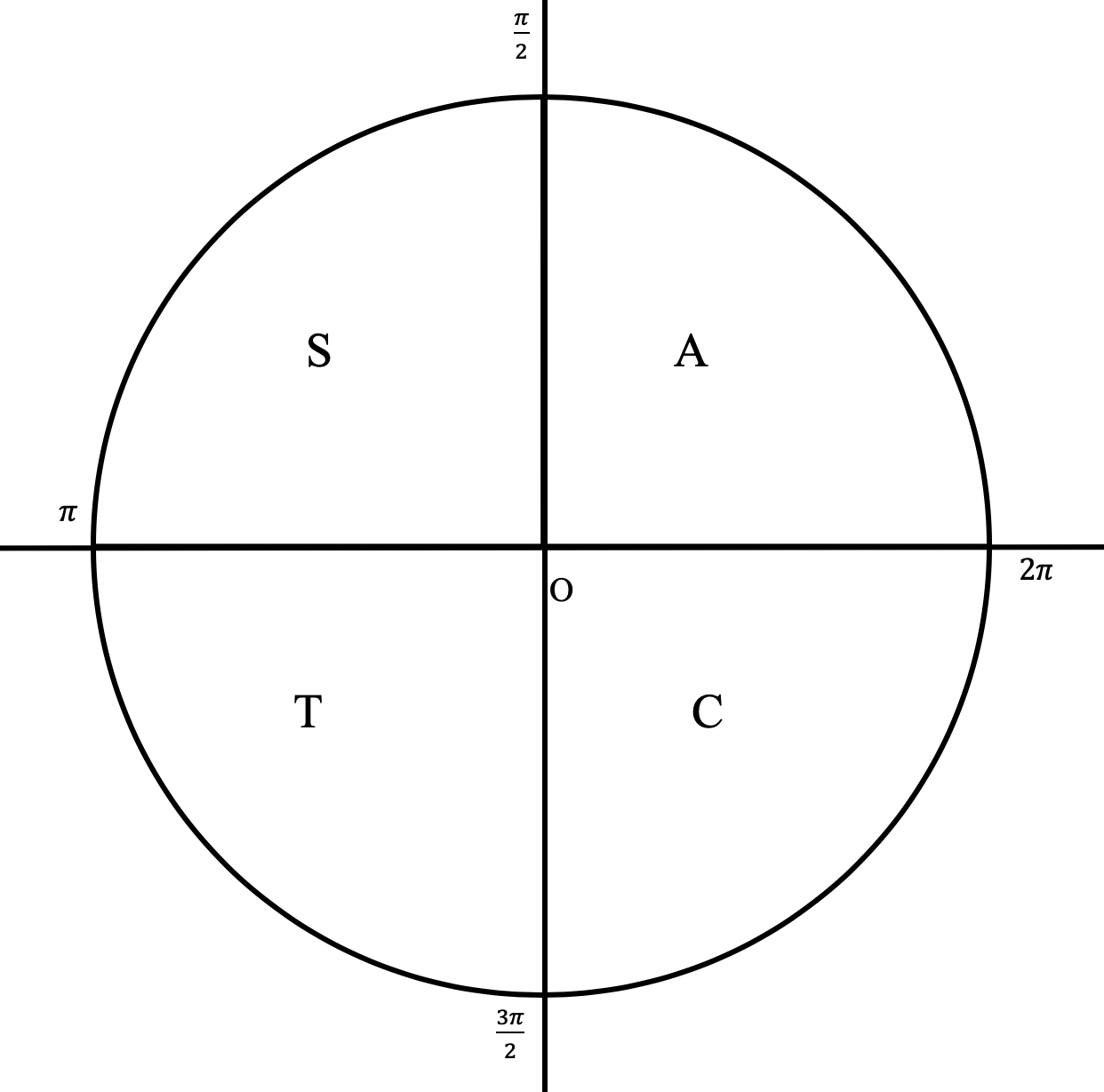
The principal angles relate to the C.A.S.T system.
Note: We may use the term reference angle instead of principal angle.
Using the Period to Write Equivalent Sinusoidal Functions
Categorize the Function as Even or Odd to Write Equivalent Sinusoidal Functions
Using Complementary Angles to Write Equivalent Sinusoidal Functions
The following are cofunction identities that describe complementary angles derived from the right triangle.

Using Horizontal Translations to Write Equivalent Sinusoidal Functions
Let's compare and .
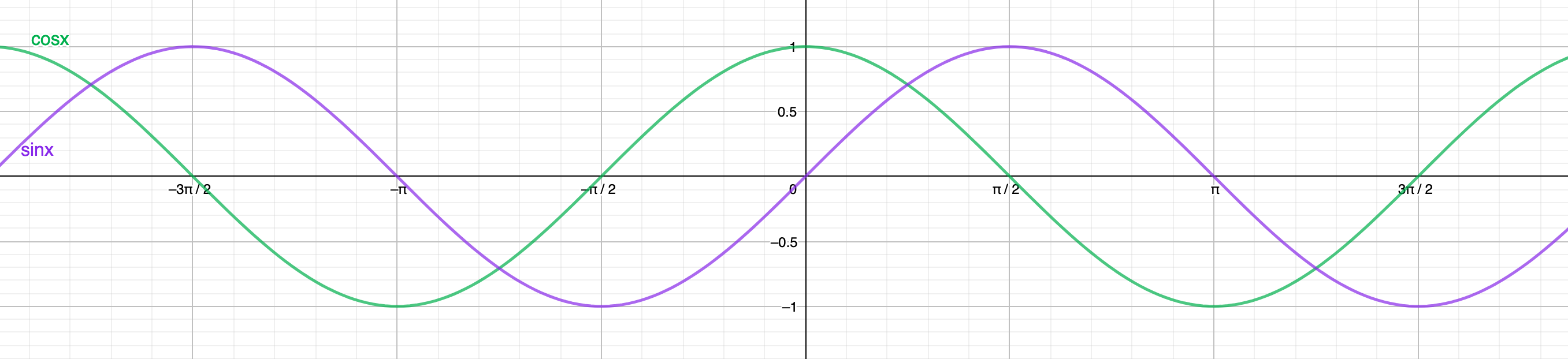
If is horizontally translated by left, then we get the function .
Therefore,
If is horizontally translated by right, then we get the function .
Therefore,
0:00 / 0:00
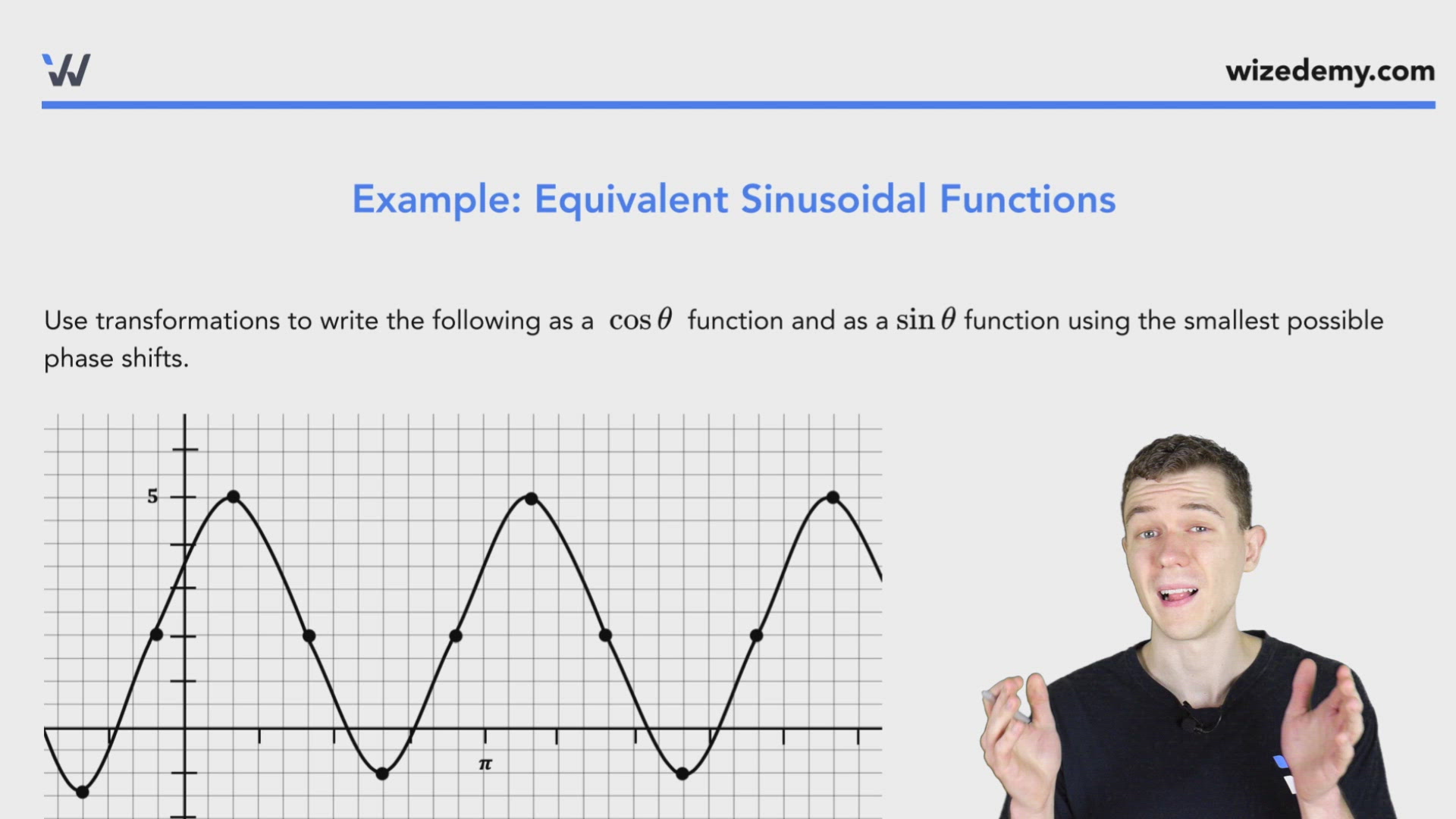
Example: Equivalent Sinusoidal Functions
Use transformations to write the following as a function and as a function using the smallest possible phase shifts.

Therefore,
Write an expression that is equivalent to each of the following using the cofunction identity:
Practice: Equivalent Sinusoidal Functions
Choose which of the following are functions that describe the following graph:
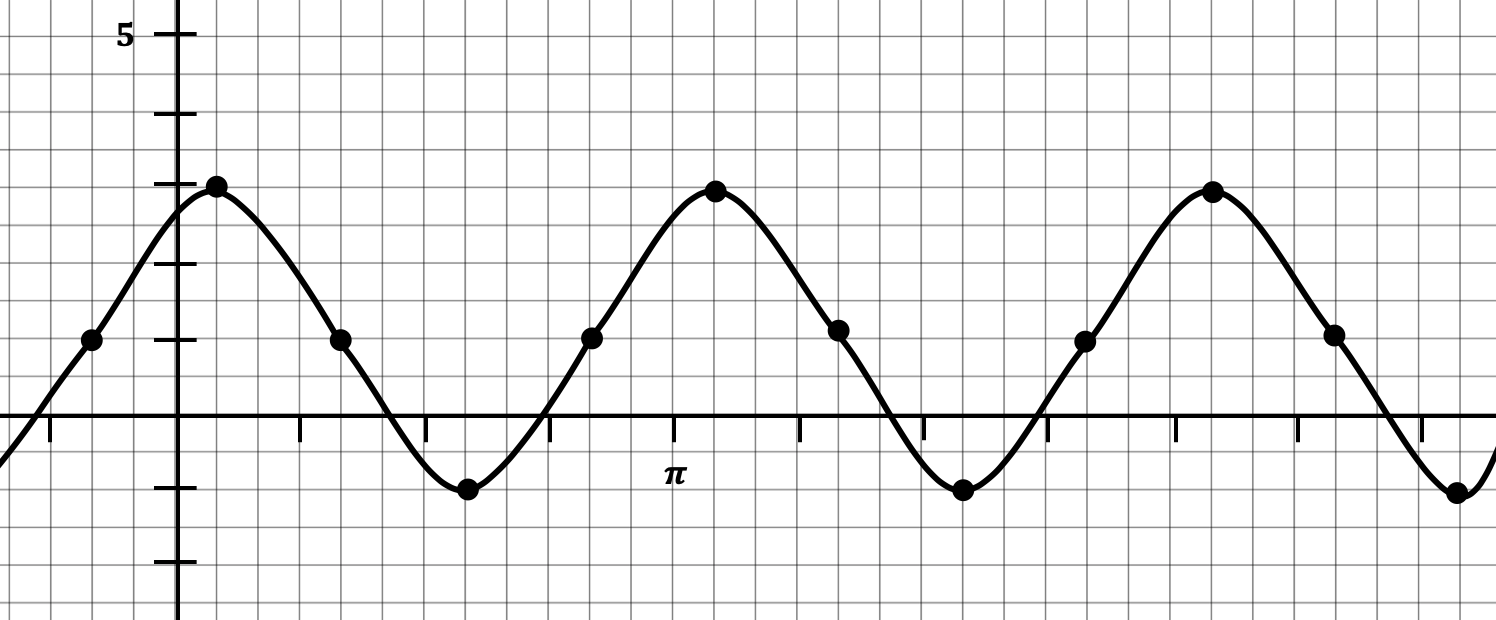
Practice: Equivalent Sinusoidal Functions
True or False?