Wize University Calculus 1 Textbook > Pre-Calculus (Review)
Inverse Functions
Popular Courses
Grade 12 Advanced Functions
Ontario High School
CALCULUS 1000A/B
Western University
Calculus 1
University Study Guides
Grade 12 Pre-Calculus/Functions
Canada High School
AP Calculus (AB) Exam Prep Course
AP Exam Prep
Math 30-1
Alberta High School
Pre-Calculus 12
British Columbia High School
MATH 1LS3
McMaster University
MATH 1LS3
McMaster University
MATH 249
University of Calgary
MATH 265
University of Calgary
Calculus 1
General Course
MATH 275
University of Calgary
MATH 140
McGill University
MAT135H1
University of Toronto
MATH*1080
University of Guelph
MATH 134
University of Alberta
Calculus 1
University Study Guides
MAT 1320
University of Ottawa
MATH 100
University of Alberta
0:00 / 0:00
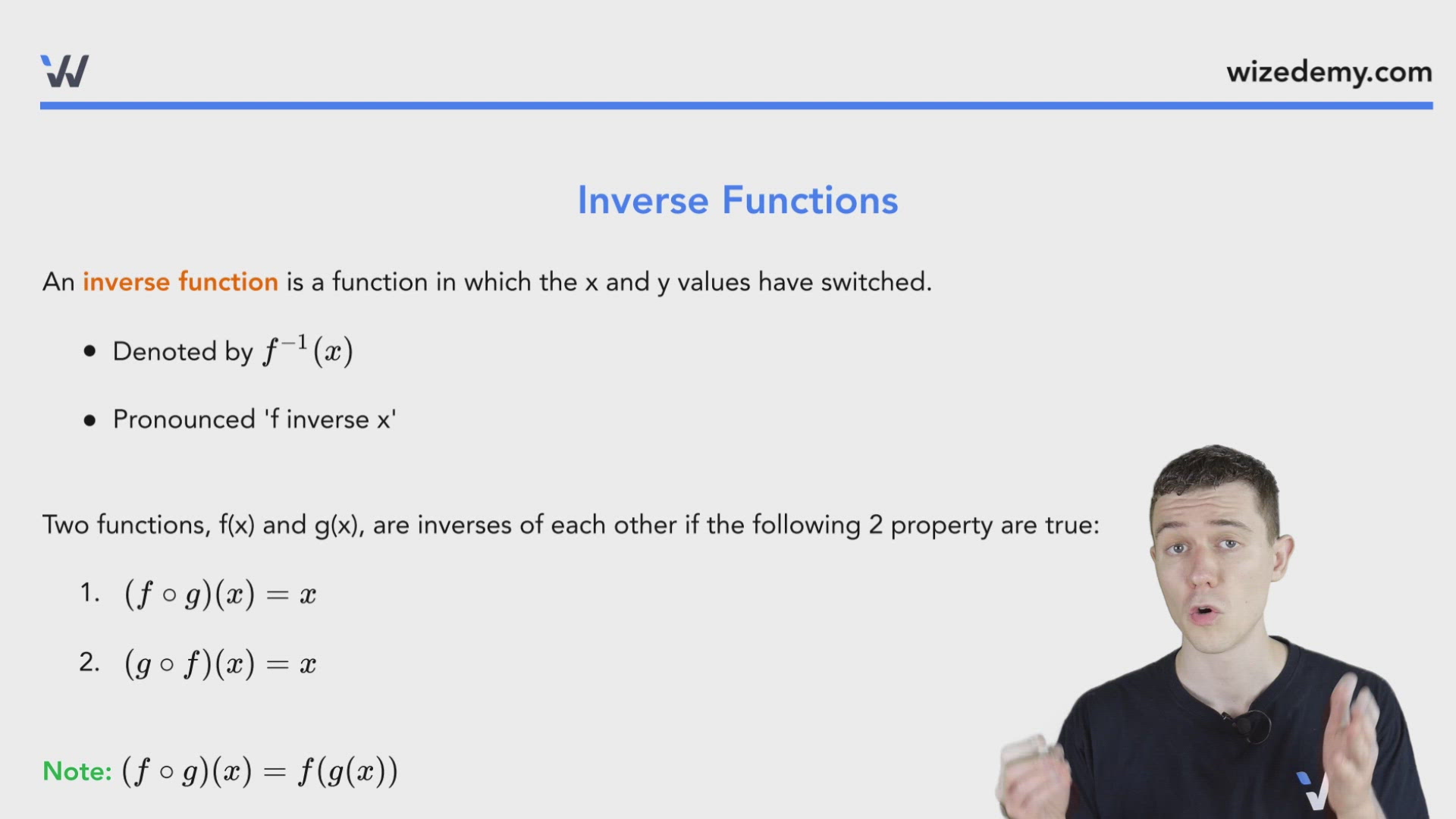
Inverse Functions
An inverse function is a function in which the x and y values have switched.
- Denoted by
- Pronounced 'f inverse x'
Two functions, f(x) and g(x), are inverses of each other if the following 2 properties are true:
Note:
Horizontal Line Test
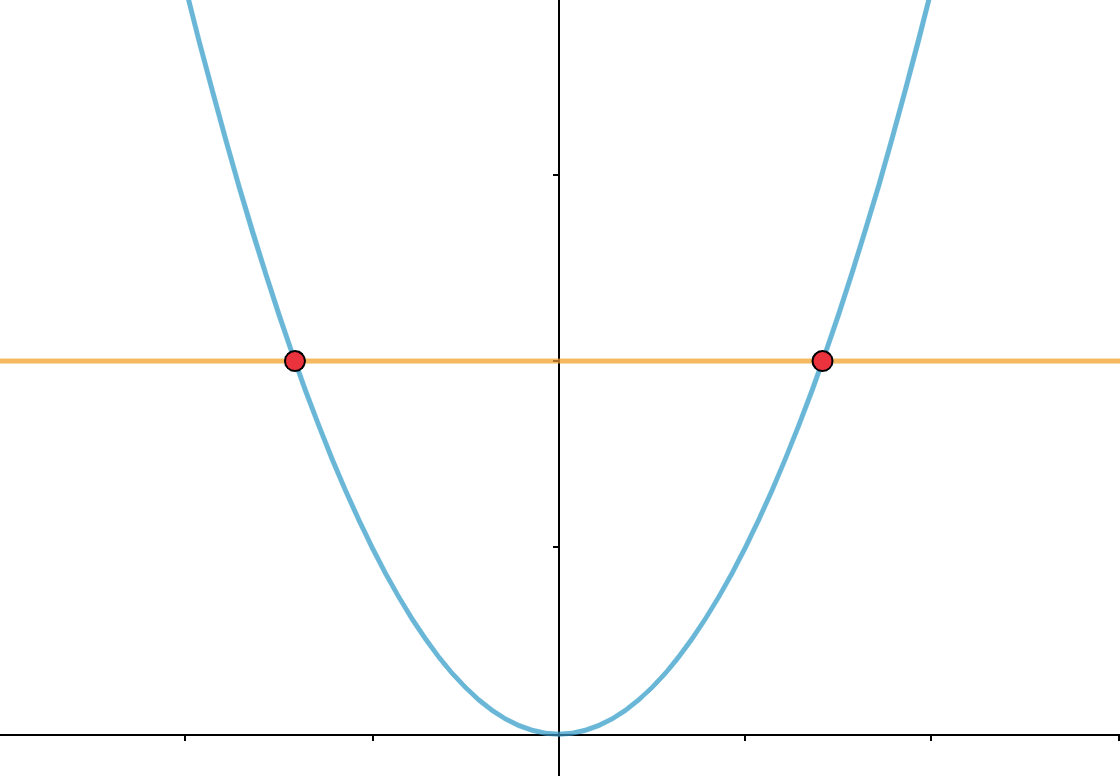
If any horizontal line intersects the graph of a function at more than one point, then is not one-to-one. If a function is not one-to-one, it cannot have an inverse function.
Example
Find the inverse of the function .
0:00 / 0:00
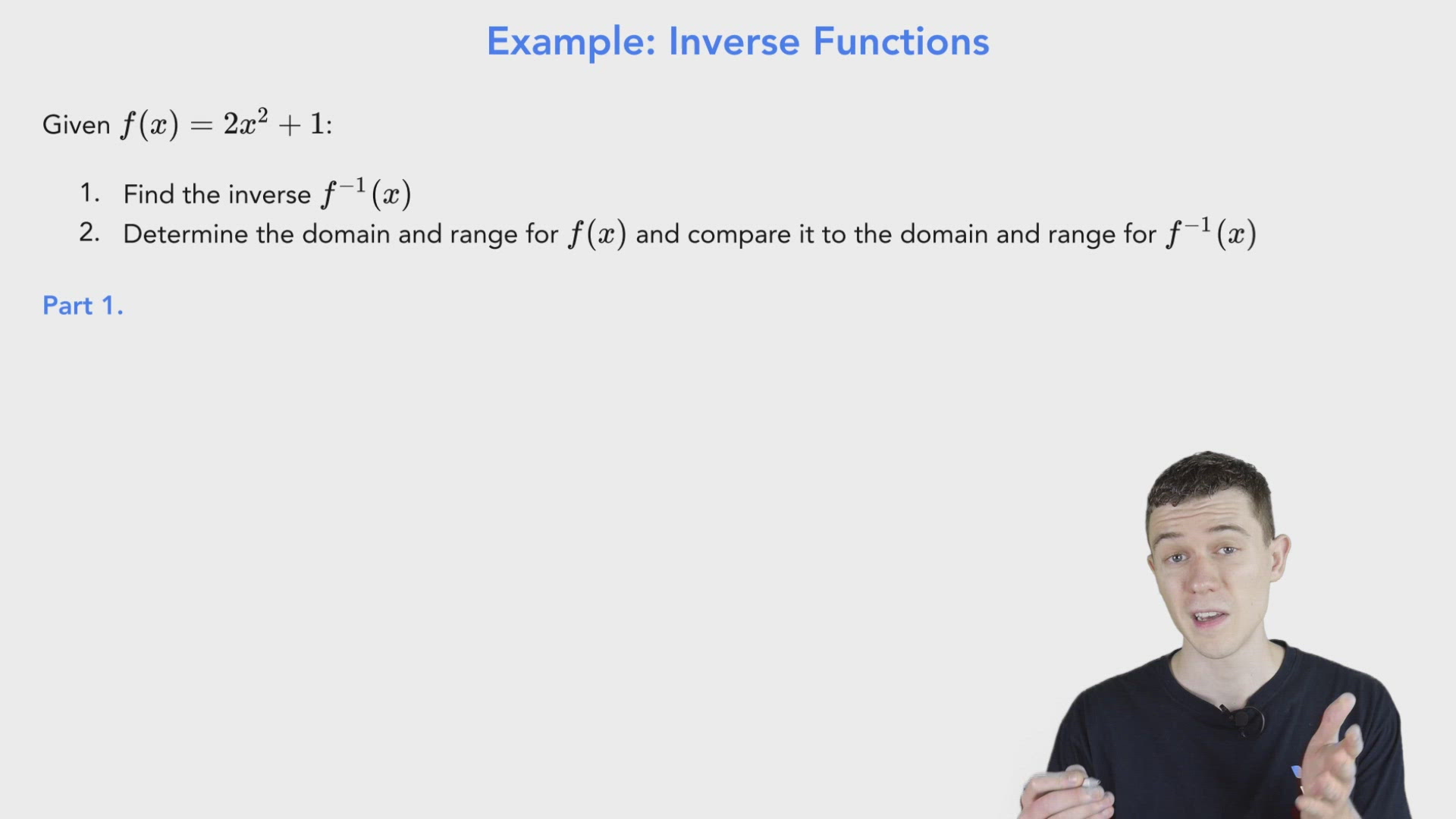
Example: Inverse Functions
Given :
- Find the inverse
- Determine the domain and range for and compare it to the domain and range for
Part 1.
Part 2.
For :
Domain:
Range:
For :
Domain:
Range:
If then determine .