Wize High School Grade 12 Pre-Calculus Textbook > Functions (Basics)
Basic Functions & Graph Properties
Popular Courses
Grade 12 Advanced Functions
Ontario High School
Grade 12 Pre-Calculus/Functions
Canada High School
Math 30-1
Alberta High School
Pre-Calculus 12
British Columbia High School
MATH 206
Concordia University
MATH 201
Concordia University
MAC 1140
University of Florida
MATH 41
Pennsylvania State University
MAT 170
Arizona State University - Tempe
MAC 1105
Florida State University
MAT 012
University of California - Davis
MTH 103A
Michigan State University
MTH 116
Michigan State University
MAC 1147
University of Florida
MATH 140
San Diego State University
MA 15300
Purdue University
MA 15800
Purdue University
MAC 1140C
University of Central Florida
MATH 102
California State University - Northridge
M 305G
The University of Texas at Austin
0:00 / 0:00
Basic Functions & Graph Properties
All basic functions have a known parent function & some properties describing the behaviour function.
What is a parent function?
A parent function is the simplest function of a family of functions that preserves the definition and shape of its entire family of functions.
Common Properties
- Odd Functions
- The function contains rotational (point) symmetry about the origin
- Even Functions
- The function is symmetric about the y-axis (ie:. line symmetry)
- Continuous Functions
- A continuous function has no sudden changes in values.
- There are no holes, asymptotes, & breaks on the graph
- Can sketch the graph without having pen leaving the page
- Discontinuous Functions
- A discontinuous function has sudden changes in values, known as discontinuities.
- There are potential holes, asymptotes, and/or breaks on the graph
- Cannot sketch the graph without the pen leaving the page
- Increasing Functions
- As the x-value increases over its domain (reading the graph from left to right), the y-value also increase
- Decreasing Functions
- As the x-value increases over its domain (reading the graph from left to right), the y-value decreases
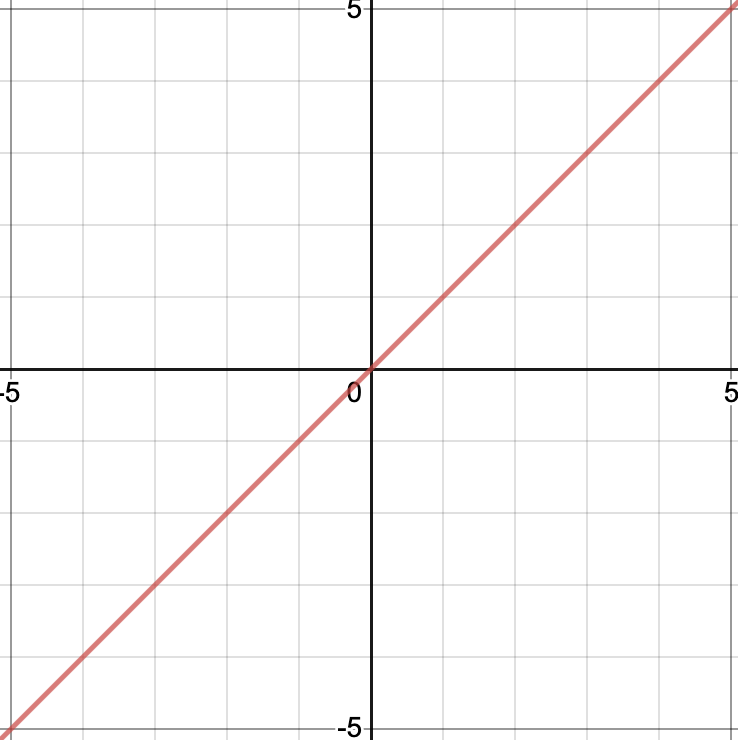
Linear Functions
Parent Function:
- Odd Function
- Continuous on its domain
- Increasing on
- Domain:
- Range:
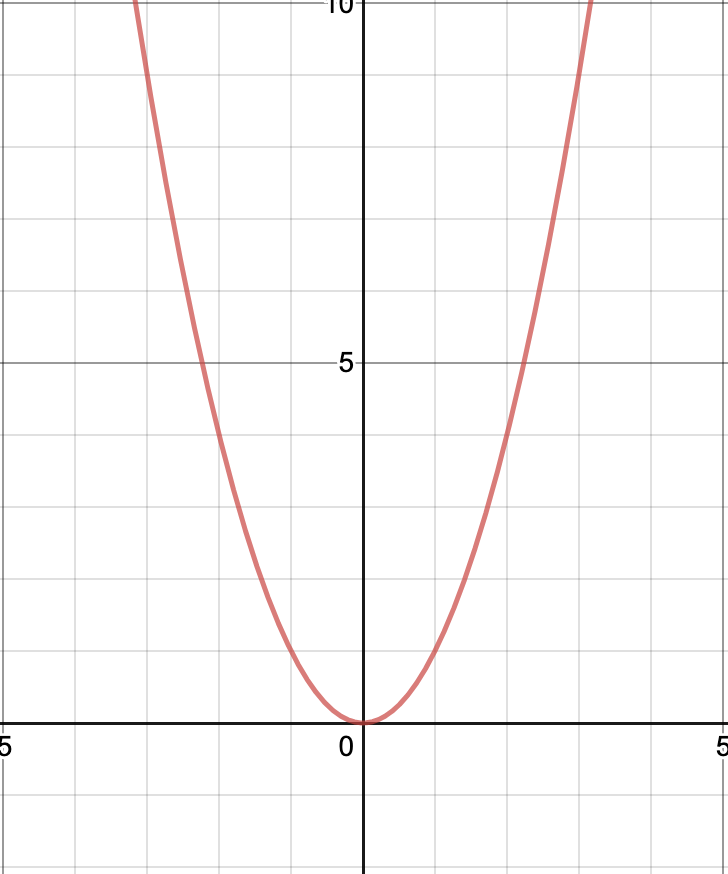
Quadratic Functions
Parent Function:
- Even function
- Continuous on its domain
- Increasing:
- Decreasing:
- Domain:
- Range:
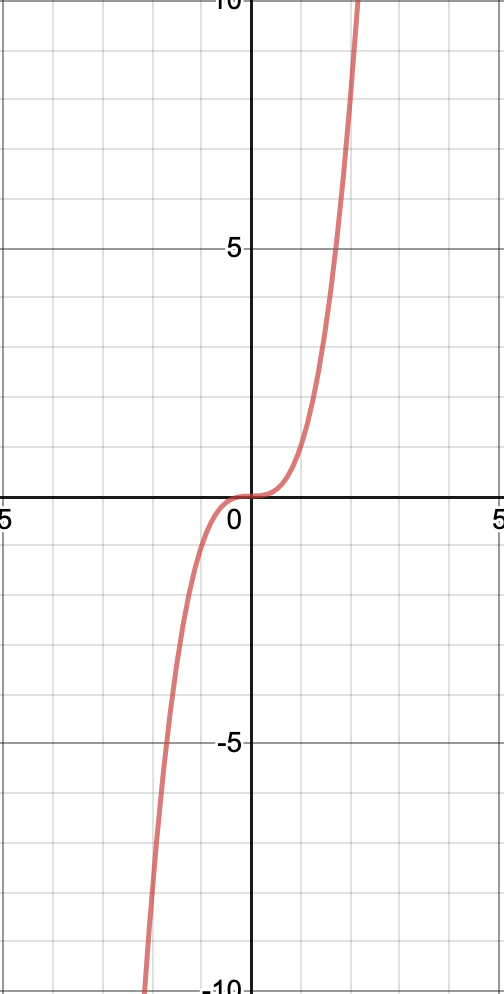
Cubic Functions
Parent Function:
- Odd function
- Continuous on its domain
- Increasing:
- Domain:
- Range:
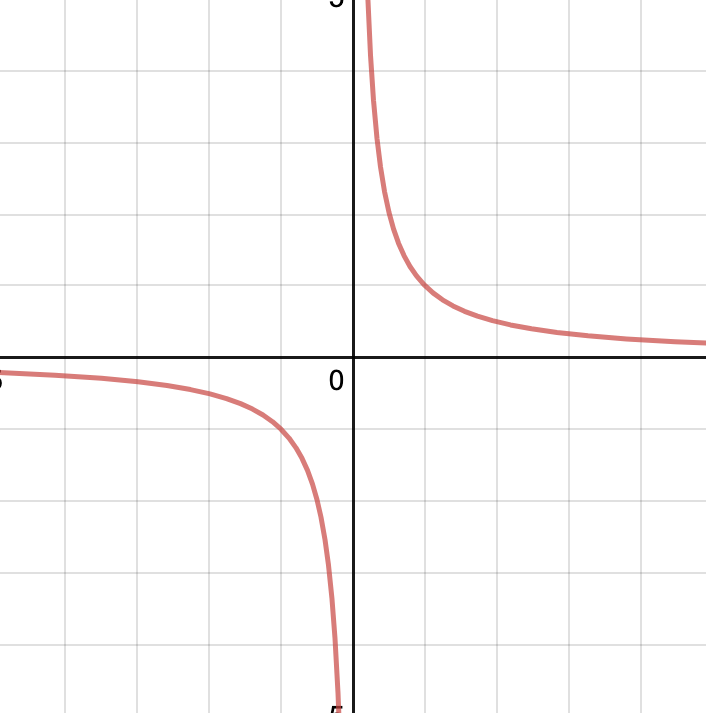
Reciprocal Functions
Parent Function:
- Odd function
- Discontinuous on its domain
- Decreasing:
- Domain:
- Range:
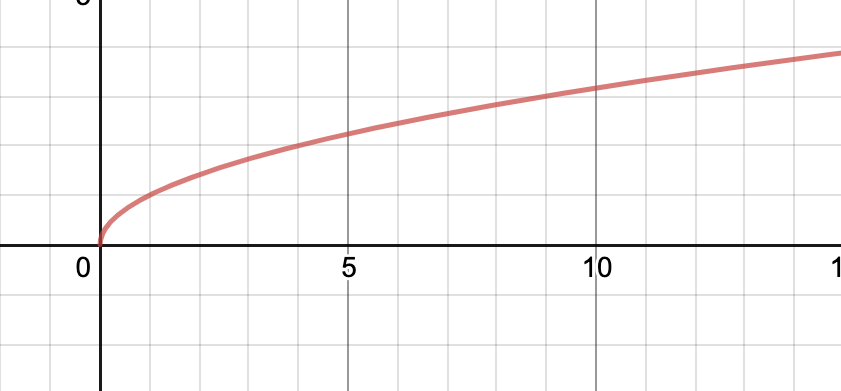
Radical Functions
Parent Function:
- Neither odd nor even
- Continuous:
- Increasing:
- Domain:
- Range:
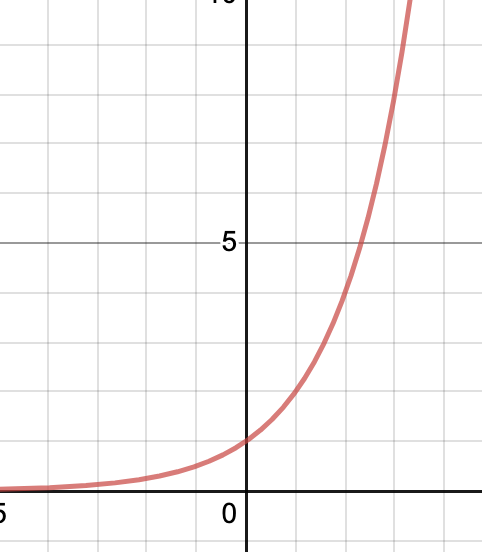
Exponential Functions
Parent Function:
- Neither even nor odd
- Continuous on its domain
- Increasing:
- Domain:
- Range:
Example
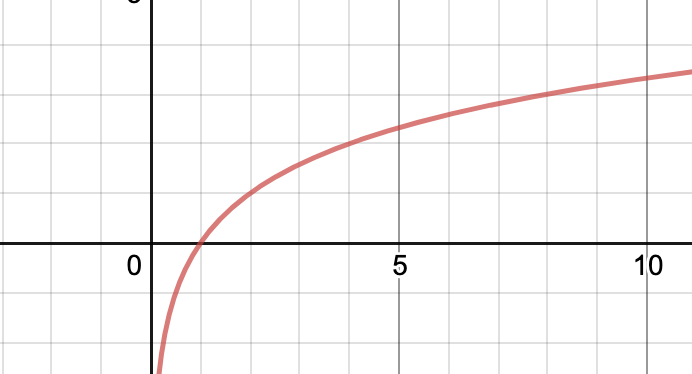
Logarithmic Functions
Parent Function:
- Neither even nor odd
- Continuous on its domain
- Increasing:
- Domain:
- Range:
Example 1
0:00 / 0:00
Example: Basic Functions & Graph Properties
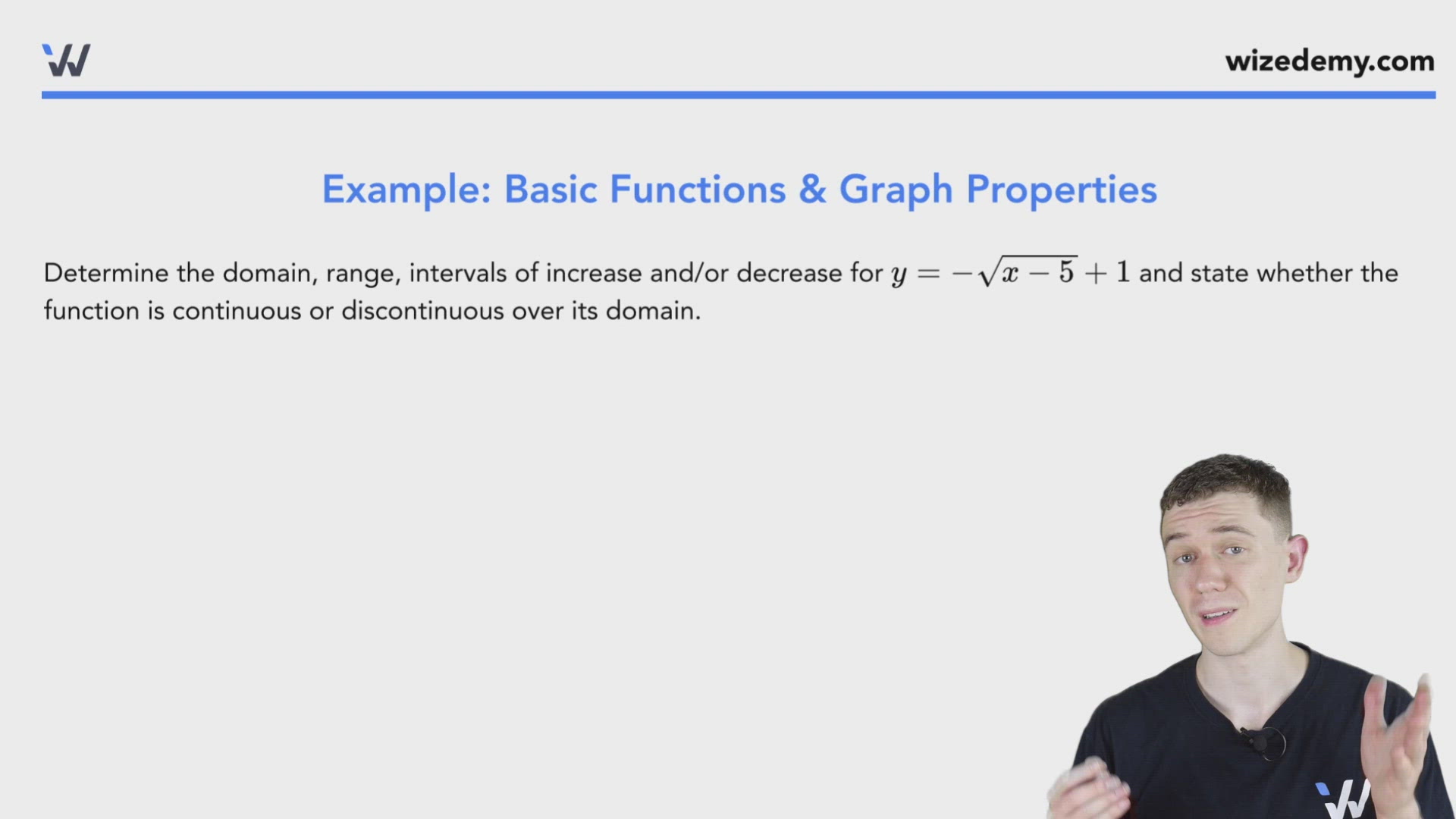
Determine the domain, range, intervals of increase and/or decrease for and state whether the function is continuous or discontinuous over its domain.
Sketch a graph of the function:
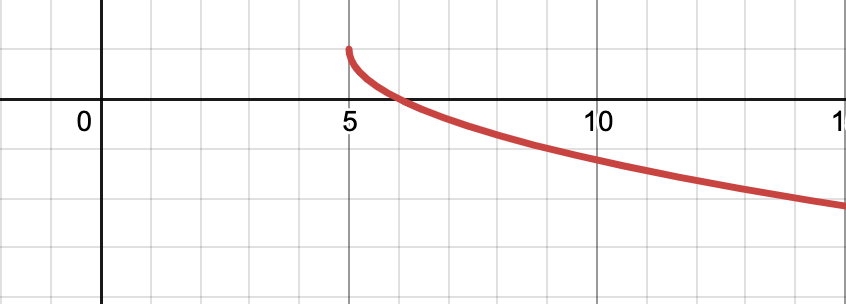
Domain:
Range:
Decreasing over
Continuous over its domain
Practice: Functions & Graph Properties
Determine the interval of increase/decrease for each of the following functions:
A.
Decreasing:
B.
Decreasing:
C.
Increasing:
D.
Decreasing:
Practice: Functions & Graph Properties
True or False:
The function is even.
Practice: Functions & Graph Properties
The function f(x) is a quadratic function continuous over all real numbers. The function f(x) has the following properties:
- Increases over the interval
- Decreases over the interval
- Contains a double root at 4
- Is congruent to
What is the equation of f(x)?