Wize University Physics Textbook (Master) > Modern Physics
Nuclear Forces and Binding Energy
Popular Courses
MCAT
General Course
Grade 12 Physics
Ontario High School
Grade 12 Physics
Canada High School
PHYS*1300
University of Guelph
Physics 30
Alberta High School
Physics 12
British Columbia High School
ENGG 212
University of Calgary
PHY132H1
University of Toronto
PHY132H1
University of Toronto
PHYS 102B
University of Victoria
PHYS 111
University of Victoria
PHYS-1300
University of Windsor
PHY 1121
University of Ottawa
PHY 1124
University of Ottawa
PHYS 121
University of Waterloo
PHYSICS 1102A/B
Western University
PHYS 227
University of Calgary
SC/PHYS 2020 3.00
York University
PHYSICS 1AA3
McMaster University
PHYS 120
Simon Fraser University
0:00 / 0:00
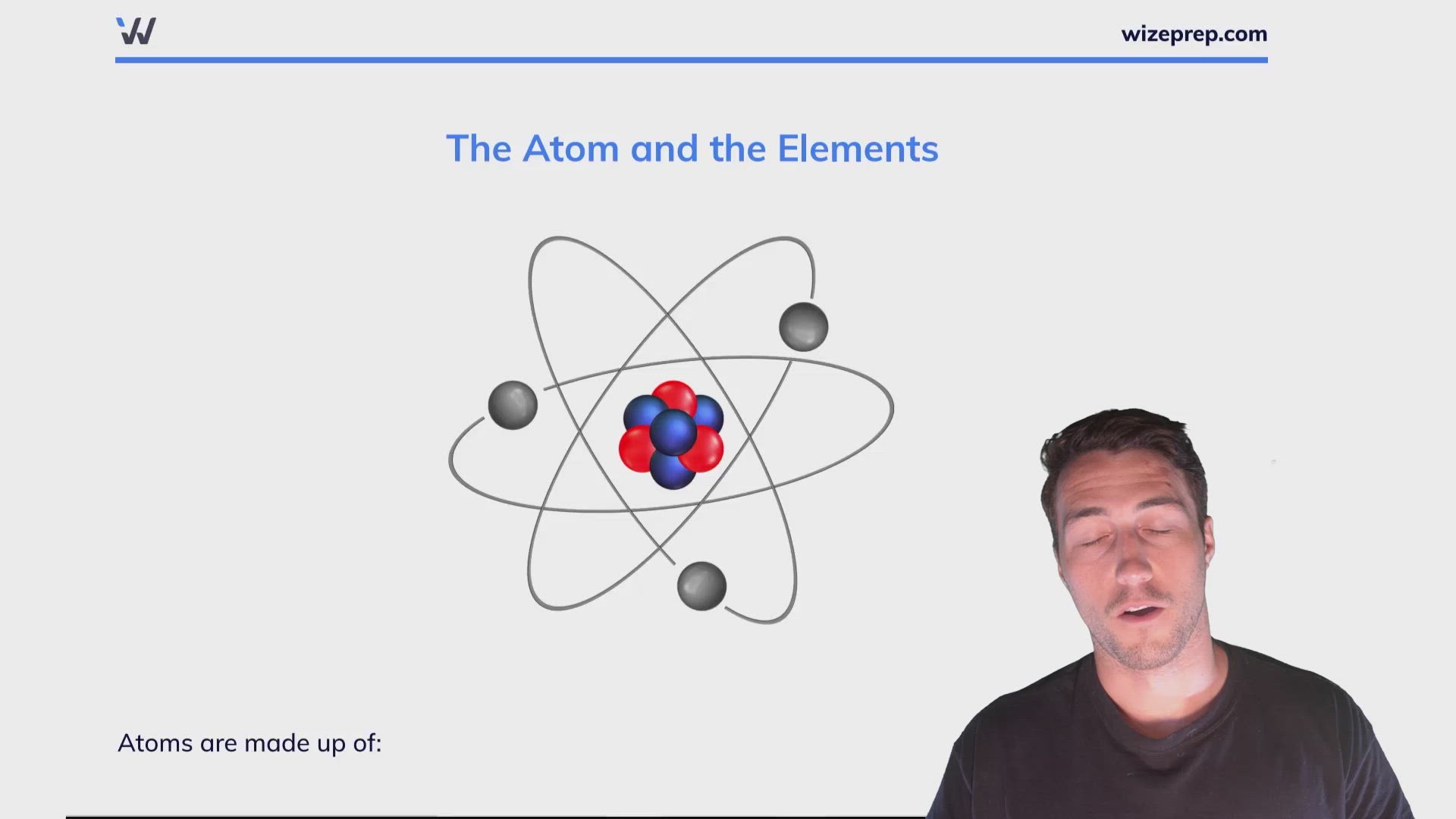
The Atom and the Elements

Atoms are made up of:
- nucleons protons (charge , mass )
neutrons (no charge, mass )
- electrons (charge , tiny mass)
where is the elementary charge:
and is the atomic mass unit, defined to be one-twelfth of the mass of a Carbon atom:
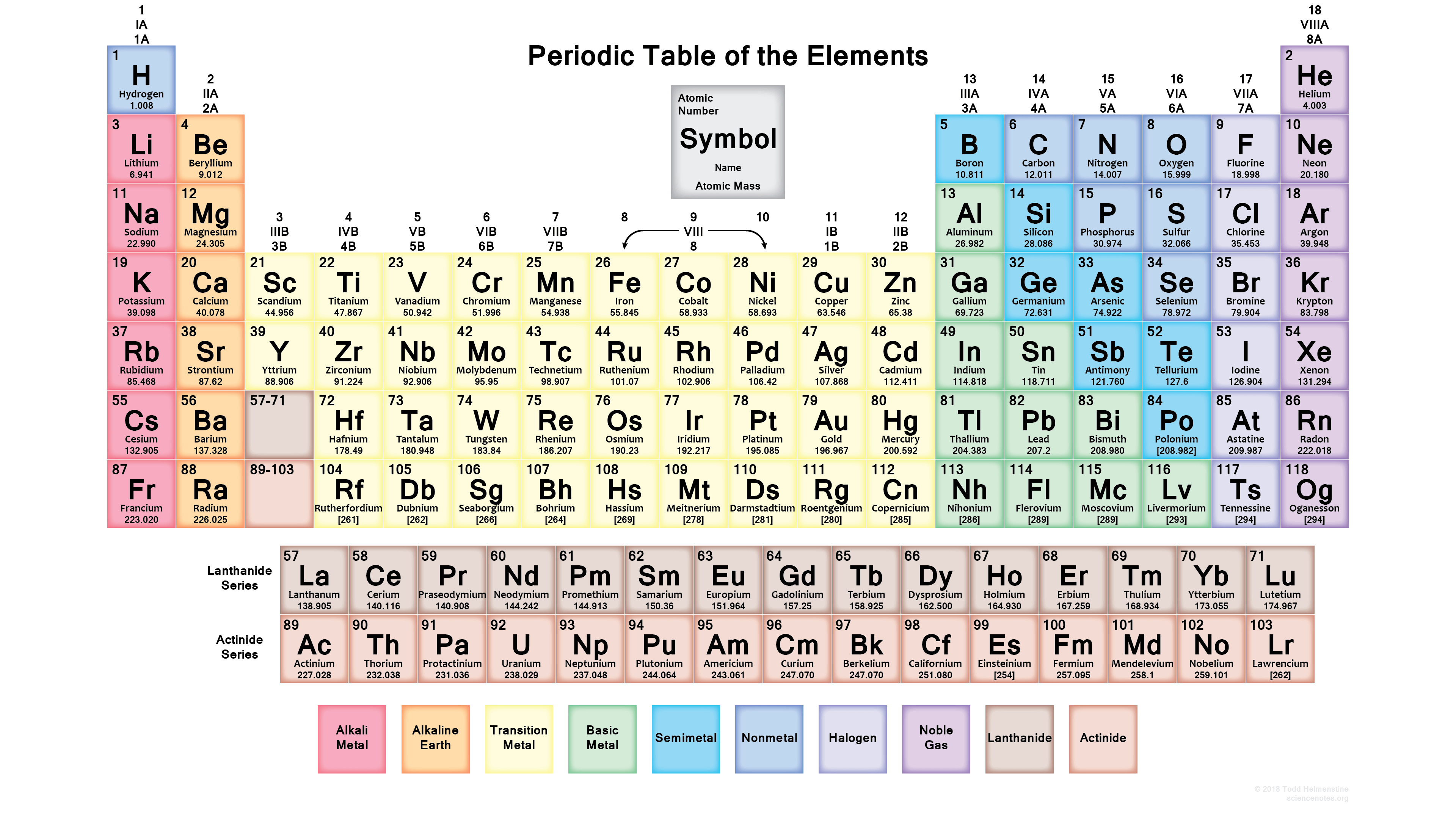
Atomic number: the number of protons in the nucleus,
Mass number: the number of protons and neutrons in the nucleus,
The chemical element is written as:
Isotopes are element varieties with the same number of protons, but different number of neutrons.
Example: hydrogen with its isotopes protium (1 proton), deuterium (1 proton and 1 neutron), tritium (1 proton and 2 neutrons)
0:00 / 0:00
Nuclear Forces and Binding Energy
Protons are positively charged. But in the nucleus, they are forced to be close together. Like charges repel. So why does the nucleus stay together?
The strong nuclear force is responsible for holding the nucleus together! This force is much stronger than the repulsion between protons.
The binding energy is the energy needed to break a nucleus into its constituent protons and neutrons. It is also the energy that is released when protons and neutrons come together and form the nucleus.

The binding energy is given by the mass defect , which is the difference between the mass of the separated nucleons and the mass of the whole nucleus.
Wize Concept
- The mass defect is always positive: a system of separated nucleons always has a greater mass than a system of bound nucleons.
- When a nucleus forms, the mass defect is transformed into binding energy.
- When a nucleus breaks apart, binding energy is transformed into mass.
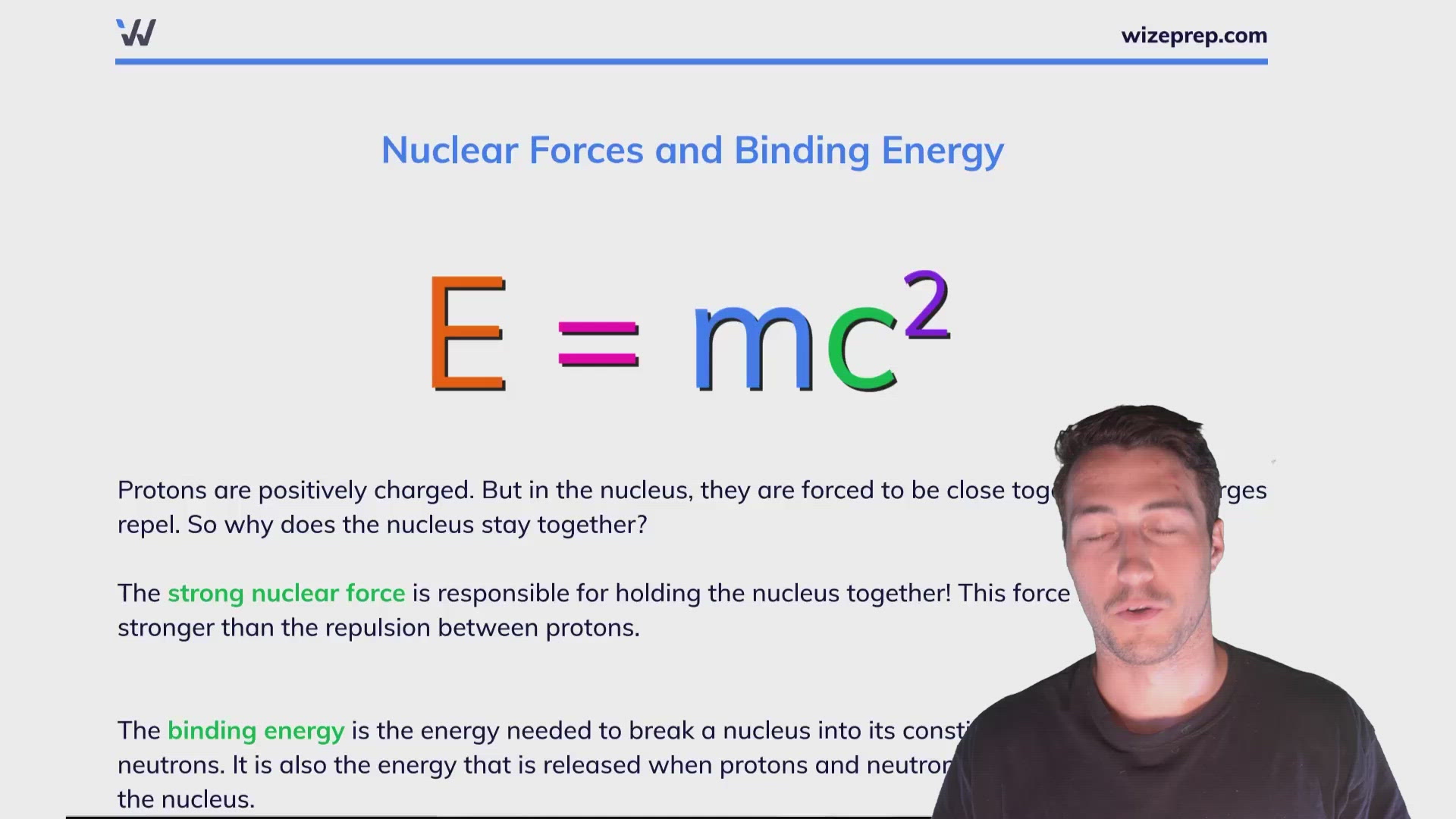
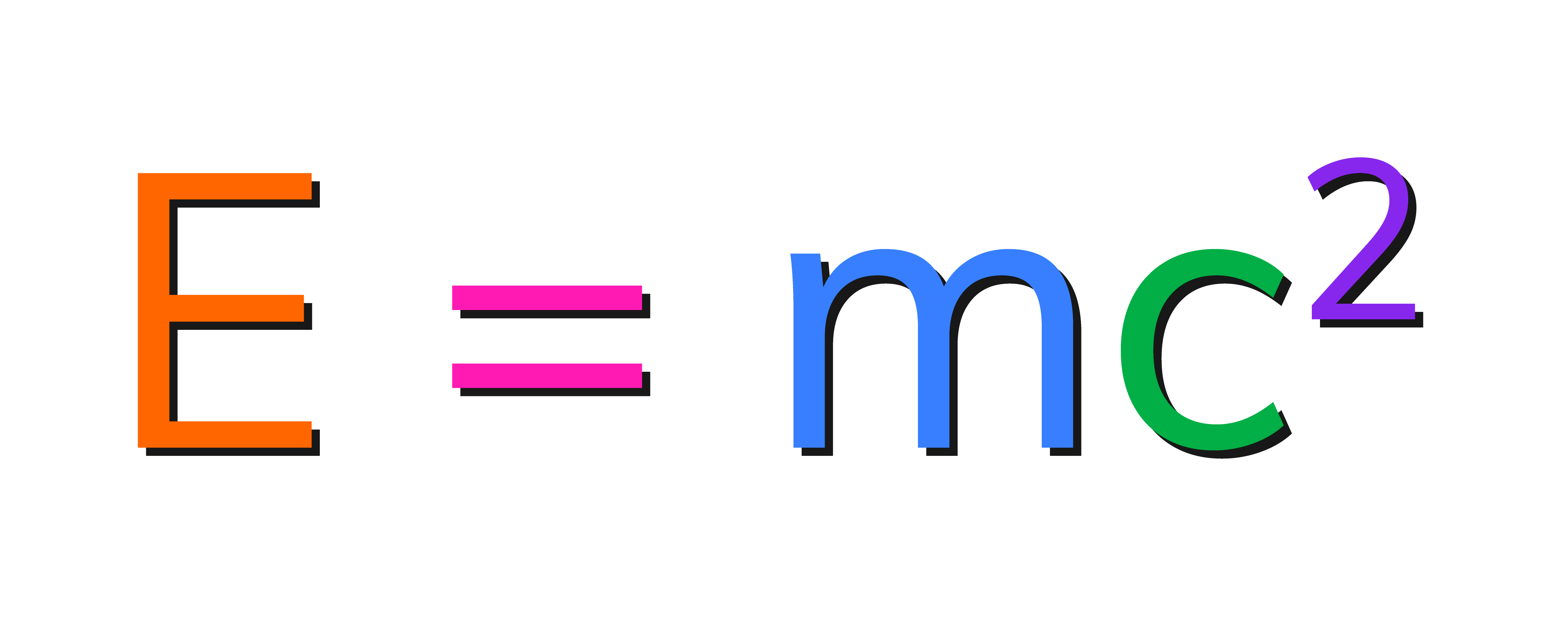
Einstein's equation tells us how mass and energy can be converted into each other:
- is energy (here, the binding energy)
- is mass (here, the mass defect)
- is the speed of light,
When dealing with the energies of small particles, a more convenient unit for energy is the electron-volt (), which is the energy gained by an electron traveling through a potential difference of one volt:
Fusion and Fission Reactors
This discovery leads to the application of both fusion and fission reactors. There are both energies released when atoms are combined together (lighter elements creating heavier elements) and when they are separated (heavier elements turning into lighter elements)
- Nuclear Reactors use the energy created from these to heat up water which then turns into steam and the steam turns turbines thus producing energy!
Practice: Binding Energy per Nucleon
Find the binding energy per nucleon for and for . Which nucleus is more stable?
mass of the proton:
mass of the neutron:
mass of the helium atom:
mass of the carbon atom:
(1 amu = 1.66x10⁻²⁷kg)