Wize High School Grade 12 Physics Textbook > Wave Nature of Light
The Concept of Diffraction
0:00 / 0:00
Wave Interference Patterns
- The concept of interference is important to understand and underlies many aspects of light as well as other types of waves (like sound waves)
- Think about these interference patterns like ocean waves if two large waves travel towards each other, with the right timing they can create an even larger MEGA wave or if the timing is off slightly they can effectively cancel each other out!
- Constructive and destructive interference deals with amplitude of the perceived wave
- For light, this means brightness
Constructive Interference

- Constructive interference occurs when two waveforms are "in phase"
- The result of this is a larger resultant amplitude as the waves synergize with each other
- To be "in phase", the waveforms must be "n" wavelengths apart
Destructive Interference
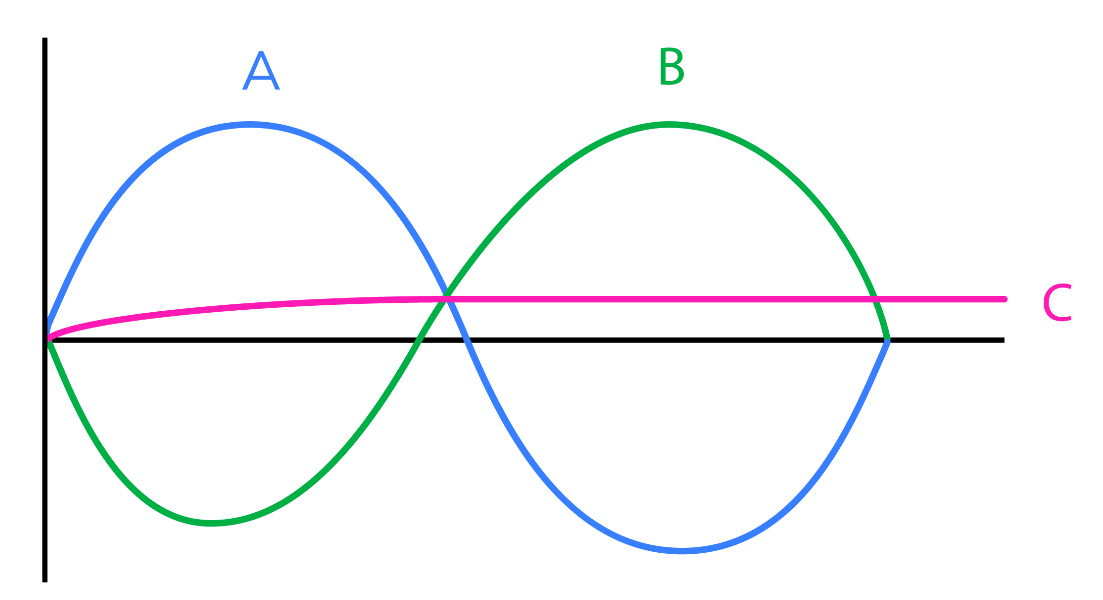
- Destructive interference occurs when two waveforms are "out of phase"
- The result is a smaller resultant amplitude as the waves effectively "cancel" each other out
- To be "out of phase", the waveforms must be "n+0.5" wavelengths apart
0:00 / 0:00
Diffraction
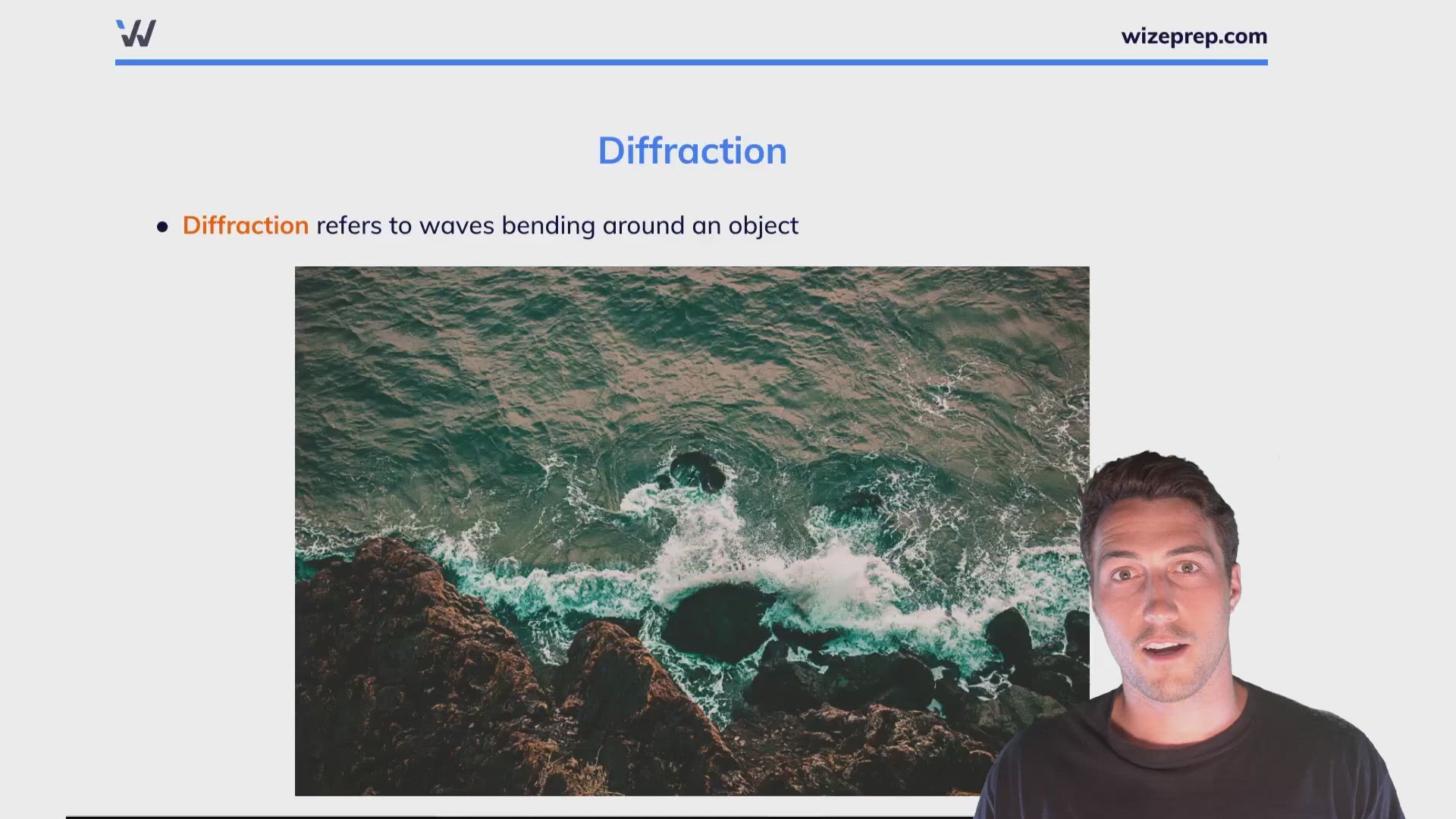
- Diffraction refers to waves bending around an object

- Think of waves moving around objects such as rocks
- After their interactions, waveforms will change in shape (think about how that perfectly circular ripple changes in shape if there's a rock or any other object in the way)

- The resulting waveform that is created is due to the result of constructive and destructive interference
Young's Double Slit Experiment
- Now, instead of a single object interfering with the waveform, visualize a wave passing through a small space in a wall
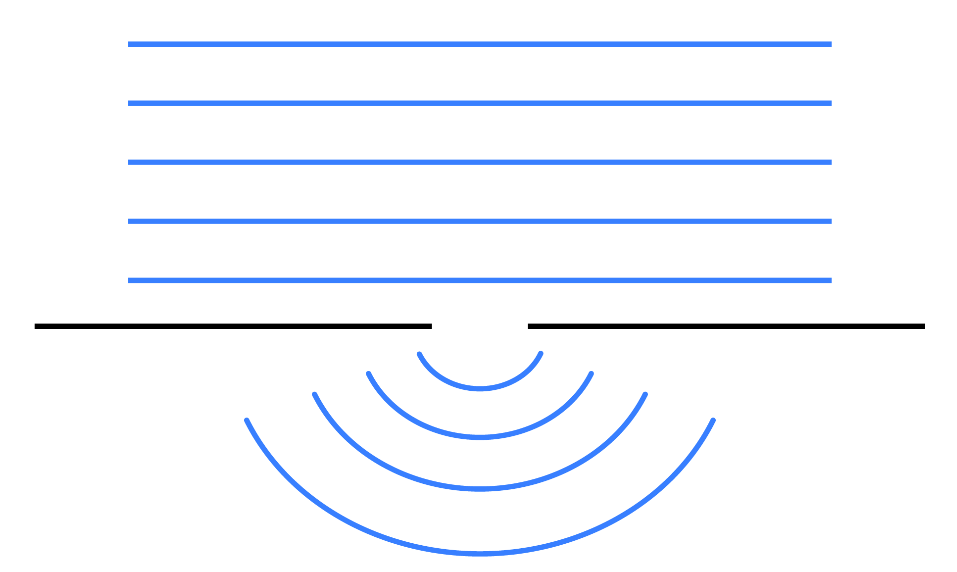
- The waves will change in shape upon reaching that small gap and traversing through it
- Now let's add a second gap:
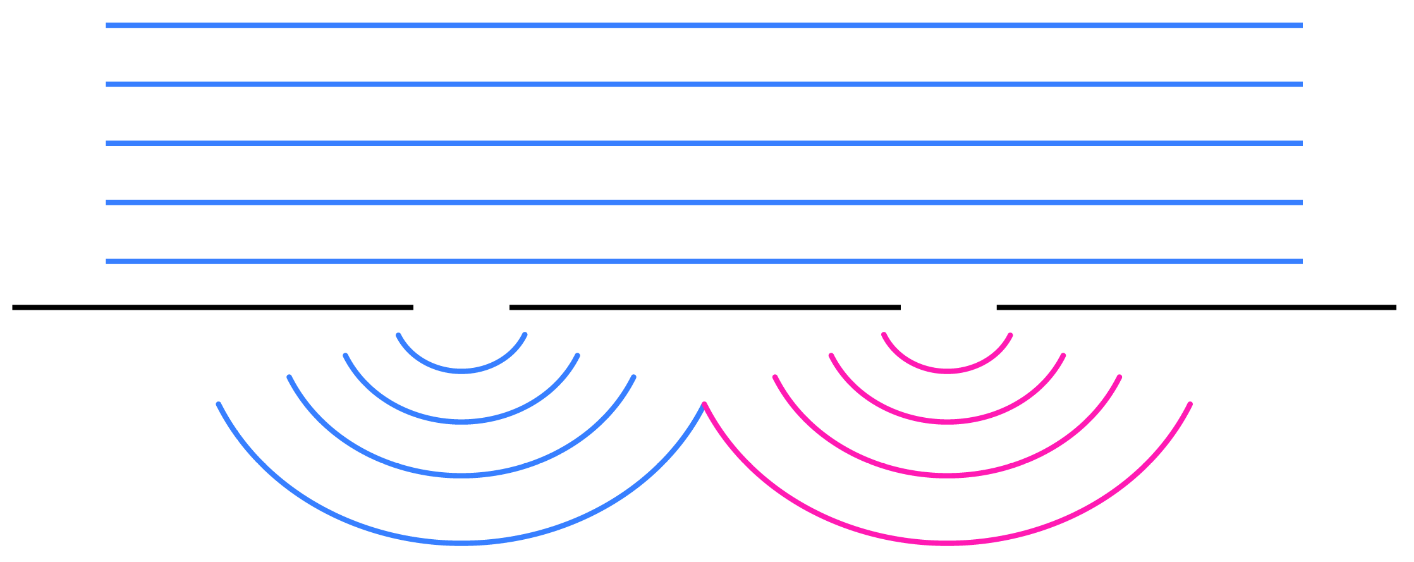
- What we see here is that there are now two waveforms present, and they begin to interact with each other
- Whenever waves interact, we have both constructive and destructive interference
- If we were to replace these waves with a light wave and put a screen on the other side, the interaction of these waves will produce bright spots (antinodes) and dark spots (nodes)
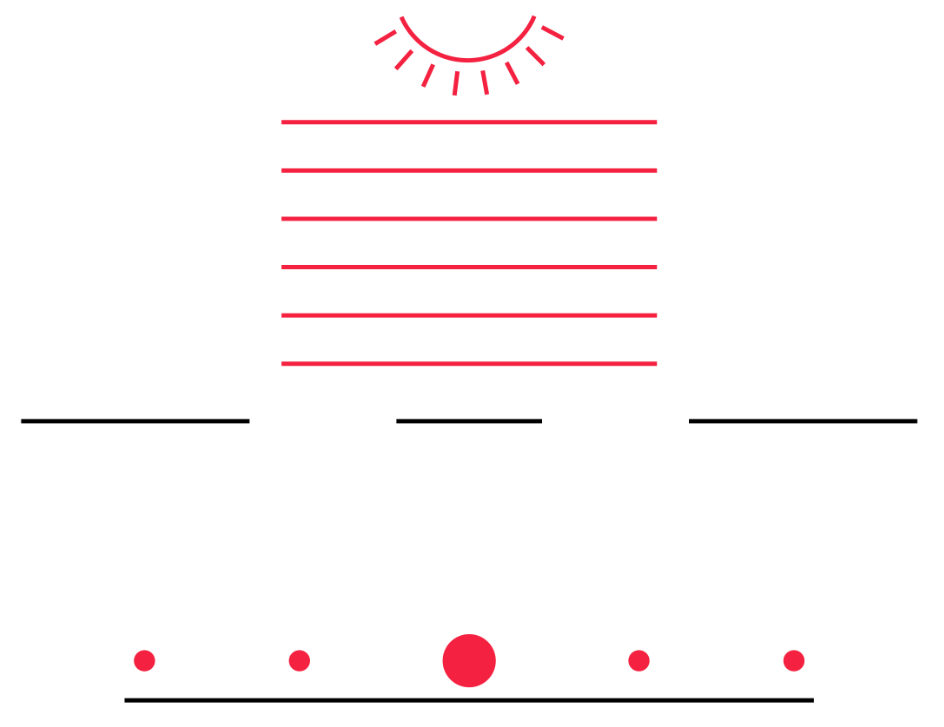
- This is the basis of Young's double slit experiment
Huygen's Principle
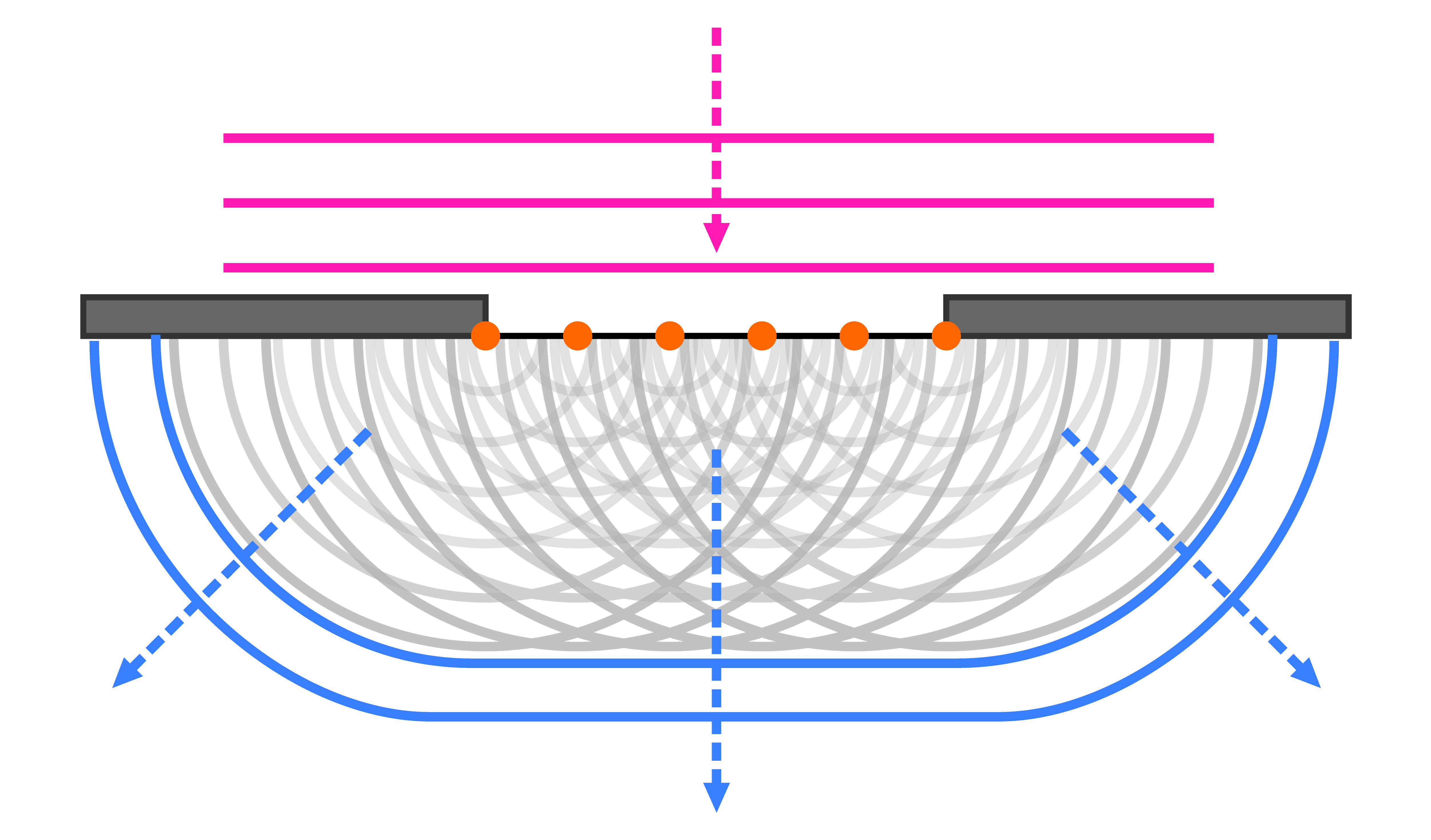
- Diffraction is the spreading out of light as it passes through a small opening.
- But why does this happen? Why does light "spread" in the first place?
According to Huygen's Principle, waves can be modeled as a bunch of little wavelets. That is, every point on a wave front can be considered a point source, generating secondary waves spreading away from it. As a wave spreads out, each wavelet is spreading out and interfering with all the others.
0:00 / 0:00
Example: Properties of Waves
The wavelength of a transverse wave is 1.50 m. It is observed that 10 crests of the wave pass a specified point every 12.0 seconds. What is the speed of the wave? How does the wave speed change if the frequency is doubled? How long does it take the wave to travel 15.0 m?
Solution;-
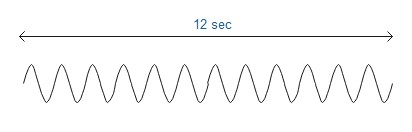
10 crest every 12 sec
Doubling the frequency just doubles the speed, as we see above.
The wave speed does not change as long as the medium is same.
Practice: Wave Equation
My friend Jon took two snapshots of a travelling wave at :
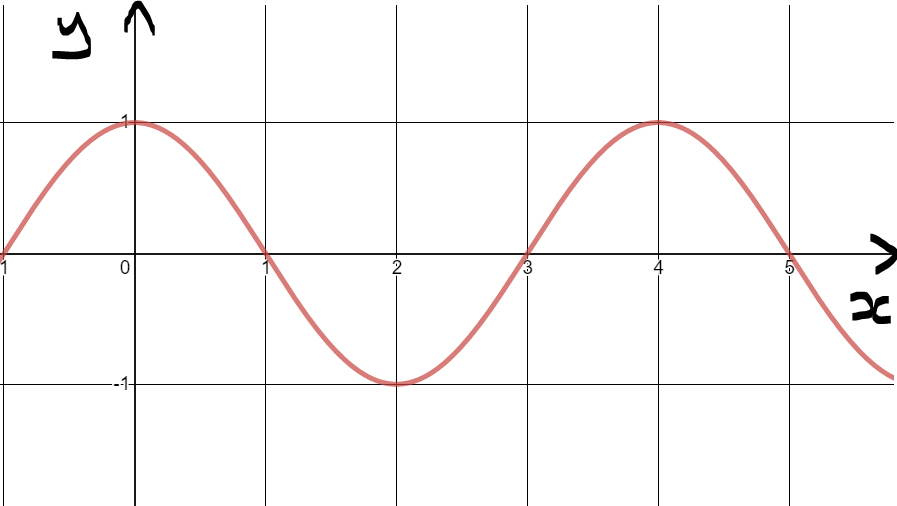
and then at :
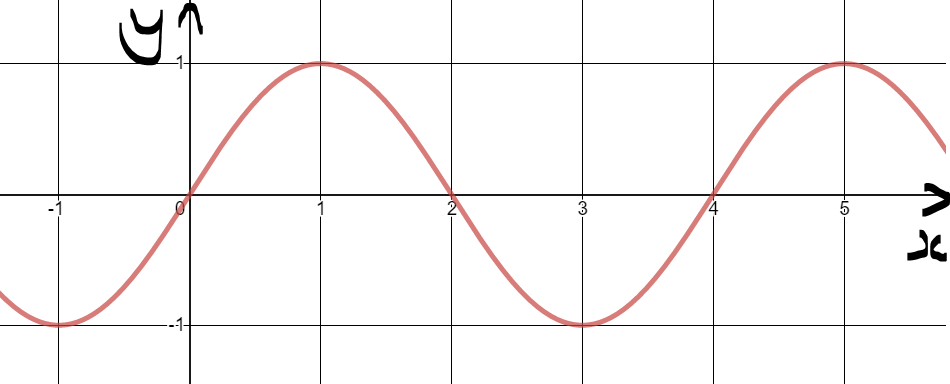
What could the speed of propagation be (if all length units are in cm)?
Practice: Diffraction
Which of the following is NOT an example of wave diffraction?