Wize University Introduction to Financial Accounting Textbook > Receivables
Percentage of Receivables Method
Popular Courses
COMM 217
Concordia University
ACCT 2301
The University of Texas at Dallas
Intro to Financial Accounting
General Course
COMM 293
University of British Columbia
Intro to Financial Accounting
University Study Guides
MGCR 211
McGill University
ACCT*1220
University of Guelph
Intro to Financial Accounting
University Study Guides
ACCT 217
University of Calgary
AP/ADMS 2500 3.00
York University
COMMERCE 1AA3
McMaster University
ACCTG 211
University of Alberta
ACC 100
Toronto Metropolitan University
COMM 111
Queen's University
ADM 1340
University of Ottawa
BU127
Wilfrid Laurier University
ACCT 2301
Houston
ACCT 2301
Houston
RSM219H1
University of Toronto
COMM 1101
Dalhousie University

0:00 / 0:00
Percentage of Receivables Method
Estimating the amount of uncollectible receivables can be done by taking a percentage of the total receivables.
Characteristics of the Percentage of Receivables Method
- Uses probabilities to determine uncollectible receivables.
- Can be calculated using a single percentage for all receivables
- Can be calculated using an increasing percentage for older receivables
- This is called the aging method
- Assumes that the older an account receivable is, the less likely it is to be collected.
- Bad debt expense is the difference between the unadjusted AFDA and the ending balance of AFDA according to the percentage method.
AFDA Formula


0:00 / 0:00
Example: Percentage of Receivables
Wize Corp.'s unadjusted trial balance at the end of 2020 indicates that accounts receivables total $500,000. Historically, 5% of receivables are uncollectible, and the company uses this rate to estimate its allowance for doubtful accounts. Prepare the journal entry to record bad debt expense.
Additional information:
- Balance of AFDA on January 1st, 2020 was $34,000.
- $14,000 of old accounts were written off during the year.
- $2,000 of written off accounts were collected.


0:00 / 0:00
Example: Percentage of Receivables (Aging Method)
On December 31st, 2020, the company's year-end, the following 6 customers still had open account balances, all sales were made under the terms 2/10, n/30:
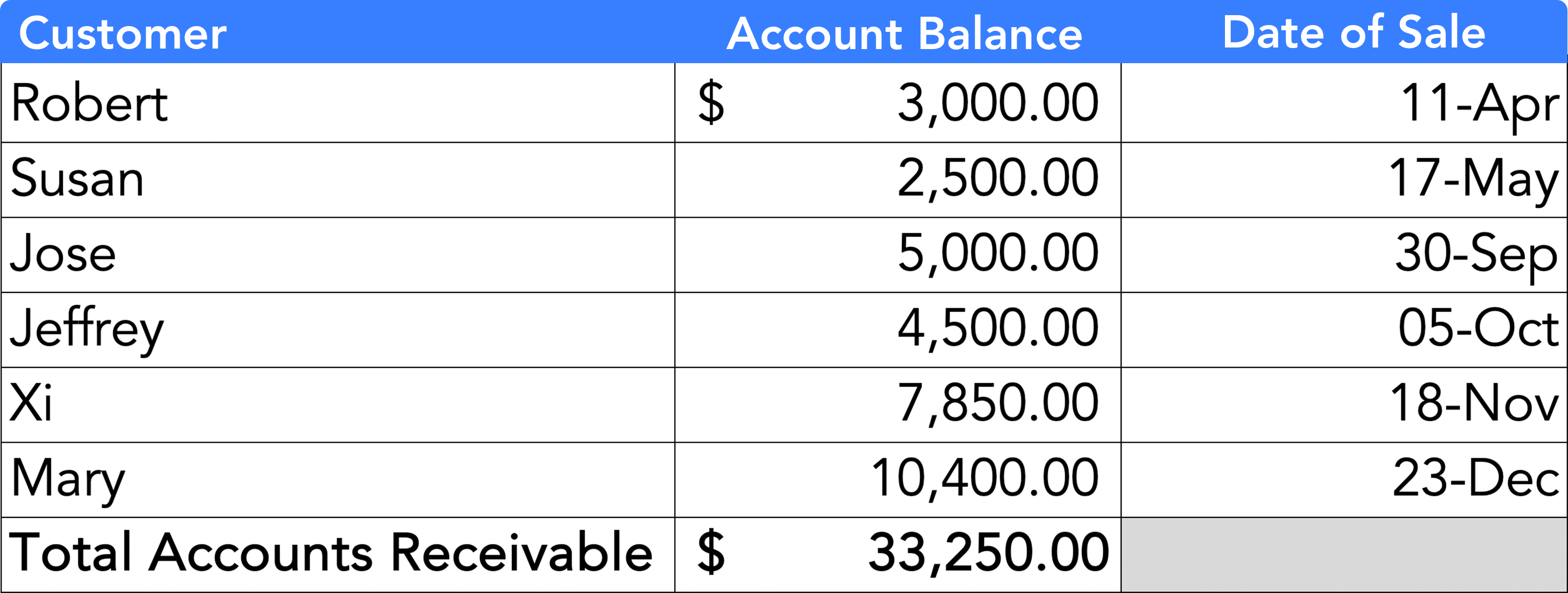
The company's policy on estimating uncollectible accounts is based on the following rates:
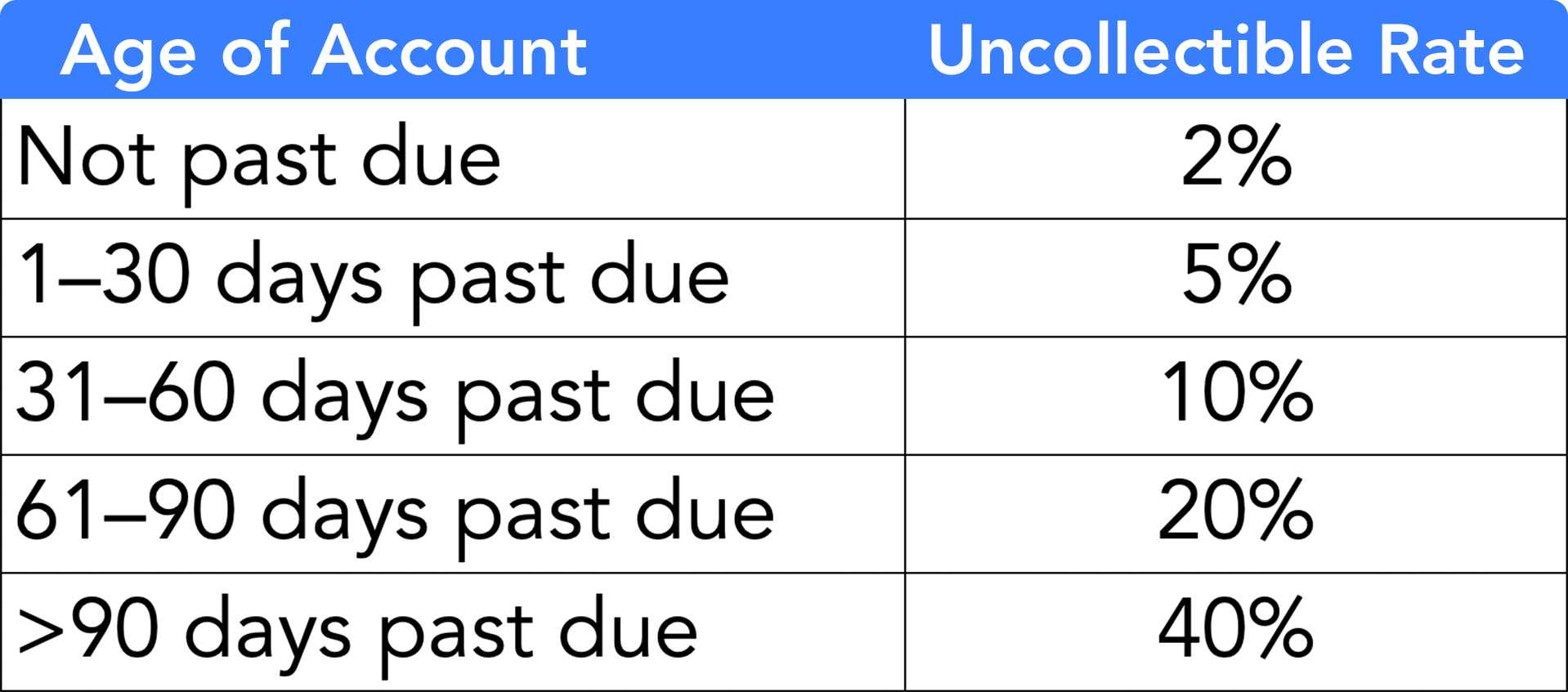
Determine the ending balance of allowance for doubtful accounts at December 31st, 2020.
Practice: Percentage of Receivables
Prepare the journal entry to record bad debt expense on October 31st, 2020. The company uses the percentage of receivables method to estimate its allowance for doubtful account, it estimates that 4% of receivables will never be collected. The following financial information is available:

What is the ending balance of the allowance for doubtful accounts?
Practice: Percentage of Receivables (Aging Method)
On August 1st, 2020 ABC Inc. had $12,000 in accounts receivables and $2,000 in allowance for doubtful accounts. The following transactions took place between August and December.
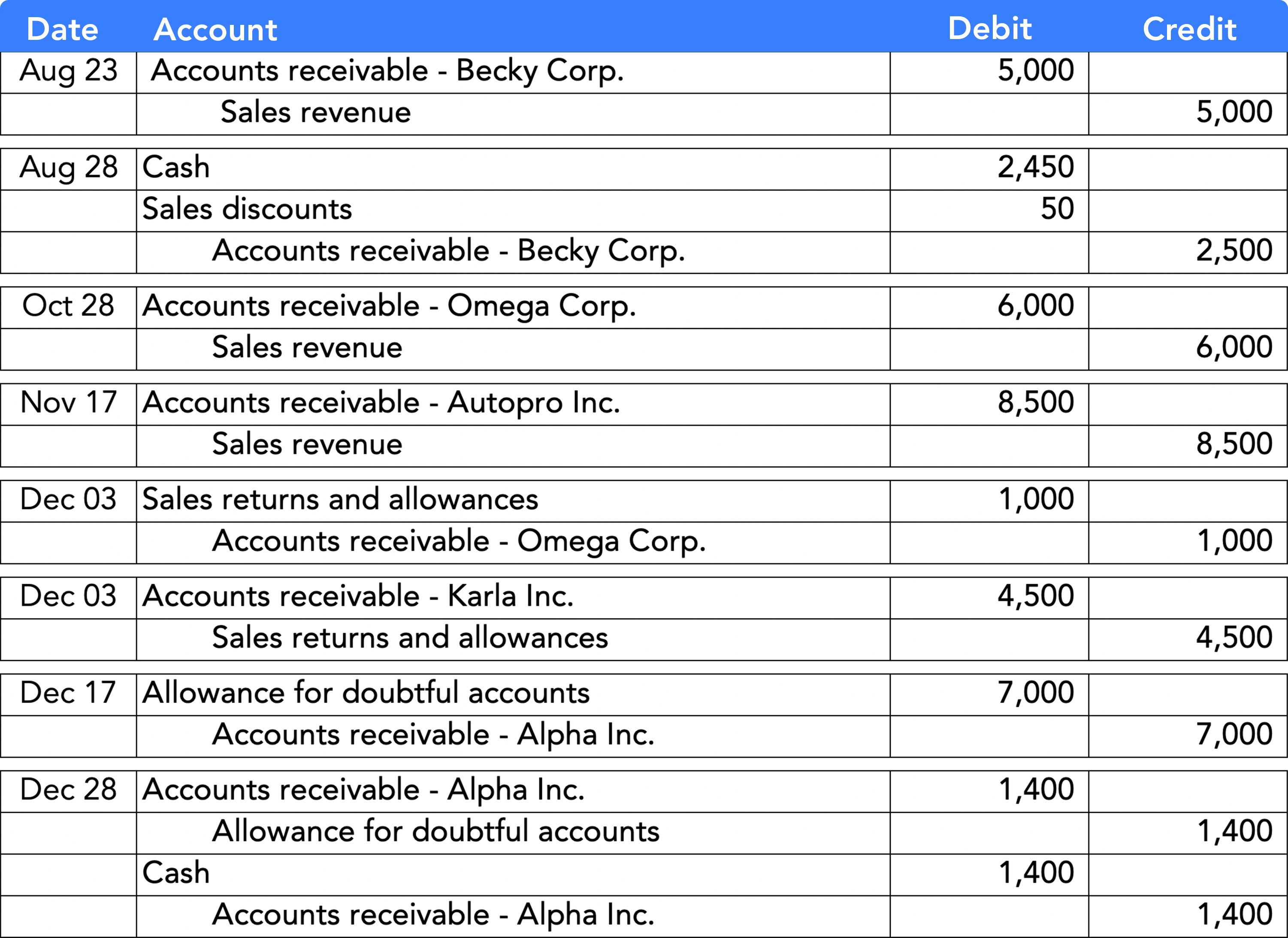
Uncollectible Rates
Not past due: 1.5%
1-30 days past due: 8%
31-60 days past due: 15%
Over 60 days past due: 32%
What is the ending balance of accounts receivable?