Wize University Introduction to Financial Accounting Textbook > Shareholders' Equity
Retiring Par-Value Shares
Popular Courses
ACCT 2301
The University of Texas at Dallas
Intro to Financial Accounting
General Course
COMM 293
University of British Columbia
Intro to Financial Accounting
University Study Guides
ACCT*1220
University of Guelph
Intro to Financial Accounting
University Study Guides
AP/ADMS 2500 3.00
York University
ADM 1340
University of Ottawa
BU127
Wilfrid Laurier University
ACCT 2301
Houston
ACCT 2301
Houston
AFM 101
University of Waterloo
BUS 251
Simon Fraser University
AFA 100
Toronto Metropolitan University
BUSINESS 3321K
Western University
COM 315
University of Victoria
ACCT-1510
University of Windsor
ADMN 1221H
Trent University
ACC 110
Toronto Metropolitan University
ACC 1100
University of Manitoba
0:00 / 0:00
Retiring Par-value Shares
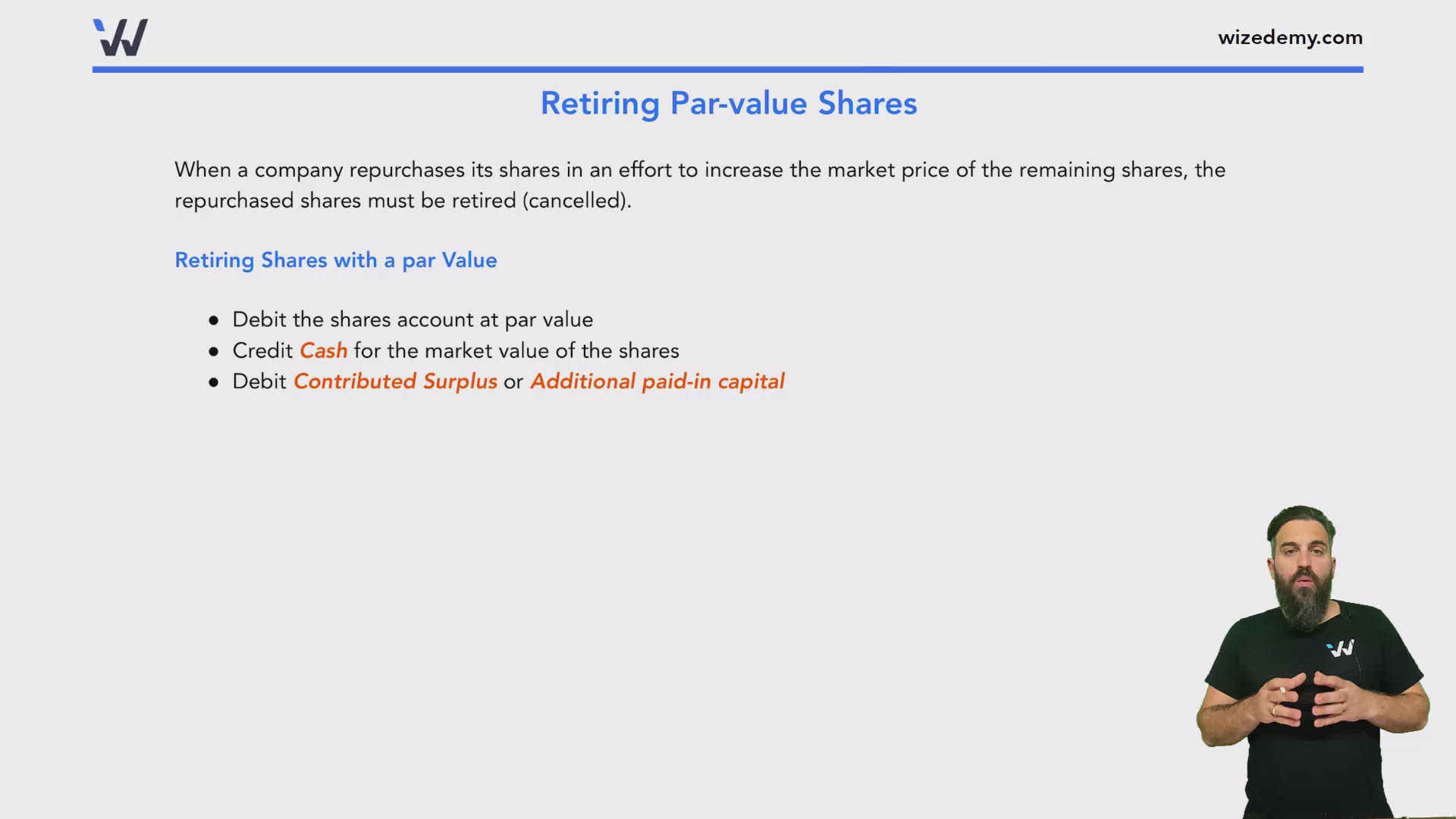
When a company repurchases its shares in an effort to increase the market price of the remaining shares, the repurchased shares must be retired (cancelled).
Retiring Shares with a par Value
- Debit the shares account at par value
- Credit Cash for the market value of the shares
- Debit Contributed Surplus or Additional paid-in capital
Wize Concept
If the balance of Contributed surplus is less than the difference between the par-value and the market price of the shares, debit the rest from Retained earnings.

0:00 / 0:00
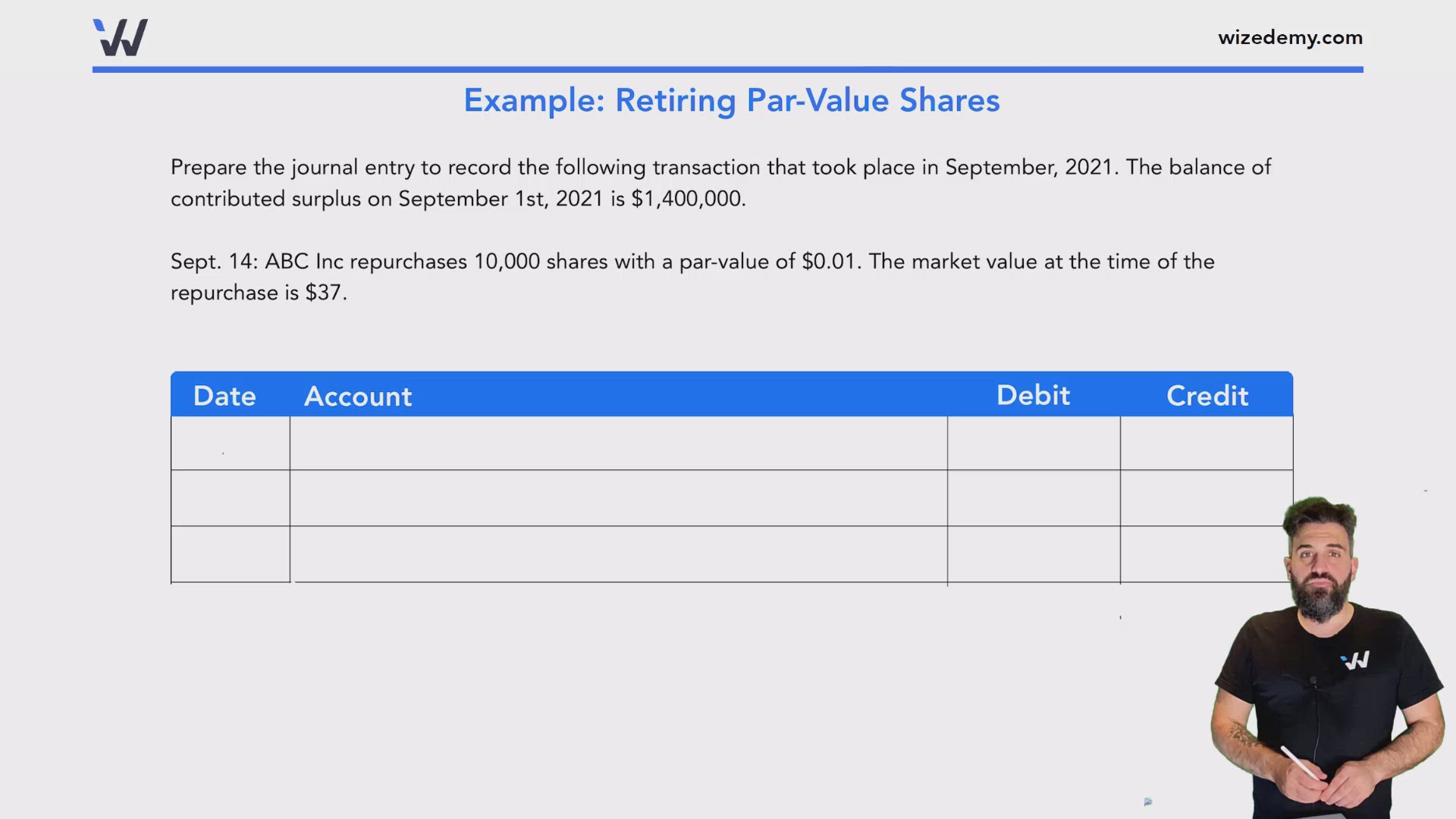
Example: Retiring Par-Value Shares
Prepare the journal entry to record the following transaction that took place in September, 2021. The balance of contributed surplus on September 1st, 2021 is $1,400,000.
Sept. 14: ABC Inc repurchases 10,000 shares with a par-value of $0.01. The market value at the time of the repurchase is $37.

Practice: Retiring Par-value Shares
The following information is available for Corn 'N Cob Corp as at April 30th, 2024:
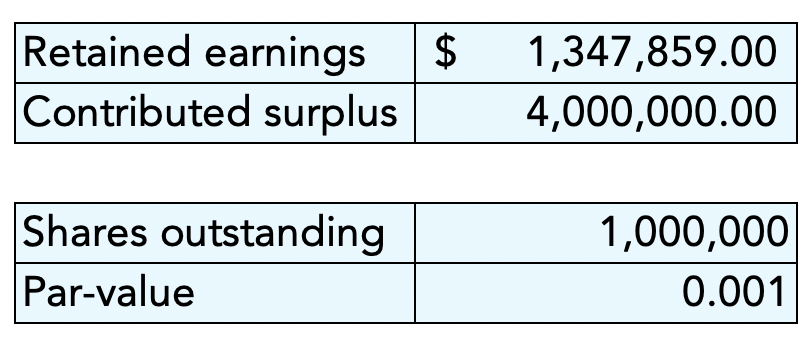
On May 17th, The company repurchased 20,000 shares when they were trading at a market value of $143 each.
Transactions:
| Account | Debit | Credit |
|---|---|---|