Popular Courses
COMM 217
Concordia University
ACCT 2301
The University of Texas at Dallas
Intro to Financial Accounting
General Course
COMM 293
University of British Columbia
Intro to Financial Accounting
University Study Guides
MGCR 211
McGill University
ACCT*1220
University of Guelph
Intro to Financial Accounting
University Study Guides
ACCT 217
University of Calgary
AP/ADMS 2500 3.00
York University
ACCTG 211
University of Alberta
COMMERCE 1AA3
McMaster University
ACC 100
Toronto Metropolitan University
COMM 111
Queen's University
ADM 1340
University of Ottawa
BU127
Wilfrid Laurier University
ACCT 2301
Houston
ACCT 2301
Houston
RSM219H1
University of Toronto
COMM 1101
Dalhousie University
0:00 / 0:00
Liabilities
What is a liability?
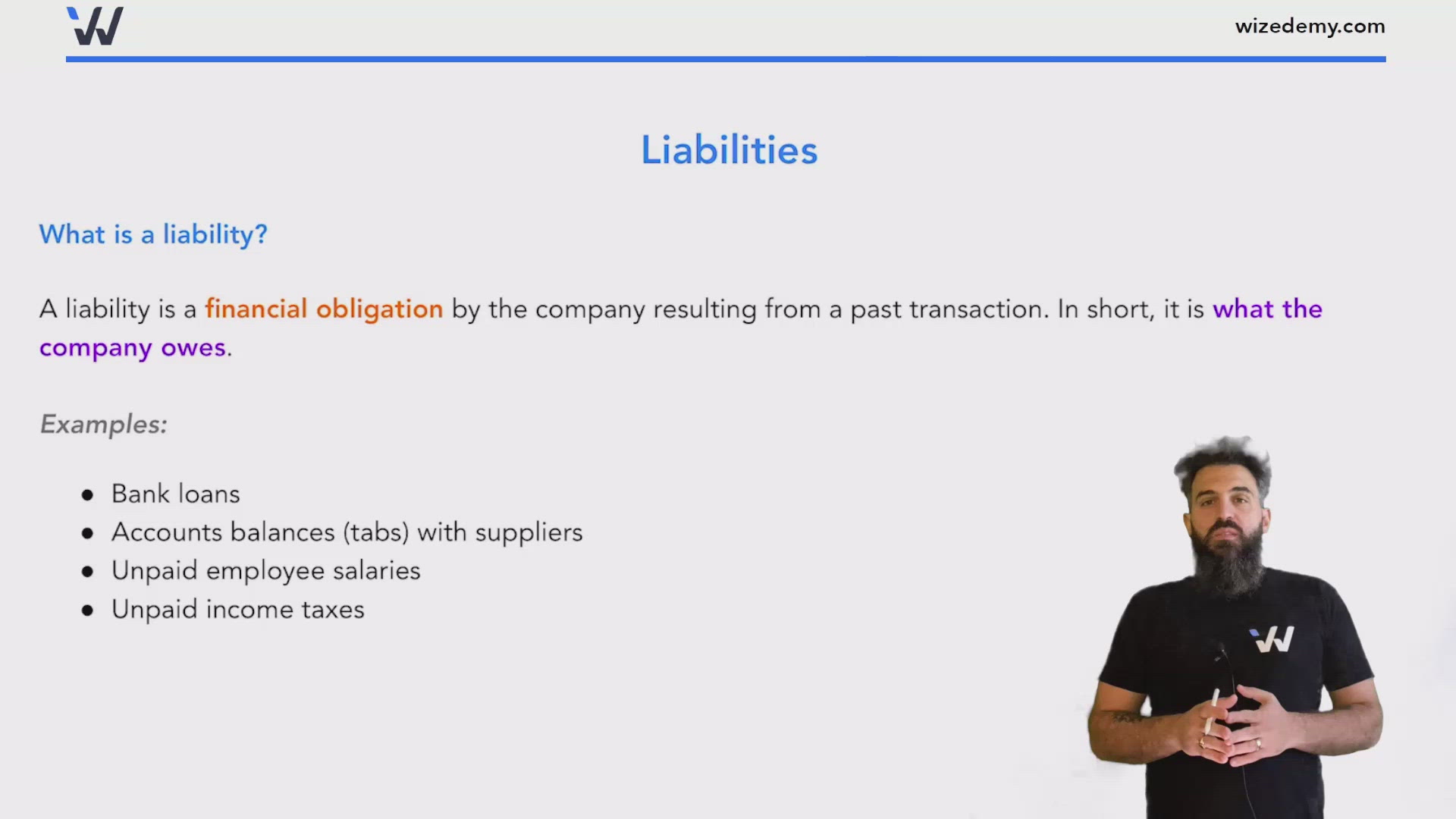
A liability is a financial obligation by the company resulting from a past transaction. In short, it is what the company owes.
Examples:
- Bank loans
- Accounts balances (tabs) with suppliers
- Unpaid employee salaries
- Unpaid income taxes
0:00 / 0:00
Classification of Liabilities
Current Liabilities
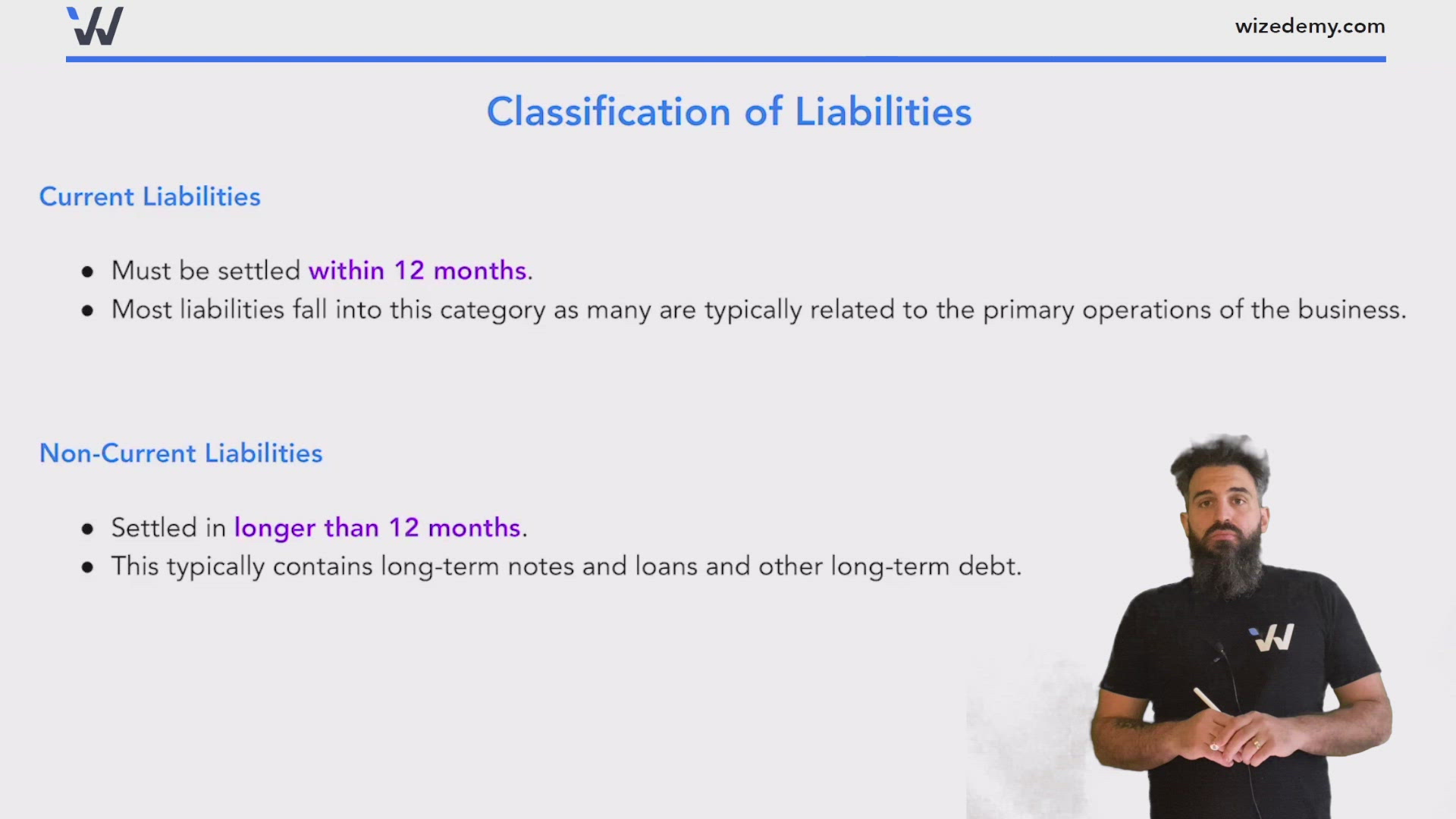
- Must be settled within 12 months.
- Most liabilities fall into this category as many are typically related to the primary operations of the business.
Non-Current Liabilities
- Settled in longer than 12 months.
- This typically contains long-term notes and loans and other long-term debt.
0:00 / 0:00
Types of Liabilities
Payables
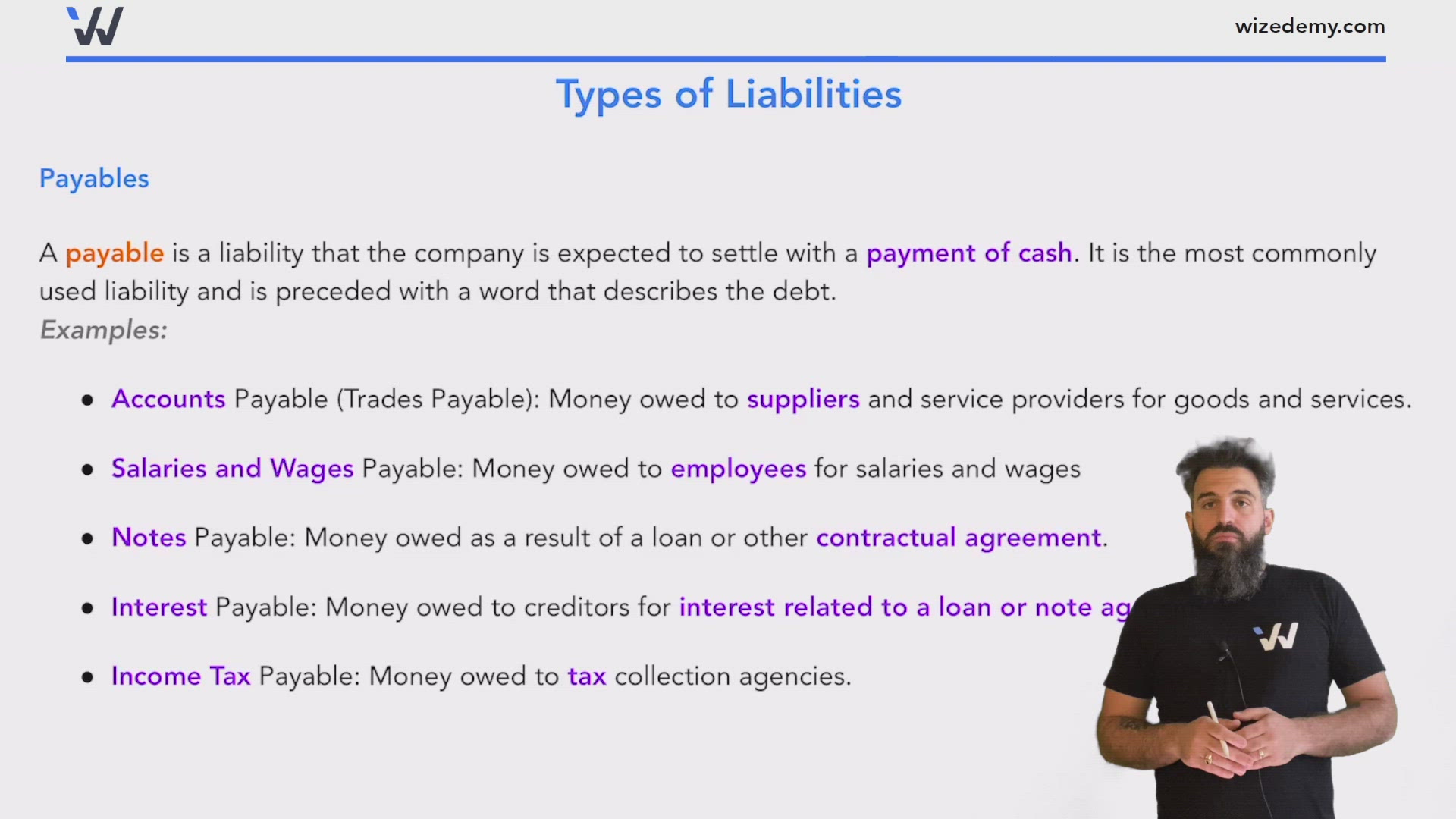
A payable is a liability that the company is expected to settle with a payment of cash. It is the most commonly used liability and is preceded with a word that describes the debt.
Examples:
- Accounts Payable (Trades Payable): Money owed to suppliers and service providers for goods and services.
- Salaries and Wages Payable: Money owed to employees for salaries and wages
- Notes Payable: Money owed as a result of a loan or other contractual agreement.
- Interest Payable: Money owed to creditors for interest related to a loan or note agreement.
- Income Tax Payable: Money owed to tax collection agencies.
Unearned Revenue (Deferred Revenue)
This refers to cash that has been collected from customers for which the goods or services have not yet been provided. Until the goods or services are provided, the amount is recorded as a liability. Once the goods and service are provided, it is converted to a revenue.
0:00 / 0:00
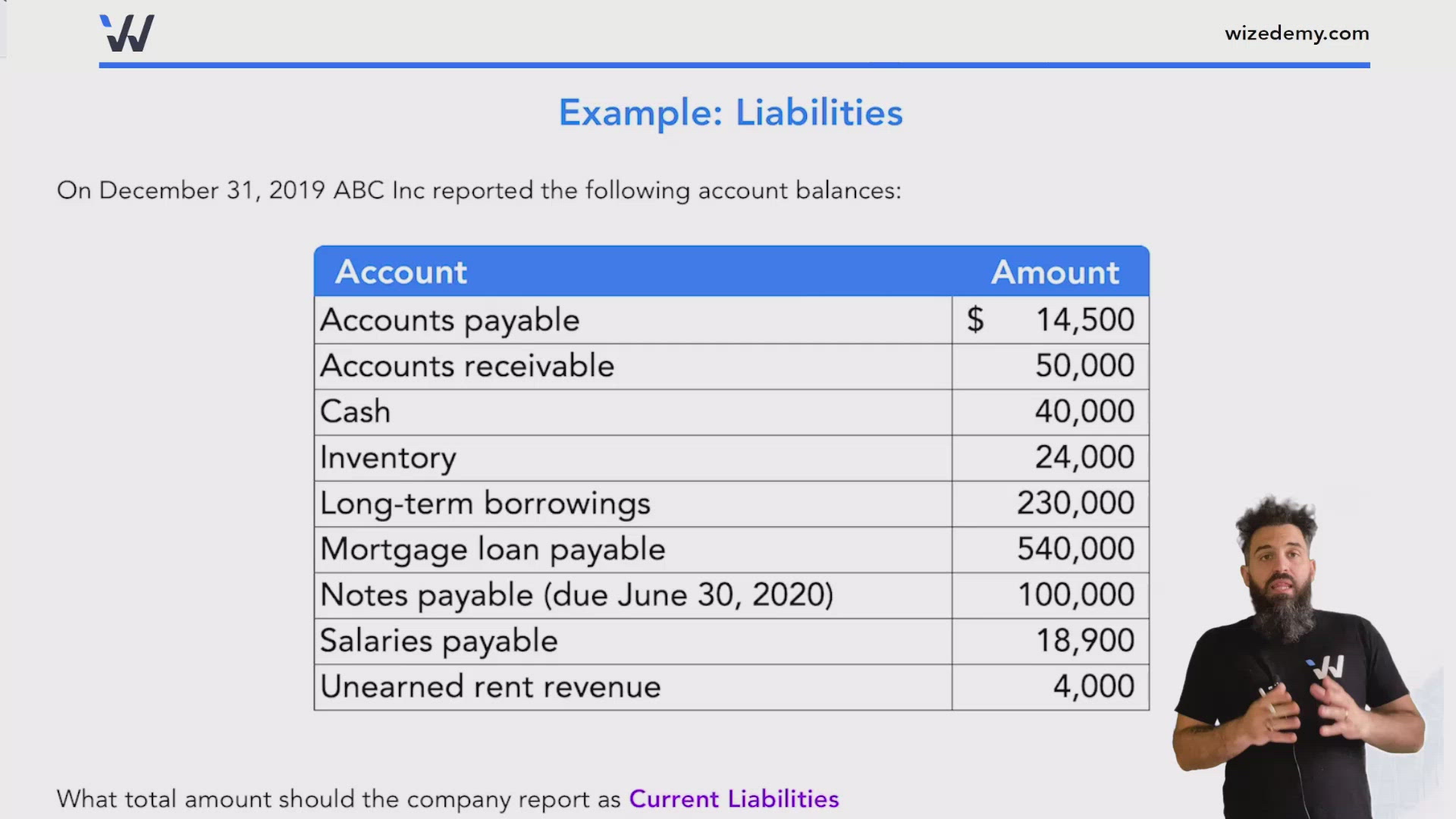
Example: Liabilities
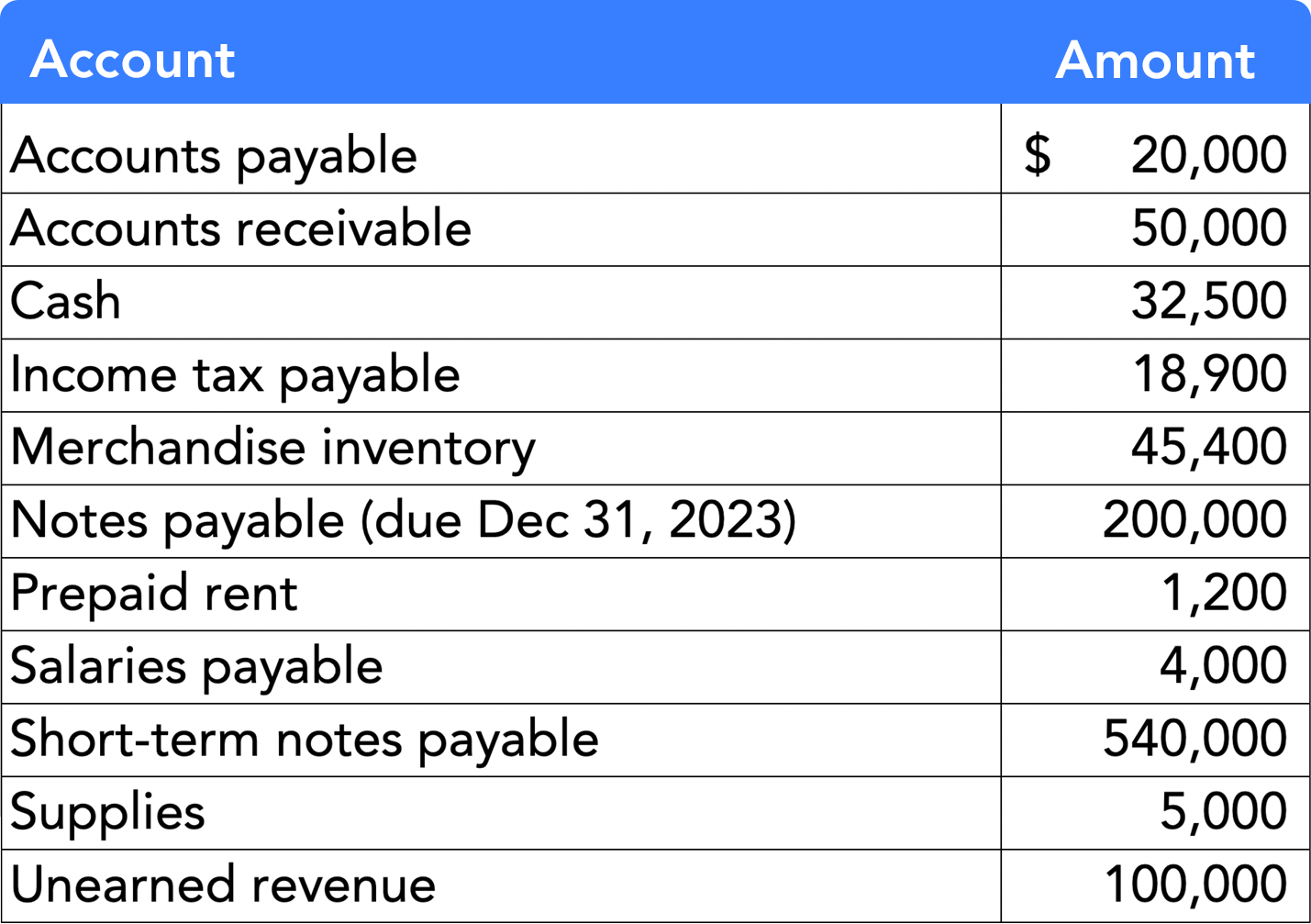
On December 31, 2019 ABC Inc reported the following account balances:

What total amount should the company report as Current Liabilities
Practice: Liabilities
ABC Inc. reported the following ending balances in 2019: