Popular Courses
COMM 217
Concordia University
ACCT 2301
The University of Texas at Dallas
Intro to Financial Accounting
General Course
COMM 293
University of British Columbia
Intro to Financial Accounting
University Study Guides
MGCR 211
McGill University
ACCT*1220
University of Guelph
Intro to Financial Accounting
University Study Guides
ACCT 217
University of Calgary
AP/ADMS 2500 3.00
York University
COMMERCE 1AA3
McMaster University
ACC 100
Toronto Metropolitan University
COMM 111
Queen's University
ADM 1340
University of Ottawa
BU127
Wilfrid Laurier University
ACCT 2301
Houston
ACCT 2301
Houston
RSM219H1
University of Toronto
COMM 1101
Dalhousie University
AFM 101
University of Waterloo
0:00 / 0:00
Debits and Credits
In accounting we use the words debit and credit to describe the change in an account value. The terms debit and credit vary in their meaning depending on the type of account they are applied to.
- Debit means left, credit means right.
Watch Out!
A common mistake students make is to associate the words debit and credit with increase and decrease. Do not do this! Debits and credits can mean both increase and decrease depending on the type of account.
- Used to describe every transaction.
- In every transaction, debits must equal credits.
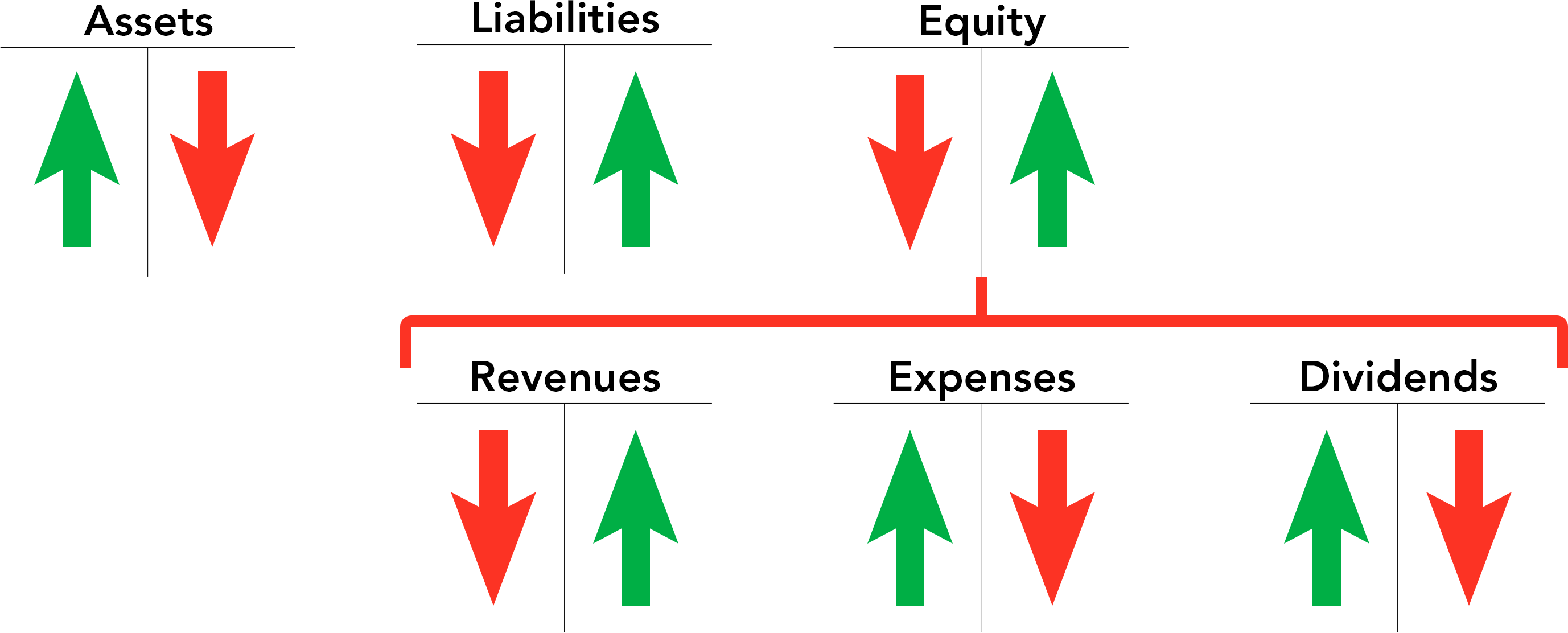
- Assets, Expenses and Dividends are called natural debits.
- Liabilities, Shareholders' Equity and Revenues are called natural credits.
Recall the Expanded Accounting Equation:

Debit and Credit Effect
0:00 / 0:00
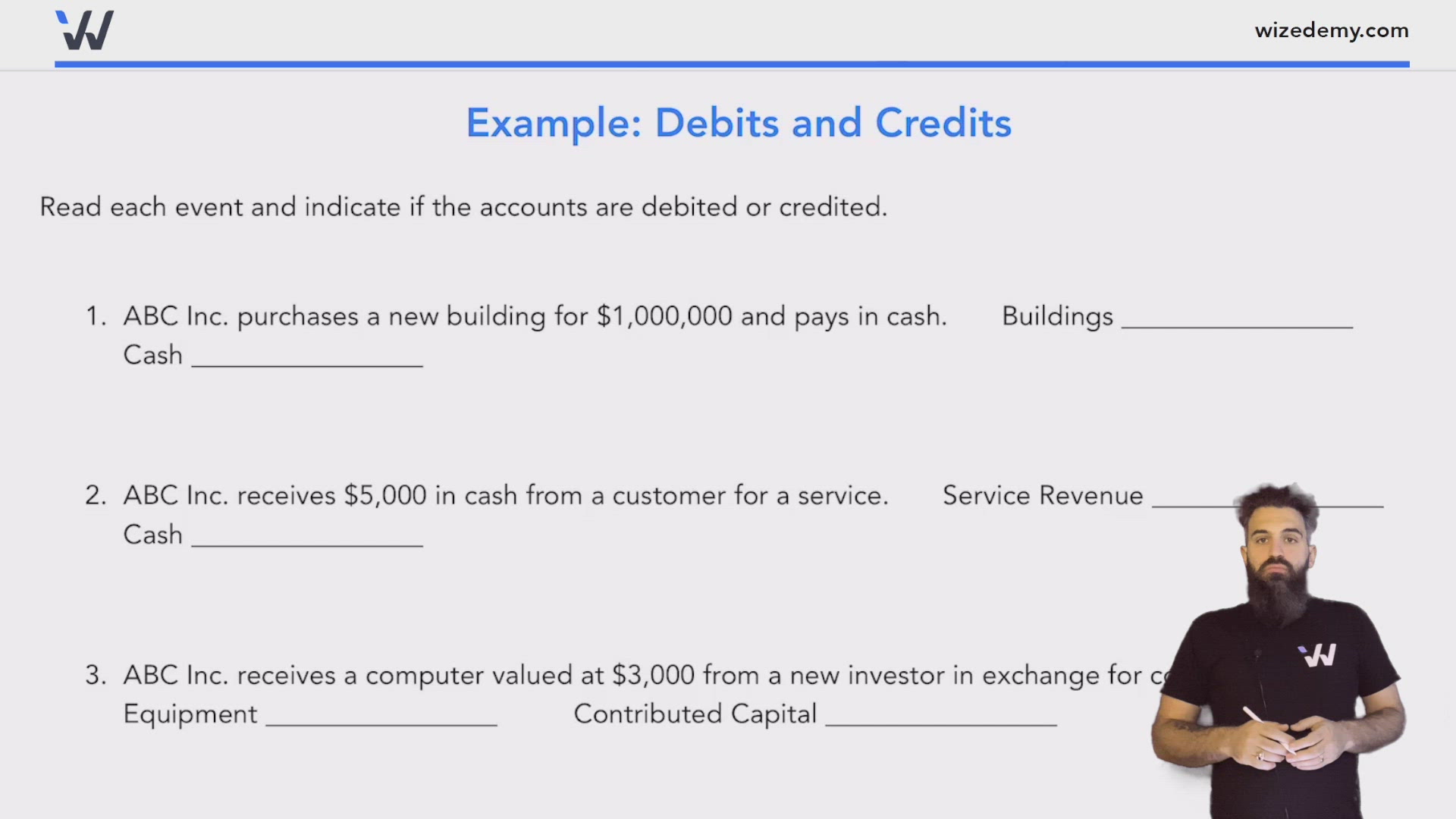
Example: Debits and Credits
Read each event and indicate if the accounts are debited or credited.
- ABC Inc. purchases a new building for $1,000,000 and pays in cash. Buildings _________________ Cash _________________
- ABC Inc. receives $5,000 in cash from a customer for a service. Service Revenue _________________ Cash _________________
- ABC Inc. receives a computer valued at $3,000 from a new investor in exchange for common shares. Equipment _________________ Contributed Capital _________________
- ABC Inc. borrows $50,000 from BRC Bank signing a note to repay the loan in 4 years. Cash _________________ Notes Payable _________________
Practice: Debits and Credits
For each of the events described, indicate if the account in question should be debited or credited.
Karlawn Corp. purchases new inventory from its supplier on account at a cost of $1,000.
Practice: Debits and Credits
Determine the correct ending account balances
Determine how much cash is on hand following these transactions:
Jan 1: Cash balance was $1,000
Jan 5: Debit cash for $230
Jan 17: Debit cash for $200
Jan 22: Credit cash for $80
Jan 27: Debit cash for $100