Wize University Introduction to Financial Accounting Textbook > Long-Term Liabilities
Bond Amortization: Effective Interest Rate Method
Popular Courses
COMM 217
Concordia University
ACCT 2301
The University of Texas at Dallas
Intro to Financial Accounting
General Course
COMM 293
University of British Columbia
Intro to Financial Accounting
University Study Guides
MGCR 211
McGill University
ACCT*1220
University of Guelph
Intro to Financial Accounting
University Study Guides
ACCT 217
University of Calgary
AP/ADMS 2500 3.00
York University
COMMERCE 1AA3
McMaster University
COMM 111
Queen's University
ADM 1340
University of Ottawa
BU127
Wilfrid Laurier University
ACCT 2301
Houston
ACCT 2301
Houston
COMM 1101
Dalhousie University
AFM 101
University of Waterloo
BUS 251
Simon Fraser University
AFA 100
Toronto Metropolitan University
0:00 / 0:00
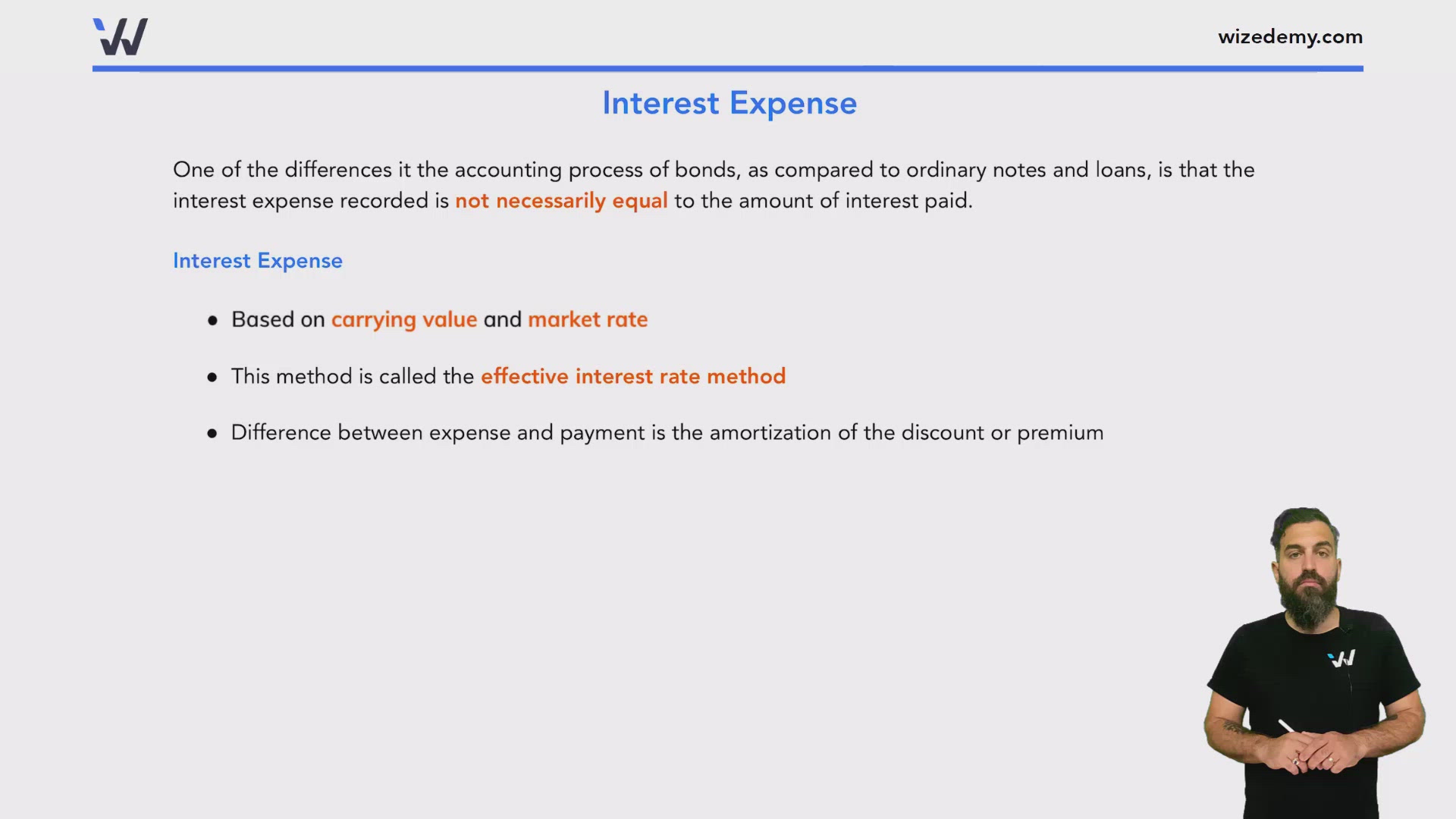
Interest Expense
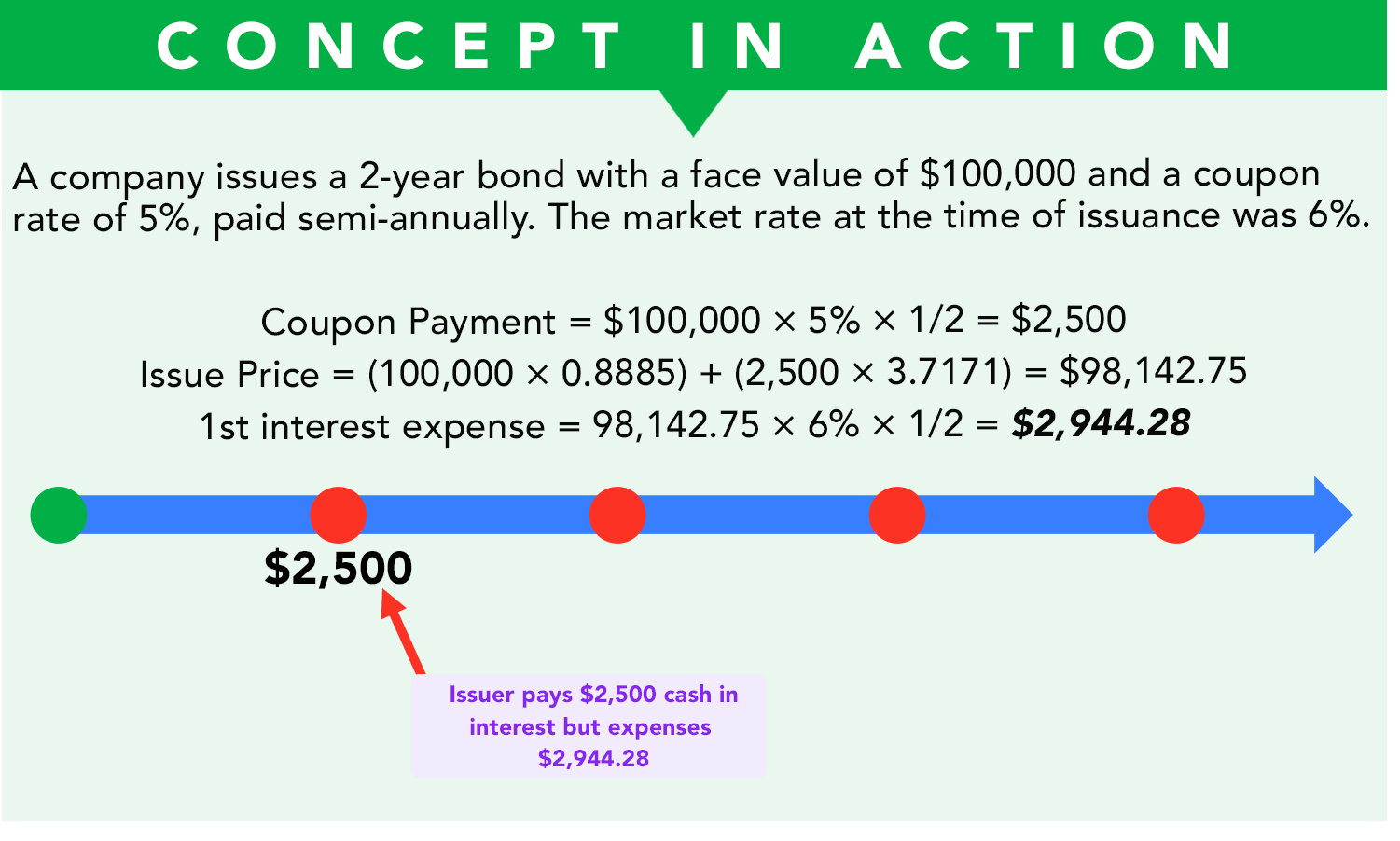
One of the differences it the accounting process of bonds, as compared to ordinary notes and loans, is that the interest expense recorded is not necessarily equal to the amount of interest paid.
Interest Expense
- Based on carrying value and market rate
- This method is called the effective interest rate method
- Difference between expense and payment is the amortization of the discount or premium

0:00 / 0:00
Bond Amortization Table
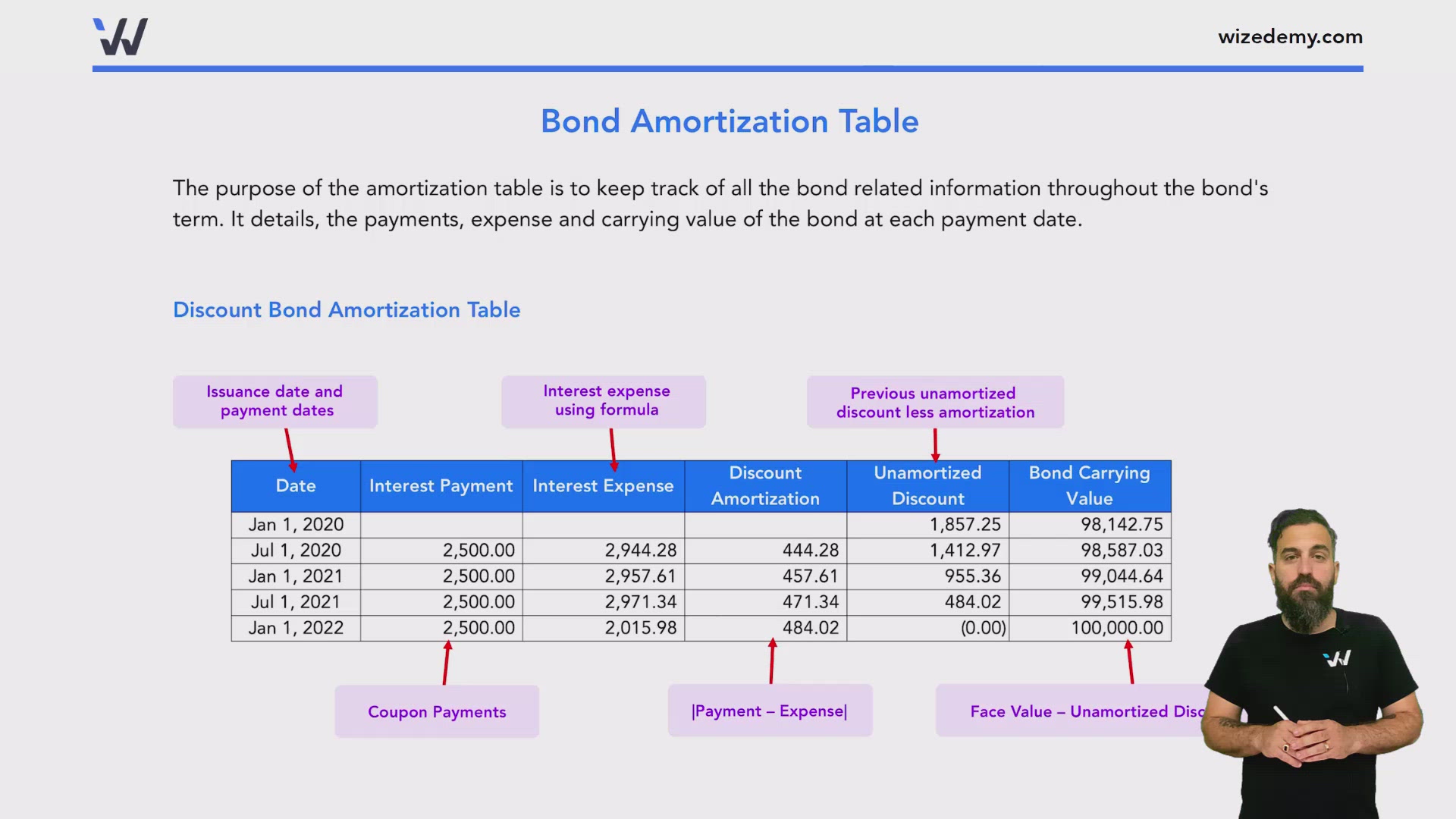
The purpose of the amortization table is to keep track of all the bond related information throughout the bond's term. It details, the payments, expense and carrying value of the bond at each payment date.
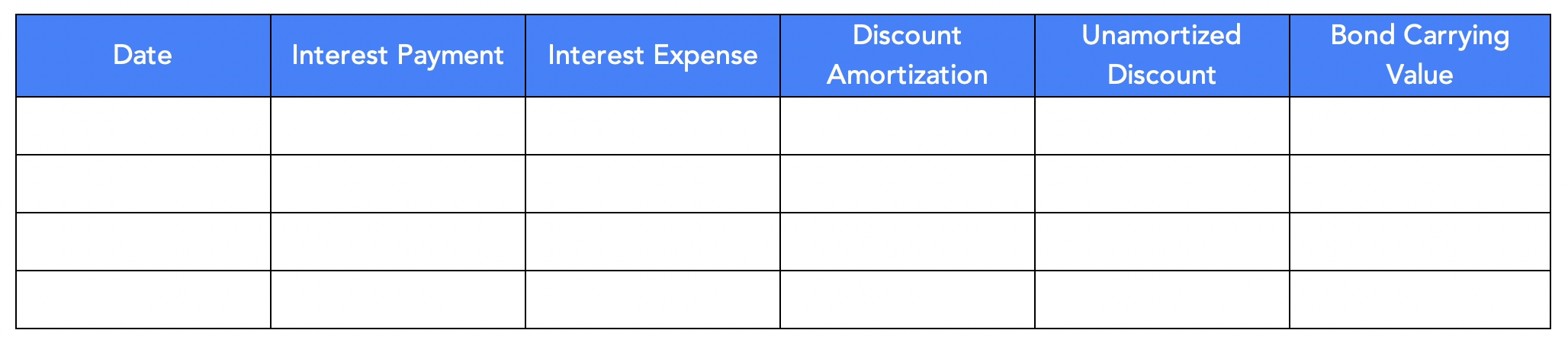
Discount Bond Amortization Table

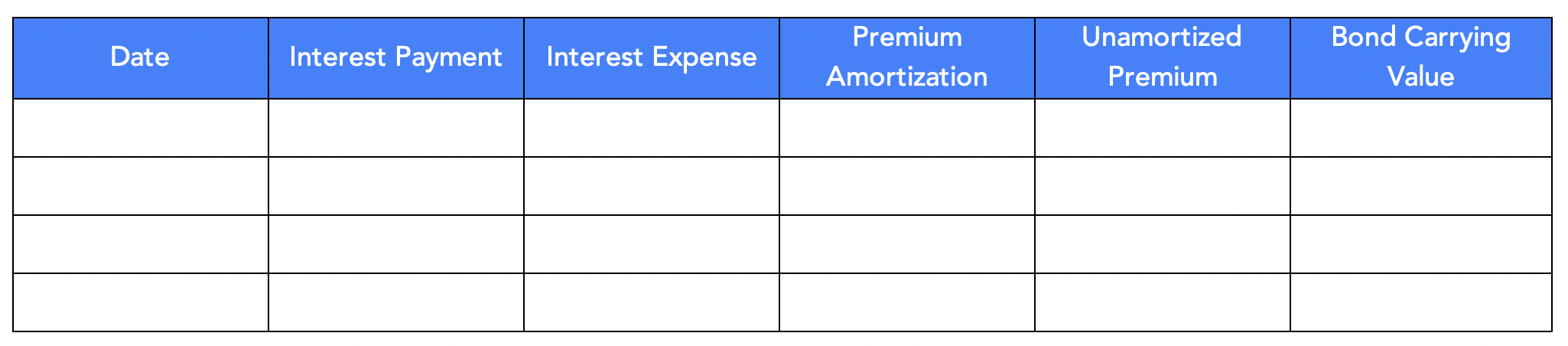
Premium Bond Amortization Table

0:00 / 0:00
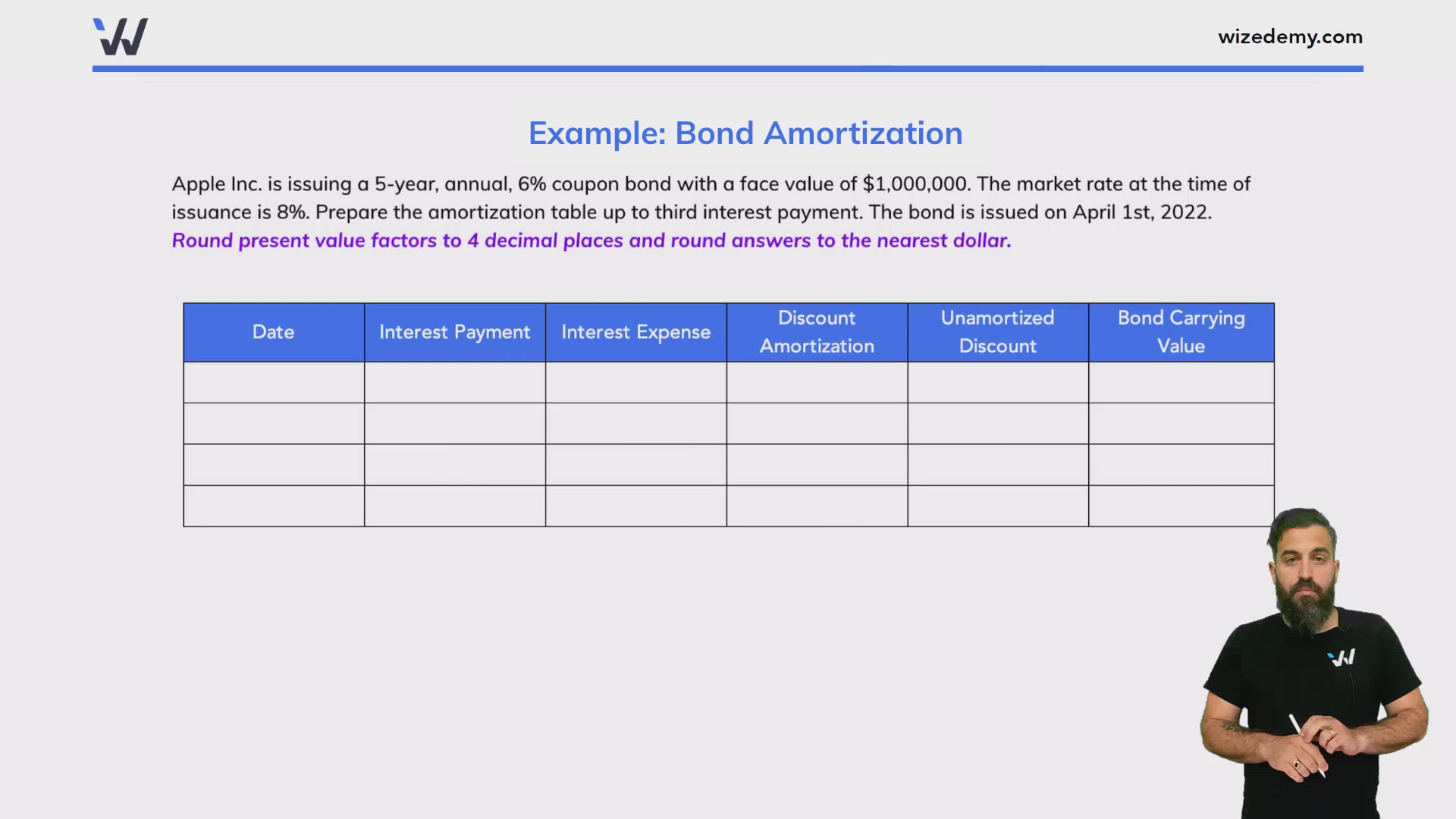
Example: Bond Amortization
Apple Inc. is issuing a 5-year, annual, 6% coupon bond with a face value of $1,000,000. The market rate at the time of issuance is 8%. Prepare the amortization table up to third interest payment. The bond is issued on April 1st, 2022.
Round present value factors to 4 decimal places and round answers to the nearest dollar.
0:00 / 0:00
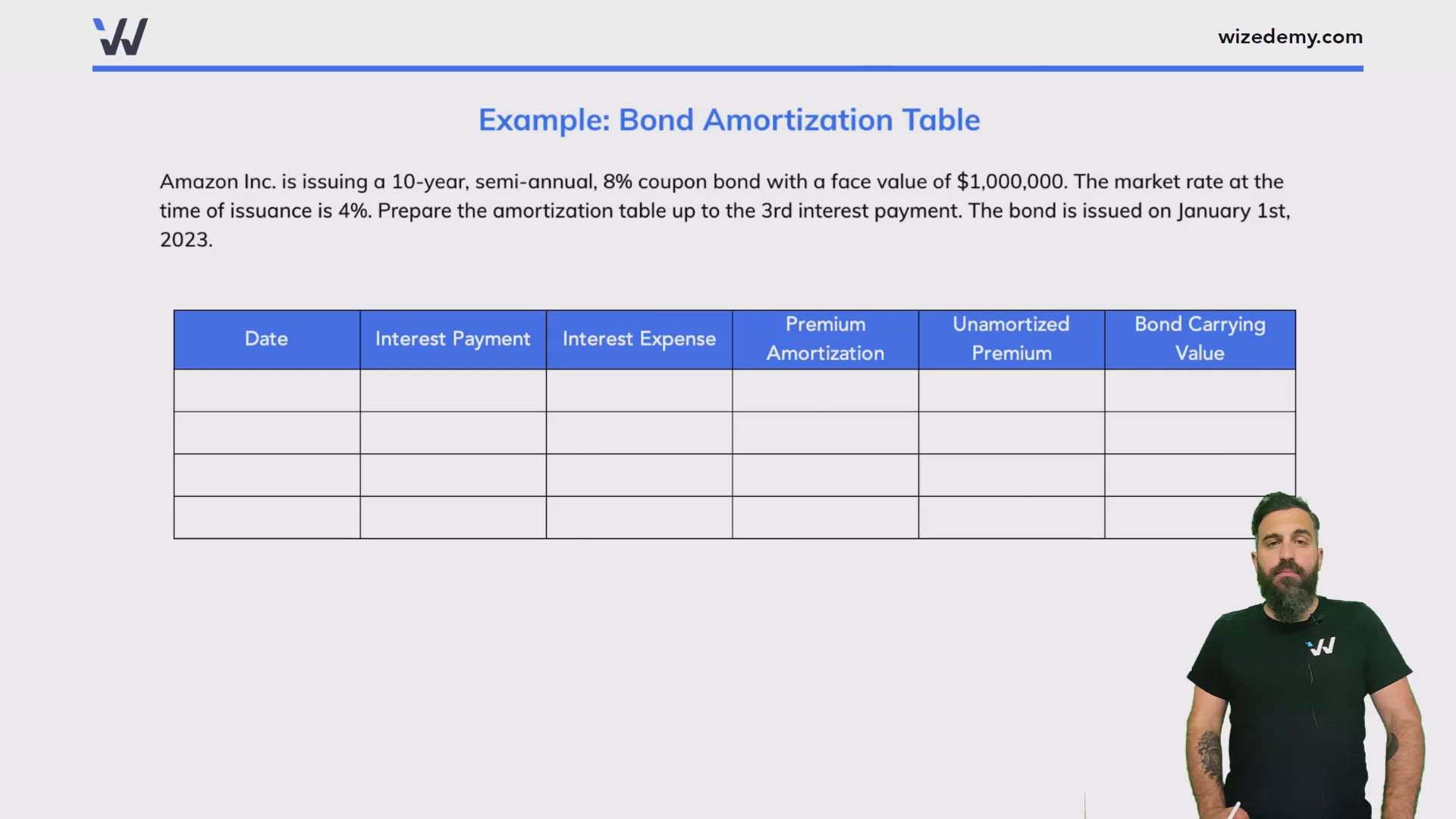
Example: Bond Amortization Table
Amazon Inc. is issuing a 10-year, semi-annual, 8% coupon bond with a face value of $1,000,000. The market rate at the time of issuance is 4%. Prepare the amortization table up to the 3rd interest payment. The bond is issued on January 1st, 2023.
Bond Present Value: 1,000,000 x 0.6730 + 40,000 x 16.3514 = 1,327,056
Round present value factors to 4 decimal places and round answers to the nearest dollar.
Practice: Bond Amortization Table
On April 1st, 2020, Wize Corp. issued 5-year bonds with a face value of $200,000 and a coupon rate of 6% paid semi-annually. At the time of issuance, the market rate on bonds was 8%. Prepare the amortization table for the first 3 interest payments. The bonds were sold at 91.89% of face value.
Round present value factors to 4 decimal places and round answers to the nearest dollar.
| Date | Interest Payment | Interest Expense | Discount Amortization | Unamortized Discount | Bond Carrying Value |
| April 1, 2020 | |||||
| October 1, 2020 | |||||
| April 1, 2021 | |||||
| October 1, 2021 |
Practice: Bond Amortization Table
On April 1st, 2020, Wize Corp. issued 5-year bonds with a face value of $300,000 and a coupon rate of 8% paid semi-annually. At the time of issuance, the market rate on bonds was 4%. Prepare the amortization table for the first 3 interest payments. The bonds were sold at 117.97% of face value.
Round all answers to the nearest dollar.
| Date | Interest Payment | Interest Expense | Premium Amortization | Unamortized Premium | Bond Carrying Value |
| April 1, 2020 | |||||
| October 1, 2020 | |||||
| April 1, 2021 | |||||
| October 1, 2021 |