Popular Courses
COMM 217
Concordia University
ACCT 2301
The University of Texas at Dallas
Intro to Financial Accounting
General Course
COMM 293
University of British Columbia
Intro to Financial Accounting
University Study Guides
MGCR 211
McGill University
ACCT*1220
University of Guelph
Intro to Financial Accounting
University Study Guides
ACCT 217
University of Calgary
AP/ADMS 2500 3.00
York University
ACCTG 211
University of Alberta
COMMERCE 1AA3
McMaster University
ACC 100
Toronto Metropolitan University
COMM 111
Queen's University
ADM 1340
University of Ottawa
BU127
Wilfrid Laurier University
ACCT 2301
Houston
ACCT 2301
Houston
RSM219H1
University of Toronto
COMM 1101
Dalhousie University
0:00 / 0:00
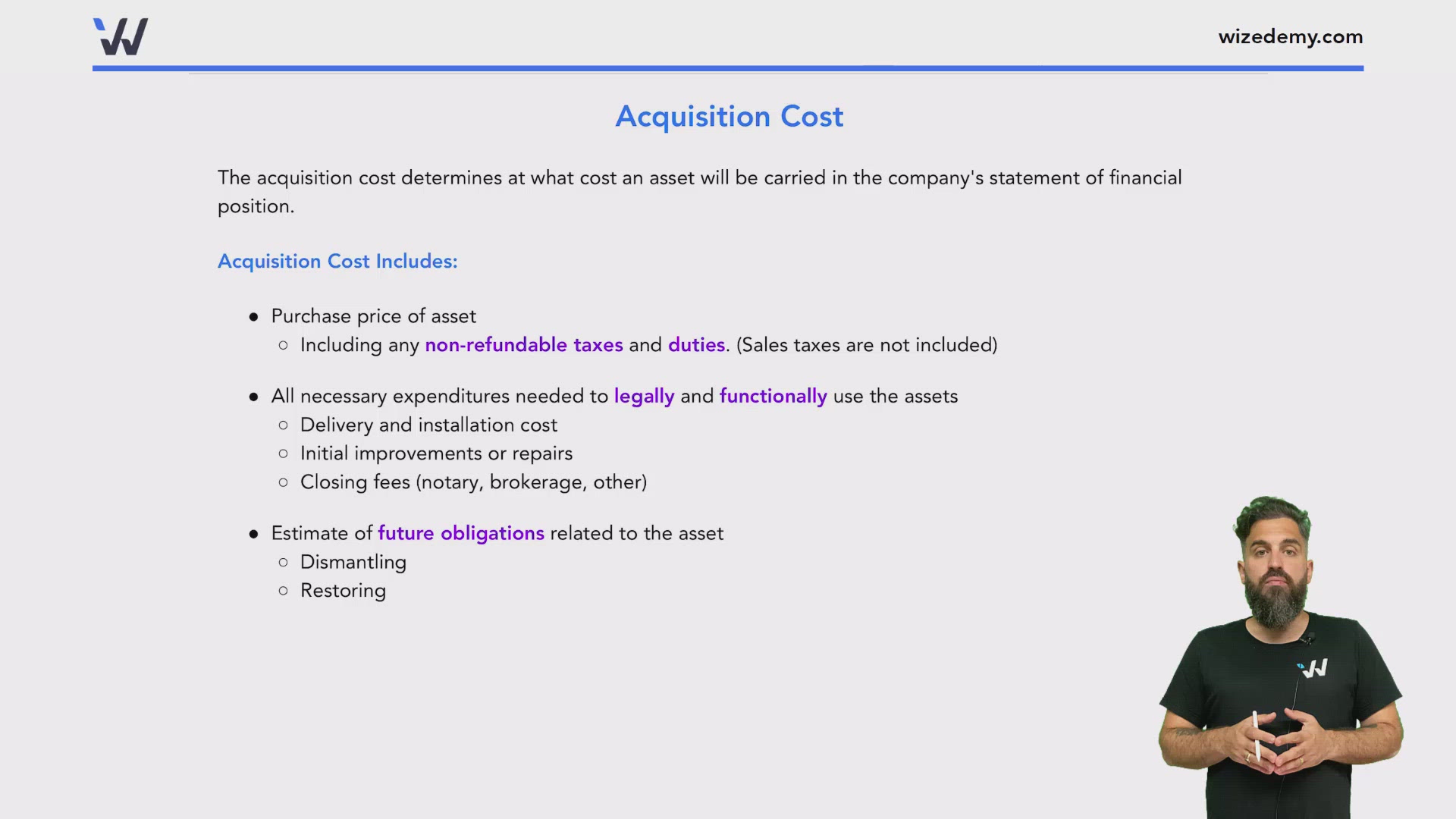
Acquisition Cost
The acquisition cost determines at what cost an asset will be carried in the company's statement of financial position.
Acquisition Cost Includes:
- Purchase price of asset
- Including any non-refundable taxes and duties. (Sales taxes are not included)
- All necessary expenditures needed to legally and functionally use the assets
- Delivery and installation cost
- Initial improvements or repairs
- Closing fees (notary, brokerage, other)
- Interest incurred during construction
- Estimate of future obligations related to the asset
- Dismantling
- Restoring
0:00 / 0:00
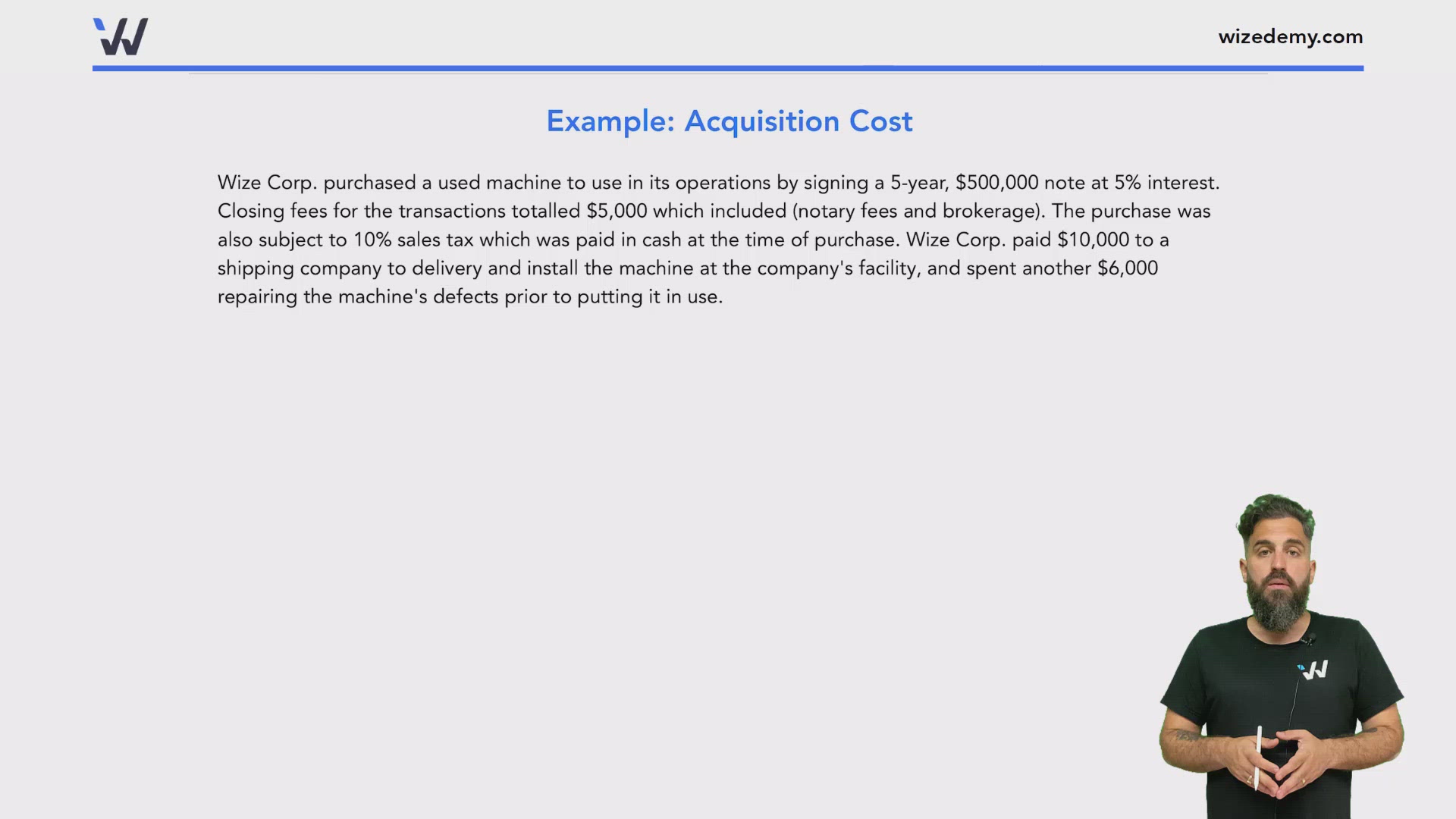
Example: Acquisition Cost
Wize Corp. purchased a used machine to use in its operations by signing a 5-year, $500,000 note at 5% interest. Closing fees for the transactions totalled $5,000 which included (notary fees and brokerage). The purchase was also subject to 10% sales tax which was paid in cash at the time of purchase. Wize Corp. paid $10,000 to a shipping company to delivery and install the machine at the company's facility, and spent another $6,000 repairing the machine's defects prior to putting it in use.
Practice: Acquisition Cost
ABC Corp. is acquiring a new building at a cost of $600,000 cash. The company must pay a property transfer tax of $6,000 and commissions of $12,000 to the real estate broker that found the property. The building needed a new roof before it could be used, costing the company $25,000. Upon completion of the roof, ABC Corp. invited several of its business associates and local politicians to a ribbon cutting ceremony, the cost of the event amounted to $15,000.
Determine the acquisition cost of the building.