Wize University Introduction to Financial Accounting Textbook > Long-Term Assets
Depreciation and Amortization
Popular Courses
COMM 217
Concordia University
ACCT 2301
The University of Texas at Dallas
Intro to Financial Accounting
General Course
COMM 293
University of British Columbia
Intro to Financial Accounting
University Study Guides
MGCR 211
McGill University
ACCT*1220
University of Guelph
Intro to Financial Accounting
University Study Guides
ACCT 217
University of Calgary
AP/ADMS 2500 3.00
York University
COMMERCE 1AA3
McMaster University
ACCTG 211
University of Alberta
ACC 100
Toronto Metropolitan University
COMM 111
Queen's University
ADM 1340
University of Ottawa
BU127
Wilfrid Laurier University
ACCT 2301
Houston
ACCT 2301
Houston
RSM219H1
University of Toronto
COMM 1101
Dalhousie University
0:00 / 0:00
Depreciation and Amortization
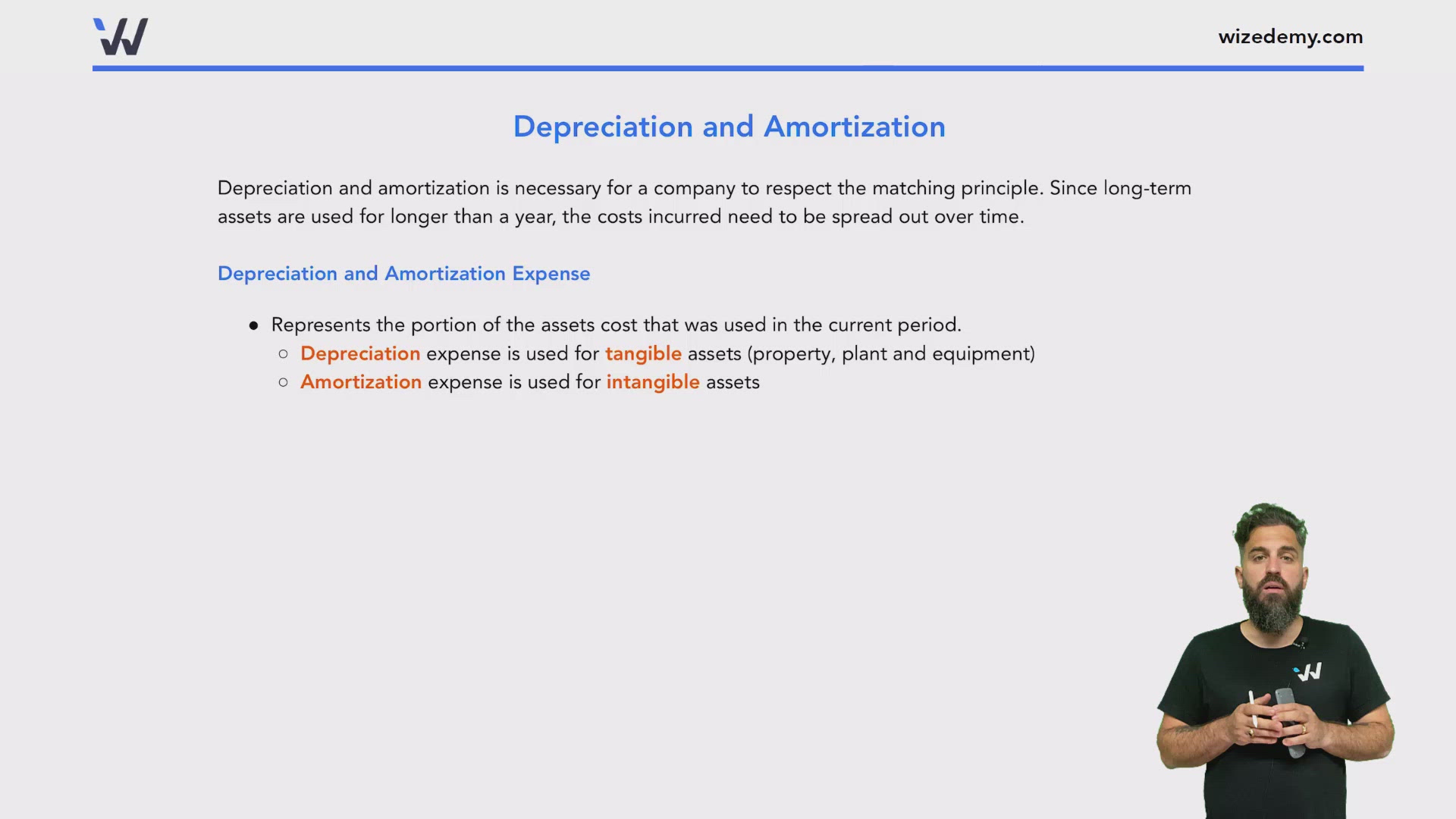
Depreciation and amortization is necessary for a company to respect the matching principle. Since long-term assets are used for longer than a year, the costs incurred need to be spread out over time.
Depreciation and Amortization Expense
- Represents the portion of the assets cost that was used in the current period.
- Depreciation expense is used for tangible assets (property, plant and equipment)
- Amortization expense is used for intangible assets
Factors that Affect Depreciation
- Useful life: How long the company estimates it will use the asset for.
- For intangible assets, cost is amortized over the shorter of the useful life or the legal life.
- Residual value: The value the company estimates will remain at the end of the asset's life, also called salvage value.
- Depreciation method: The type of depreciation used, typically depends on the type of asset.
- Straight-line method
- Declining-balance method
- Units of production method
Accumulated Depreciation
- Contra-asset
- Represents the total amount of depreciation on an asset since it was acquired.
- Decreases the carrying value of an asset.

Journalizing Depreciation
- Adjusting journal entry
- Debit depreciation expense
- Credit accumulated depreciation of specific asset


0:00 / 0:00
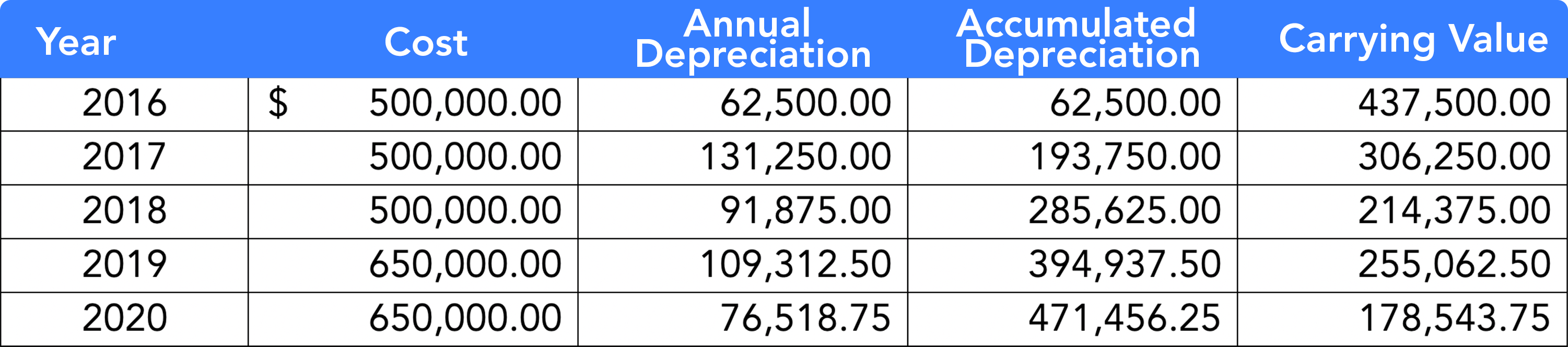
Amortization Table
The amortization table is a useful tool for organizing and keeping track of the depreciation or amortization of a company's assets.
For each year the asset has been owned, it shows the:
- Cost
- Any additional capital expenditures are added to cost in the year they occur
- Annual depreciation
- Accumulated depreciation
- Carrying Value
- Cost - Accumulated depreciation