Wize University Introduction to Financial Accounting Textbook > Long-Term Assets
Straight-Line Method
Popular Courses
COMM 217
Concordia University
ACCT 2301
The University of Texas at Dallas
Intro to Financial Accounting
General Course
COMM 293
University of British Columbia
Intro to Financial Accounting
University Study Guides
MGCR 211
McGill University
ACCT*1220
University of Guelph
Intro to Financial Accounting
University Study Guides
ACCT 217
University of Calgary
AP/ADMS 2500 3.00
York University
COMMERCE 1AA3
McMaster University
ACCTG 211
University of Alberta
ACC 100
Toronto Metropolitan University
COMM 111
Queen's University
ADM 1340
University of Ottawa
BU127
Wilfrid Laurier University
ACCT 2301
Houston
ACCT 2301
Houston
RSM219H1
University of Toronto
COMM 1101
Dalhousie University
0:00 / 0:00
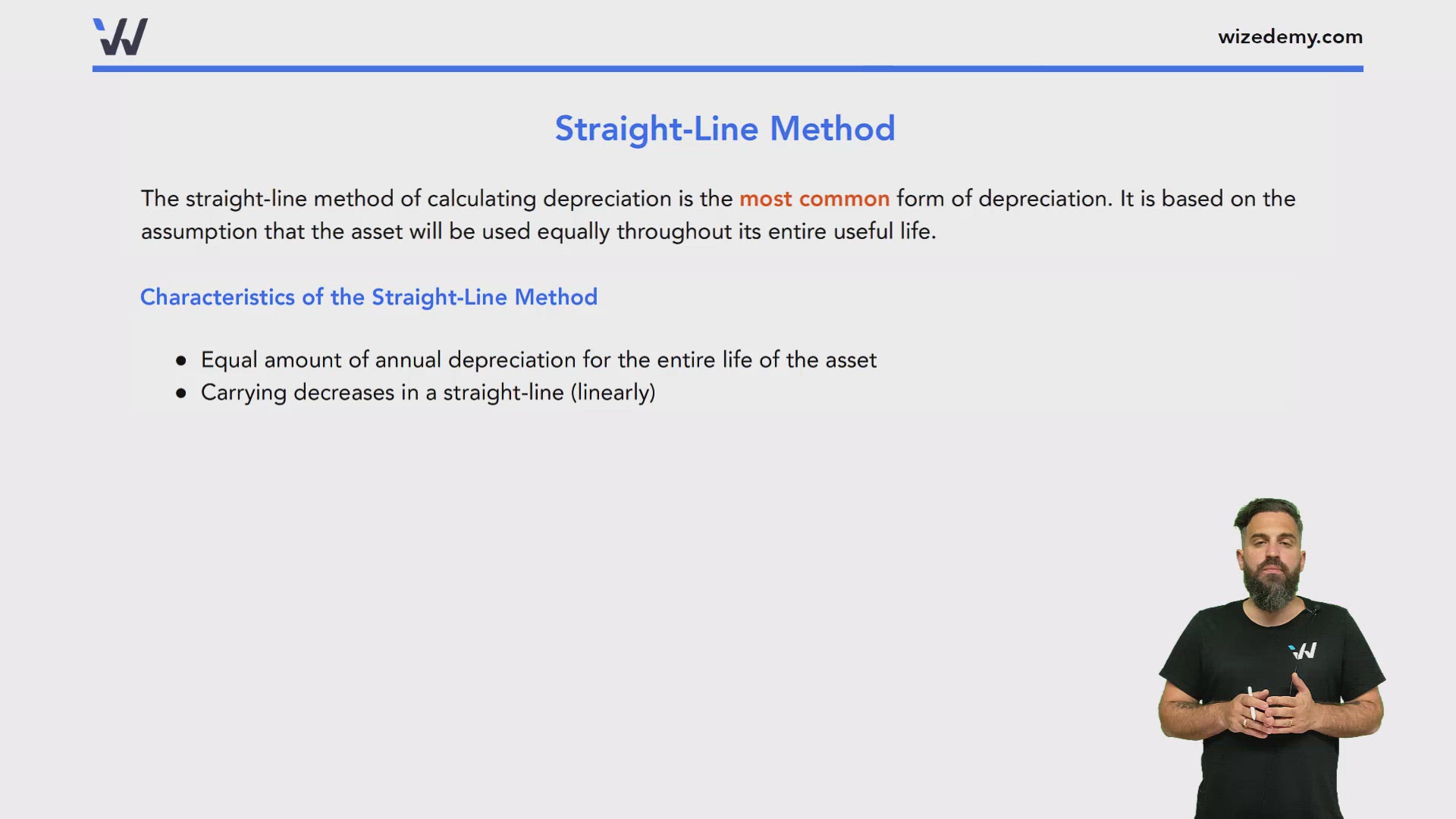
Straight-Line Method
The straight-line method of calculating depreciation is the most common form of depreciation. It is based on the assumption that the asset will be used equally throughout its entire useful life.
Characteristics of the Straight-Line Method
- Equal amount of annual depreciation for the entire life of the asset
- Carrying decreases in a straight-line (linearly)
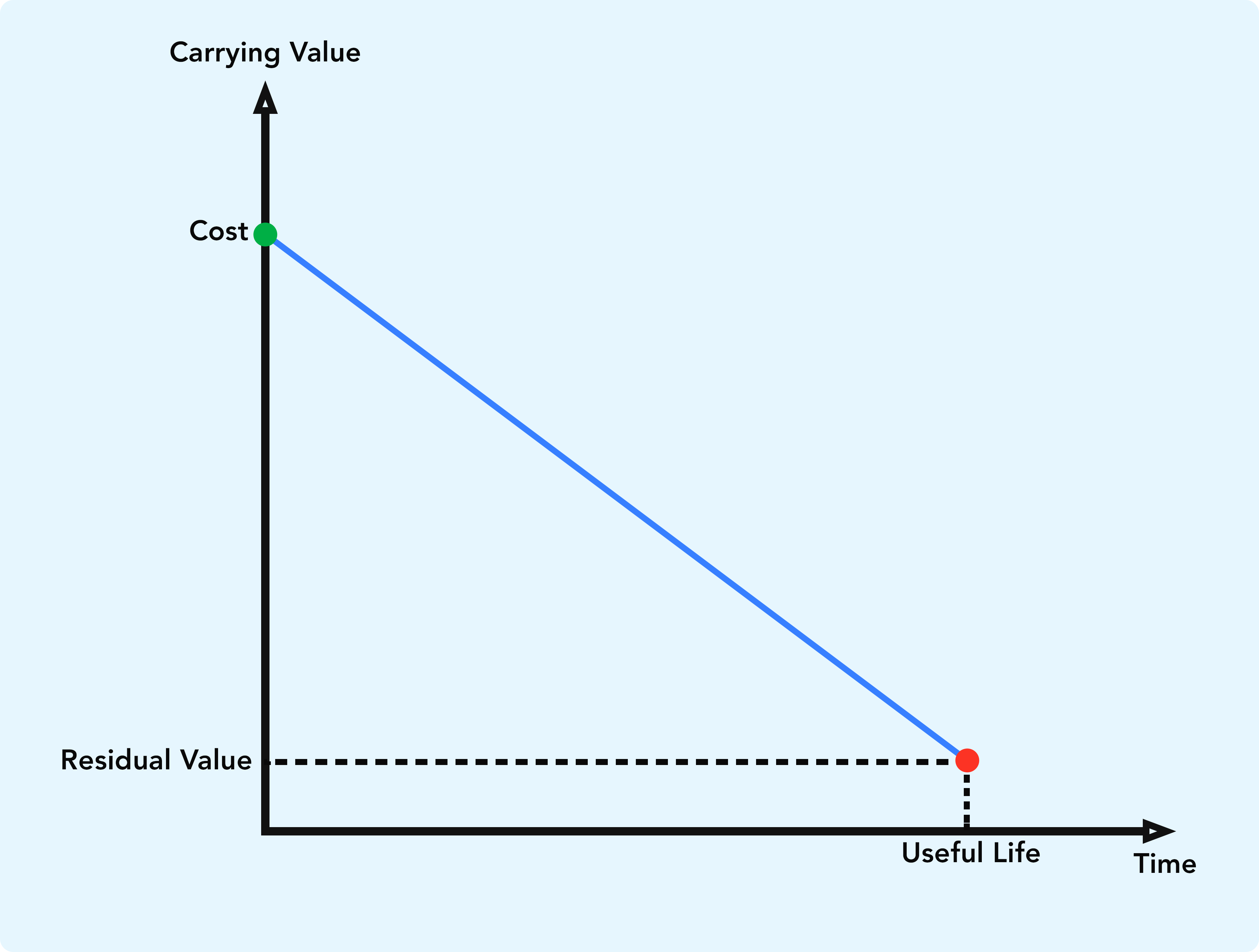
Straight-Line Formula

Watch Out!
Depreciation expense must be adjusted if an asset is not owned for an entire year. For example, if an asset is purchased on December 1st and the year-end is December 31st, it will only be depreciated by 1/12th of the annual amount.


0:00 / 0:00
Example: Straight-Line Method
On April 1st, 2020, Wize Corp. purchased a used machine to use in its operations by signing a 5-year, $500,000 note at 5% interest. Closing fees for the transactions totalled $5,000 which included (notary fees and brokerage). The purchase was also subject to 10% sales tax which was paid in cash at the time of purchase. Wize Corp. paid $10,000 to a shipping company to delivery and install the machine at the company's facility, and spent another $6,000 repairing the machine's defects prior to putting it in use. The company's fiscal year ends December 31st.
The acquisition cost of the machine totalled $521,000, and the company estimates that it will be used for 10 years and have a residual value of $11,000.
- Using the straight-line method, determine the depreciation expense to be recorded on December 31st, 2020 and 2021.
- Prepare the journal entries to record depreciation on December 31st, 2020 and 2021
Journal entry to record depreciation expense in 2020

Journal entry to record depreciation expense in 2021

- Prepare the amortization table for the years 2020 and 2021.
0:00 / 0:00
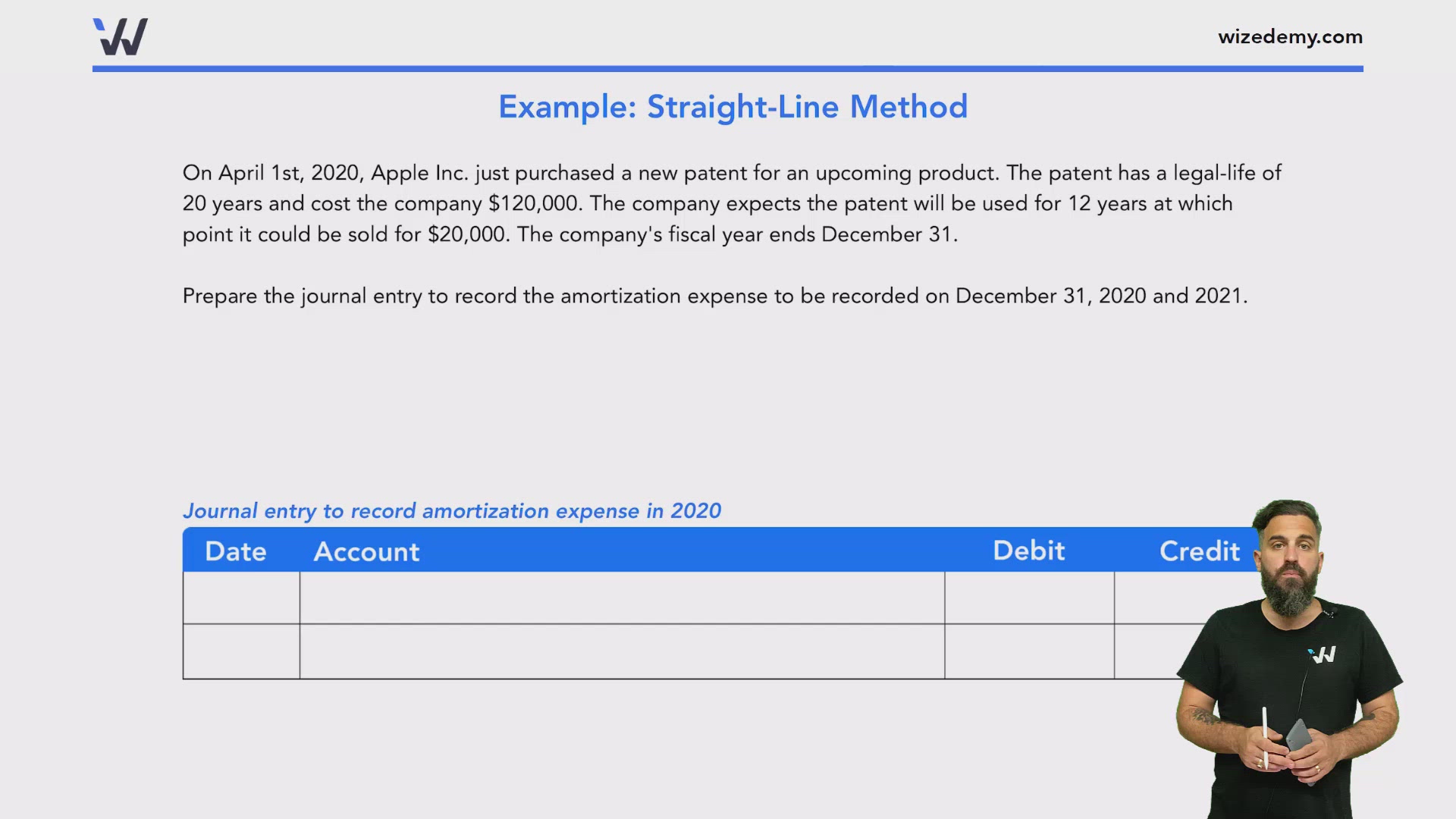
Example: Straight-Line Method
On April 1st, 2020, Apple Inc. just purchased a new patent for an upcoming product. The patent has a legal-life of 20 years and cost the company $120,000. The company expects the patent will be used for 12 years at which point it could be sold for $20,000. The company's fiscal year ends December 31.
Prepare the journal entry to record the amortization expense to be recorded on December 31, 2020 and 2021.
Journal entry to record amortization expense in 2020

Journal entry to record amortization expense in 2021
Practice: Straight-Line Method
On February 1st, 2020, KG Corp. purchased machinery for $90,000 cash. The company also had to pay $10,000 for delivery and installation. The machine has an estimated useful life of 10 years and a residual value of $4,000. The company's fiscal year ends October 31st and it depreciates its machinery using the straight-line method.
Calculate the depreciation expense to be reported on the company's 2020 and 2021 income statement.
Practice: Straight-Line Method
On January 1st, 2020, Wize Manufacturing purchased an existing patent for $30,000. The patent was registered on January 1st, 2012 and had a legal life of 20 years. The company uses the straight-line method to amortize its intangible assets, prepare the journal entry to record the related amortization expense at the company's year end, December 31st, 2020.
Transactions:
| Account | Debit | Credit |
|---|---|---|