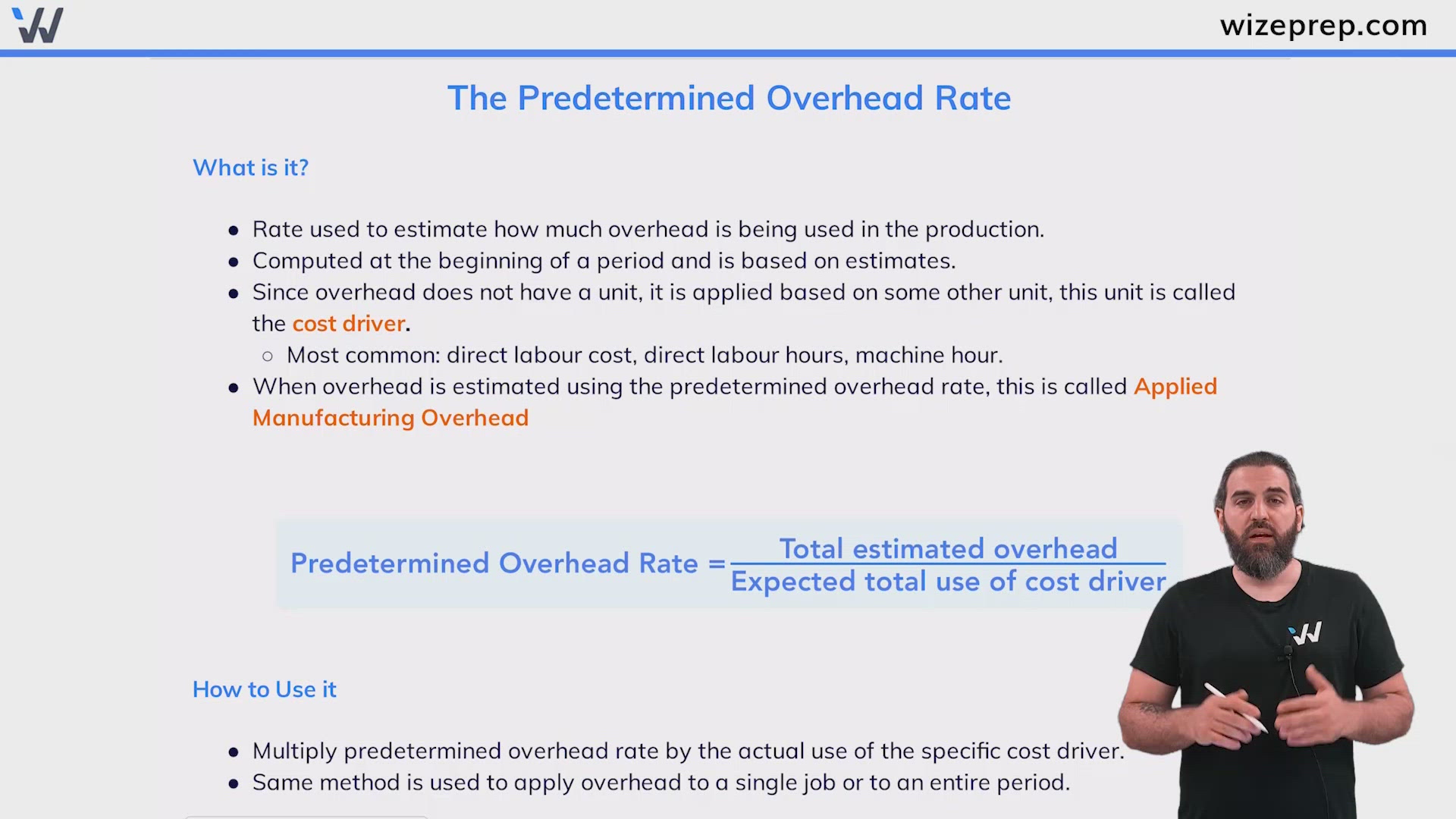
The Predetermined Overhead Rate
What is it?
- Rate used to estimate how much overhead is being used in the production.
- Computed at the beginning of a period and is based on estimates.
- Since overhead does not have a unit, it is applied based on some other unit, this unit is called the cost driver.
- Most common: direct labour cost, direct labour hours, machine hour.
- When overhead is estimated using the predetermined overhead rate, this is called Applied Manufacturing Overhead

How to Use it
- Multiply predetermined overhead rate by the actual use of the specific cost driver.
- Same method is used to apply overhead to a single job or to an entire period.

Example: Applying Overhead to a Job
ABC Inc. estimates that it will spend $1,000,000 on manufacturing overhead during 2020. It applies overhead on the basis of Direct Labour hours. It expects to spend $500,000 on direct labour in 2020. The company pays its workers $25 per hour.
During the year, Job #55 was started and completed. The job required $10,000 of direct materials and 20 hours of labour. What is the total cost of the job.
Applying Overhead to a Period
ABC Inc. estimates that it will spend $1,000,000 on manufacturing overhead during 2020. It applies overhead on the basis of Direct Labour Cost. It expects to spend $500,000 on direct labour in 2020. The company pays its workers $35 per hour. At the end of the year, a total of 13,000 direct labour hours had been worked.
How much overhead was applied during 2020?