Wize University Biochemistry Textbook > Carbohydrate Metabolism
Glycogen metabolism

0:00 / 0:00
Glycogen Synthesis
Glucose (from carbohydrates) is transported across the lipid bilayer into liver and skeletal muscle cells where it is converted to glucose-6-phosphate (G6P).
When the cell has used all the glucose it requires to meet it's energy needs, it stores the rest of glucose as glycogen.
- Glucose -6- phosphate is converted to glucose-1-phosphate (G1P)
- Glucose-1- phosphate is added to the glycogen chain. This reaction is coupled with the hydrolysis of UTP--> UDP
- Glycogen ( n residues) + G1P +UTP ----> Glycogen (n+1 resudes) + UDP + 2Pi
- This reaction is catalysed by glycogen synthase.
- A separate enzyme is responsible for adding branch points to glycogen
Glycogen Breakdown
When the cell requires glucose, glycogen phosphorylase removed G1P monomers from glycogen.
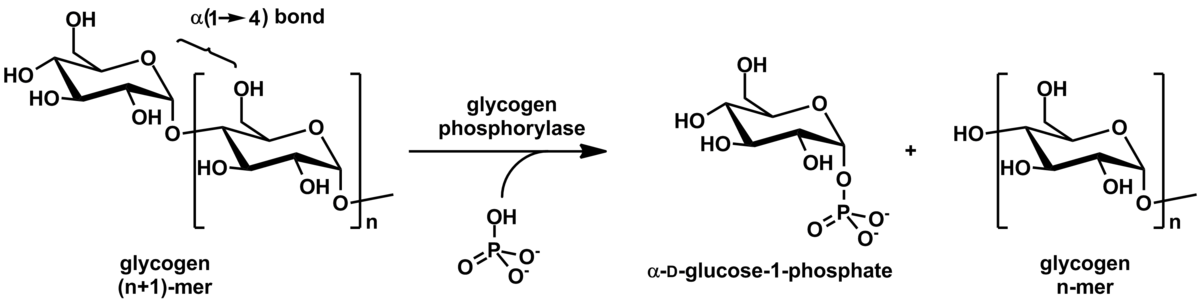
A different enzyme moves the phosphate group to make G1P>> G6P.
Wize Concept
Note that glycogen breakdown is NOT just the reverse of glycogen synthesis. This is because the ΔG must be negative (i.e. reaction must be energetically favorable) for both reactions. Having two different pathways also allows independent control of each pathway.
Regulation of Glycogen Synthesis and Breakdown
1. Covalent modification of the enzymes in both pathways.
- Phosphorylated glycogen synthase is LESS active than the dephosphorylated form.
- Phosphorylated glycogen phosphorylase is MORE active than the dephosphorylated form.
2. Hormone signals dictate whether these enzymes are phosphorylated or unphosphorylated.
- Insulin is released by the pancreas when blood sugar levels are high
- promotes glycogen synthesis---> promotes dephosphorylation of glycogen synthase and glycogen phosphorylase
- Glucagon acts when blood sugar is low
- promotes glycogen breakdown (in liver only!)---> promotes phosphorylation of glycogen synthase and glycogen phosphorylase
- Glucose is released into the blood stream to maintain blood sugar levels
- Epinephrine ----> promotes phosphorylation of glycogen synthase and glycogen phosphorylase
3. Allosteric effectors
- Skeletal Muscle
- glycogen synthase- activated by G6P
- glycogen phosphorylase- activated by AMP, inhibited by ATP
- Liver
- glycogen phosphorylase- inhibited by glucose
These allosteric effectors can override control by hormones and covalent modification.
0:00 / 0:00
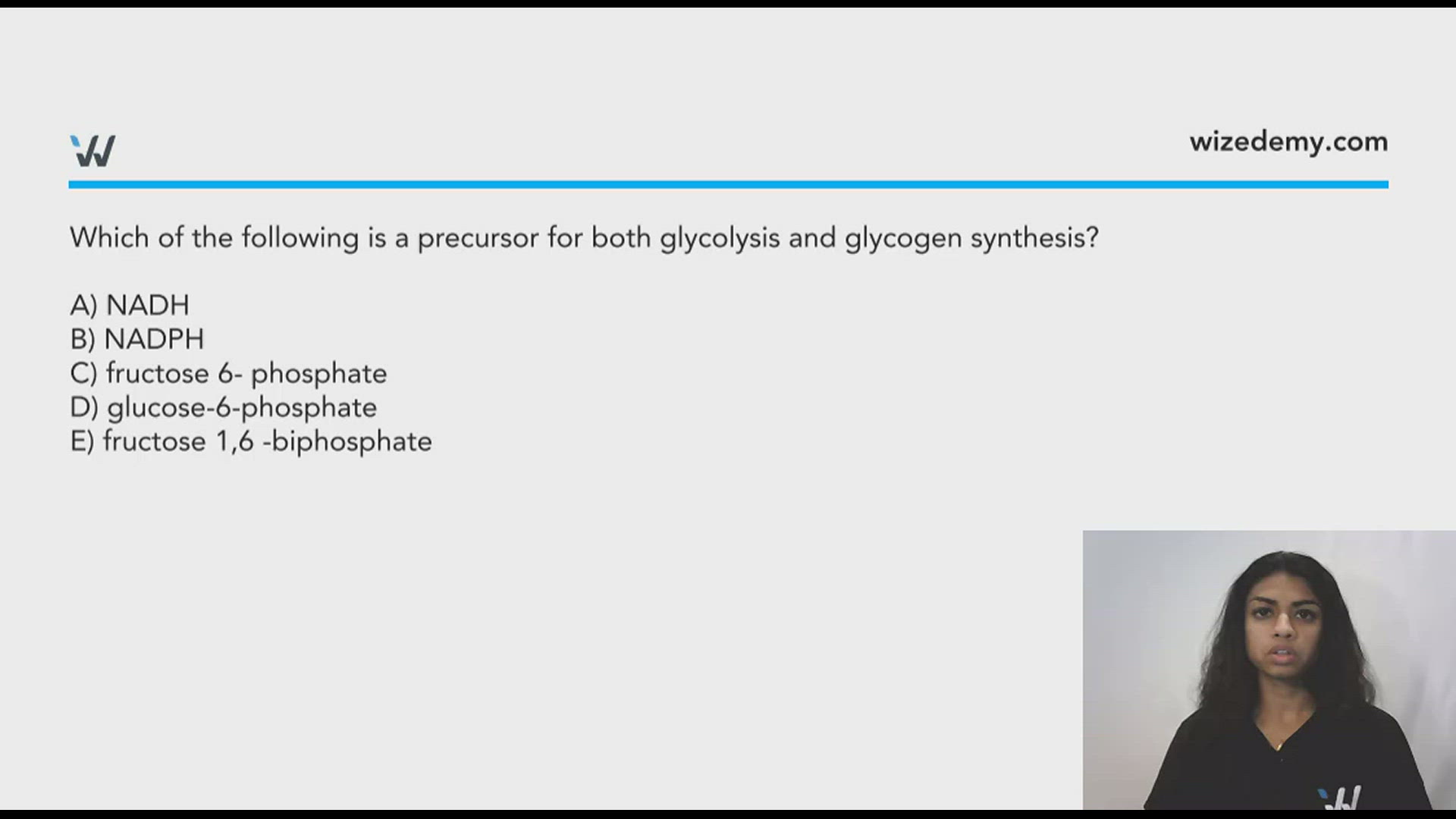
Which of the following is a precursor for both glycolysis and glycogen synthesis?
A) NADH
B) NADPH
C) fructose 6- phosphate
D) glucose-6-phosphate
E) fructose 1,6 -biphosphate
The correct answer is D) glucose-6-phosphate
In glycogen synthesis, glucose is taken into the cell and covereted to glucose-6- phosphate before it is added to glycogen.
In glycolysis, the first step of the pathway is hexokinase catalyzing the reaction of glucose ---> glucose-6- phosphate.
0:00 / 0:00
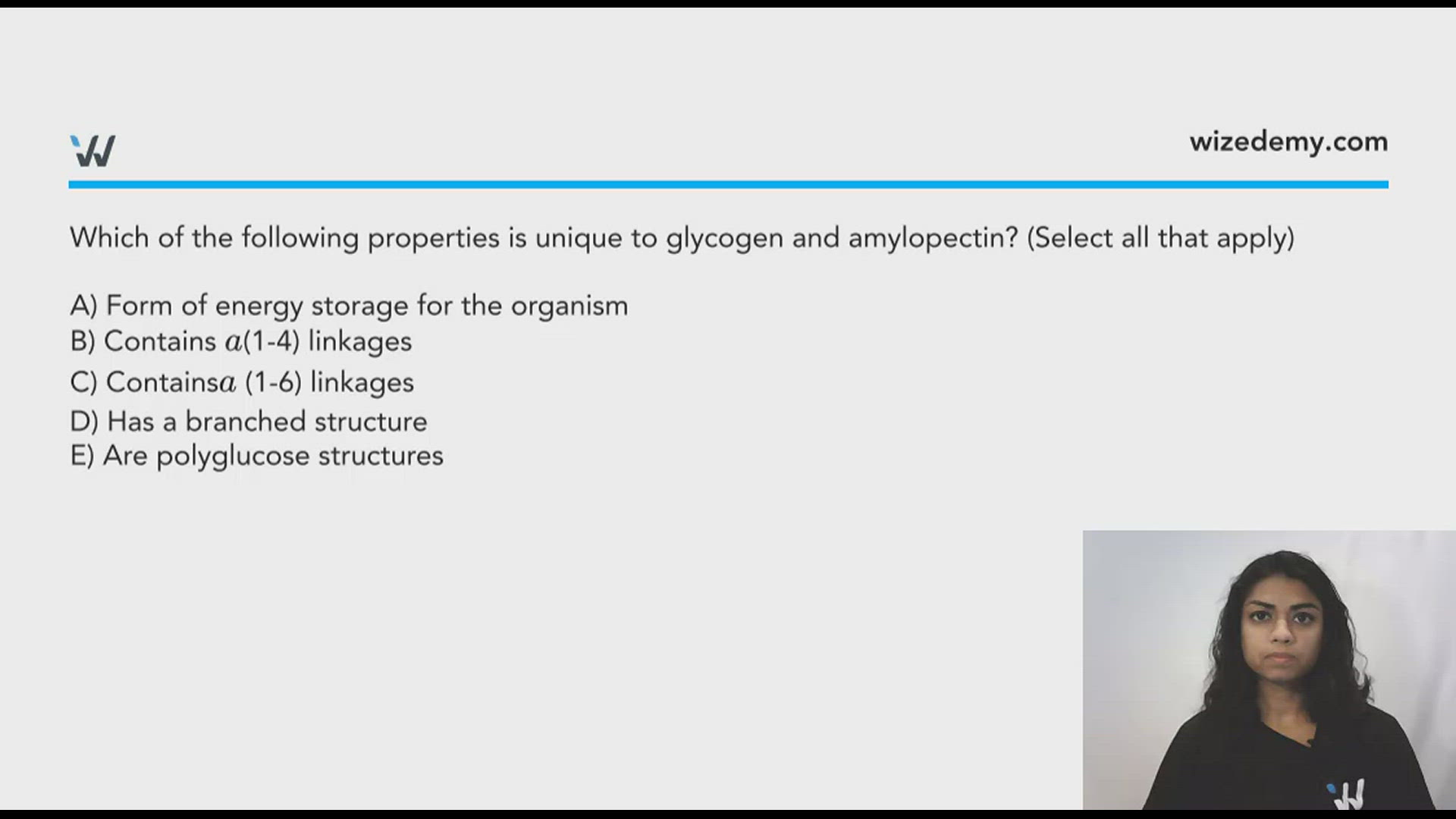
Which of the following properties is unique to glycogen and amylopectin? (Select all that apply)
A) Form of energy storage for the organism
B) Contains (1-4) linkages
C) Contains (1-6) linkages
D) Has a branched structure
E) Are polyglucose structures
The correct answers are C and D.
- In addition to amylopectin, amylose is another type of starch found in plants that is used for storing energy.
- Amylose, amylopectin, glycogen, and pectin all contain (1-4) linkages
- Amylose, amylopectin, glycogen, and cellulose are all polyglucose structures