Wize University Biochemistry Textbook > Intermolecular Forces + Properties of Water
Intermolecular Forces: Van der Waals Interactions

0:00 / 0:00
Intermolecular Forces: Van der Waals Interactions
Van der Waals interactions is a general term given to the interaction between partial positive and partial negative regions of different molecules. These are relatively weak forces and there are a few different types.
Permanent Dipole - Permanent Dipole (PD-PD)
When a molecule has a polar covalent bond it is said that the molecule has a permanent dipole.
- When two elements with different electronegativities form a covalent bond, this bond will be polar.
- This causes the atoms sharing the electrons to have partial charges because one is "pulling the electrons to itself" a little more.
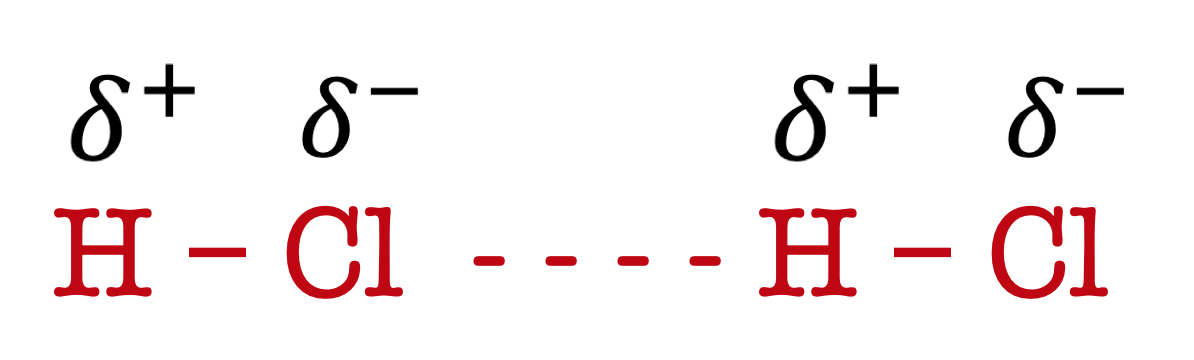
- When two such molecules come close together, an attraction between those partial charges occurs. Example: The bond between hydrogen (H) and chlorine (Cl) is polar because chlorine has higher electronegativity than hydrogen. This means that when bound, Cl has a partial negative charge, and H has a partial positive charge. The opposing partial charges on these molecules can interact with one another. This is a PD-PD interaction.
Permanent Dipole - Induced Dipole (PD-ID)
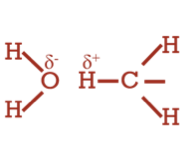
- When a permanent dipole is in close proximity to a molecule without any polar bonds, it is possible for the permanent dipole to induce a dipole across the non-polar covalent bond in the other molecule. Example: For example, the O-H bond in water is polar, therefore, it has a permanent dipole. When water approaches a molecule with a non-polar C-H bond, the partially charged oxygen atom can induce a dipole to form on this C-H bond. This is called a PD-ID interaction.
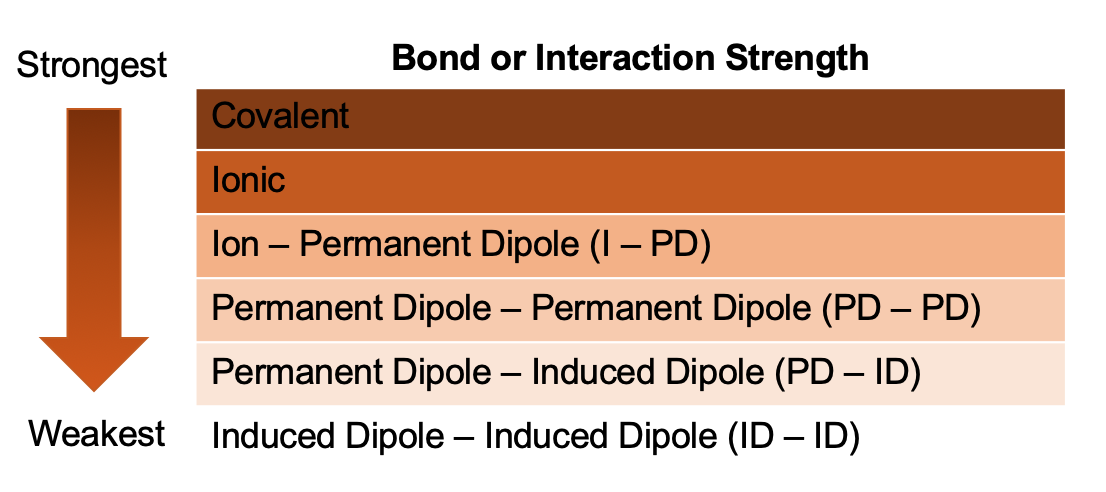
- PD-ID interactions are weaker than PD-PD interactions.
Induced Dipole - Induced Dipole (ID-ID)
Also known as London Dispersion Forces, it occurs between two molecules with non-polar bonds.
- Since electrons fluctuate, temporary asymmetrical distributions of electrons can generate partial charges on the atoms involved in the non-polar covalent bond.
- This is the weakest intermolecular interaction.
- The molecule with the partial charge can induce a dipole on its neighbor. Example: The bond between two chlorine atoms is non-polar since they have the exact same electronegativity. However, one of the two chlorines may become temporarily partially charged, affecting the Cl2 molecule next to it. This temporary attractive force is the ID-ID interaction.

Strength Comparison
Practice: Non-Covalent Interactions
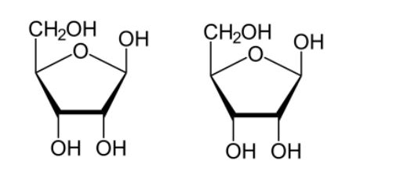
What is the strongest type of non-covalent interaction that could form between the two molecules below?
Practice: Strength of Van Der Waals
Which molecule has the strongest van der Waals forces?