Wize University Biochemistry Textbook > Protein Purification and Identification
Protein Identification
0:00 / 0:00
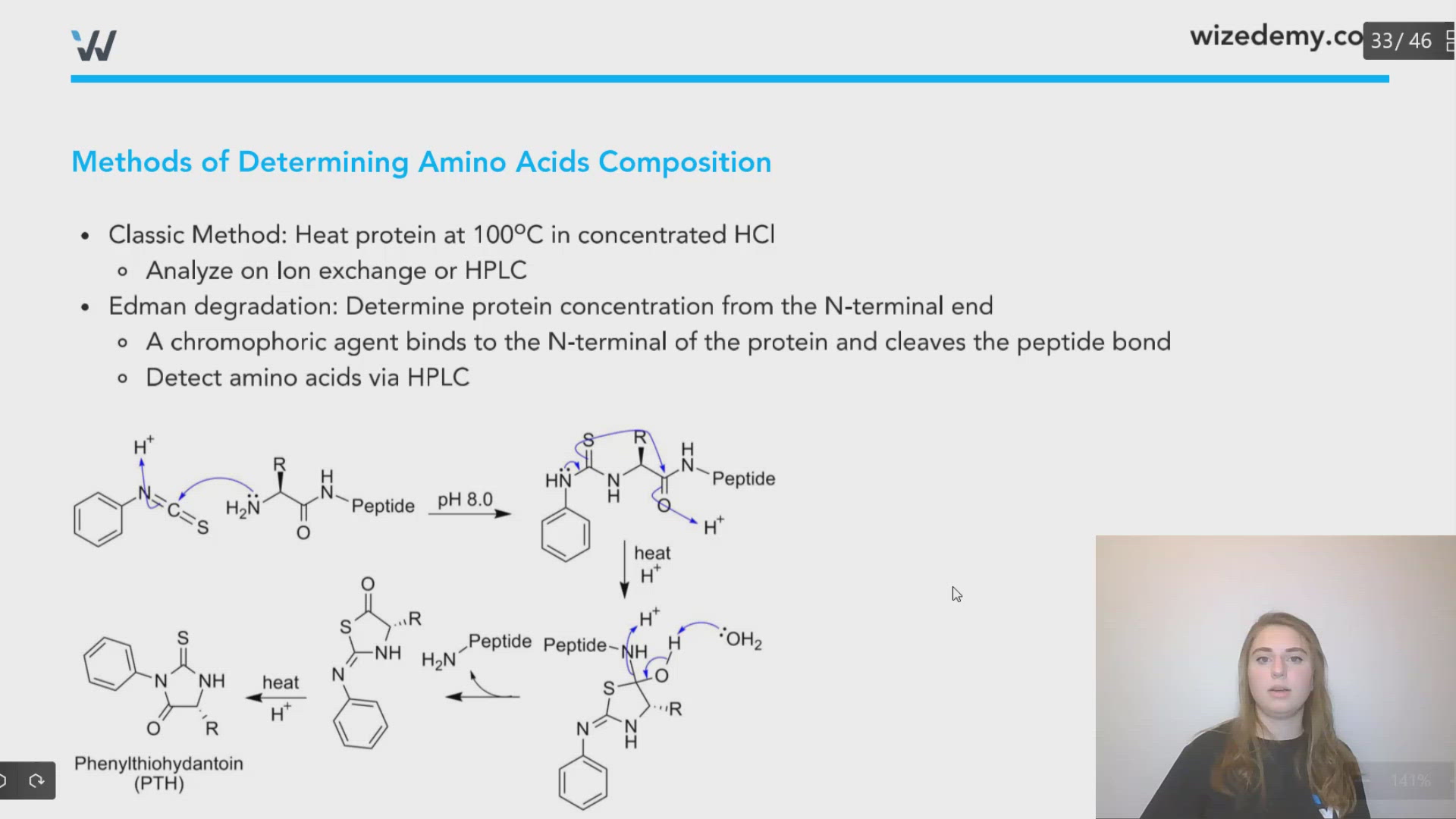
Methods of Determining Amino Acids Composition
- Classic Method: Heat protein at 100oC in concentrated HCl
- Analyze on Ion exchange or HPLC
- Edman degradation: Determine protein concentration from the N-terminal end
- A chromophoric agent binds to the N-terminal of the protein and cleaves the peptide bond
- Detect amino acids via HPLC
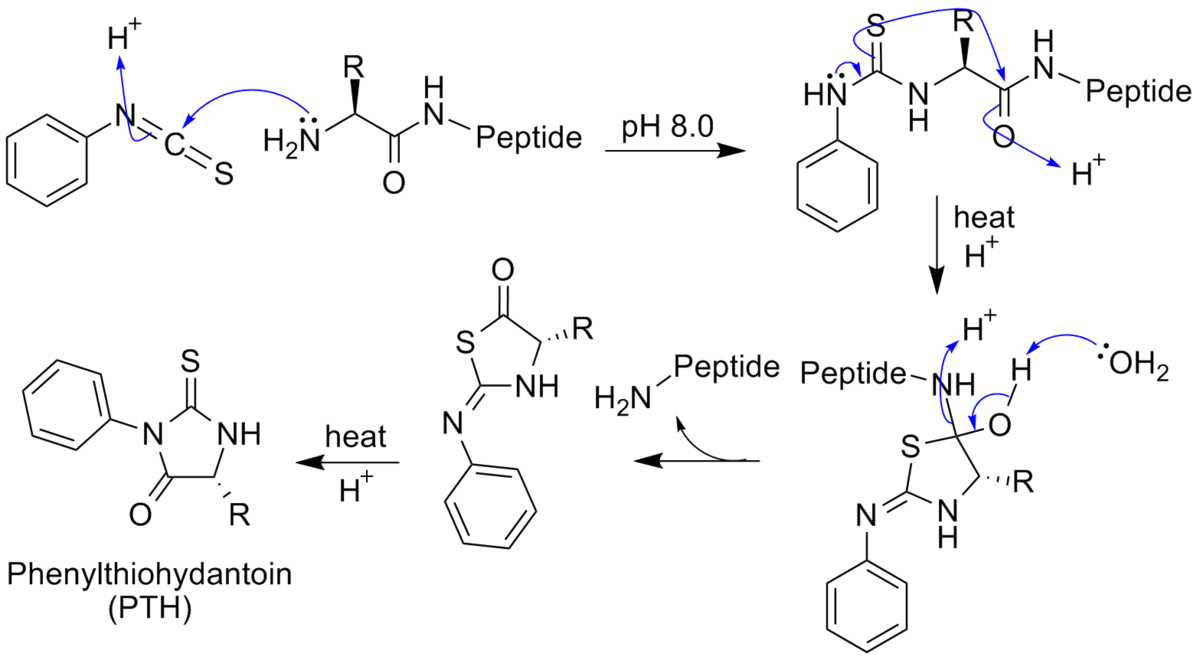
https://fr.wikipedia.org/wiki/Fichier:EdmanDegradation.png. Choij. This file has been placed in public domain.
- Carboxypeptidase: Binds to the C-terminal of the protein and cleaves the peptide bond
- Detect amino acids via HPLC
- These methods are useful but are limited by the length of the protein.
0:00 / 0:00
Protein Detection Techniques
Once researchers think they have purified a specific protein, they need to detect the presence of that protein.
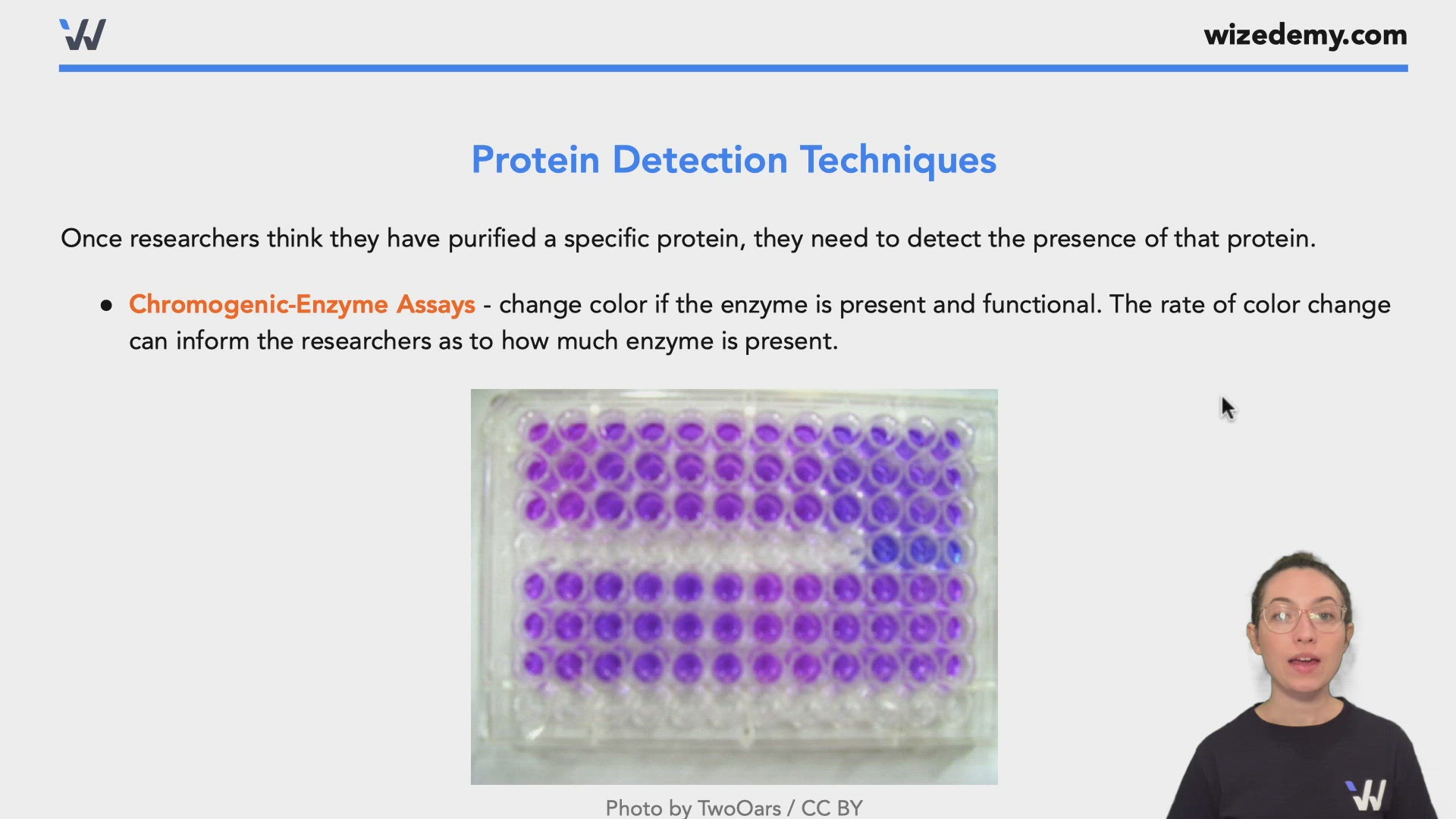
- Chromogenic-Enzyme Assays - change color if the enzyme is present and functional. The rate of color change can inform the researchers as to how much enzyme is present.
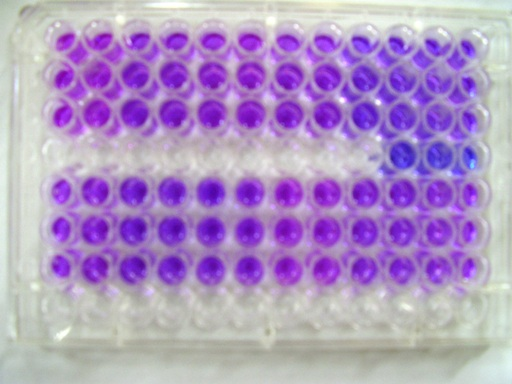
- Antibody Assays - an antibody labelled with an enzyme, fluorescent molecule, or radioactive isotope can be used to bind to the protein. The amount of protein in a sample can be detected based on how many antibodies are detected.

- GFP-tagging - Green Fluorescent Protein (GFP) can be used to tag a protein. When the protein is expressed by the cell, GFP, which is fused to the protein, will also "light up" allowing researchers to determine where and how much protein is present.
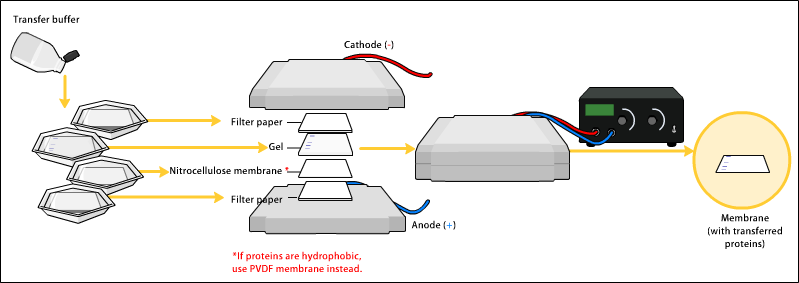
- Western Blotting/ Immunoblotting - combines gel electrophoresis with protein detection.
- Proteins are run on an SDS-PAGE gel.
- Protein are detected using a primary antibody.
- The primary antibody is detected using a secondary antibody that is conjugated to an enzyme or fluorescent molecule.
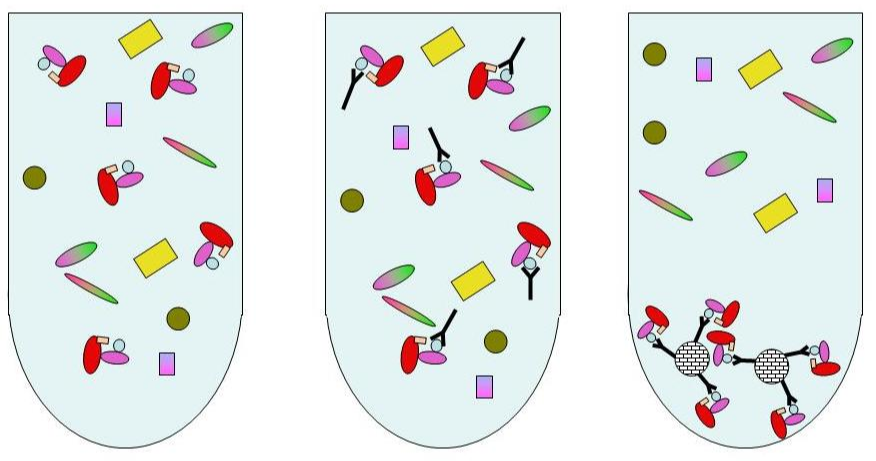
- Immunoprecipitation (IP) - Used to detect protein in a mixture of proteins using antibody specificity.
- An antibody is given time to bind to the specific protein of interest that it recognizes.
- An agent that recognizes the antibody is then added to the mixture, which causes the antibody + protein to precipitate out of the solution.
0:00 / 0:00
Mass Spectrometry (MS)
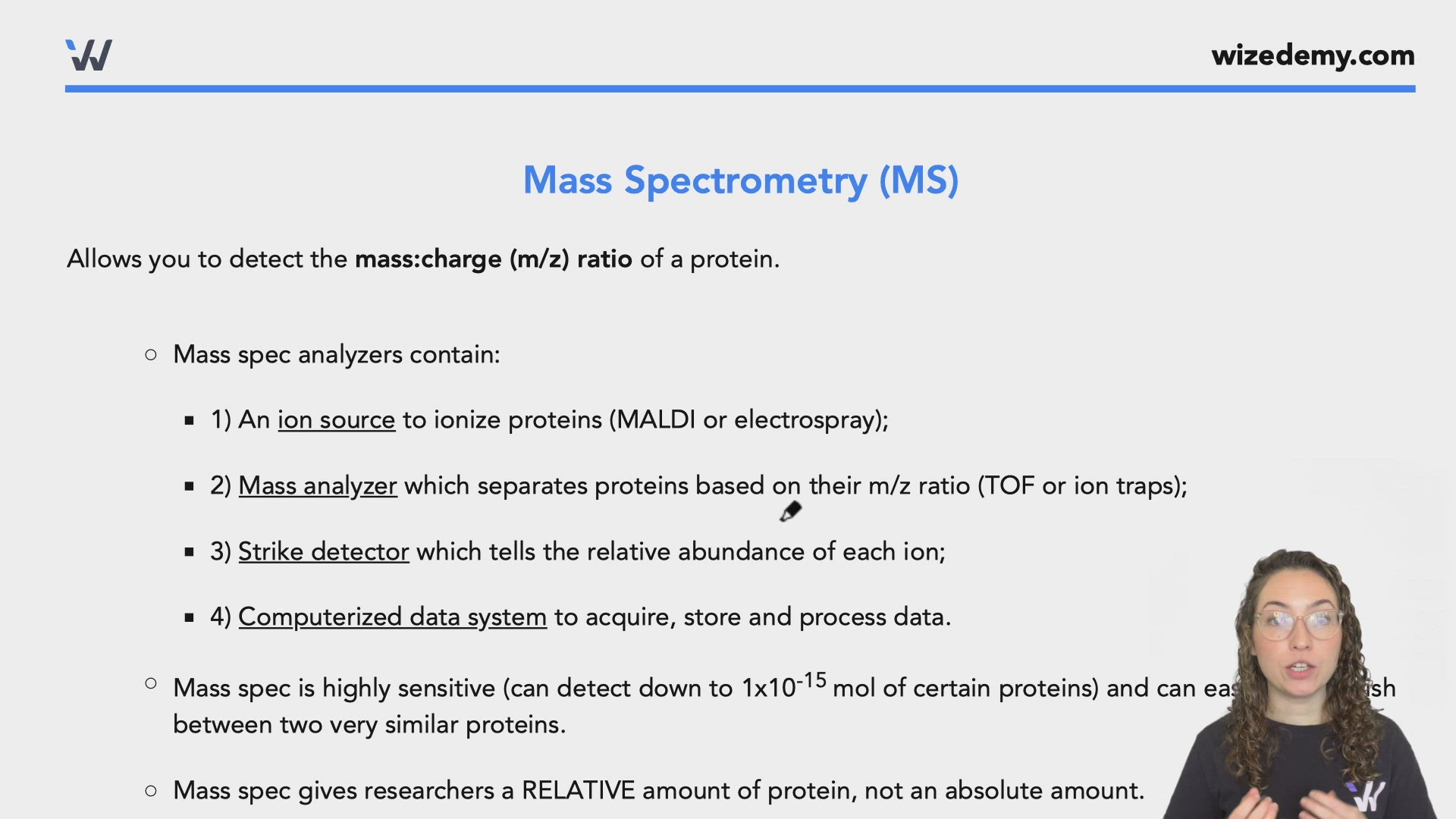
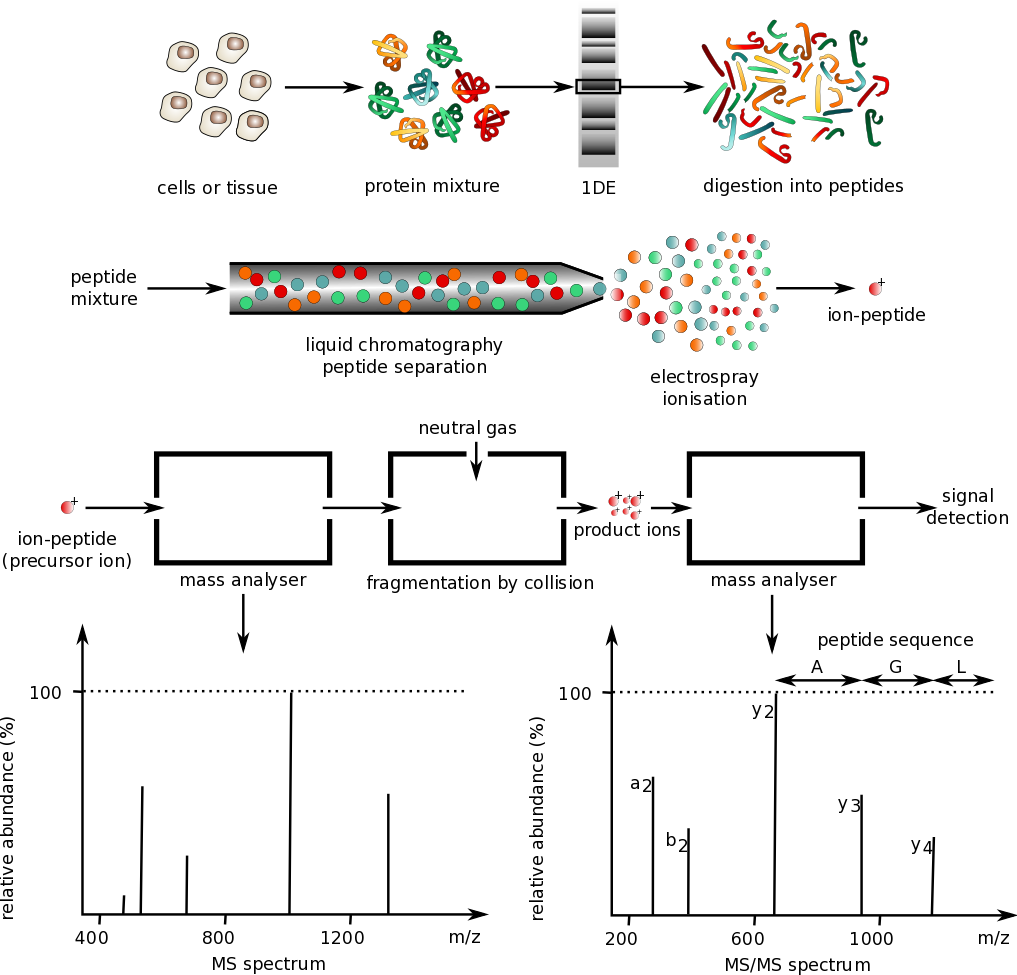
Allows you to detect the mass:charge (m/z) ratio of a protein.
- Mass spec analyzers contain:
- 1) An ion source to ionize proteins (MALDI or electrospray);
- 2) Mass analyzer which separates proteins based on their m/z ratio (TOF or ion traps);
- 3) Strike detector which tells the relative abundance of each ion;
- 4) Computerized data system to acquire, store and process data.
- Mass spec is highly sensitive (can detect down to 1x10-15 mol of certain proteins) and can easily distinguish between two very similar proteins.
- Mass spec gives researchers a RELATIVE amount of protein, not an absolute amount.
You digest a peptide with the following composition: 5 Val, 3 Ala, 1 Met, 2 Lys, and 2 Phe
The CNBr digest yields two fragment, one with the composition VVFAAM
The Chymotrypsin digest yields three fragments, one of them was just a valine and the other two were three amino acids long and and nine amino acids long
The Trypsin digest yields three fragments, one of them is a lysine and the other is VVAFV
What is the CORRECT sequence of the peptide?