Wize University Biology Textbook > Energy & Metabolism
Laws of Thermodynamics
Popular Courses
MCAT
General Course
AP Biology Exam Prep Course
AP Exam Prep
Biology
General Course
General Biology
University Study Guides
BIOLOGY 1002B
Western University
BIOL 211
University of Calgary
BIOL 102
Queen's University
BIOL 112
University of British Columbia
Grade 12 Biology
Canada High School
High School Biology
US High School
DAT
General Course
General Biology
University Study Guides
BIOL 130
University of Waterloo
SC/BIOL 1000 3.00
York University
BLG 143
Toronto Metropolitan University
BIOL 112
McGill University
BIOL 186
University of Victoria
BIOL-1101
University of Windsor
BIOL 1201
Western University
BISC 101
Simon Fraser University
0:00 / 0:00
The Laws of Thermodynamics
The First Law of Thermodynamics
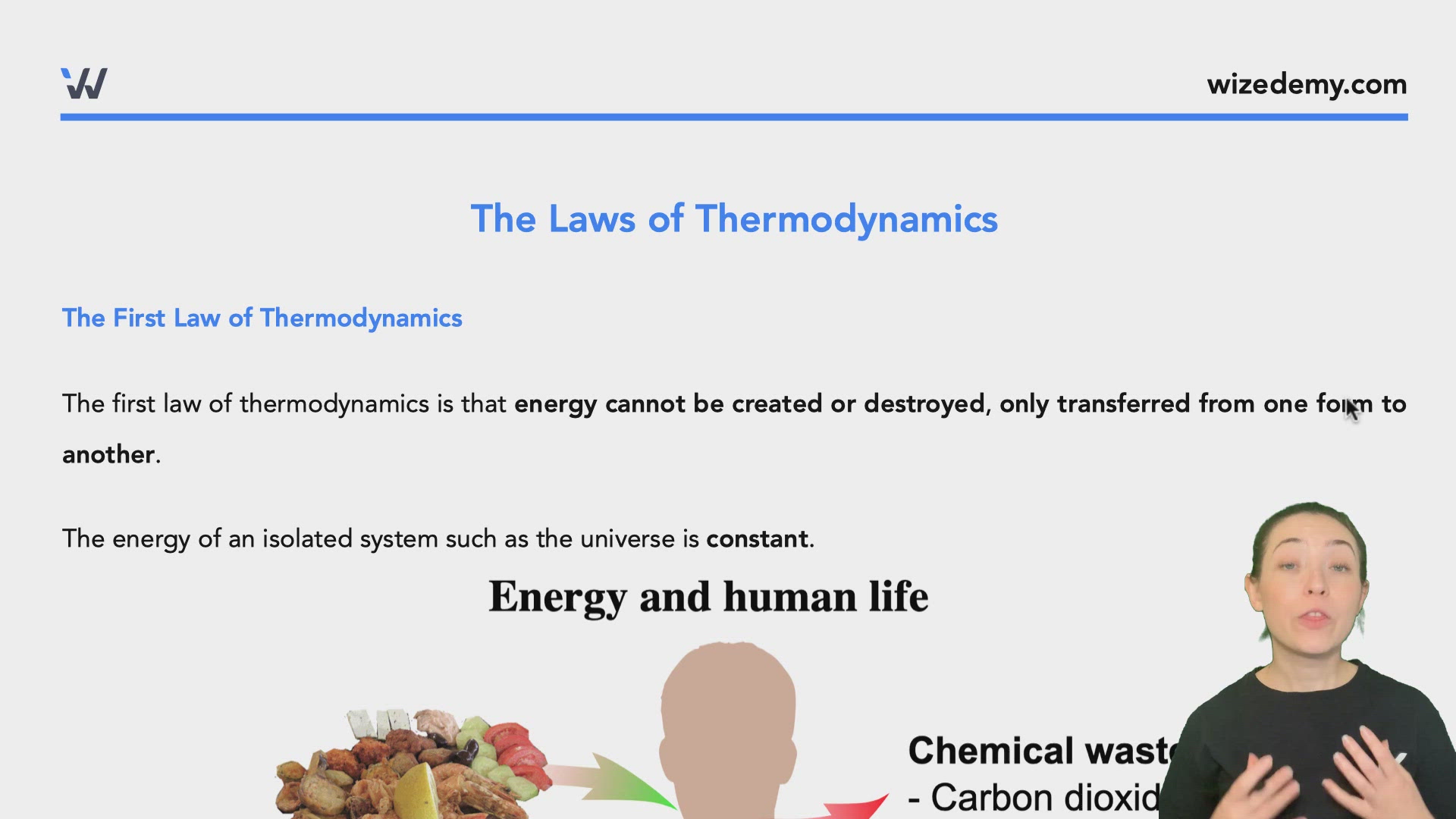
The first law of thermodynamics is that energy cannot be created or destroyed, only transferred from one form to another.
The energy of an isolated system such as the universe is constant.

The Second Law of Thermodynamics
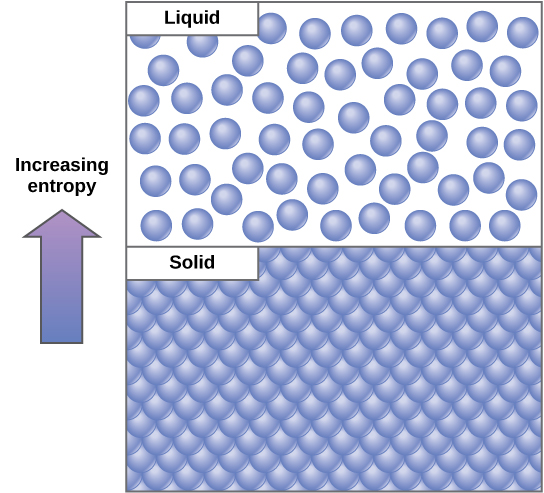
The second law states that a system naturally moves toward more disorder. That is, its entropy always increases.
- Entropy is denoted by the letter S.
- This can also be related to the first law by thinking of the energy transfer. Every transfer of energy from one form to the other increases the universe's entropy.
- If a system is naturally moving toward more disorder, then it will take work to keep or create order. Example: Once you clean your bedroom, it doesn't take long to make a mess again. In order to keep it clean and in order, we need to do work.
Energy In Biology
- Sometimes the energy used in a reaction is not equal to the energy of the structure in the end.
- Where does the energy go? ––> it can be released as heat, light, sound, or movement for example. This means not all the energy is harnessed into the structure of the molecule or in a usable/useful way. Example: ATP hydrolysis reaction results in a lower energy molecule of ADP. The energy generated by breaking phosphate bonds in ATP releases energy that can be used for other reactions.

0:00 / 0:00
Example: Entropy
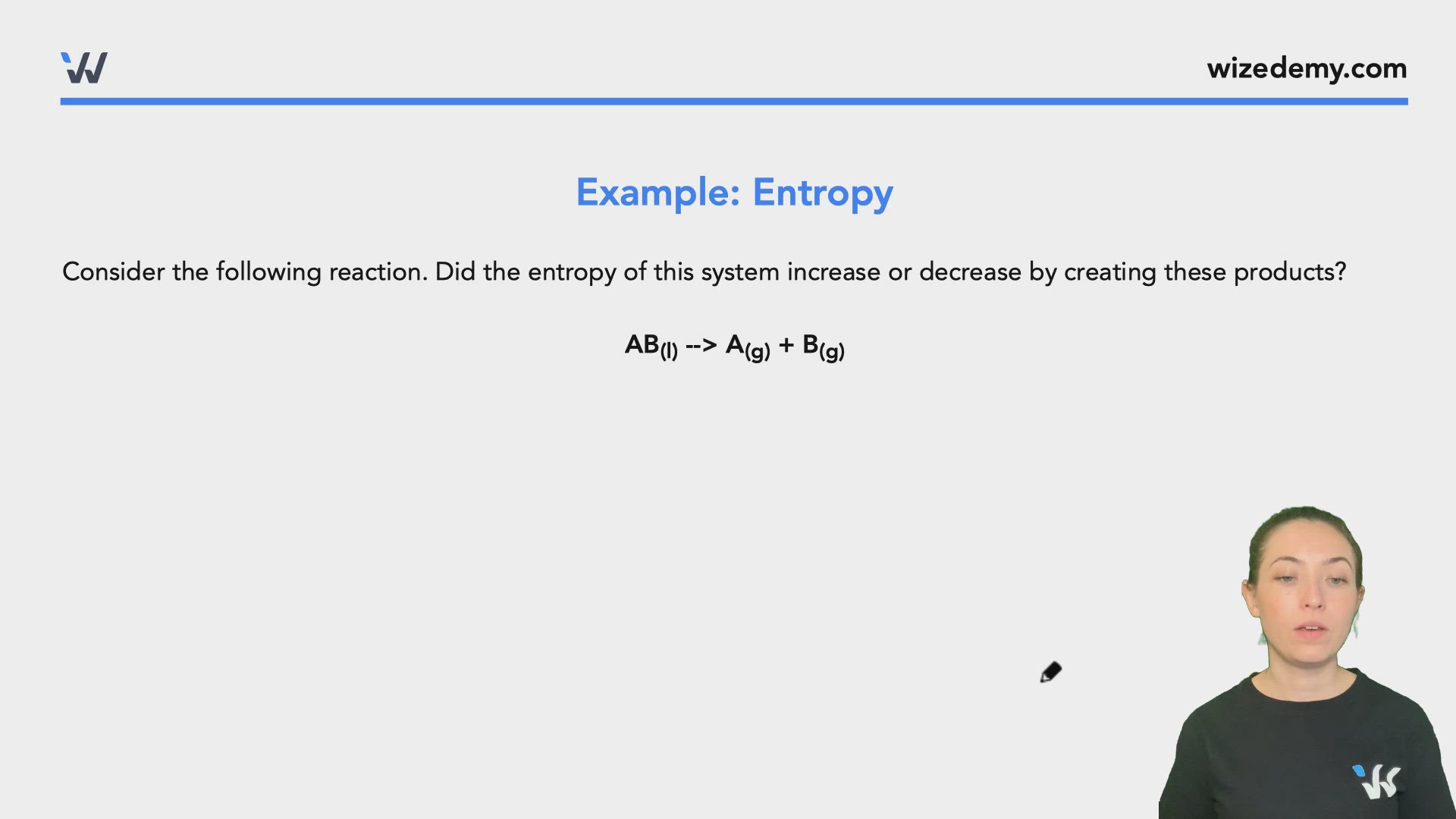
Consider the following reaction. Did the entropy of this system increase or decrease by creating these products?
AB(l) --> A(g) + B(g)
This may seem like a strange problem, but it's an easy way to think about entropy. In this system, where there was once one molecule, now there are two. This system became more disorganized and there are more possible states for it now that it has two molecules rather than one. Therefore, the entropy of this system increased.
Practice: Laws of Thermodynamics
According to the laws of thermodynamics: