Wize University Biology Textbook > The Cell Cycle
Prokaryotic Cell Division: Life Cycle & Growth
Popular Courses
MCAT
General Course
Biology
General Course
General Biology
University Study Guides
BIOL 107
University of Alberta
BIOL 112
University of British Columbia
Grade 12 Biology
Canada High School
DAT
General Course
High School Biology
US High School
BIOL 121
University of British Columbia
General Biology
University Study Guides
SC/BIOL 1000 3.00
York University
BIOL 112
McGill University
BIOL-1101
University of Windsor
BIO230H1
University of Toronto
BIOL 1201
Western University
BISC 101
Simon Fraser University
BIOL 1P91
Brock University
BS 161
Michigan State University
BIOL 331
University of Calgary
BIOL 1020
University of Manitoba
0:00 / 0:00
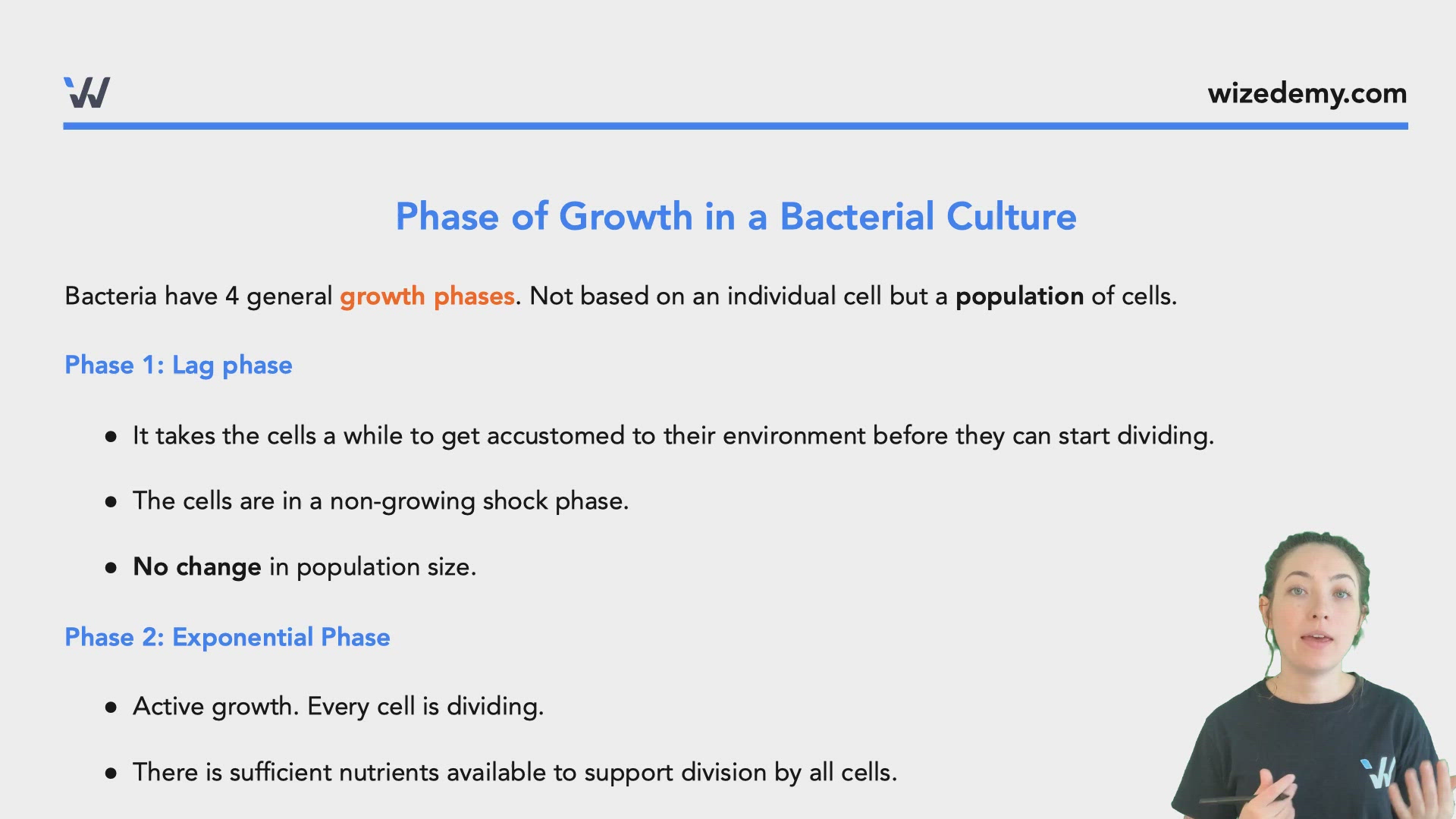
Phase of Growth in a Bacterial Culture
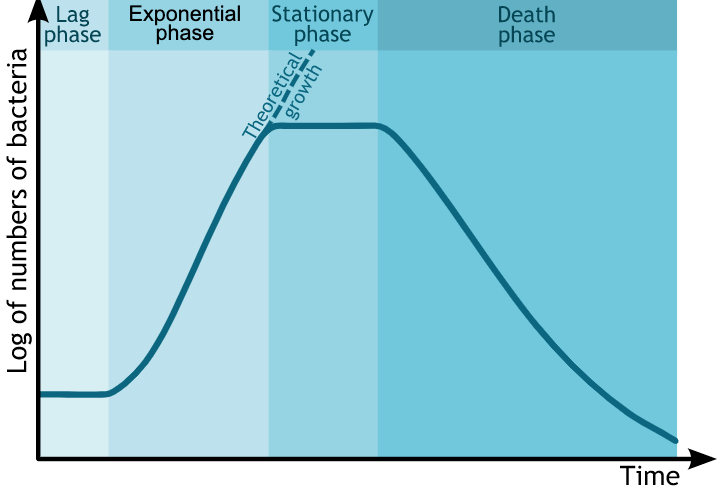
Bacteria have 4 general growth phases. Not based on an individual cell but a population of cells.
Phase 1: Lag phase
- It takes the cells a while to get accustomed to their environment before they can start dividing.
- The cells are in a non-growing shock phase.
- No change in population size.
Phase 2: Exponential Phase
- Active growth. Every cell is dividing.
- There is sufficient nutrients available to support division by all cells.
- Number of dividing cells outnumber the dying cells significantly.
- Population size increases exponentially.
Phase 3: Stationary phase
- Nutrients are just enough to support some growth.
- Dividing cells are equal to dying cells.
- Population size is not changing.
Phase 4: Death phase
- Nutrients are depleted. Waste product accumulation becomes toxic.
- More dying cells than newly dividing cells.
- Population is declining.
Practice: Bacterial Growth
You add 10 bacterial cells into nutrient culture and you let them grow for 90 minutes. You know that this bacterial species takes 15 minutes to divide. How many cells do you have after 90 minutes?
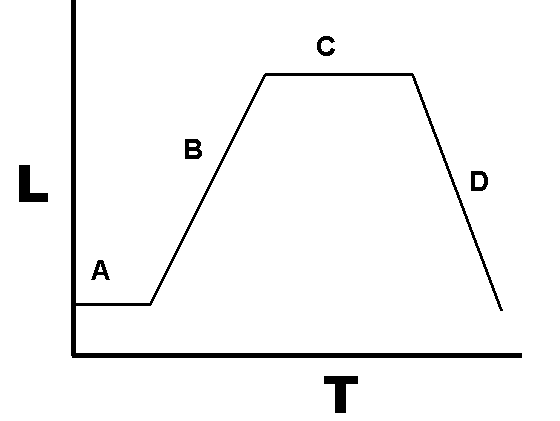
Practice: Bacterial Growth Curve
Label the bacterial growth curve: (one word each)