Wize University Biology Textbook > Seed Plants
Angiosperm Reproduction
Popular Courses
Biology
General Course
General Biology
University Study Guides
DAT
General Course
BIO 1131
University of Ottawa
General Biology
University Study Guides
BIOL 108
University of Alberta
BIOL 111
McGill University
BIOL 184
University of Victoria
BIOL 1201
Western University
BISC 101
Simon Fraser University
BIOL 1011
Dalhousie University
BIOL 1P91
Brock University
BIOLOGY 2601A/B
Western University
BLG 144
Toronto Metropolitan University
BIOL 331
University of Calgary
BIOL 1020
University of Manitoba
BIOA01H3
University of Toronto
BISC 102
Simon Fraser University
BI110
Wilfrid Laurier University
BIO220H1
University of Toronto

0:00 / 0:00
Angiosperm Reproduction
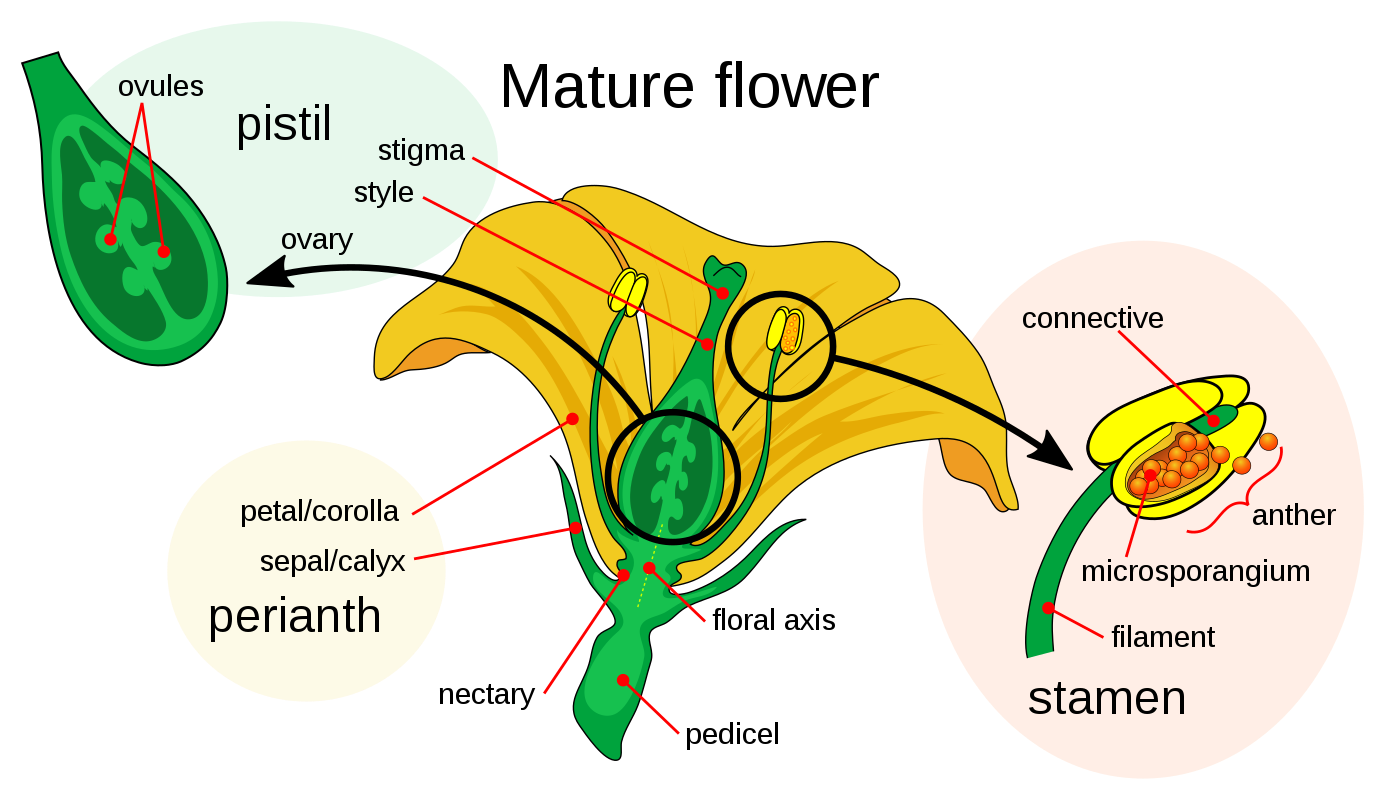
Angiosperm Structures
- Flowers: modified leaves (sporophylls)
- Sepal and Petals: attract pollinators, non-reproductive
- Stamen: filament + anther
- Produces Microspore => male Gametophyte => pollen grain (sperm)
- Anther: produces the pollen
- Pistil: stigma + style + ovary
- Produces Megaspore => female Gametophyte => egg
- Each has 1 stigma, but may have many ovules
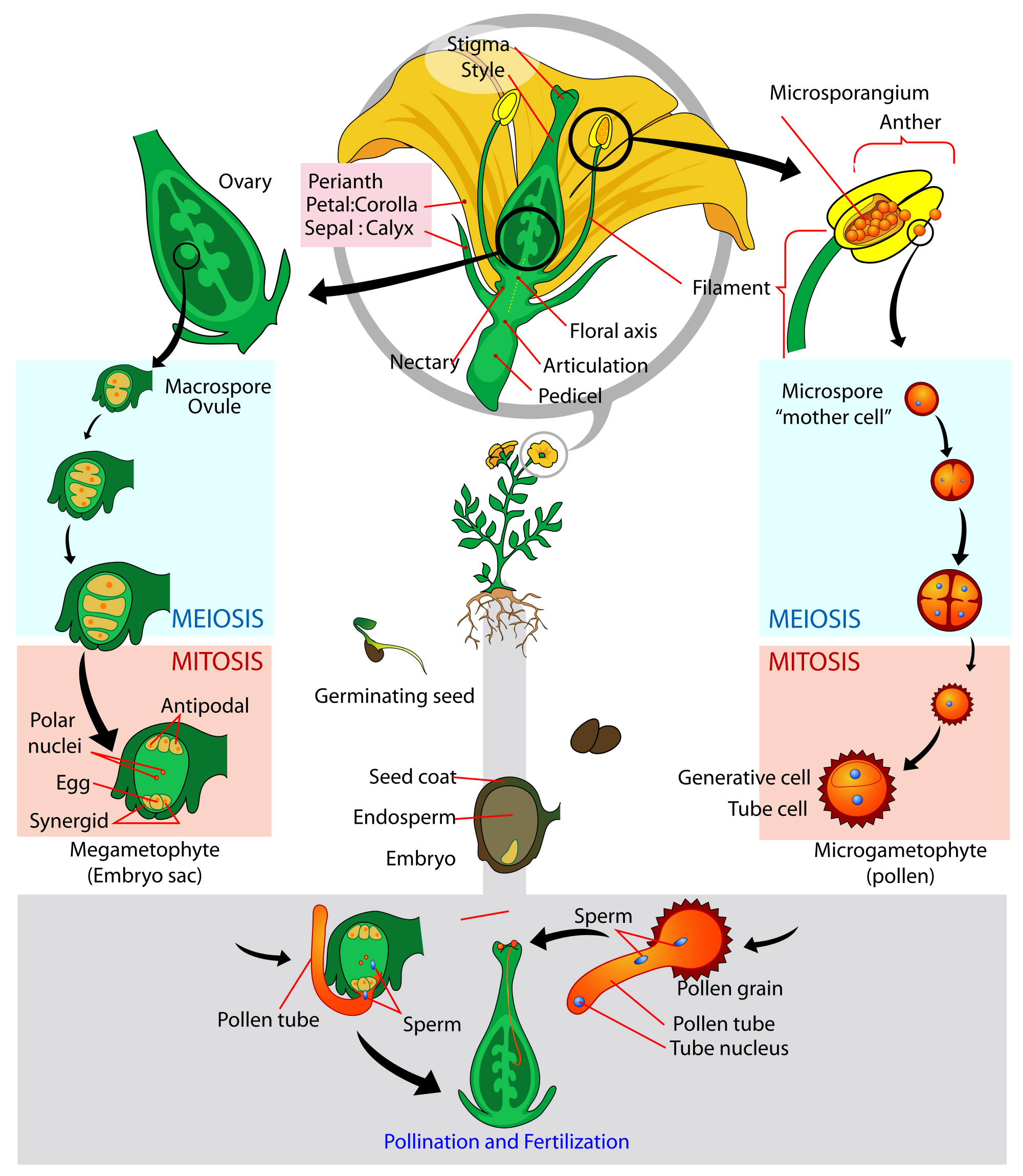
Angiosperm Life Cycle
- Anther produces the male gametophyte (pollen)
- Ovule produces the female gametophyte (megaspore)
- Pollen lands on stigma
- pollen tube grows into ovary
- Double Fertilization: Pollen tube releases 2 sperm
- 1 sperm fertilizes egg
- 1 sperm initiates development of endosperm: stored food
- Triploid Endosperm: 1 sperm + 2 female nuclei combine
0:00 / 0:00
Advantages of Angiosperm Reproduction
- Costly endosperm only created after successful fertilization
- Female gametophytes are smaller (cheaper and faster to produce) Recall: much less costly than moss or fern female gametophytes
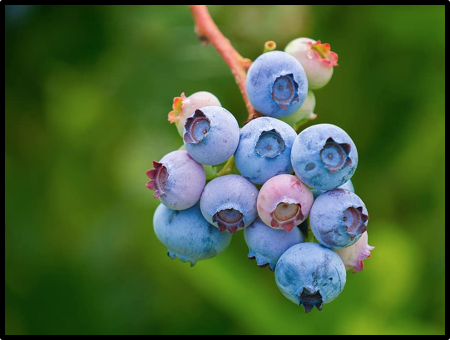
- Fruit: Mature ovary with seed
- May look very different from original plant
- Protects dormant seed
- Attracts animals - aids in dispersal
- Types of seed dispersal
- Wind: seed has "wings"
- Adhesive: seed can stick (plants or animals)
- Fleshy: seeds are tasty, eaten by animals
Importance to humans
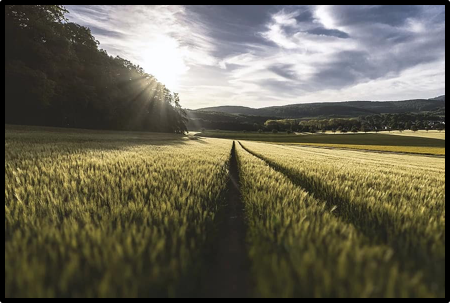
- Large portion of human diet
- 80% of calories from just six species
- Wheat
- Rice
- Corn
- Potatoes
- Cassava
- Sweet Potatoes
- Typically all parts are edible Examples: Seed, Fruit, Leaves, Roots, Tubers, Flowers
- Grown for other culinary purposes Examples: Oil, Spices, Flavoring, Sugar
- Drugs
- Medicinal
- Recreational
0:00 / 0:00
Angiosperm Pollination
Pollination is an incredibly important ecosystem function that can easily be disrupted with habitat loss and development.
- Gymnosperms mostly wind pollinated
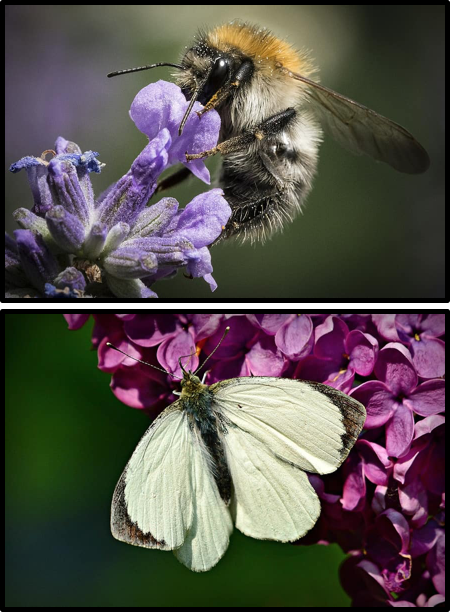
- Angiosperms 80% pollinated by animals
- Some completely dependent on animals
- Evolved mechanisms to attract pollinators
- Bright flowers: daytime, visual attraction
- Smelly flowers: nighttime, usually colorless
- Co-Evolution (plant + pollinator)
- Reciprocal relationship: diversification of plants occurred at the same time as pollinator diversification
- Both exert selective pressures on each other (selective agents)
- Co-evolve
- Symbiotic Relationship:
- Plants spend less energy producing less pollen
- Instead, plants produce flowers, nectar etc. to attract pollinators to spread gametes
- Pollinators receive nectar / pollen (food)
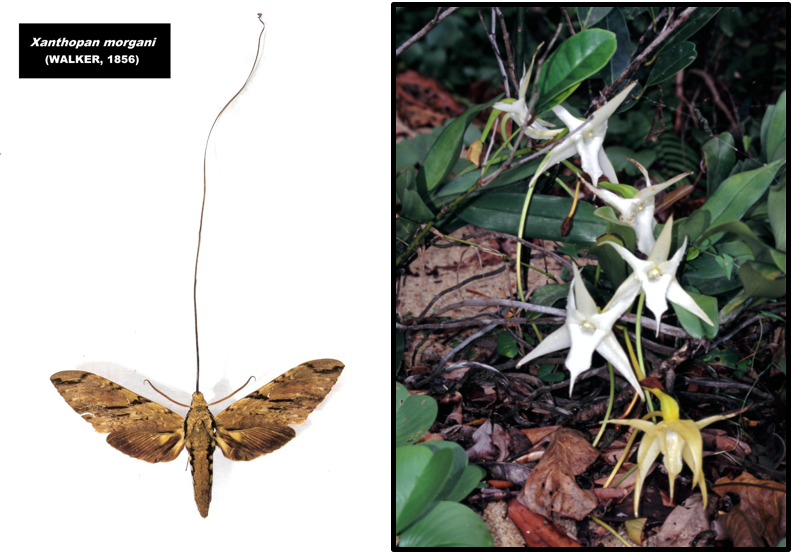
Darwins Orchid Example
- Moth pollinated plant
- Plant has long tube to access nectar
- Moth's tongue was not long enough, so it rubbed its face against pollen (thus spreading pollen between plants)
- Moth evolved longer tongue to reach nectar more easily
- Plant responded by evolving longer tube
- Cycle continues until both species have exaggerated traits
- Also an example of Directional Selection
Practice: Angiosperms
Which of the following are NOT part of angiosperm flowers?
Practice: Angiosperms
Which of the following DOES NOT occur during double fertilization?
Practice: Angiosperms
Which of the following are NOT advantages of fruit production?
Practice: Angiosperms
Which term best describes the example of the Darwin's Orchid and the Moth pollinator?