Wize University Biology Textbook > Invertebrates (Part 2: Molting)
Arthropoda: Chelicerata (Spiders, Scorpions and Mites)
Popular Courses
Biology
General Course
General Biology
University Study Guides
DAT
General Course
Grade 11 Biology
Ontario High School
Grade 11 Biology
Canada High School
General Biology
University Study Guides
BIOL 108
University of Alberta
Biology 20
Alberta High School
BIOL 111
McGill University
BIOL 1201
Western University
Life Sciences 11
British Columbia High School
BIOL 1P91
Brock University
BLG 144
Toronto Metropolitan University
BIOL 1020
University of Manitoba
BIOL 331
University of Calgary
BIOA01H3
University of Toronto
BISC 102
Simon Fraser University
BI110
Wilfrid Laurier University
BIO220H1
University of Toronto
BIOL 201
University of Alberta

0:00 / 0:00
Subphylum: Chelicerata

- Horseshoe crabs, scorpions, spiders, mites
- Lack antennae
- Chelicerae: segmented pincers that function as mouthparts
- Chel = "claw", Ceros = "horn"
- Muscular pincers: used to inject venom
- 2 main tagmata
- Cephalothorax
- Partially / completely covered by carapace (hard exoskeleton)
- 6 pairs of limbs (4 pairs of legs)
- Chelicerae
- Pedipalps: sensory limbs near the mouth
- handles food, transfers sperm
- Eyes
- Abdomen
- Contains gut and reproductive organs
- May have legs

Class: Arachnids
- Spiders, mites and scorpions
- Mostly terrestrial
- Ocelli: simple eyes
- Fluid feeding predators
- Do not ingest solid particles
- Digest solids into liquid before eating
- Separate sexes
Order: Aranaea
- Spiders
- Tight constriction between cephalothorax and abdomen
- Trachea and/or book lungs
- Spinnerets: Abdominal appendages for spinning silk
- Fluid Feeding: poison glands inject through chelicera
- Silk producing
- Used to catch prey, escape, transport
- Lines burrows and wrap eggs
- Maternal care and complex courtship
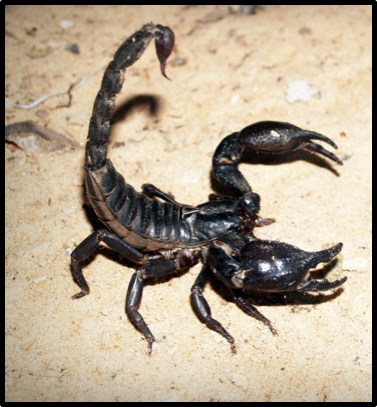
Order: Scorpiones
- Pedipalps modified as grasping pincers
- External digestion, drinks fluids
- Courtship: dance to attract mate
- Female broods young underneath cephalothorax
- carries young on her back
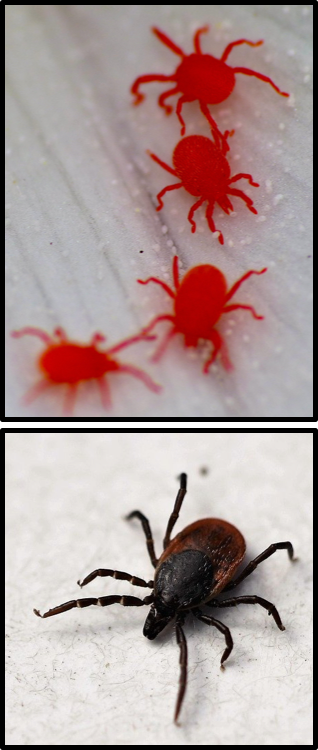
Order: Acari
- Mites
- Fused cephalothorax and abdomen
- No obvious segmentation
- 2 or 3 segmented chelicerae
- 0-2 pairs of ocelli
- Diverse ecology
- Predators, detritivores, herbivores, parasites
- Live in soil, water, plants, in and on animals
- Fluid feeders
- But, detritivores eat solids
- Important in decomposition
- Predators in freshwater and soil
- Huge economic importance
- Crop pests Example: Spider mites
- Bio-control agents
- Medically important Examples: Mites, Chiggars, ticks
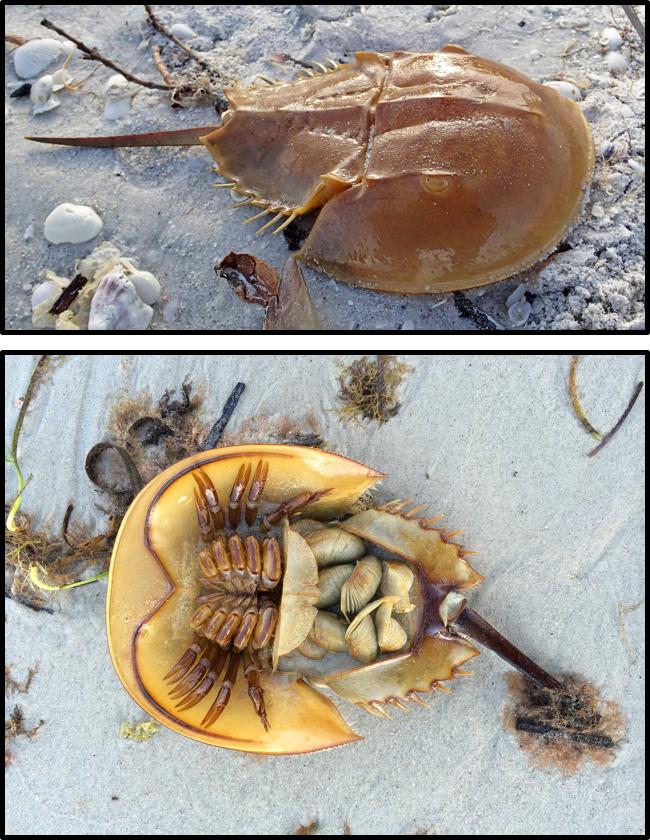
Class Xiphosura
- Horseshoe crabs
- Compound eyes
- Book gills
- Long terminal spine
- Xiphos = "sword', uros = "tail"
- flips animal rightside up
- Burrows in sand
- Habitat
- Coastal bays
- Moves to deep water in winter
- Food
- Scavengers
- Predators
- Spawn just above tide
- important food for shorebirds
- Planktonic larvae
Practice: Chelicerata
Which of the following are features of Chelicerates? (select all that apply)
Practice: Chelicerata
What method do arachnids use for feeding?