Wize University Biology Textbook > Craniates (Developed Heads)
Intro to Craniates
Popular Courses
Biology
General Course
General Biology
University Study Guides
DAT
General Course
Grade 11 Biology
Ontario High School
Grade 11 Biology
Canada High School
General Biology
University Study Guides
BIOL 108
University of Alberta
Biology 20
Alberta High School
BIOL 111
McGill University
BIOL 1201
Western University
Life Sciences 11
British Columbia High School
BIOL 1P91
Brock University
BLG 144
Toronto Metropolitan University
BIOL 1020
University of Manitoba
BIOL 331
University of Calgary
BIOA01H3
University of Toronto
BISC 102
Simon Fraser University
BI110
Wilfrid Laurier University
BIO220H1
University of Toronto
BIOL 201
University of Alberta
0:00 / 0:00
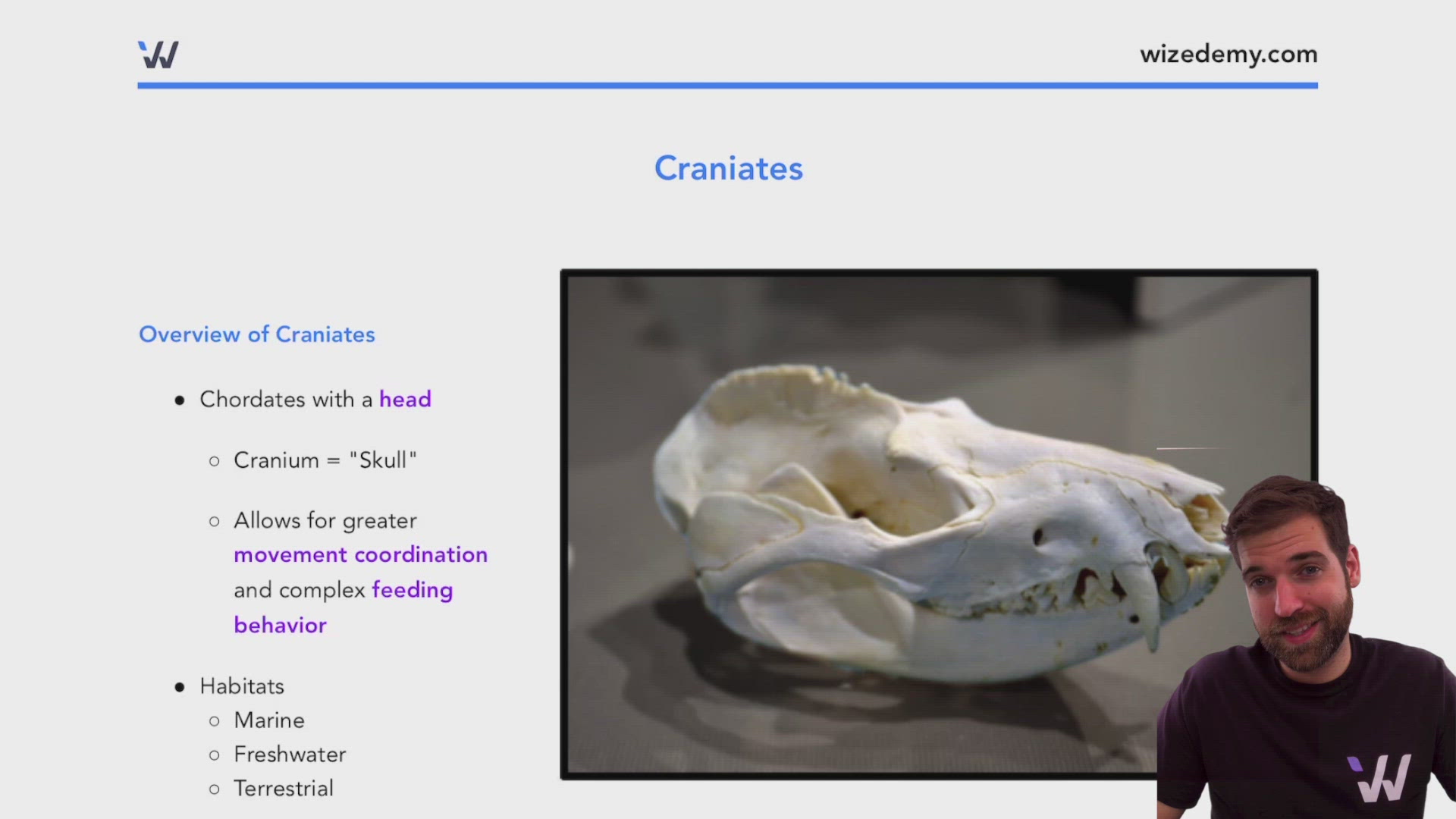
Craniates
Overview of Craniates
- Chordates with a head
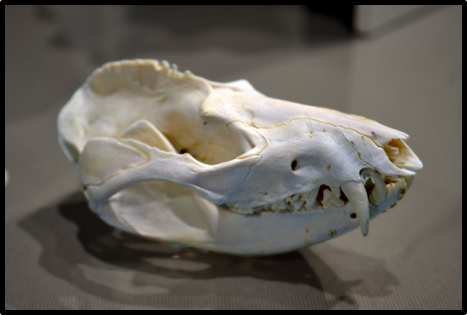
- Cranium = "Skull"
- Allows for greater movement coordination and complex feeding behavior
- Habitats
- Marine
- Freshwater
- Terrestrial
- Includes the largest animals that ever existed Examples: Sauropods, blue whales
- Most are vertebrates
- Craniate Derived Character State
- 2+ clusters of Hox genes
- Neural crest
- Temporary embryonic cells
- Endoskeleton and cephalization
- Modified circulatory system
- Pharyngeal clefts

Jawless Craniates
- Two classes lack jaws
- Lack teeth and paired limbs
- Mouth like an open tube
- Long, flexible tubular bodies
Class Myxini
- Only living vertebrate that lack vertebrae
- But does have developed notochord
- Cartilaginous cranium
- Tiny eyes, lack lenses
- Mouth surrounded by tentacles
- Feeds on soft bodied worms / corpses
- Corpses
- Grip on flesh using Keratinous plates in the mouth
- Ties body into knot
- Slides knot forward until it braces against flesh
- Pulls off chunk
- Protective slime for defense
- Myxo = "slime"
Practice: Overview of Craniates
What did the evolution of the head enable? (select all that apply)
Practice: Overview of Craniates
Myxini is the only living vertebrate that lacks ______________ but has a _____________.