Wize University Biology Textbook > Craniates (Developed Heads)
Osteichthyans (Boney Fish)
Popular Courses
Biology
General Course
General Biology
University Study Guides
DAT
General Course
General Biology
University Study Guides
BIOL 108
University of Alberta
BIOL 111
McGill University
BIOL 1201
Western University
BIOL 1P91
Brock University
BLG 144
Toronto Metropolitan University
BIOL 331
University of Calgary
BIOL 1020
University of Manitoba
BIOA01H3
University of Toronto
BISC 102
Simon Fraser University
BI110
Wilfrid Laurier University
BIO220H1
University of Toronto
BIOL 201
University of Alberta
BIO 115
Rutgers University
BIOL 261
Concordia University
BIOL 115
McGill University
BI111
Wilfrid Laurier University

0:00 / 0:00
Osteichthyans
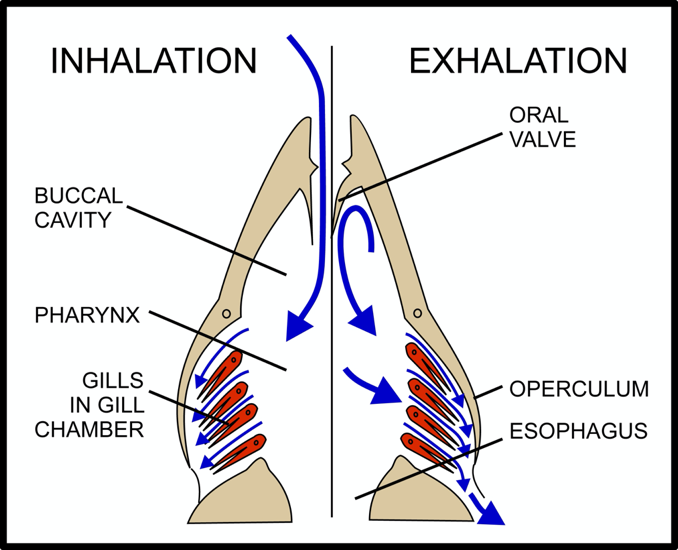
Overview of Osteichthyans
- Bony Fish
- Oste = "bony", Ichthyans = "fish"
- Hard ossified endoskeleton
- Group contains all tetrapods
- Operculum: A bony cover that protects fish gills
- Swim Bladder: air sac used to control buoyancy
- Evolved from lungs
- Mostly external fertilization
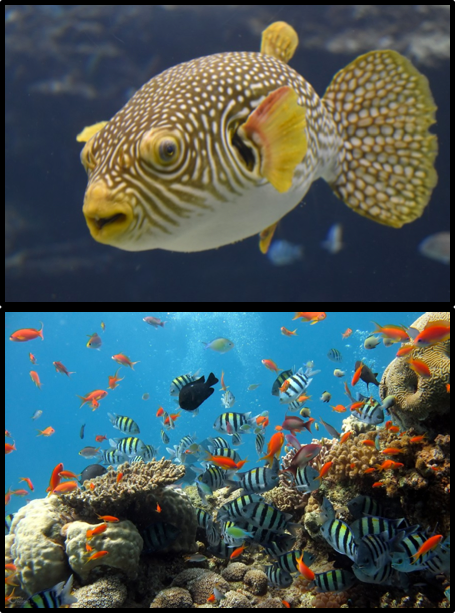
Fish Diversity
Ray-finned fishes
- Actinopterygii
- Over 27,000 species
- Major protein source for humans
- Fisheries have seriously depleted natural fish populations
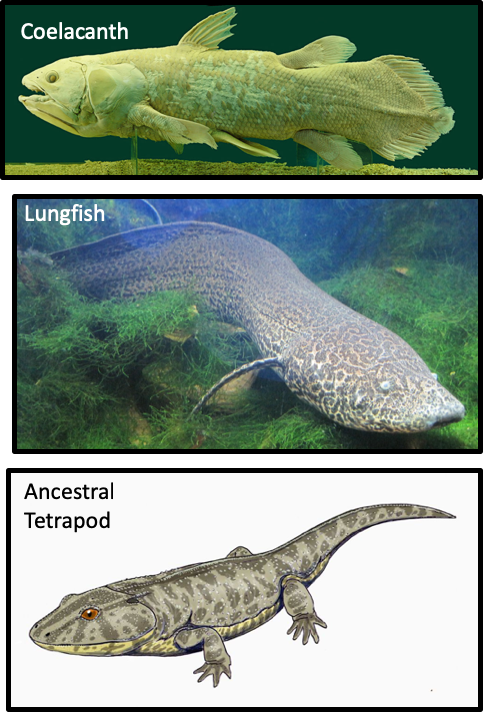
Lobe-finned fishes
- Sarcopterygii
- Rod-shaped bones with thick layer of muscle in fins
- Likely used these robust fins to occasionally move on land
- Large predators in the Devonian era
- Only three lineages survived today
- Coelacanths: thought to be extinct 75 MYA, but found in 1938!
- Dipnoi: Lungfish
- Found in ponds and swamps
- Gulp air to supplement gills
- Can estivate when ponds are dry
- Tetrapods: Vertebrates with limbs and feet
- Far more diverse
- Includes humans!
Practice: Ostiechthyans
Ostiechthyans have a ______________ skeleton, where Gnathostomes have a _______________ skeleton.
Practice: Ostiechthyans
What are the two main groups of bony fish?