Popular Courses
Biology
General Course
General Biology
University Study Guides
DAT
General Course
BIOLOGY 1M03
McMaster University
General Biology
University Study Guides
BIOL 108
University of Alberta
BIOL 111
McGill University
BIOL 1201
Western University
BIOL 1P91
Brock University
BLG 144
Toronto Metropolitan University
BIOL 1020
University of Manitoba
BIOL 331
University of Calgary
BIOA01H3
University of Toronto
BISC 102
Simon Fraser University
BI110
Wilfrid Laurier University
BIO220H1
University of Toronto
BIOL 201
University of Alberta
BIO 115
Rutgers University
BIOL 261
Concordia University
BI111
Wilfrid Laurier University
0:00 / 0:00
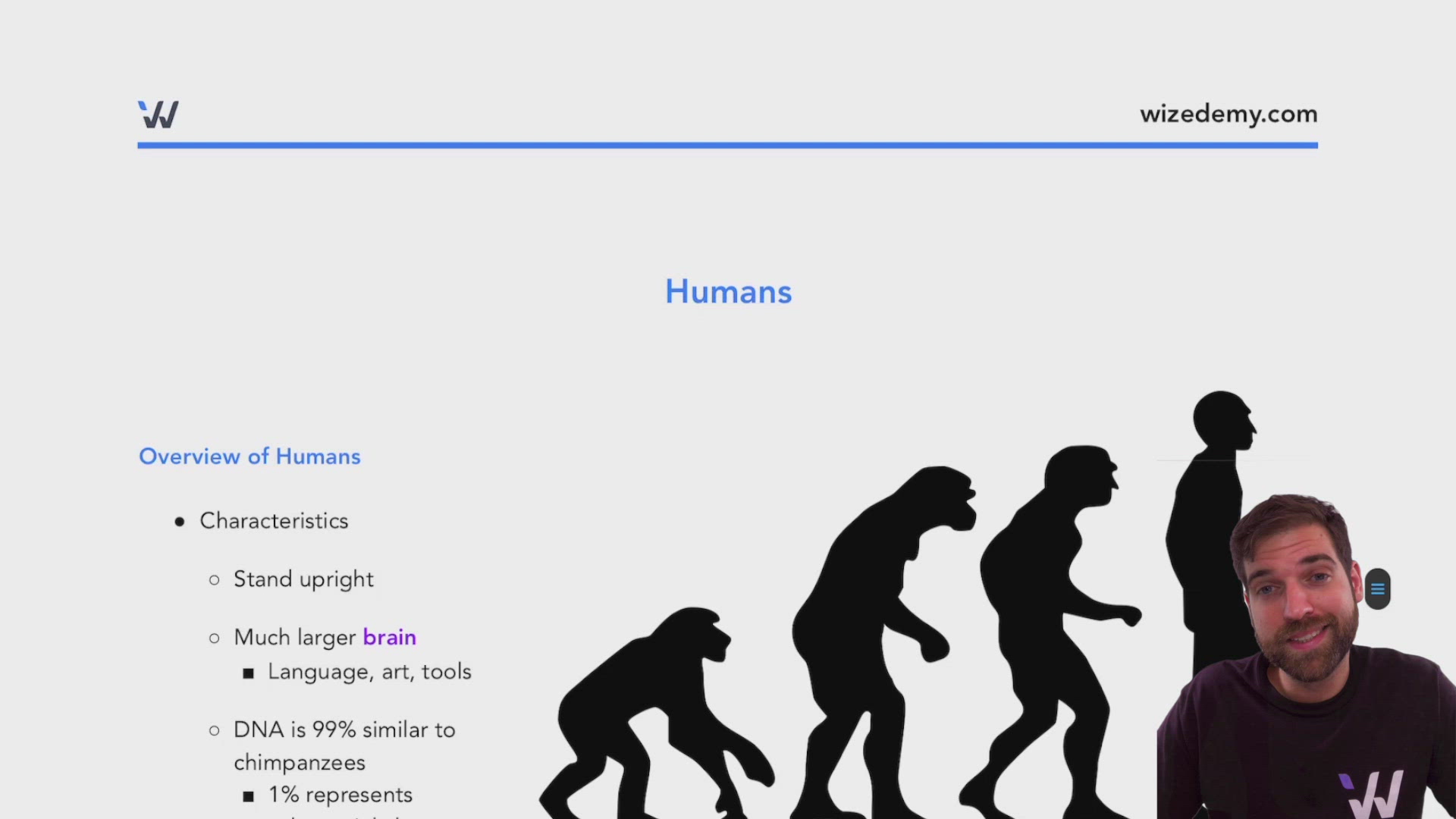
Humans

Overview of Humans
- Characteristics
- Stand upright
- Much larger brain
- Language, art, tools
- DNA is 99% similar to chimpanzees
- 1% represents substantial changes
- Early Hominins: extinct species that are more closely related to humans than chimps
- Earliest fossil ~6.5 MYA
- Show gradual progression to more upright
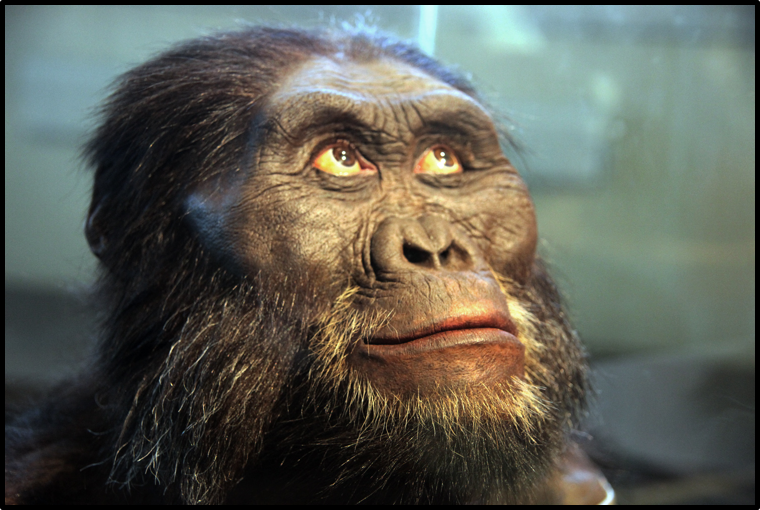
Australopiths
- 2-4 MYA
- "lucy" discovered in africa
- Bipedalism: walking on two legs
- Became more efficient, fewer limbs required
- Tool use
- Found cuts on bone ~2.5 MYA
- Indicates stone knives
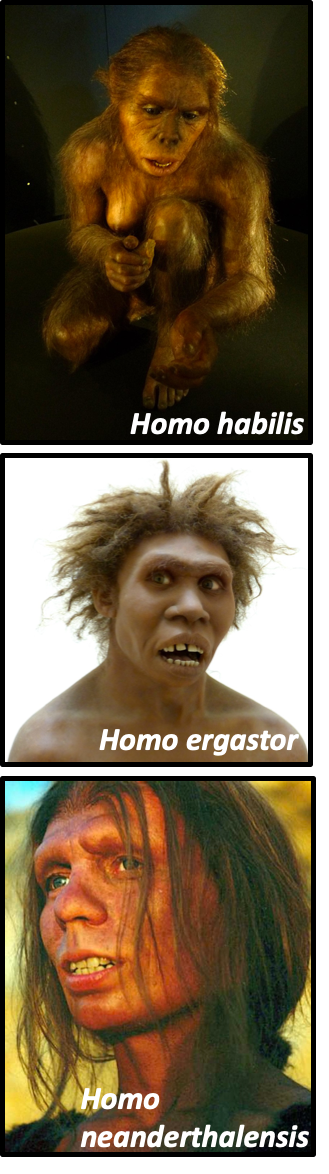
Homo
- Genus that contains humans
- Homo habilis
- "Handy man"
- 2.4 - 1.6 MYA
- Sharp stone tools
- Homo ergaster
- 1.9 - 1.5 MYA
- Larger brain
- Decreased sexual dimorphism
- Used to be considered Homo erectus
- Homo neanderthalensis
- Neandrathals
- Larger head than modern humans
- Buried dead
- Tools from stone and wood
- 350,000 - 30,000 YA
- Gene flow with humans
- Homo sapiens
- Modern humans
- Oldest fossils from Africa 195,000 - 160,000 YA
- More slender, less pronounced brows
Human Migration
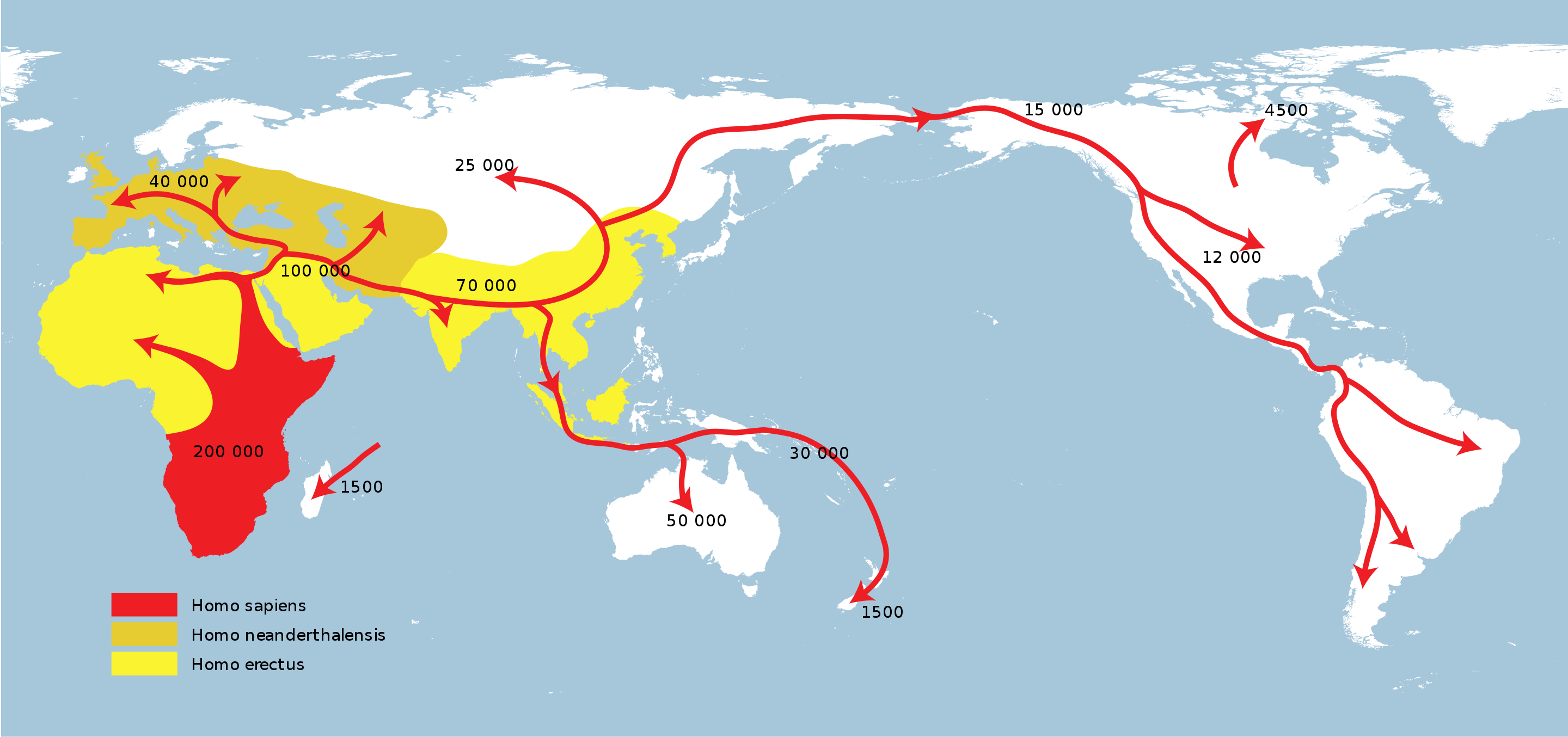
Numbers are years before present
Practice: Hominids
Bipedalism developed first in what group of hominids?
Practice: Humans
True or False:
There was no contact between Neanderthals and Homo sapiens.