Wize University Chemistry Textbook > Introduction to Organic Chemistry
Nomenclature [hydrocarbons]
Popular Courses
General Chemistry
University Study Guides
CHEM 101
University of Alberta
CHEM 112
Queen's University
Chemistry
General Course
CHEM 1AA3
McMaster University
CHEM 103
University of Alberta
General Chemistry
University Study Guides
CHEM 110
McGill University
CHEM 123
University of British Columbia
APSC 132
Queen's University
CHEM 112B
Queen's University
CHEM 130
University of British Columbia
CHEM 1100
University of Manitoba
CHEM 1481
Texas A & M University
CEM 141
Michigan State University
CHMA10H3
University of Toronto
SC/CHEM 1100 4.00
York University
CHEM 1035
Virginia Tech
CHM 2045
University of Florida
CHEM 1001
Carleton University
0:00 / 0:00
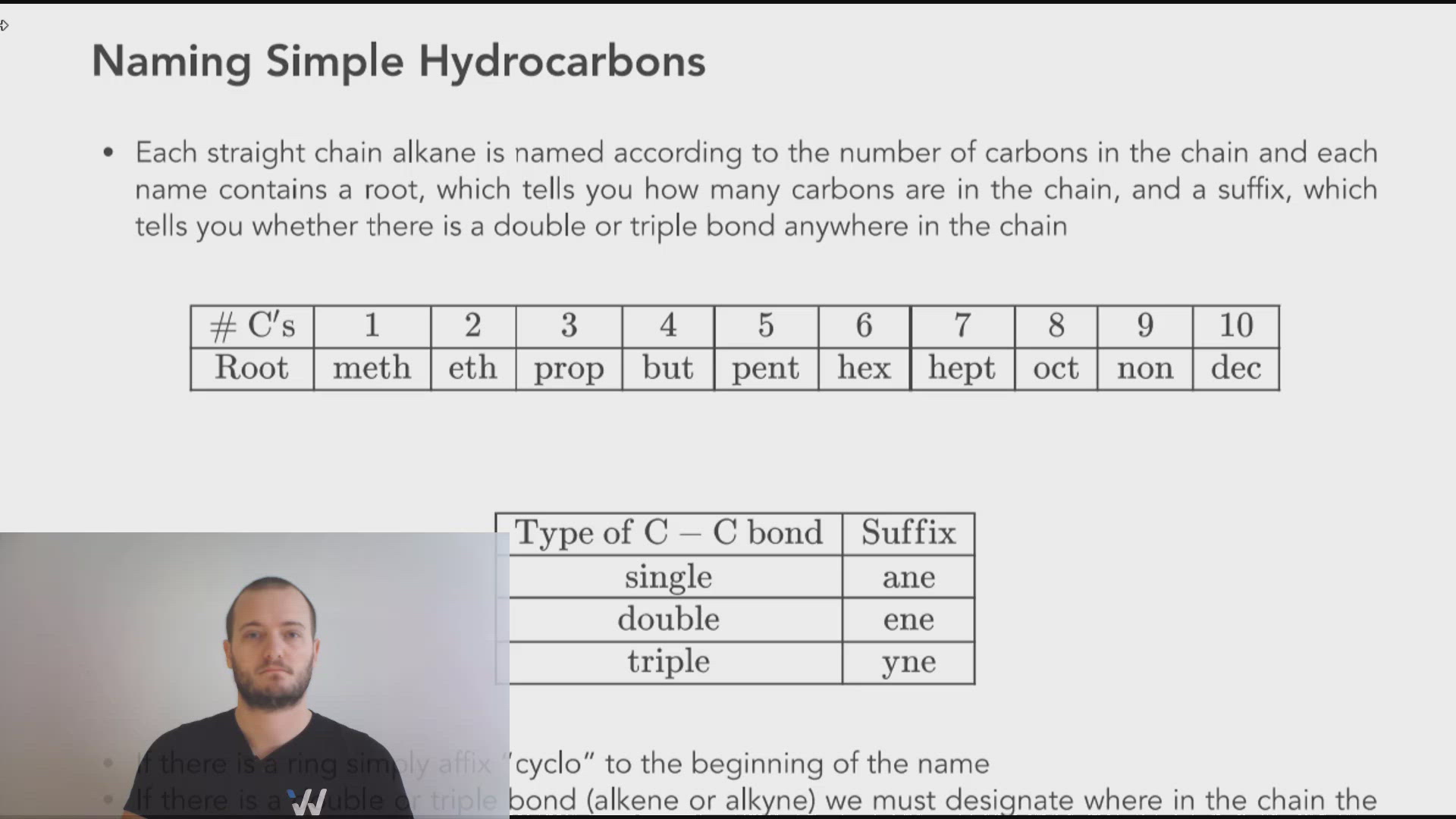
Naming Simple Hydrocarbons
Each name contains:
- A root (aka prefix), which tells you how many carbons are in the longest chain
- And a suffix, which tells you whether there is a double or triple bond anywhere in the chain
- If there is a ring simply affix “cyclo” to the beginning of the name
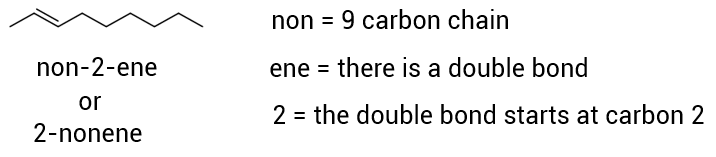
- If there is a double or triple bond (alkene or alkyne) we must designate where in the chain the double bond is located. This is done by placing a number in front of the name. Example:
- If the carbon chain has a branch point, the longest chain becomes the parent molecule and the group coming off becomes a substituent.
- Substituents use the same root as simple alkanes but the suffix is –yl.
Shown below are a few very common substituents that have non-systematic names.

Steps to Naming Simple Hydrocarbons
- Identify the longest carbon chain and circle it. If the longest carbon chain is a ring then the ring (with no other carbons) becomes the parent. If a ring is a substituent on a larger carbon chain treat it like a substituent (eg. cyclohexyl-)
- Number the carbon chain so that the highest priority group (alkene > alkyne > substituent) has the lowest possible number.
- List the substituents with their numbers (which tells you the location on the chain) in alphabetical order followed by the root and suffix (with appropriate numbering) of the longest chain. Note: If the same substituent appears more than once add a prefix of “di” for two “tri” for three, “tetra” for four. These prefixes don't have to be in alphabetical order
- Put the stereochemical designation in the very front in brackets.
0:00 / 0:00
Nomenclature Cheatsheet
To name an organic molecule:
1. Identify the longest continuous chain of carbon atoms. This is the root of the name.

2. Number the carbons in the longest carbon chain such that the substituents (attached groups) have the lowest possible numbers.
3. Alphabetize the substituents forming the prefix
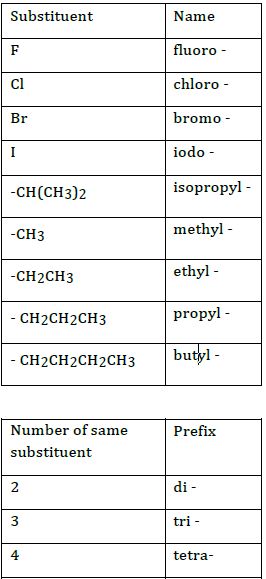
4. The main functional group on the carbon backbone provides the suffix
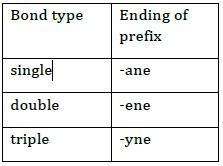
Example: Naming Hydrocarbons
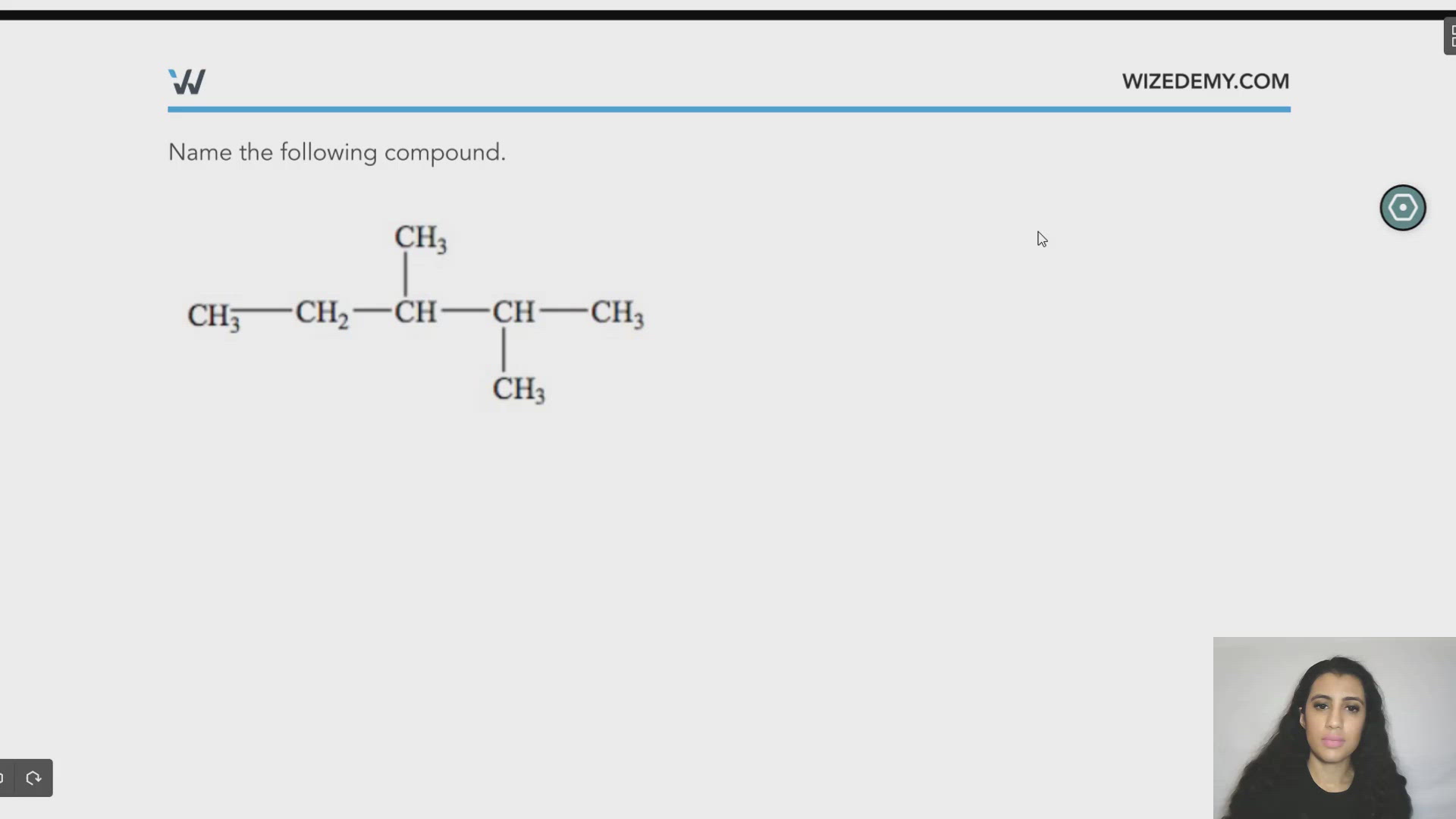
Name the following compound.
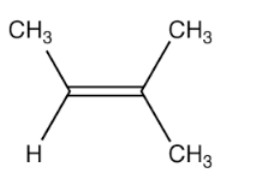
2 – methylbut-2-ene
0:00 / 0:00
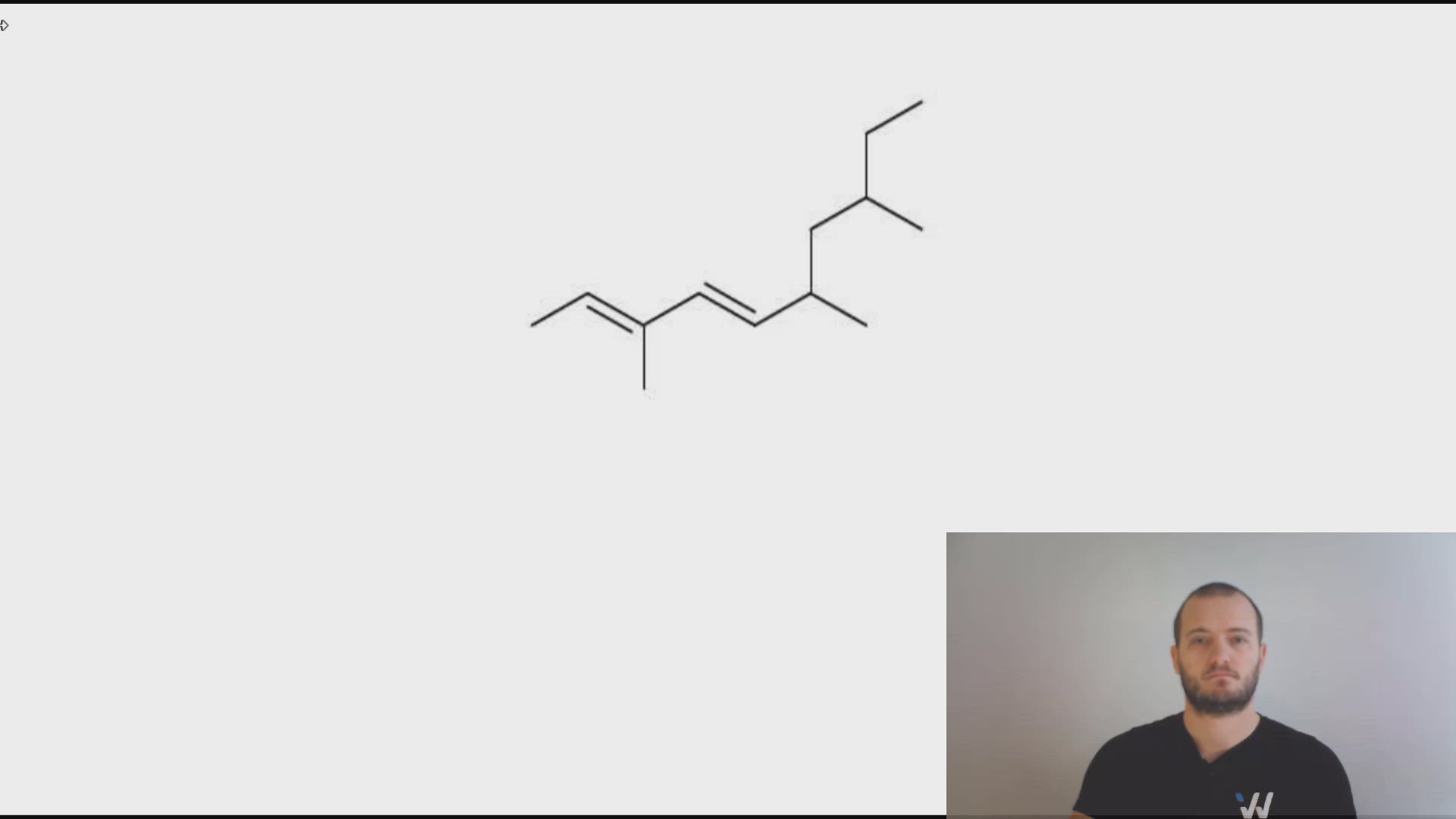
Example: Naming Hydrocarbons
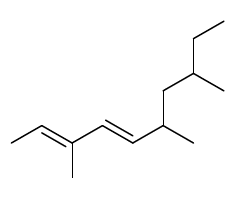
- Longest Chain is 10 carbons long dec
- Numbering starts on the left to make deca-2, 4-diene NOT deca-6, 8-diene
- We have metyl groups at positions 3, 6 and 8
** Don't worry about how we determine and for now **
Practice: Naming Hydrocarbons
Name the following compound.

Practice: Nomenclature
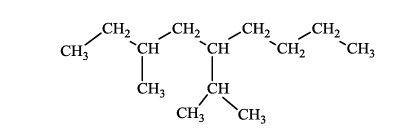
The correct systematic name of the following alkane is?