Wize University Chemistry Textbook > Organic Chemistry Reactions
Alkene and Alkyne Addition Reactions
Popular Courses
General Chemistry
University Study Guides
CHEM 112
Queen's University
Chemistry
General Course
CHEM 1AA3
McMaster University
General Chemistry
University Study Guides
APSC 132
Queen's University
CHEM 112B
Queen's University
CHEM 130
University of British Columbia
CHEM 1100
University of Manitoba
CHEM 1481
Texas A & M University
CHMA10H3
University of Toronto
SC/CHEM 1100 4.00
York University
CHM 2045
University of Florida
CHEM 1001
Carleton University
CHEM 111
University of British Columbia
CHEM 112
University of Saskatchewan
CHEM 1P91
Brock University
CHMA11H3
University of Toronto
CHEM 1110
University of Manitoba
CHM 1301
University of Ottawa
0:00 / 0:00
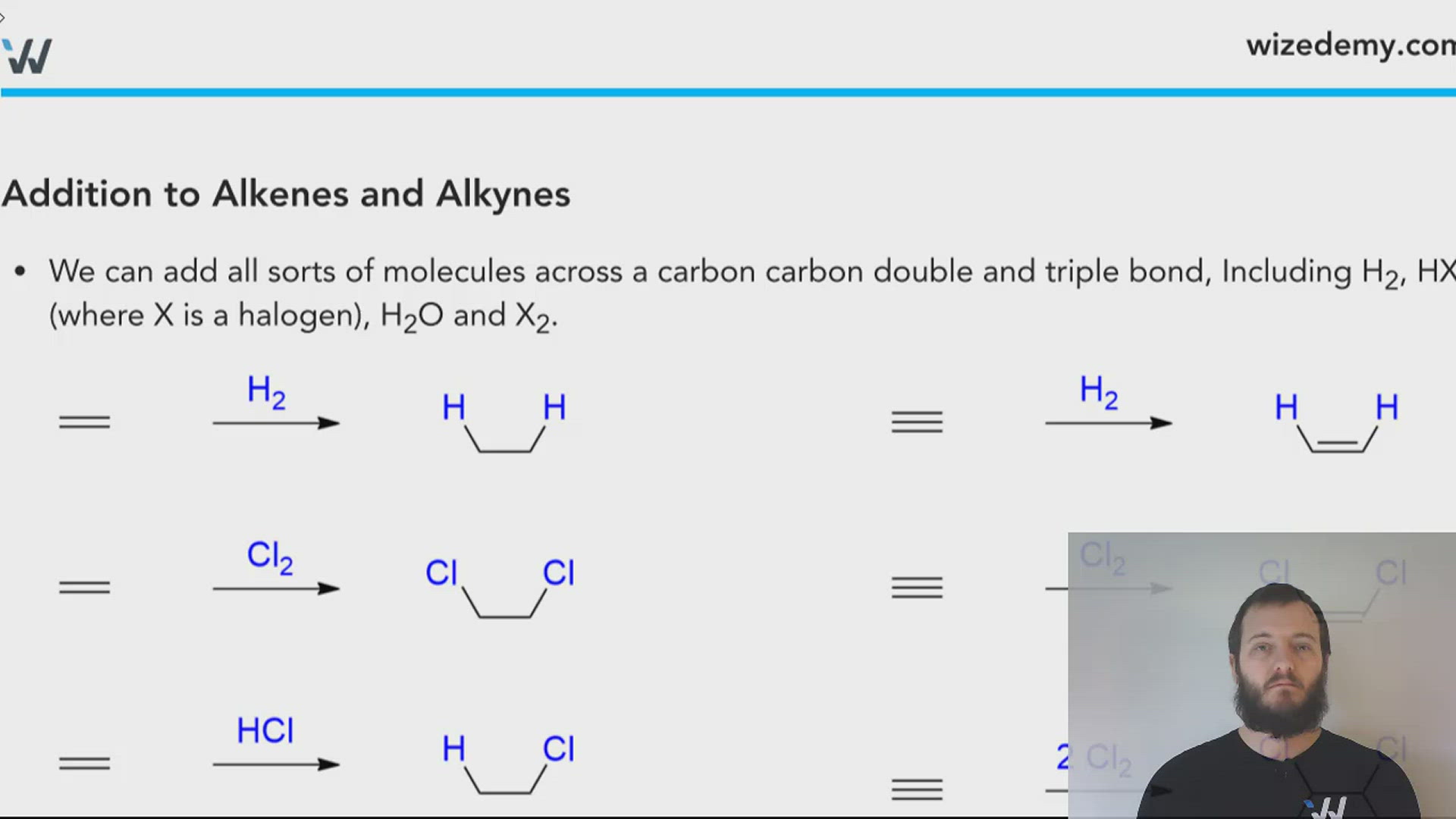
Addition to Alkenes and Alkynes
- We can add all sorts of molecules across a carbon carbon double and triple bond, Including H2, HX (where X is a halogen), H2O and X2.

0:00 / 0:00
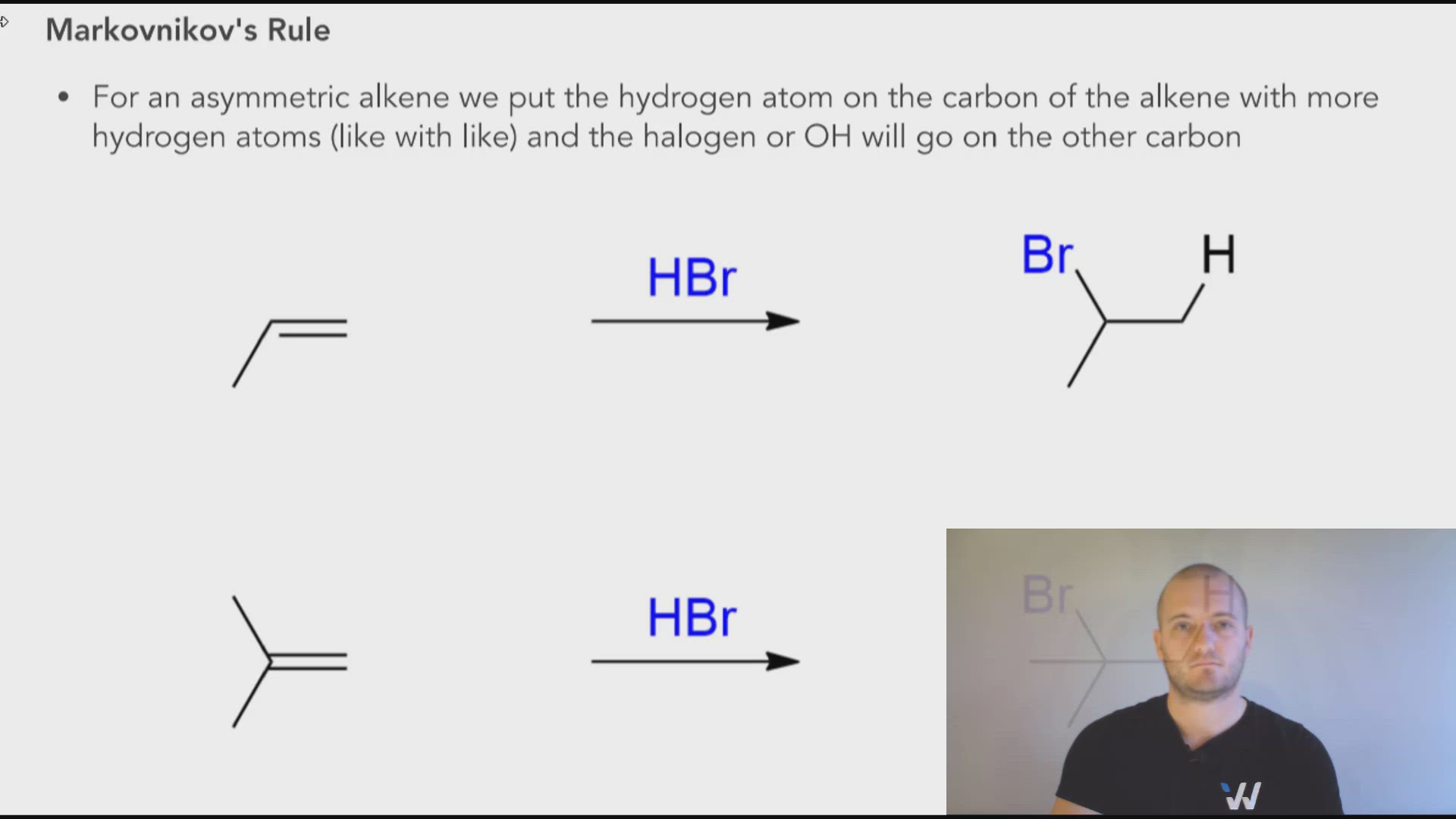
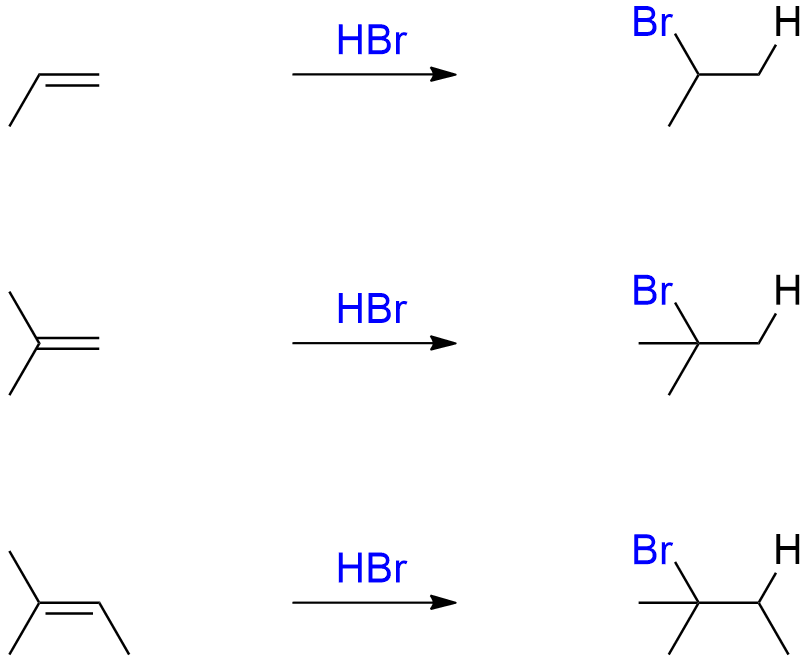
Markovnikov's Rule
- For an asymmetric alkene we put the hydrogen atom on the carbon of the alkene with more hydrogen atoms (like with like) and the halogen or OH will go on the other carbon

Mark Yourself Question
- Grab a piece of paper and try this problem yourself.
- When you're done, check the "I have answered this question" box below.
- View the solution and report whether you got it right or wrong.
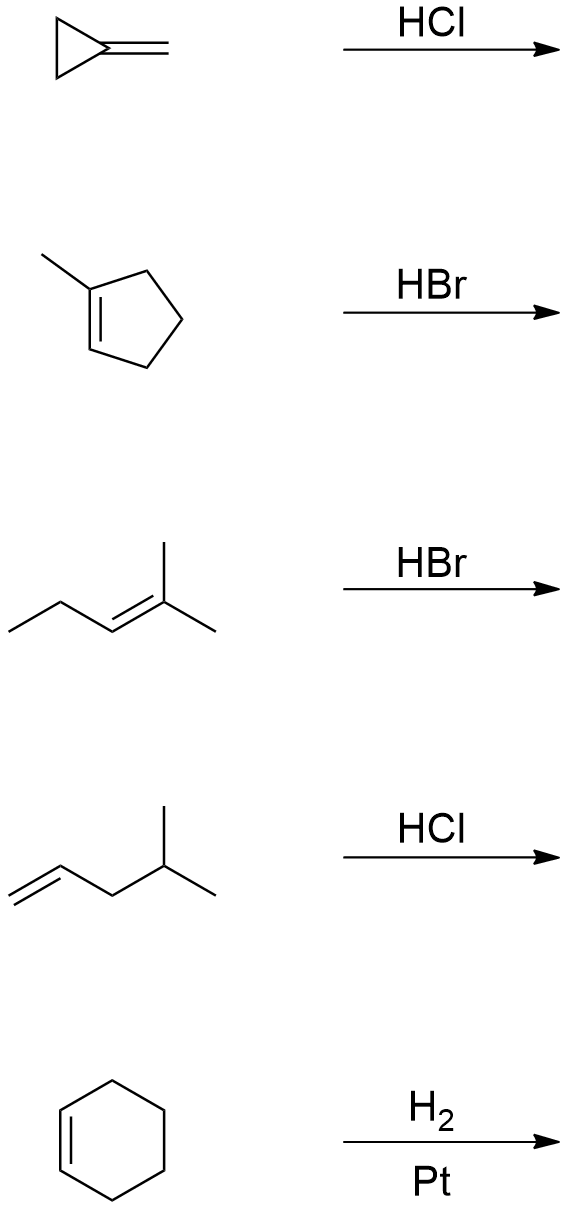
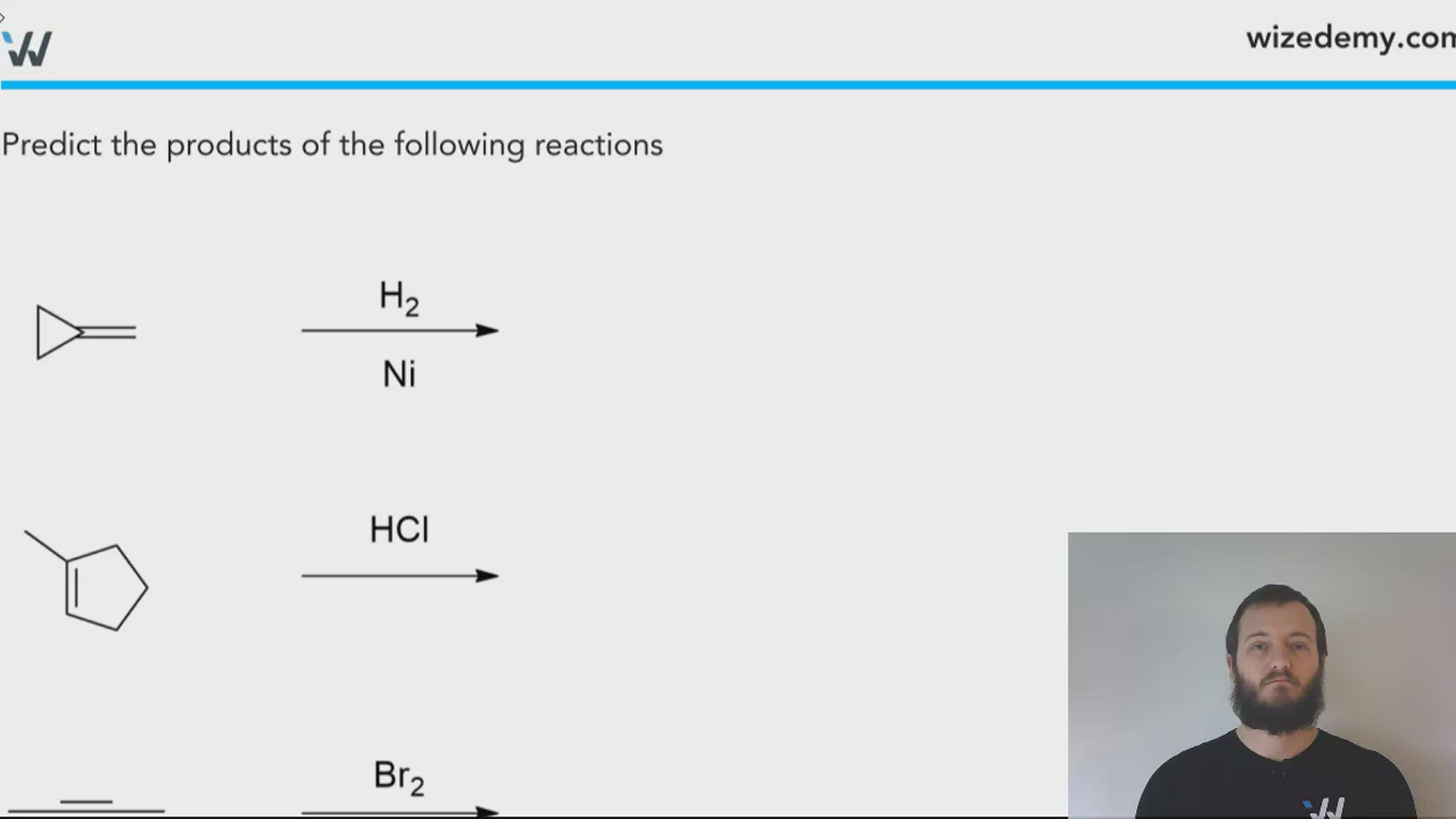
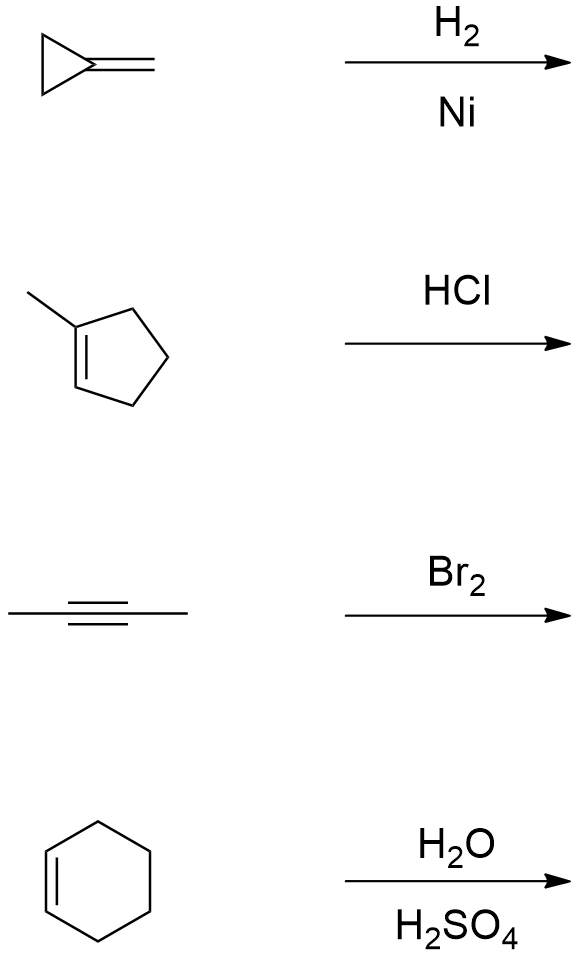
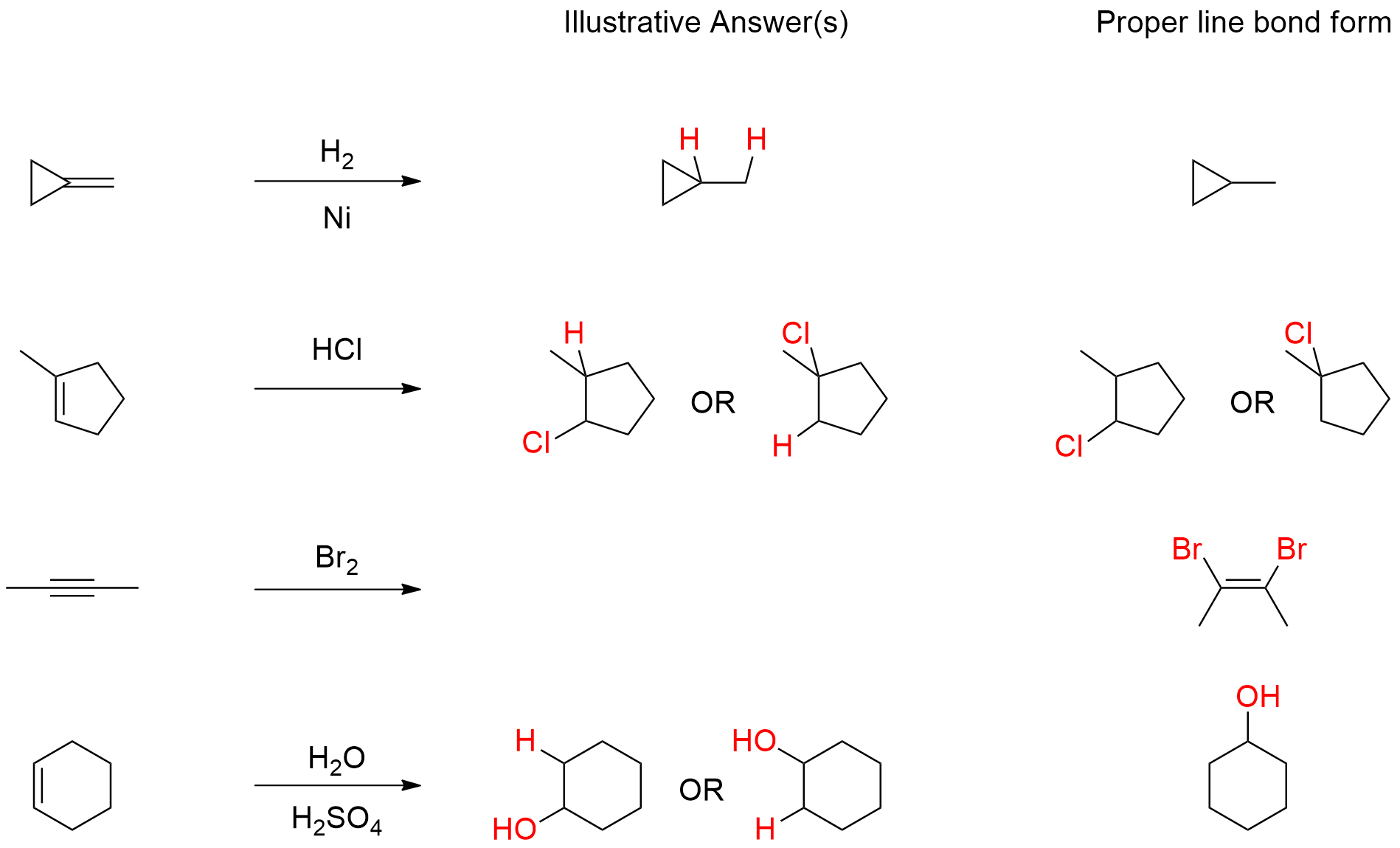
Predict the products of the following reactions
What is the missing reagent in the reaction below?

0:00 / 0:00
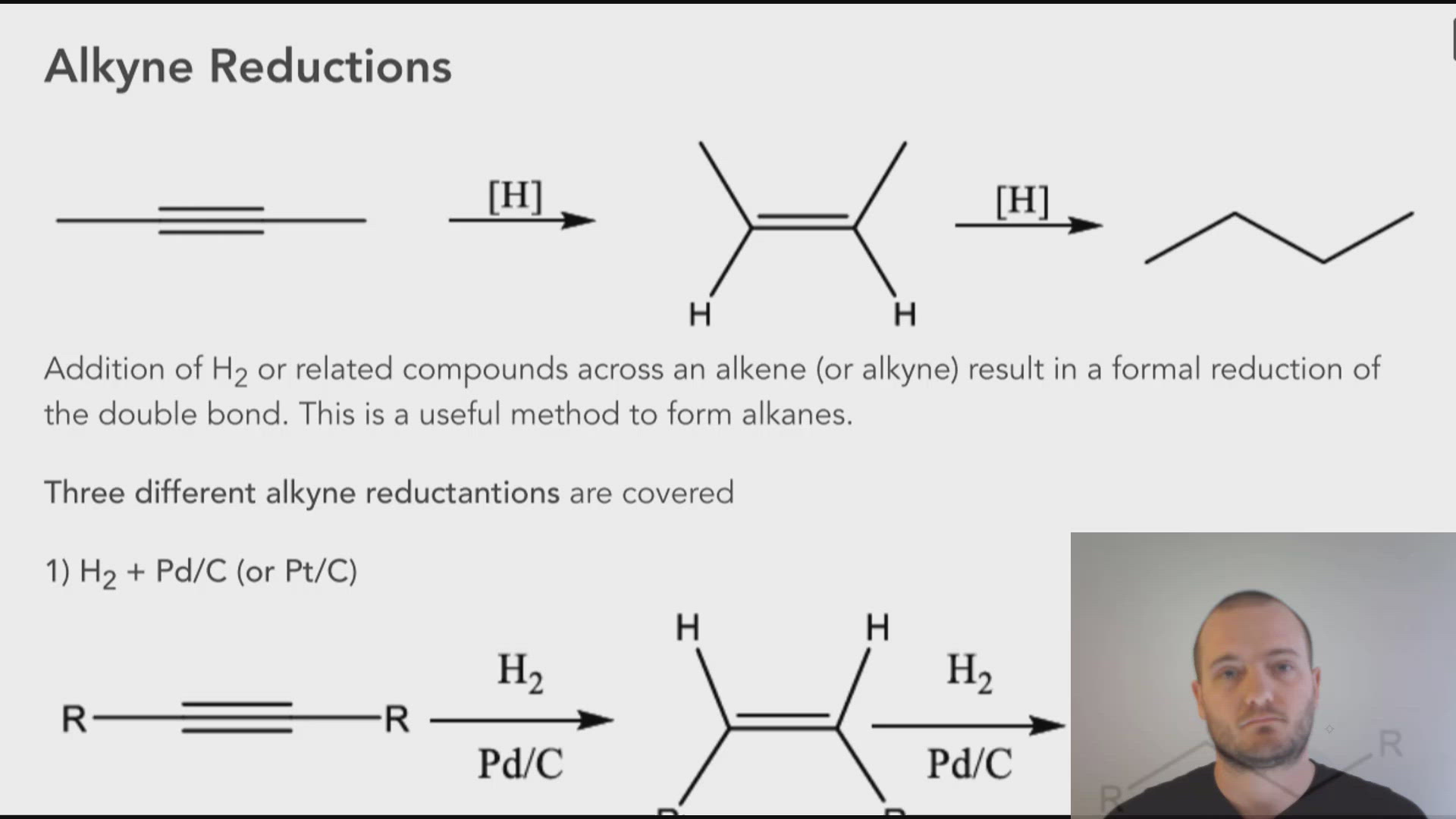
Alkyne Reductions

Addition of H2 or related compounds across an alkene (or alkyne) result in a formal reduction of the double bond. This is a useful method to form alkanes.
Three different alkyne reductantions are covered
1) H2 + Pd/C (or Pt/C)

Hydrogenation using Pd or Pt (or Ni) and H2 convert alkenes to alkanes, which means that if you try to reduce an alkyne you will go all the way to alkane. You can't stop!!!
2) Lindlar's Catalyst:
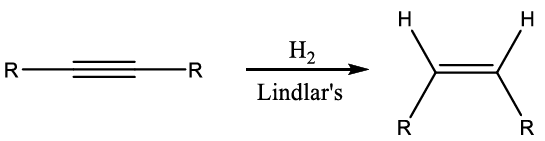
Lindlar's catalyst was developed to prevent alkynes from reducing all the way to alkanes, and stops the reaction at the cis alkene.
Remember, the product is the cis alkene because the H2 molecule is still delivered to the same face of the double bond.
3) Li (or Na)/ NH3
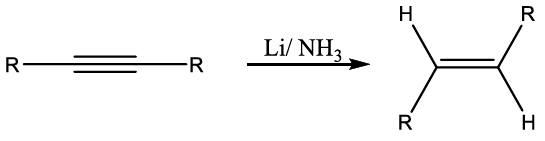
If you want the trans double bond, reduction of an alkyne with Li (or Na) dissolved in liquid ammonia (NH3) is the way to go.
0:00 / 0:00
Predict the products of the following reactions
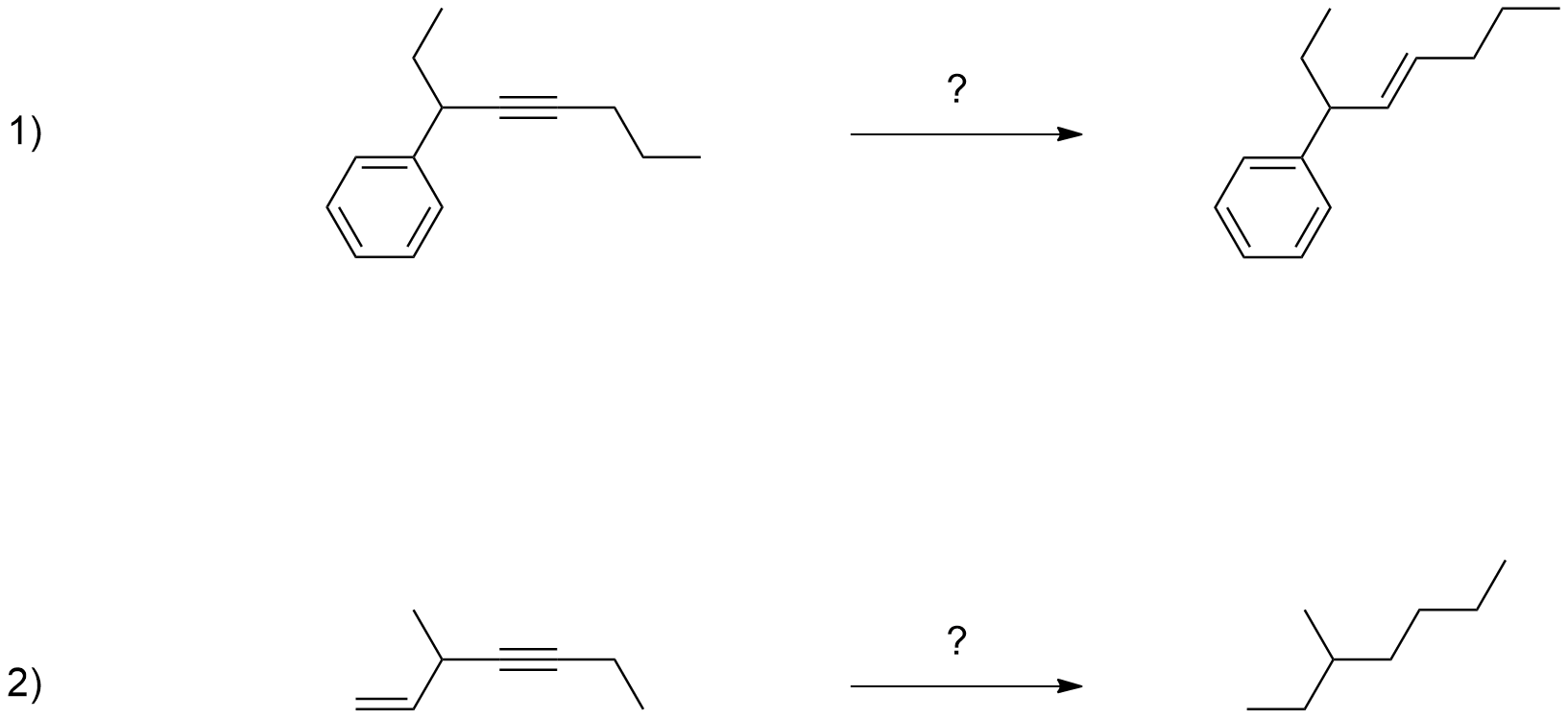
Choose the reagents that will best accomplish this transformation from the following list. Only enter the corresponding letter in the answer field, not the reagents.
a) AlCl3 and H2
b) Pd/C and H2
c) Li/NH3
d) Lindlar's Catalyst
2-butyne reacts with a vast excess of bromine gas (Br2) ate elevated temperature. When the reaction is complete which of the following products have formed?