Wize University Chemistry Textbook > Molecular Orbital Theory
Molecular Orbital Theory (Cont'd)
Popular Courses
General Chemistry
University Study Guides
CHEM 121
University of British Columbia
DAT
General Course
Chemistry
General Course
General Chemistry
University Study Guides
CHEM 121
Simon Fraser University
CHEM 1011
Dalhousie University
APSC 131
Queen's University
CHEM 1100
University of Manitoba
CHEM 1481
Texas A & M University
CEM 141
Michigan State University
CHMA10H3
University of Toronto
SC/CHEM 1100 4.00
York University
CHEM 1021
Dalhousie University
CHM 2045
University of Florida
CHEM 1001
Carleton University
CHEM 6A
University of California - San Diego
CHEM 111
University of British Columbia
CHEM 112
University of Saskatchewan
CHEM 1P91
Brock University

0:00 / 0:00
Molecular Orbital Theory
- A general, but slightly complicated approach to chemical bonding is the Molecular Orbital Theory. This theory builds on the electron wave functions of Quantum Mechanics to describe chemical bonding. The mathematical process of combining atomic orbitals to generate molecular orbitals is called the linear combination of atomic orbitals (LCAO). The wave function describes the wavelike properties of an electron. Molecular orbitals are combinations of atomic orbital wave functions.
- 1s orbitals can interfere constructively or destructively:

- When p orbitals overlap end to end, they create σ and σ* orbitals. The side-by-side overlap of two p orbitals gives rise to a π bonding molecular orbital and a π* antibonding molecular orbital.

- Molecular orbital theory can explain why some molecules form, while other won’t.
0:00 / 0:00
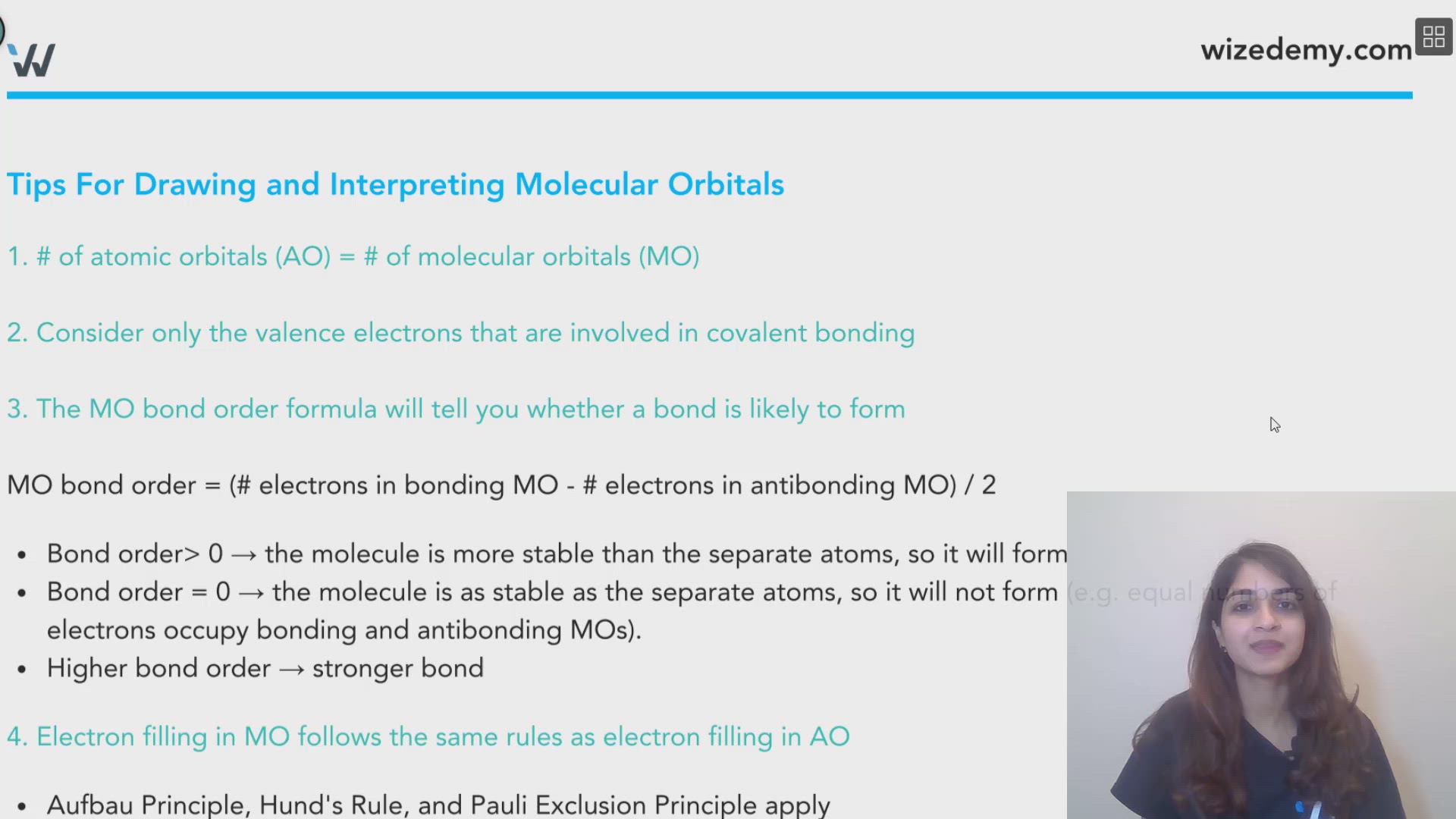
Tips For Drawing and Interpreting Molecular Orbitals
1. # of atomic orbitals (AO) = # of molecular orbitals (MO)
2. Consider only the valence electrons that are involved in covalent bonding
3. The MO bond order formula will tell you whether a bond is likely to form
MO bond order = (# electrons in bonding MO - # electrons in antibonding MO) / 2
- Bond order> 0 → the molecule is more stable than the separate atoms, so it will form
- Bond order = 0 → the molecule is as stable as the separate atoms, so it will not form (e.g. equal numbers of electrons occupy bonding and antibonding MOs).
- Higher bond order → stronger bond
4. Electron filling in MO follows the same rules as electron filling in AO
- Aufbau Principle, Hund's Rule, and Pauli Exclusion Principle apply
- Fill electrons starting from lowest energy level first, no two electrons in an orbital can have the same spin
5. Sigma ( σ ) MOs are lower in energy than their respective AOs, whereas σ* antiboding MOs are higher in energy than their respective AOs. Similarly π < π *
=> Antibonding orbitals are always higher in energy!
6. Is σ > π or is σ < π?
- Usually, a simple rule of thumb is when Z = 1, 2, 3......7 the pi bond is more stable than the sigma bond, so π < σ
- At high Z, there is more shielding and less mixing between the s and p orbitals. So when Z > 7, the sigma bond is more stable than the pi bond, and σ < π.
7. Is a compound paramagnetic (respond to a magnetic field) or diamagnetic?
The same rules of paramagnetism apply to MO as AO. If there are any unpaired electrons in the MO orbitals, the compound is paramagnetic. Otherwise, if all the electrons in the MOs are paired, the compound is diamagnetic.
0:00 / 0:00
Molecular Orbital Theory - Concept Clarifier
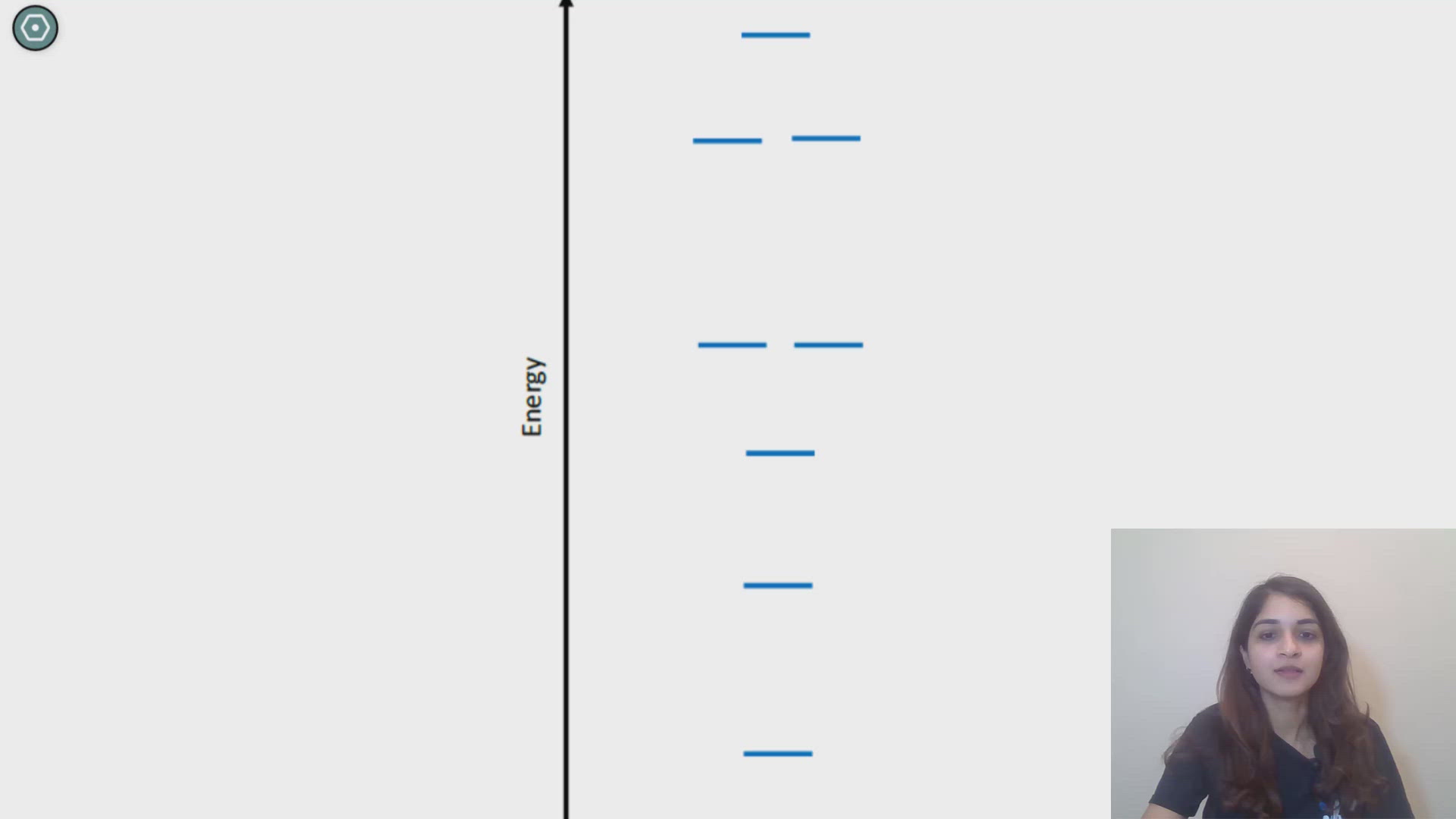
a) Complete the molecular orbital energy diagram below for an ion of F2+. Make sure to include all valence electrons and name all orbitals (hint the bond axis is the z axis)
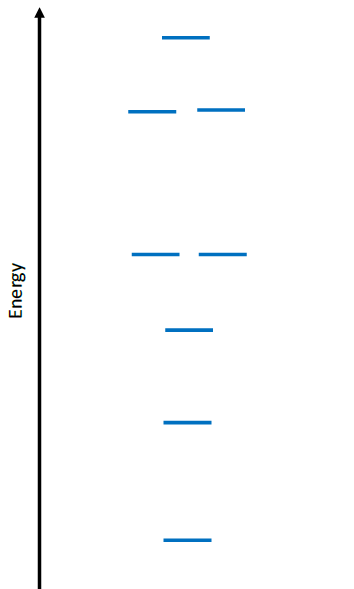
b) How many bonding electrons, in total, are there?
c) How many antibonding electrons, in total are there?
d) What is the bond order?
e) Is this species paramagnetic?
f) Name the molecular orbital in which can be found the highest energy electrons. In the box below, draw the 2D sketch for the 3D boundary diagram for this molecular orbital
g) Is the F2+ ion more or less stable than the parent F2 molecule?
According to Molecular Orbital Theory, what is the bond order of B22+ ?