Popular Courses
CHEM 1302A/B
Western University
General Chemistry
University Study Guides
AP Chemistry Exam Prep Course
AP Exam Prep
CHEM 1A03
McMaster University
CHEM 112
Queen's University
CHEM 203
University of Calgary
Chemistry
General Course
DAT
General Course
General Chemistry
University Study Guides
ENGG 204
University of Calgary
CHM135H1
University of Toronto
CHEM 154
University of British Columbia
CHEM 102
University of Alberta
CHEM 120
McGill University
CHEM 112B
Queen's University
CHEM 130
University of British Columbia
CHEM 1100
University of Manitoba
CHEM 1481
Texas A & M University
CHEM 206
Concordia University
CHMA10H3
University of Toronto

0:00 / 0:00
Solubility and Ksp
- Recall that a saturated solution is one that has the maximum quantity of solute dissolved. It is at this point that an equilibrium forms between the solid and the dissolved ions.
- Ex: AgCl(s) ⇌ Ag+(aq) + Cl-(aq)
- Increasing temperature can cause the solubility to increase
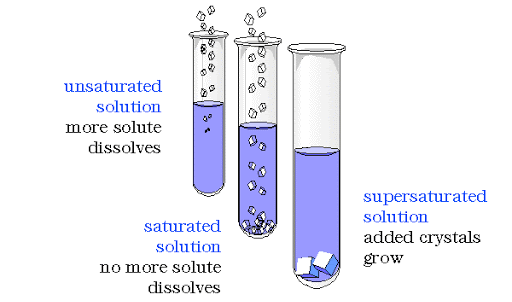
Ksp= The solubility product constant
- It is the equilibrium constant (K) that is specifically for saturated solutions
Write the Ksp expression for the above reaction in equilibrium:
Ksp=[Ag+][Cl-]
Watch Out!
Remember that solids or liquids are never included in any K expression!
For these solids, we can write out ICE tables similar to how we did earlier:
Let's say the Ksp=1.8x10⁻¹⁰ for the AgCl(s) at 25oC and we start with 0.2M of AgCl(s). We could be asked to find the concentrations for the ions at equilibrium.
1) Create an ICE Table
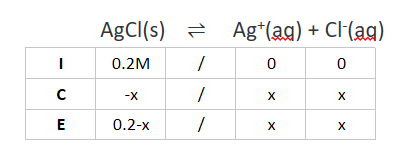
2) Write out a Ksp expression and solve for x:
Ksp=[Ag+][Cl-]
1.8x10-10=x2
x=1.34x10⁻⁵ M = [Ag+]=[Cl-]
Wize Tip
If you are ever asked to solve for the "molar solubility" or "solubility" of a salt, they are asking you to solve for x like we just did!
Solubility is referring to how much of a solid dissolves to give a saturated solution (at equilibrium)
0:00 / 0:00
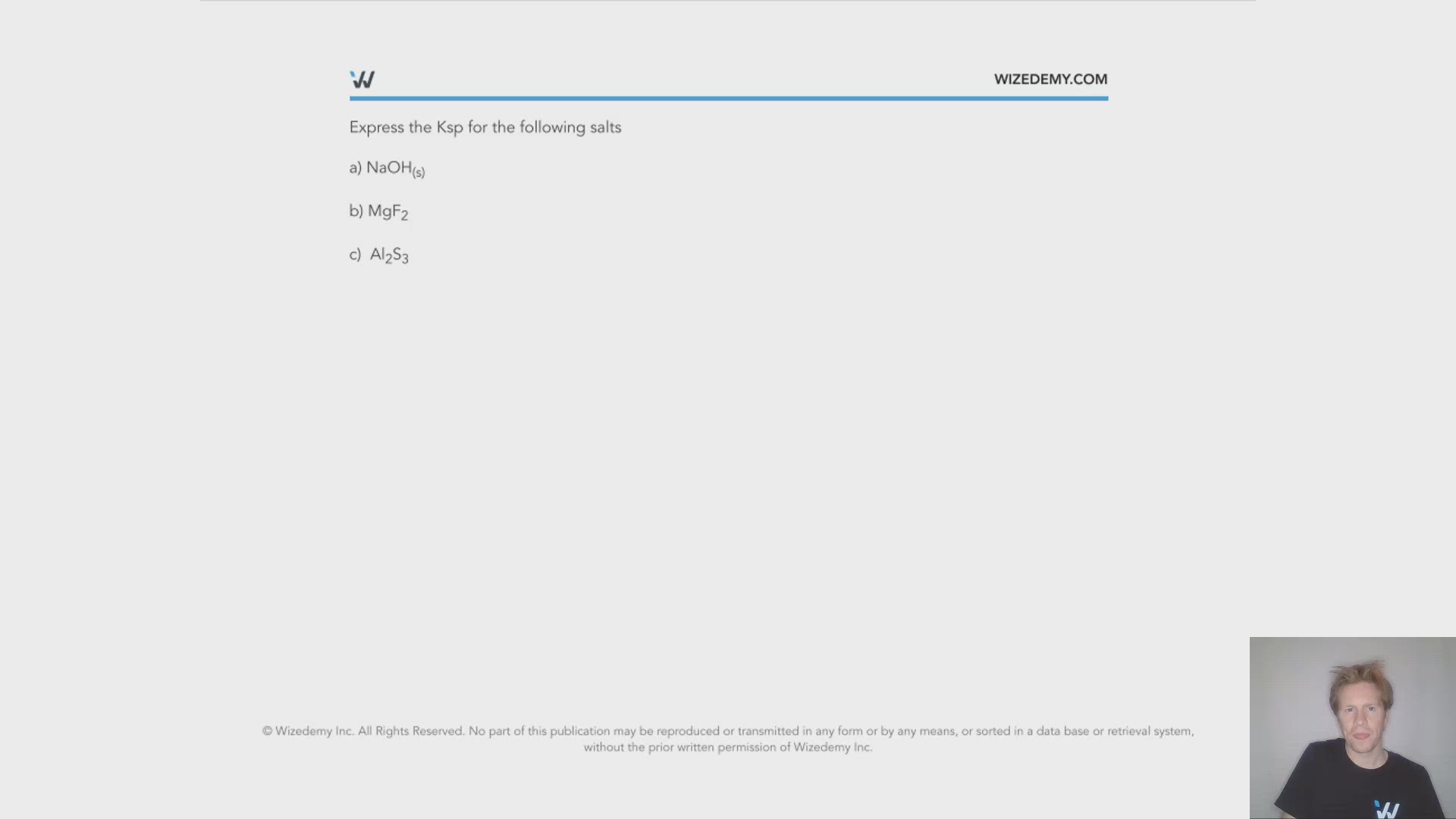
Express the Ksp for the following salts
a) NaOH(s)
b) MgF2
c) Al2S3
a) 𝐾𝑠𝑝 = [𝑁𝑎+][𝑂𝐻−]
b) 𝐾𝑠𝑝 = [𝑀𝑔2+][𝐹−]2
c) 𝐾𝑠𝑝 = [𝐴𝑙3+]2[𝑆2−]3
Estimate the molar solubility of Ag2CrO4 in pure water if Ksp for silver chromate is 1.1x10⁻¹².
The solubility of copper(II) arsenate, Cu3(AsO4)2, in pure water is 3.7×10⁻⁸ M. Calculate the value of Ksp for copper(II) arsenate from this data.