Wize University Chemistry Textbook > Introduction to Organic Chemistry
5 Ways to Represent Alkane Structures
Popular Courses
General Chemistry
University Study Guides
CHEM 112
Queen's University
CHEM 121
University of British Columbia
Chemistry
General Course
CHEM 1AA3
McMaster University
General Chemistry
University Study Guides
CHEM 123
University of British Columbia
APSC 132
Queen's University
CHEM 112B
Queen's University
CHEM 130
University of British Columbia
CHEM 1100
University of Manitoba
CHEM 1481
Texas A & M University
CEM 141
Michigan State University
CHMA10H3
University of Toronto
SC/CHEM 1100 4.00
York University
CHEM 1035
Virginia Tech
CHM 2045
University of Florida
CHEM 1001
Carleton University
CHEM 111
University of British Columbia
CHEM 112
University of Saskatchewan
What is Organic Chemistry?
Study of compounds containing primarily carbon and have lots of C-H bonds.


0:00 / 0:00
5 Ways to Represent Alkane Structures

0:00 / 0:00
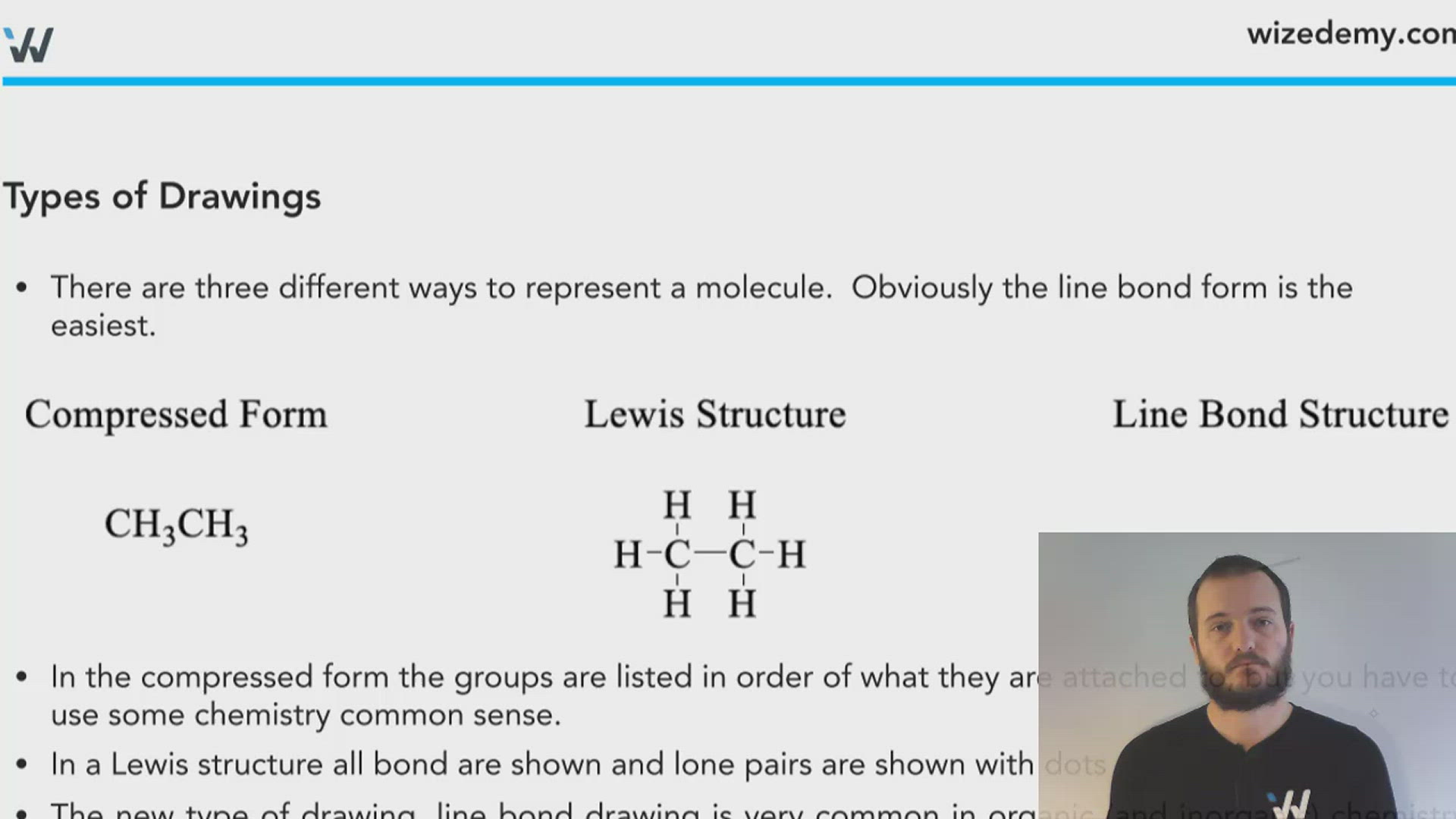
Types of Drawings

- In the compressed form the groups are listed in order of what they are attached to, but you have to use some chemistry common sense.
- In a Lewis structure all bond are shown and lone pairs are shown with dots
- The new type of drawing, line bond drawing is very common in organic (and inorganic) chemistry because it is much more convenient when drawing large molecules.
Rules for Line Bond Drawings
- Each line represents a bond
- Each corner represents a carbon atom unless it has been indicated otherwise
- Heteroatoms (not carbon or hydrogen) are written with their molecular symbol
- All carbons are assumed to have four bonds. Carbons with less than four bonds are assumed to have the appropriate number of hydrogen atoms attached. Hydrogen's are drawn if they are attached to heteroatoms or aldehydes.
- Lone pairs are typically not drawn but can be included.
- All atoms are assumed to be neutral unless otherwise indicated.
- In general when neutral oxygen and sulfur have 2 lone pairs; nitrogen and phosphorus have one lone pair and halogens have three lone pairs.
Wize Concept
For the following examples, you should be able to look at the lewis structure and draw its line bond structure and also look at the line bond structure and draw the lewis structure!
Understanding this will come in handy on exams!

A Closer Look at Line Drawings
In organic chemistry, there's often a number of carbon and hydrogen atoms. Line drawings simplify this by replacing any nonessential carbons and hydrogens with lines:

Example: Line Drawings
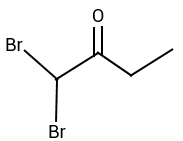
Convert the following into line drawing (aka skeletal) form
a)
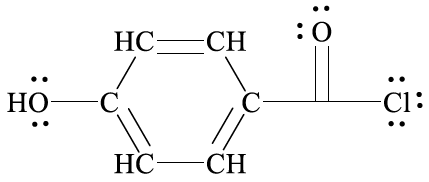
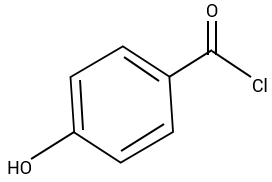
b)
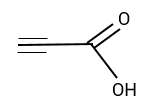
c)