Popular Courses
Grade 12 Chemistry
Ontario High School
Grade 12 Chemistry
Canada High School
General Chemistry
University Study Guides
High School Chemistry
US High School
Chemistry 30
Alberta High School
Chemistry
General Course
CHEM 1AA3
McMaster University
General Chemistry
University Study Guides
CHEM 123
University of British Columbia
APSC 132
Queen's University
CHEM 112B
Queen's University
CHEM 130
University of British Columbia
CHEM 1100
University of Manitoba
CHEM 1481
Texas A & M University
CEM 141
Michigan State University
CHMA10H3
University of Toronto
SC/CHEM 1100 4.00
York University
CHEM 1035
Virginia Tech
CHM 2045
University of Florida
CHEM 1001
Carleton University

0:00 / 0:00
Introduction to Hydrocarbons
A hydrocarbon is an organic compound that only contains carbon and hydrogen atoms

Unsaturated vs Saturated Hydrocarbons
A saturated hydrocarbon is one that has the maximum number of hydrogens added (no double or triple bonds)
- Alkanes are saturated hydrocarbons
- Alkenes and alkynes are unsaturated hydrocarbons
General Formulas for Hydrocarbons
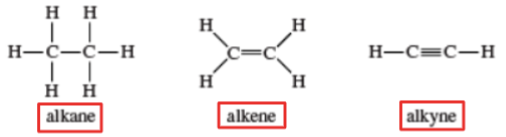
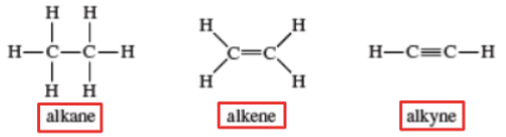
Alkanes are hydrocarbons that only have single bonds between carbon atoms ... CnH2n+2
Alkenes are hydrocarbons that have at least 1 C=C double bond ...CnH2n
Alkynes are hydrocarbons that contain at least 1 C≡C triple bond ... CnH2n-2
Aliphatic vs Aromatic Hydrocarbons
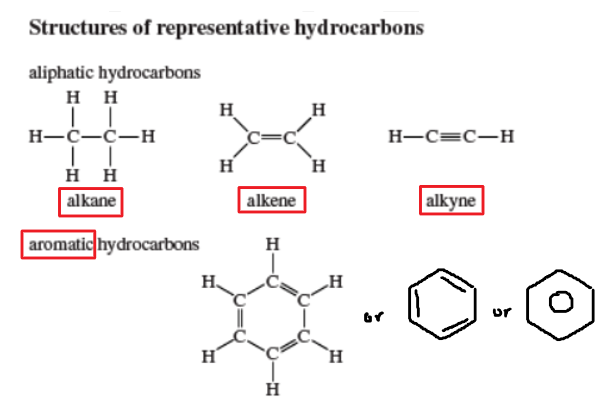
Aliphatic hydrocarbons: compounds that have a structure based on straight or branched chains or rings of carbon atoms (does not include aromatic compounds like benzene)
Includes: alkanes, alkenes, alkynes, and cyclic hydrocarbons
Aromatic hydrocarbons: a compound with a structure based on benzene (C6H6).
Benzene has all 6 Cs in intermediate length between a single and double bond because of resonance.

0:00 / 0:00
Cyclic Hydrocarbons

0:00 / 0:00
Hydrocarbons
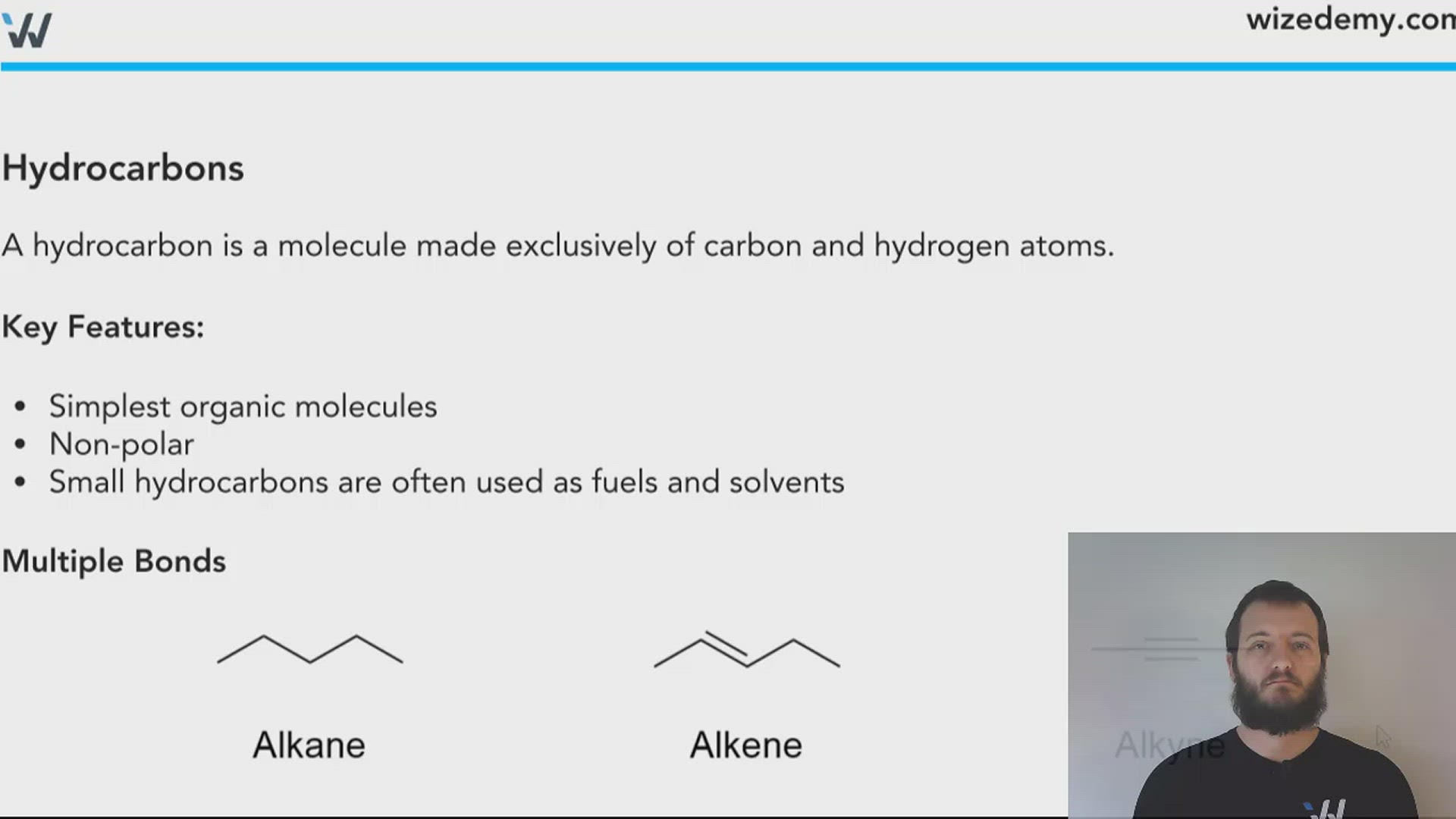
A hydrocarbon is a molecule made exclusively of carbon and hydrogen atoms.
Key Features:
- Simplest organic molecules
- Non-polar
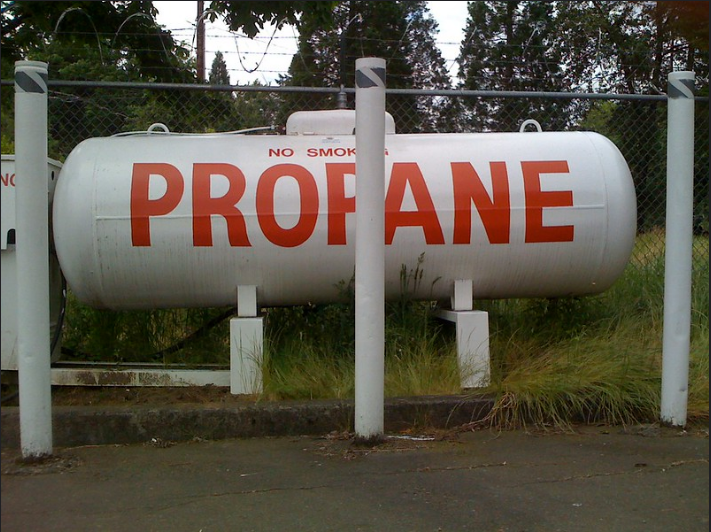
- Small hydrocarbons are often used as fuels in combustion reactions and as solvents
Multiple Bonds

Isomers
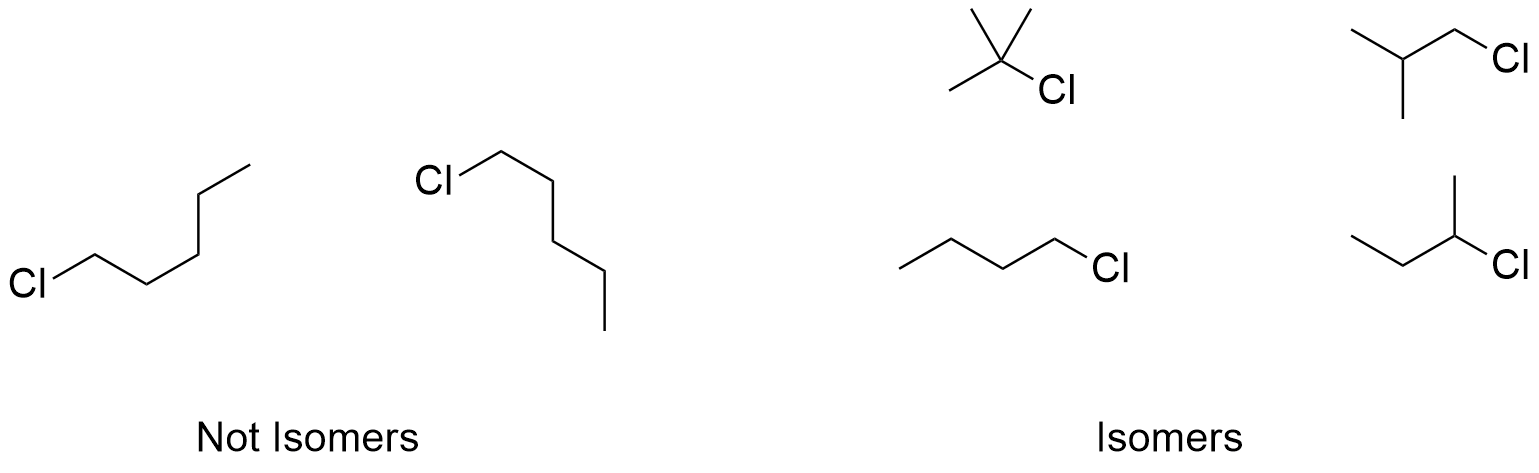
If two organic compounds have the same number of atoms but different bond connectivity then they are isomers, or more precisely structural isomers.