Wize University Chemistry Textbook > Atoms, Ions, & Isotopes
Atomic Structure
Popular Courses
MCAT
General Course
CHEM 1301A/B
Western University
General Chemistry
University Study Guides
AP Chemistry Exam Prep Course
AP Exam Prep
CHEM 101
University of Alberta
CHEM 112
Queen's University
CHEM 121
University of British Columbia
DAT
General Course
Chemistry
General Course
CHEM 103
University of Alberta
General Chemistry
University Study Guides
CHEM 110
McGill University
CHEM 1E03
McMaster University
CHM135H1
University of Toronto
CHEM 120
University of Waterloo
CHEM 205
Concordia University
CHEM 121
Simon Fraser University
APSC 131
Queen's University
CHEM 1100
University of Manitoba
CHEM 1481
Texas A & M University
0:00 / 0:00
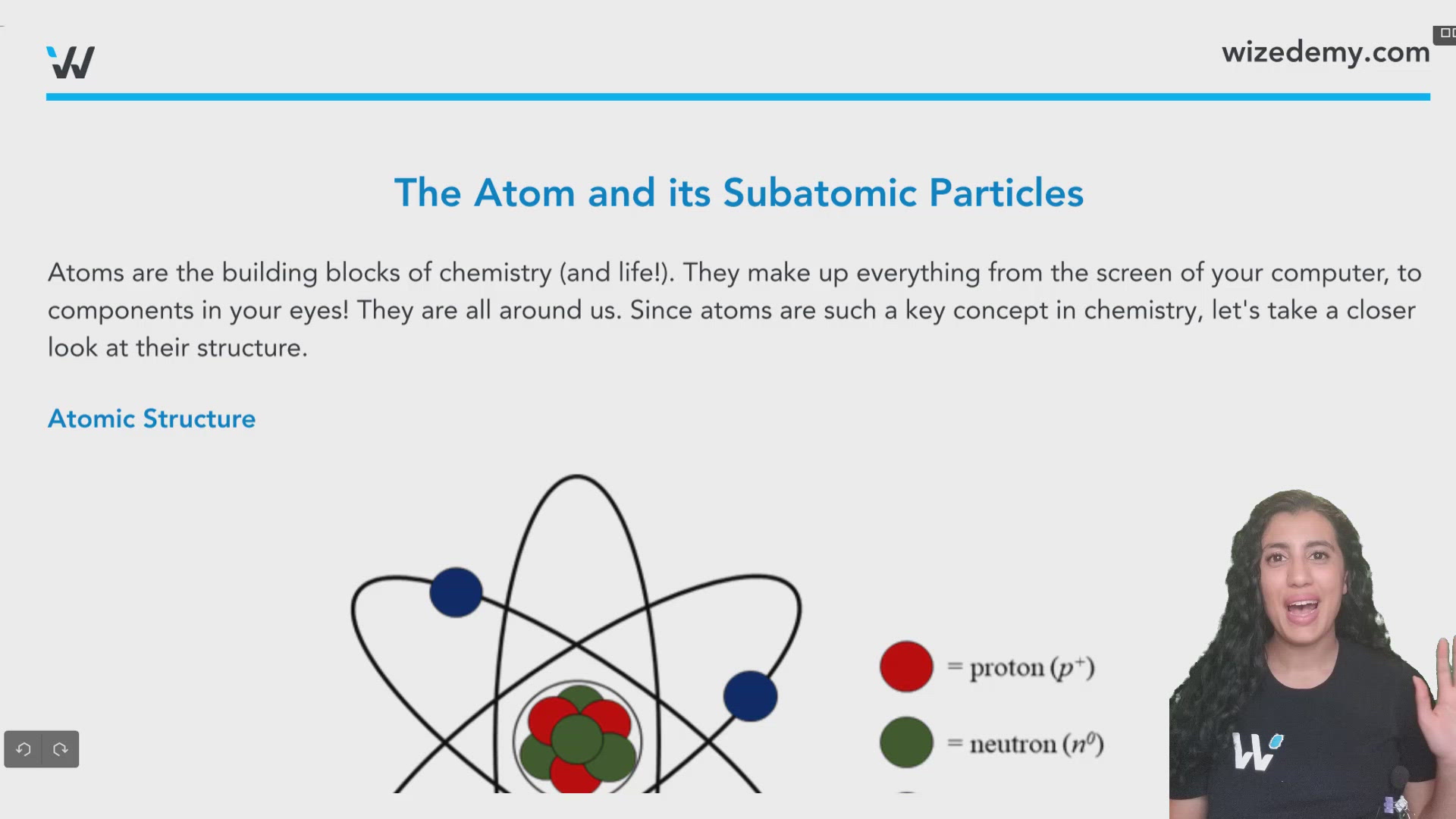
The Atom and its Subatomic Particles
Atoms are the building blocks of chemistry (and life!). They make up everything from the screen of your computer, to components in your eyes! They are all around us. Since atoms are such a key concept in chemistry, let's take a closer look at their structure.
Atomic Structure

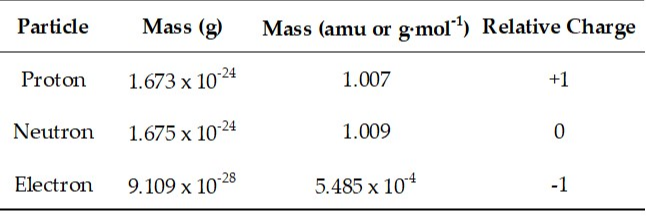
Subatomic Particles
Chemical Symbols and Notation

0:00 / 0:00
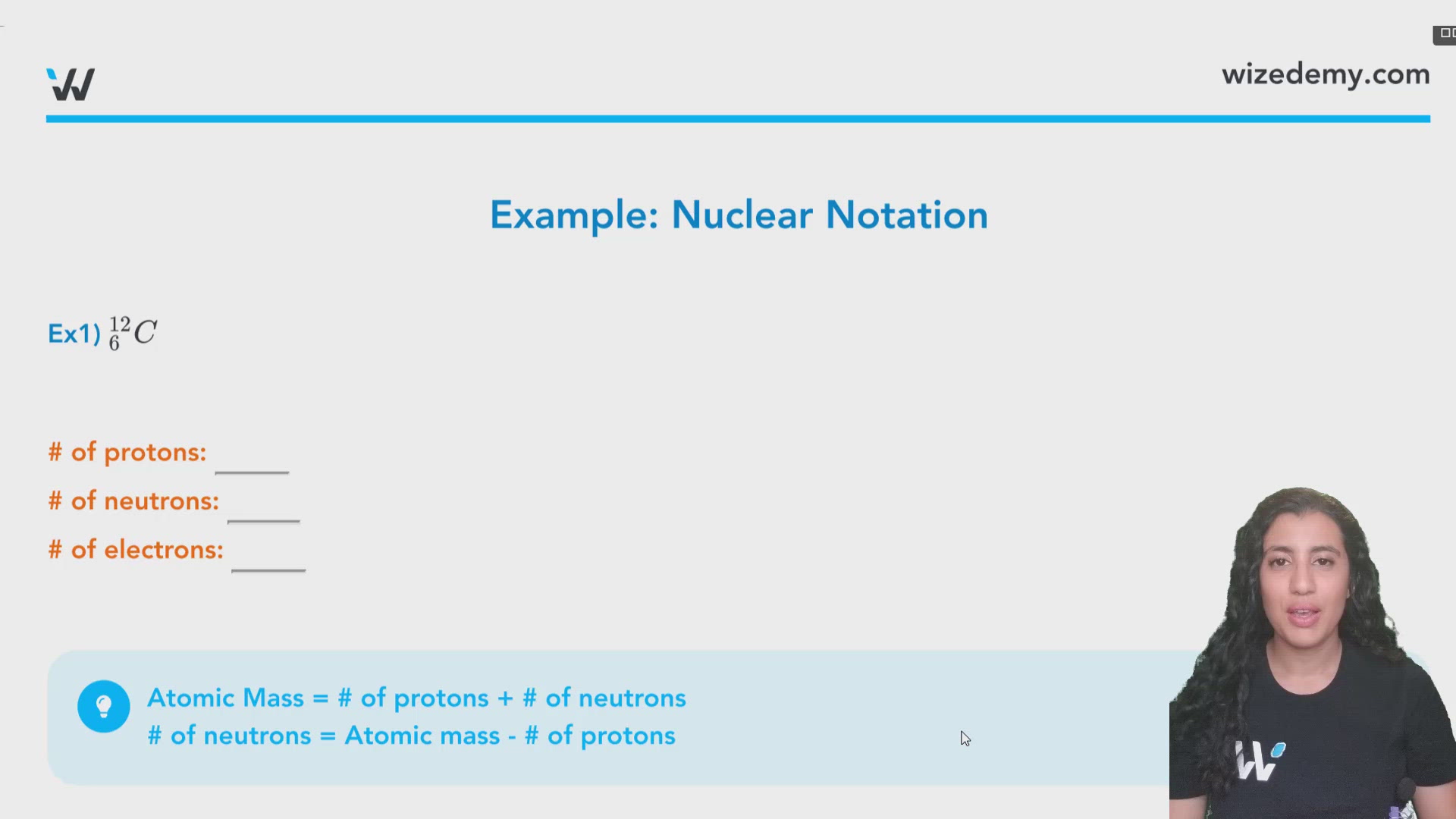
Example: Nuclear Notation
Ex1)
# of protons:
6
# of neutrons:
6
# of electrons:
6
Wize Concept
Atomic Mass = # of protons + # of neutrons
# of neutrons = Atomic mass - # of protons
Ex2)
# of protons:
9
# of neutrons:
10
# of electrons:
10
Wize Tip
When electrons are added to an element we call it an anion, and it would have a negative charge.
When electrons are removed from an element we call it a cation, and it would have a positive charge
Practice: Nuclear Notation
How many protons, neutrons and electrons are there in ?