Wize University Chemistry Textbook > Atoms, Ions, & Isotopes
Isotopes and Atomic Weight
Popular Courses
MCAT
General Course
CHEM 1301A/B
Western University
General Chemistry
University Study Guides
AP Chemistry Exam Prep Course
AP Exam Prep
CHEM 1A03
McMaster University
CHEM 121
University of British Columbia
DAT
General Course
Chemistry
General Course
General Chemistry
University Study Guides
CHM135H1
University of Toronto
CHEM 120
University of Waterloo
CHEM 205
Concordia University
CHEM 121
Simon Fraser University
CHEM 1011
Dalhousie University
CHE 102
University of Waterloo
CHEM 1100
University of Manitoba
CHEM 1481
Texas A & M University
CEM 141
Michigan State University
CHMA10H3
University of Toronto
SC/CHEM 1100 4.00
York University
0:00 / 0:00
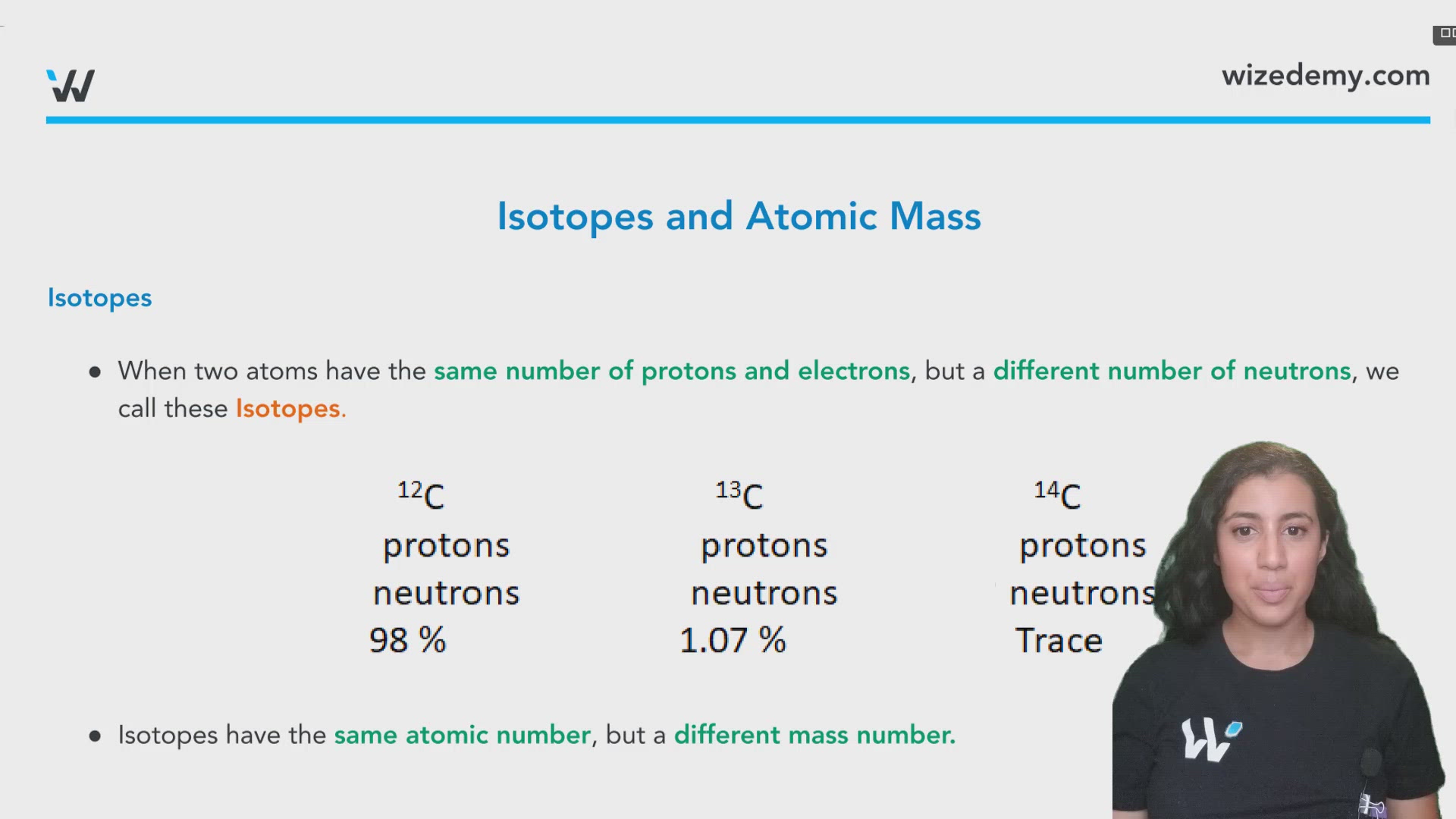
Isotopes and Atomic Mass
Isotopes
- When two atoms have the same number of protons and electrons, but a different number of neutrons, we call these isotopes.
- Isotopes have the same atomic number, but a different mass number.
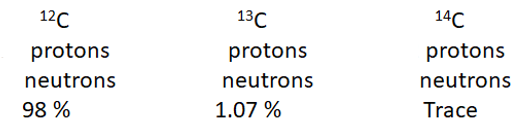
How is the Atomic Mass in the Periodic Table Calculated?
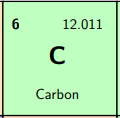
- The atomic mass is written as 12amu for C for example, but this does not mean that each C atom weighs exactly 12amu!
- The atomic mass # is actually a weighted average based on the relative abundance of isotopes
- Isotopes have similar reactivity to one another, that's why we can form C bonds with either C-12 or 13 etc
To determine the average mass of an element, use this equation:
Watch Out!
Plug in the mass of each isotope in amu and plug in the relative abundance of each isotope in the form of a decimal not percentage!
For example, above we are told the relative abundance of C-12 is 98%. You would want to plug in 0.98 for this isotope's relative abundance.
0:00 / 0:00
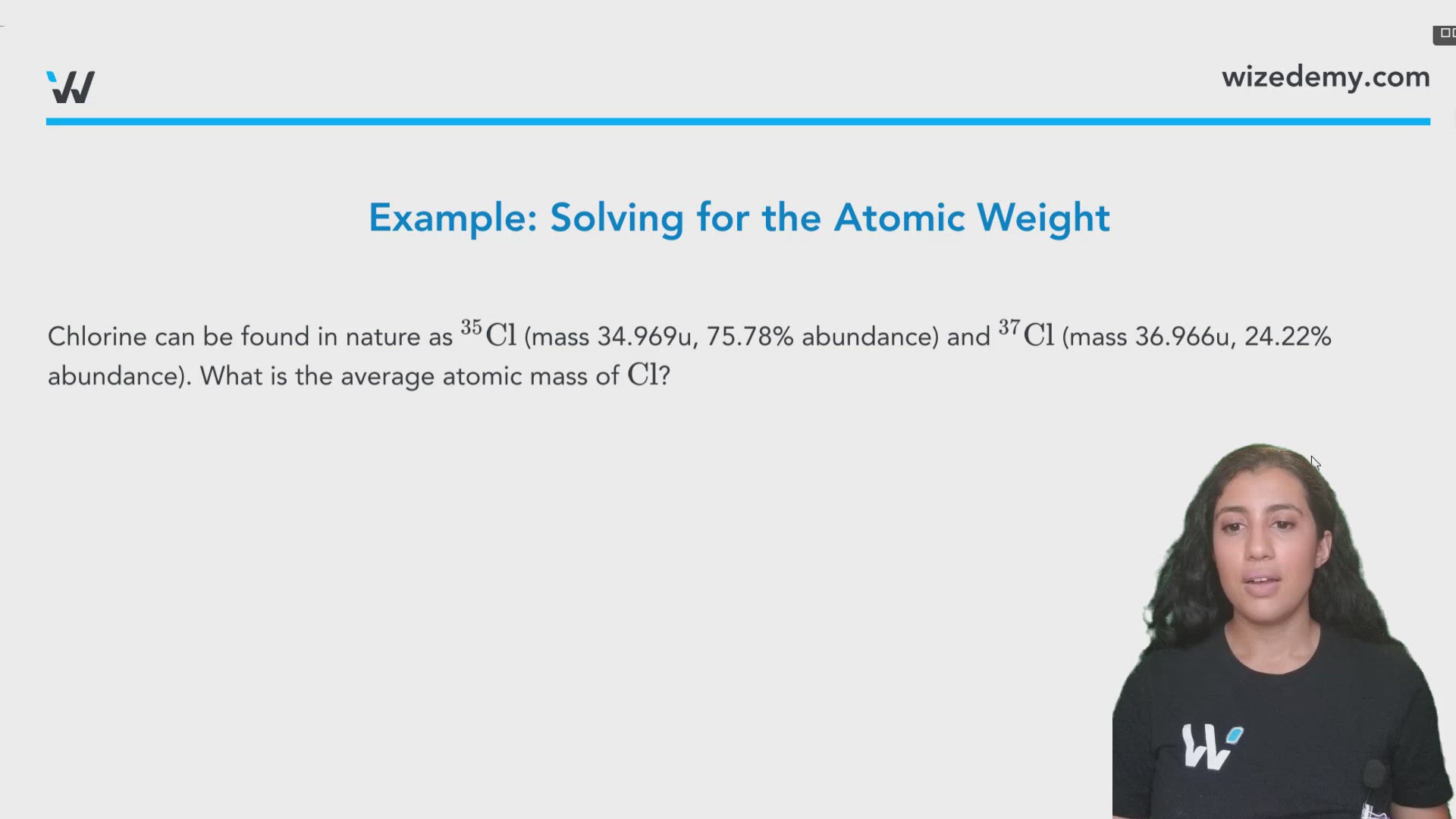
Example: Solving for the Atomic Weight
Chlorine can be found in nature as (mass 34.969u, 75.78% abundance) and (mass 36.966u, 24.22% abundance). What is the average atomic mass of ?
Practice: Solving for Weight of an Isotope
Naturally occurring potassium contains two stable isotopes. The lighter isotope, 39K ( 38.9637 amu) is the more abundant isotope, accounting for 93.26% of the nuclei. What is the weight of the heavier isotope, 41K?
Bromine is a noxious fuming red liquid in its elemental form. Naturally occurring bromine has two stable isotopes 79Br (78.918u) and 81Br (80.916u). What are the relative abundances of these two isotopes?
Enter your answer as a percentage (eg, if the answer is 16.26%, enter 16.26 as the answer)