Aggregate Demand
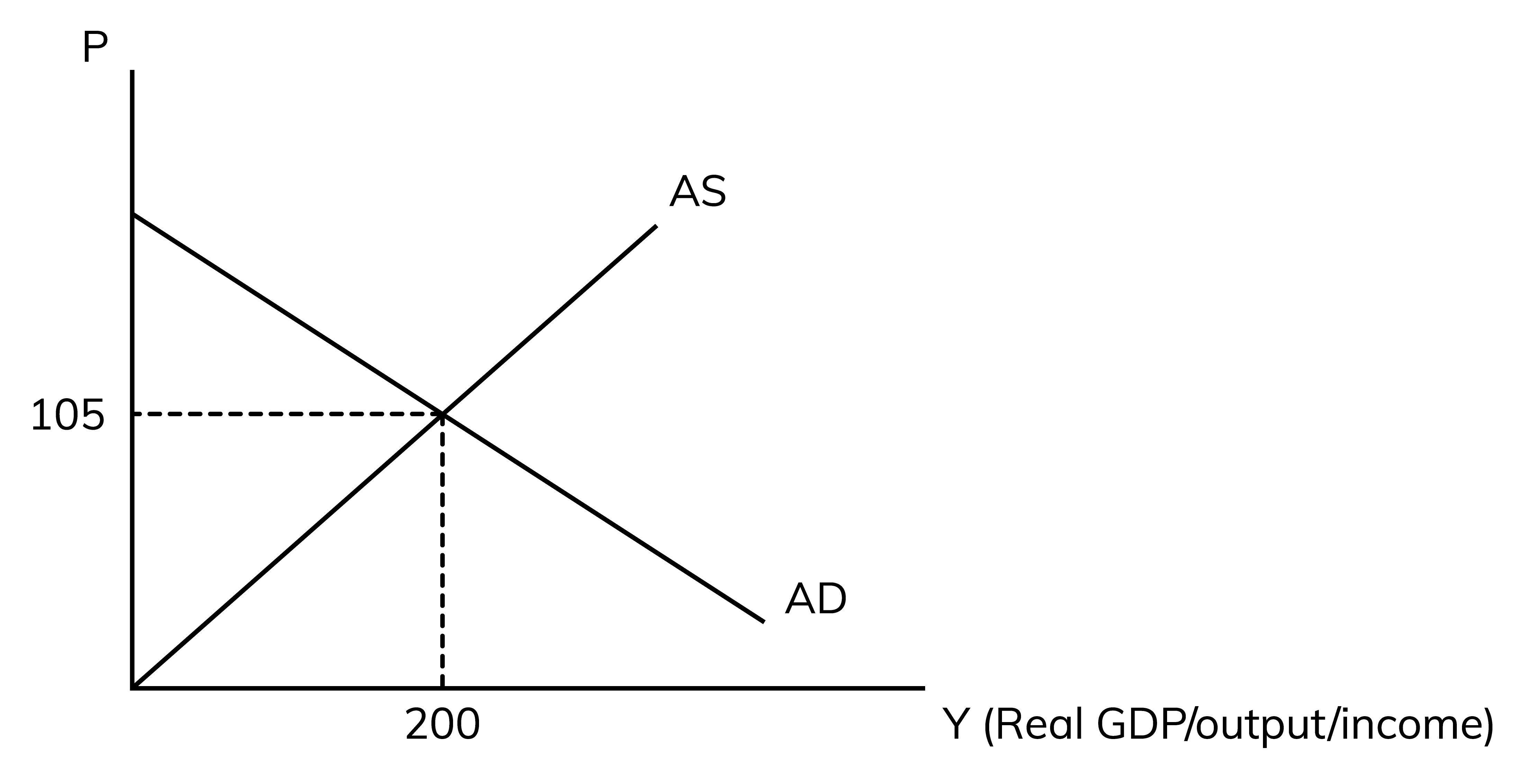
The aggregate demand is the total demand for all the goods and services provided in the economy.
Why Does the Aggregate-Demand (AD) Curve Slope Downward?
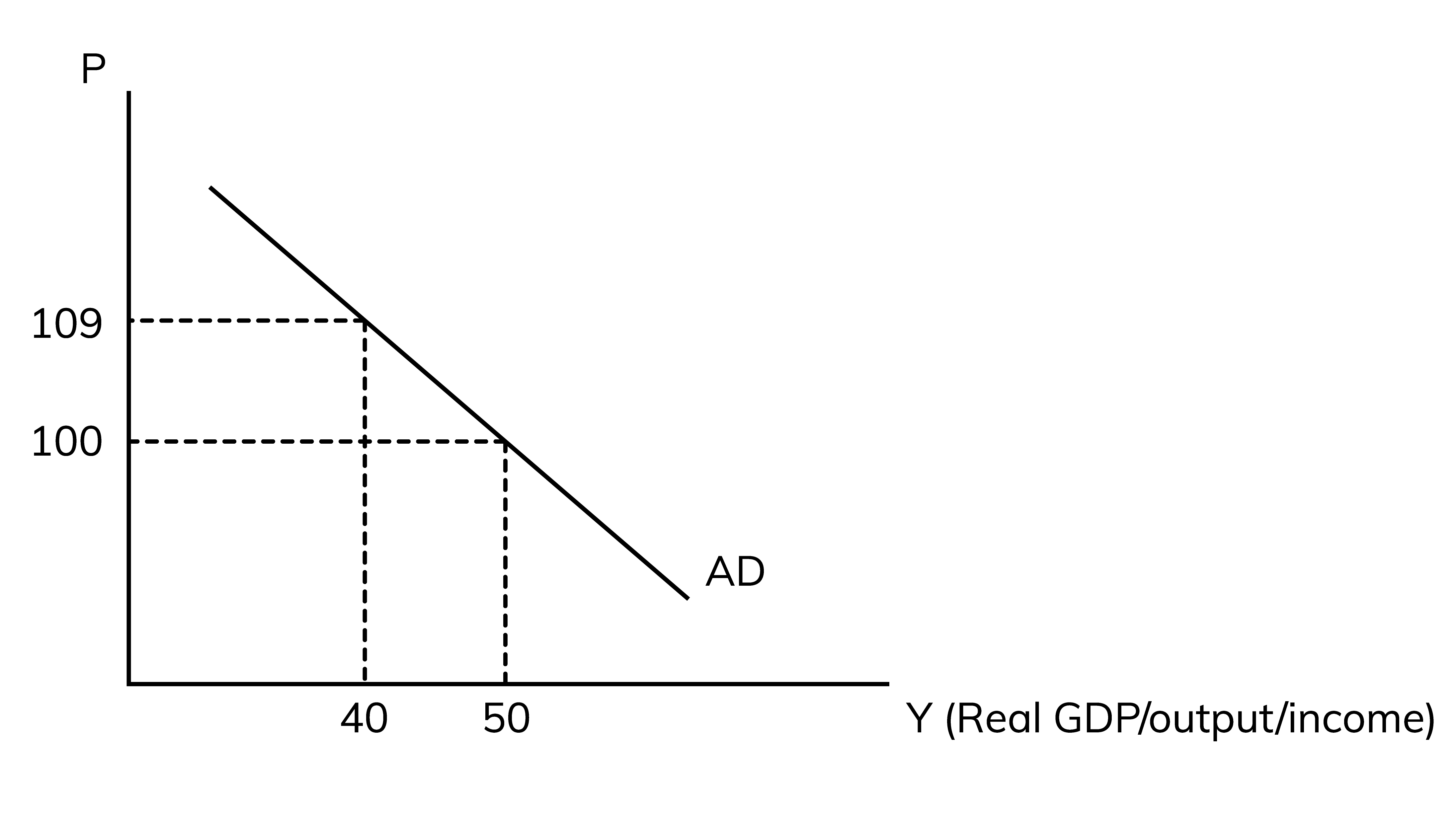
1. The Wealth Effect: A higher price level ________ real wealth, which causes a ________ in consumption and AD.
2. The Interest Rate Effect: A higher price level ________ the interest rate, which ________ spending on investment and AD.
3. The Real Exchange-Rate Effect: This is also called the substitution effect or the foreign trade effect. A higher price level causes the real exchange rate to ________, which ________ net exports and AD.
All three of these factors lead to a movement along the AD curve.
Shifts in AD
- Shifts Arising from Changes in Consumption: An event that makes consumers spend more at a given price level (a tax cut or a stock market boom) shifts AD to the ________.
- Shifts Arising from Changes in Investment: An event that makes firms invest more at a given price level (optimism about the future or a fall in interest rates) shifts AD to the ________
- Shifts Arising from Changes in Government Purchases: An increase in government purchases of goods and services (greater spending on defence or highway construction) shifts AD to the ________.
- Shifts Arising from Changes in Net Exports: An event that raises spending on net exports at a given price level (a boom experienced by a major trading partner) shifts AD to the ________.